


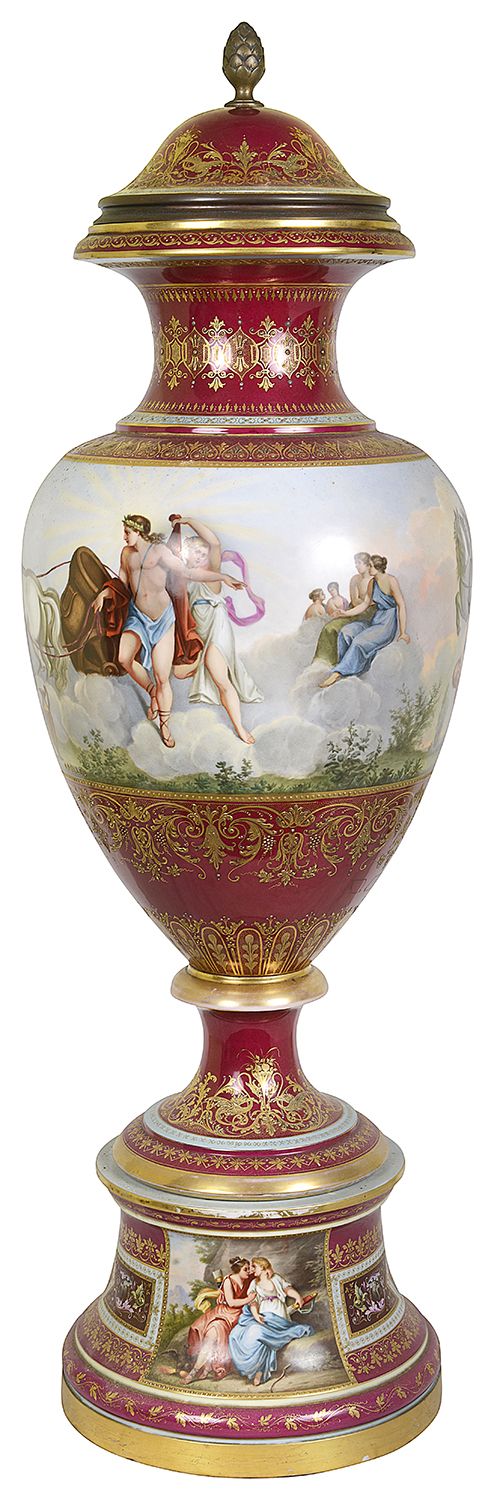


19th Century Vienna Vase
These 19th century vienna vase examples bring classical elegance and hand-painted artistry to any room, offering collectors a striking focal point.
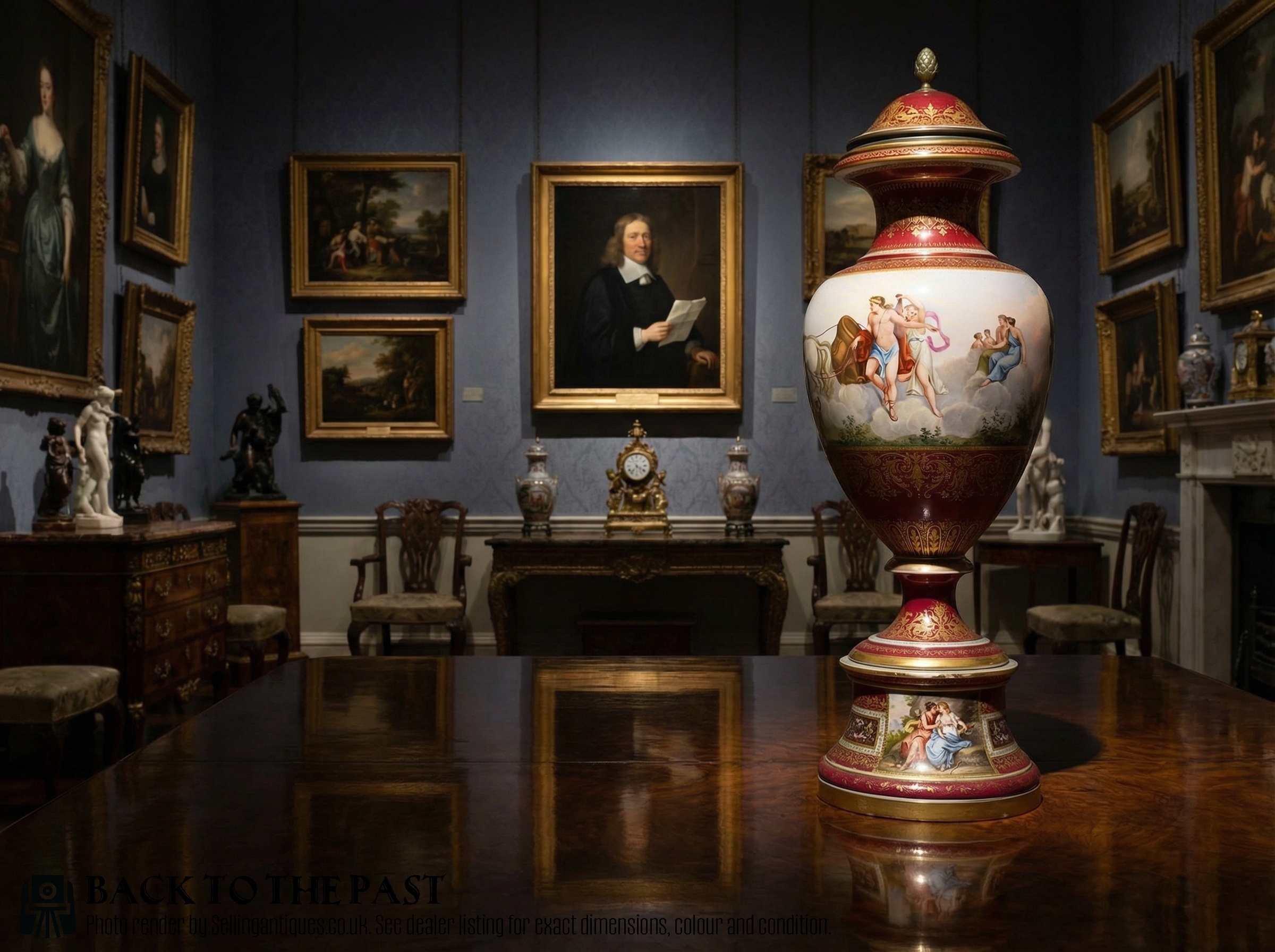
19th Century Vienna Vase
A 19th century vienna vase combines classical forms with detailed hand-painted porcelain artistry. Buyers searching for this phrase encounter decorative urns, lidded urns, and decorative ewers dating from the nineteenth century, including pieces from eighteen seventy through to nineteen hundred.
Most items adopt traditional urn and jug silhouettes suited for prominent display on mantelpieces or pedestals. The forms often incorporate classical motifs and substantial proportions that define the Victorian and Gothic aesthetic of the era.
How they were made
Potters shaped these vessels from fine porcelain before applying intricate hand-painted designs. Artisans then highlighted specific decorative elements using gold leaf, gilt, and traditional gilding techniques.
Enamel colours were carefully layered onto the porcelain body to create rich portraits and classical scenes. Certain items are mounted on wood bases, combining ceramic craftsmanship with complementary materials.
Listings for this phrase include porcelain urns, lidded vessels, and decorative ewers spanning the period from eighteen seventy to nineteen hundred.
What varies in quality
The precision and detail of the hand-painted decoration distinguish finer examples from standard production pieces. Superior items feature finely rendered portraits, such as historical figures, executed with notable artistic skill.
The application of gold leaf and gilding contributes significantly to the visual impact of a vessel. Rich, intact gilding and well-preserved enamel work elevate the overall presentation of the porcelain.
Royal Vienna·Rembrandt Van Rijn
The 19th Century Vienna Vase Glossary
- Garniture
- A set of matching decorative vessels, typically consisting of three pieces designed to be displayed together on a mantelpiece or sideboard. Such sets provide symmetrical balance in formal interior schemes.
- Ewer
- A large jug with a wide spout and a curved handle, originally designed for water but frequently produced in porcelain purely for decorative display. These vessels often feature classical handles and pedestals.
- Gilding
- The application of gold leaf or gold paint to the surface of porcelain or wood. This technique adds metallic brilliance to highlights, borders, and figurative scenes.
- Neoclassical
- An artistic style inspired by the art and architecture of classical antiquity, characterised by formal symmetry and classical motifs. This aesthetic heavily influences the ornamentation found on nineteenth-century porcelain.
19th Century Vienna Vase: Frequently Asked Questions
What styles are typical for a 19th century vienna vase?
These vessels predominantly reflect neoclassical, neoclassical revival, and Victorian neoclassical styles. Makers drew heavily on classical antiquity for their decorative motifs and vessel silhouettes.
Such designs include decorative urns, lidded vases, and ewers that emulate ancient forms while incorporating nineteenth-century painting techniques.
How were these porcelain vases decorated?
Decorations typically involve detailed hand-painted scenes and portraits rendered in rich enamel colours. Artisans added further opulence by applying gold leaf and intricate gilding to borders and handles.
Portrait subjects include historical figures, while other pieces feature classical figurative compositions set against solid-coloured grounds.
Are these vases found as pairs or sets?
Many listings feature matched pairs of urns and lidded vases intended for symmetrical placement. Larger groupings, such as garnitures of three vases, also appear in the historical record and current selection.
These multi-piece sets were created to adorn mantelpieces and large furniture surfaces in formal nineteenth-century interiors.
What materials accompany the porcelain on these pieces?
While porcelain forms the primary body of each vessel, manufacturers often incorporated enamel and gold leaf for surface ornamentation. Some examples also feature wooden components, such as integrated wood bases.
These combined materials enhance the decorative presence of the urns and ewers.