




Antique Vienna Urn
These antique vienna urn pieces are decorative ceramic vessels from the nineteenth and early twentieth centuries, bringing classical elegance and hand-painted artistry to any room.
Antique Vienna Urn
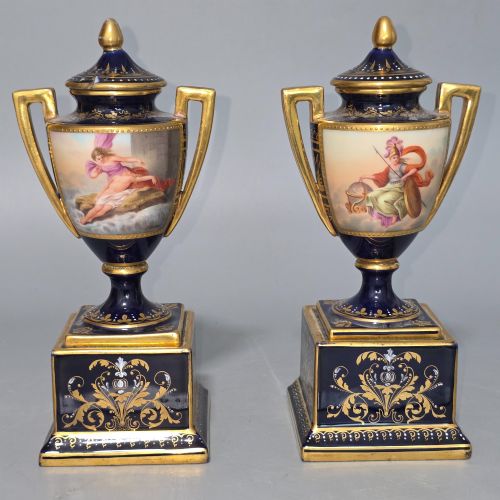
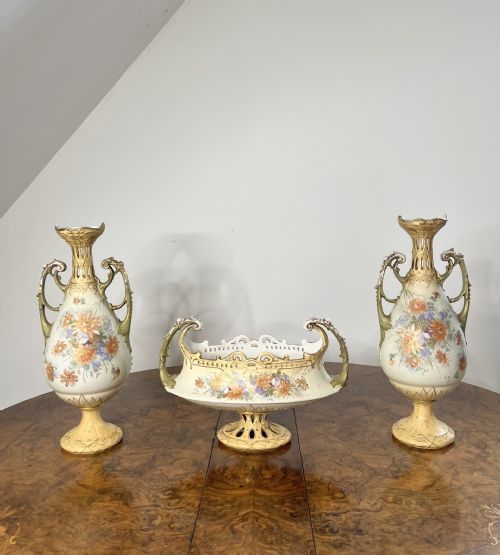
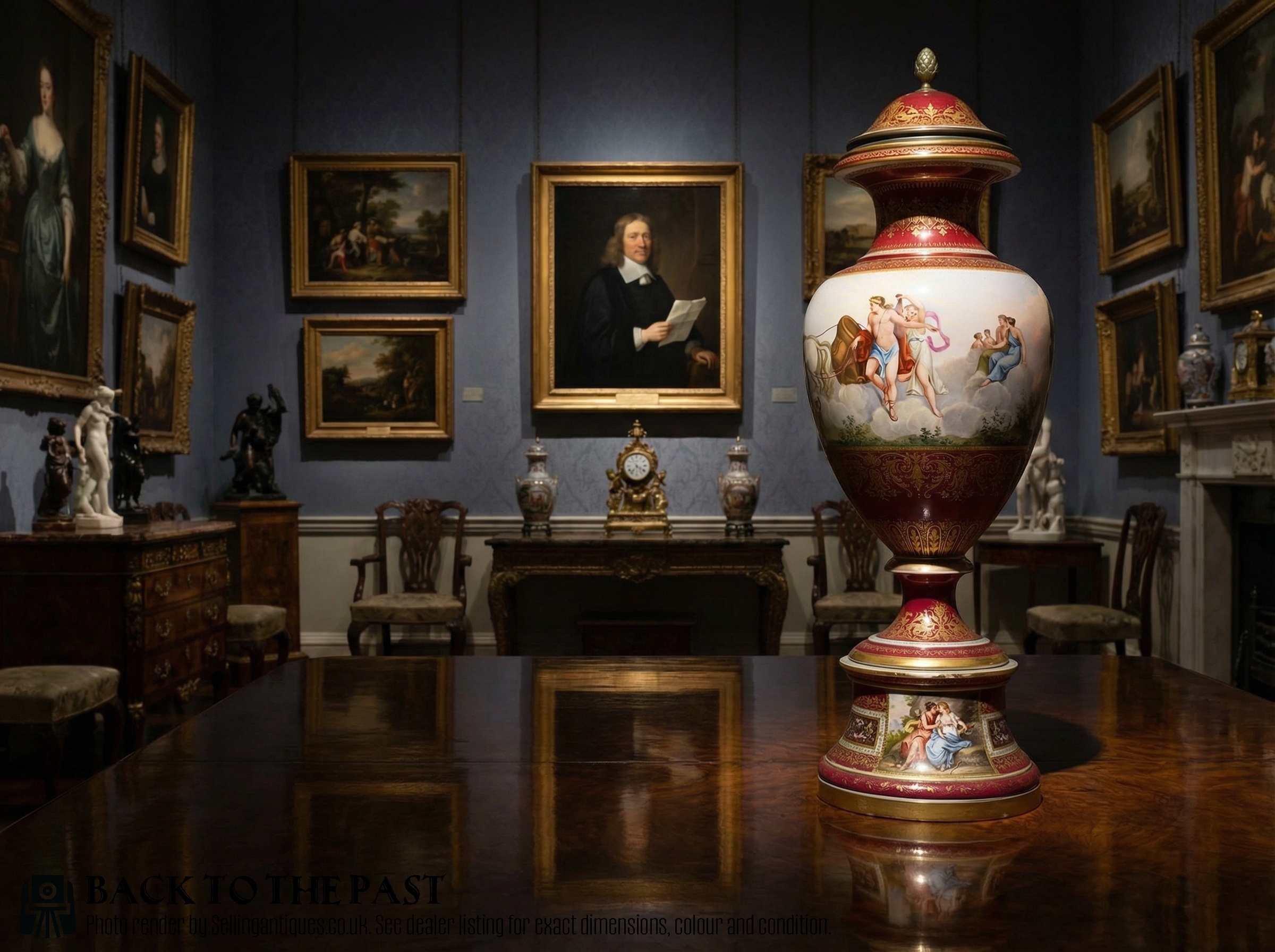
When you search for an antique vienna urn, you are looking at decorative porcelain and earthenware vessels produced primarily across the nineteenth century and into the early twentieth century. The selection ranges from single lidded urns and grand centrepieces to matched pairs and multi-piece garniture sets.
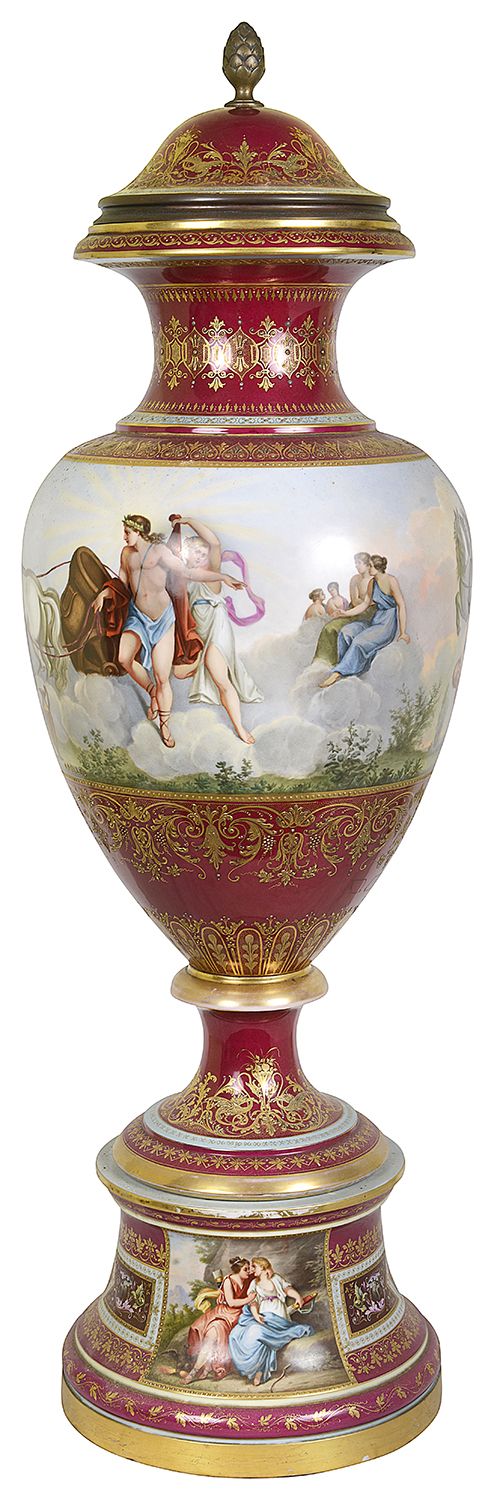
You are most likely to meet nineteenth-century porcelain examples on this page, often featuring neoclassical or empire styling alongside hand-painted details. Forms vary from large lidded vases and ewers to amphora vases and portrait vessels.
The objects reflect diverse aesthetic movements of their time, moving from nineteenth-century classical revivals into later art nouveau and secessionist designs. Makers and factories of the period produced both standalone decorative showpieces and matching sets intended for prominent display.
Materials and production methods
These items are constructed primarily from porcelain and earthenware, shaped into varied ceramic bodies and finished with glazed surfaces. The physical substance provides a smooth white canvas suited to detailed pictorial and decorative work.
Makers applied intricate hand-painted designs, often accented with gilding, gold leaf, and enamel work to highlight classical motifs and figural portraits. Firing techniques allowed for rich colour saturation and durable metallic highlights that endure on the finished vessels.
Some nineteenth-century decorators enjoyed symmetrical mantelpieces so much they bought three matching lidded vases just to line them up in a row.
Assessing quality in vienna ceramics
The distinction between standard production and top-tier pieces rests on the precision and fineness of the hand-painted artistry. Superior examples display meticulous brushwork in figural portraits, intricate gilding, and balanced compositional forms.
The ambition of the form also dictates quality, with large lidded garniture sets and signed artist pieces representing the upper echelon of the medium. The sophistication of the period style, whether neoclassical revival or art nouveau, shapes the overall aesthetic success of the vessel.
F. Koller·Ernst Wahliss
The Antique Vienna Urn Glossary
- Garniture set
- A matched grouping of three or more vases or urns designed to be displayed together on a mantelpiece or sideboard. These sets often comprise a large centrepiece flanked by smaller matching vessels.
- Ewer
- A large jug with a wide spout and a curved handle, originally intended for pouring water but frequently produced in porcelain purely as a decorative ornamental piece.
- Amphora
- A two-handled jar with a narrow neck used in classical antiquity, the form of which was revived by nineteenth-century porcelain makers for grand decorative urns.
- Gilding
- The application of gold leaf or powdered gold paint to the surface of ceramic pieces to create bright metallic highlights and borders.
- Secessionist
- An artistic movement originating in central Europe during the late nineteenth and early twentieth centuries, characterised by stylised floral motifs and rejection of historicism.
Antique Vienna Urn: Frequently Asked Questions
What is an antique vienna urn?
An antique vienna urn is a decorative ceramic vessel, usually made of porcelain during the nineteenth century, often featuring hand-painted scenes and gilding.
These pieces were produced in various styles including neoclassical and art nouveau, serving primarily as ornamental display items.
How were these urns used historically?
These vessels were created purely for decorative display in grand nineteenth-century interiors, placed on mantelpieces, tables, or cabinets.
Matched sets, known as garnitures, were arranged symmetrically to enhance the formal appearance of a room.
How do I identify the period of a vienna vase?
Dating relies on stylistic clues, such as the heavy classical motifs of mid-nineteenth-century pieces versus the flowing organic lines of later art nouveau designs.
Signatures, model numbers, and specific factory marks also help narrow down the decade of production.
How should I care for porcelain urns?
Keep these fragile ceramic and gilded pieces out of direct sunlight to protect hand-painted enamel colours and metallic gold leaf.
Dust them gently with a soft dry cloth and avoid using liquid cleaners or water on the decorated surfaces.