



19th Century Porcelain Garniture
These 19th century porcelain garniture sets bring grand decorative symmetry to a room through matching urns, clocks and candelabra.
19th Century Porcelain Garniture
A 19th century porcelain garniture typically consists of a central mantel clock accompanied by matching side pieces such as urns or candelabra, designed to sit harmoniously on a chimneypiece. The forms span decorative vases, lidded urns and clock sets originating from major European porcelain centres.
French workshops dominate the selections, frequently employing Sevres style aesthetics alongside Rococo Revival, Empire and Napoleon III designs. Buyers also encounter German factory pieces from Berlin and Vienna, alongside English productions.
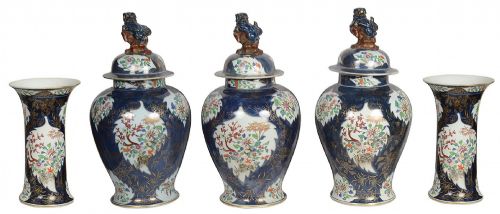
The groupings appear in sets of three pieces, such as a clock flanked by vases, or pairs of candelabra and vases designed to be displayed together as a unified scheme.
Assessing Quality and Execution
The standard of hand-painting on the porcelain panels separates superior examples from simpler productions, with finer works displaying detailed botanical or figurative scenes. The crispness of the bronze or ormolu casting also dictates the tier of the piece, as sharper chased mounts require greater skill than cast variants.
The integration between the ceramic body and the metal mounts defines the overall construction standard. Superior sets maintain precise alignment where the porcelain sits within its gilt metal housing.
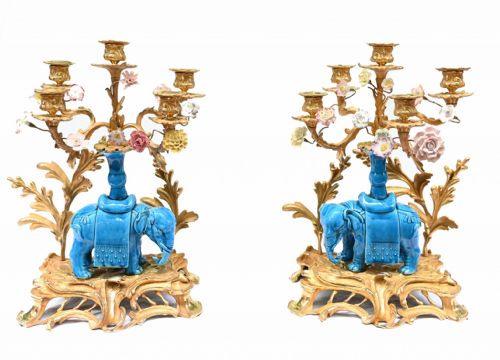
Elephants occasionally support nineteenth-century candelabra, proving that formal mantels welcomed a touch of menagerie charm.
KPM Berlin·Vienna Porcelain·Minton Porcelain·Meissen·Samson Porcelain
The 19th Century Porcelain Garniture Glossary
- Garniture
- A set of matched ornamental objects designed for display together, usually consisting of three or more pieces such as vases or a clock with side urns.
- Ormolu
- Gilt bronze mounts applied to furniture, clocks and porcelain, created by merging mercury and gold onto a bronze base.
- Bleu Celeste
- A bright turquoise blue enamel ground colour developed at the Sevres porcelain factory during the eighteenth century and revived later.
- Cloisonne
- A decorative technique where enamel is applied within compartments created by soldered wire strips on a metal base.
19th Century Porcelain Garniture: Frequently Asked Questions
What is a porcelain garniture set?
A porcelain garniture set is a coordinated grouping of decorative ceramic objects, typically comprising a central mantel clock accompanied by matching vases or candelabra. These sets were manufactured to create a balanced, symmetrical display on mantelpieces and sideboards.
The pieces share matching decorative themes, glaze colours and metal mounts, ensuring a unified visual appearance across the entire arrangement.
How were garniture sets displayed?
Garniture sets were positioned on drawing room mantelpieces, with the tallest item placed centrally and flanked by the matching side pieces. This arrangement directed focus towards the centre while maintaining horizontal balance.
They also adorned large console tables and cabinets in formal reception rooms, serving both a decorative and functional role.
How do I care for antique porcelain?
Antique porcelain requires gentle dusting with a soft, dry brush to prevent the accumulation of dirt on painted surfaces and gilt mounts. Avoid using chemical cleaners or water, which can damage exposed enamel and delicate gold leaf.
Keep the pieces away from direct sunlight and strong heat sources to protect the painted colours and prevent the drying out of internal clock mechanisms.
How do I identify Sevres style pieces?
Sevres style pieces typically feature rich blue enamel grounds, lavish ormolu mounts and hand-painted pastoral or floral panels enclosed within gilded scrollwork. These items emulate the luxurious output of the historic French royal factory.
Many pieces from the period adopt these specific decorative conventions without necessarily being produced in the original Sevres workshops.