

Antique Silver Vesta Cases
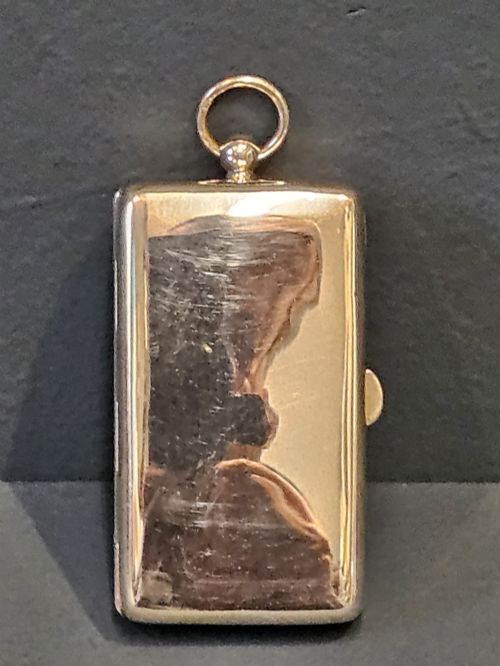
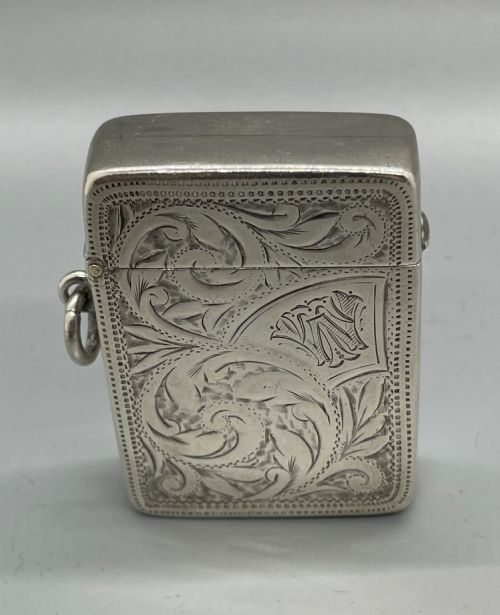
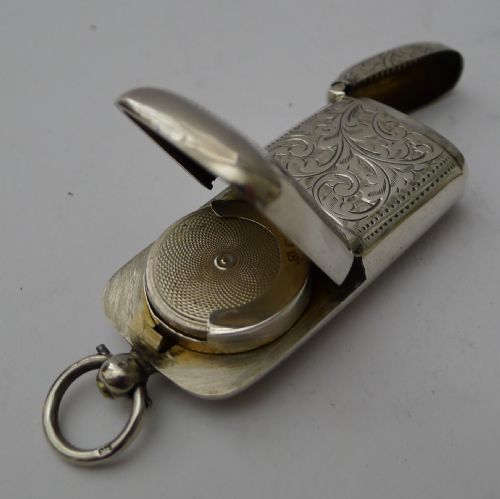
A small hinged silver box with a ribbed striker, made to carry friction matches safely in a waistcoat pocket or on a watch chain.
Antique Silver Vesta Cases
A vesta is a short friction match. The matches that came in from the 1830s were volatile, so they were carried in a closed metal box with a serrated striker on the outside, usually the base. Petrol lighters took over from about the 1920s and the trade fell away.
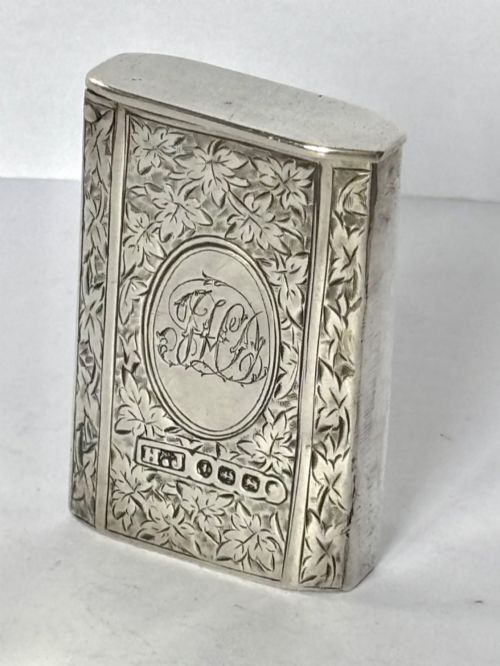
What turns up on Sellingantiques is overwhelmingly late Victorian to George V English sterling, hallmarked and often dated in the title. Birmingham accounts for 74 titles and Chester 51, against 12 for London, so the provincial offices define the category. Dealer dates run 1860 to 1960, clustering on the 1910s, 1900s and 1920s; Edwardian and Victorian labels together cover over half the archive.
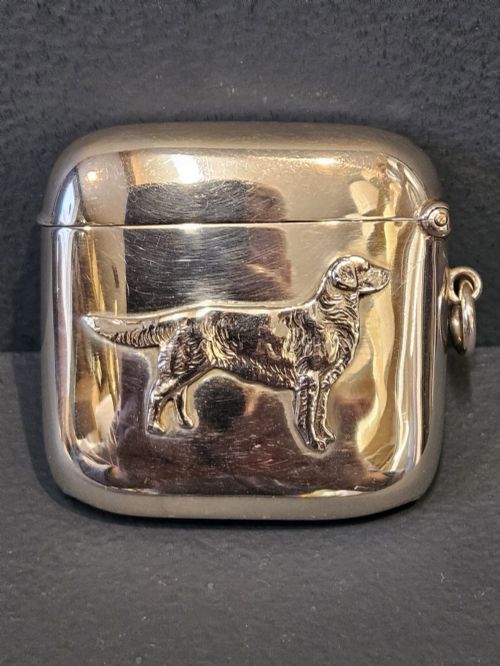
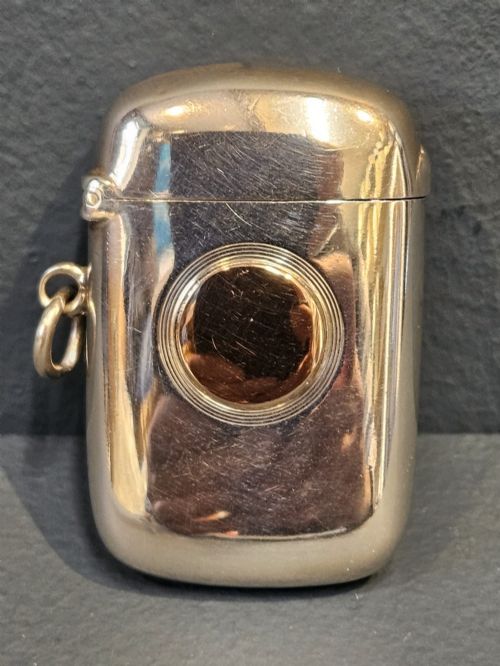
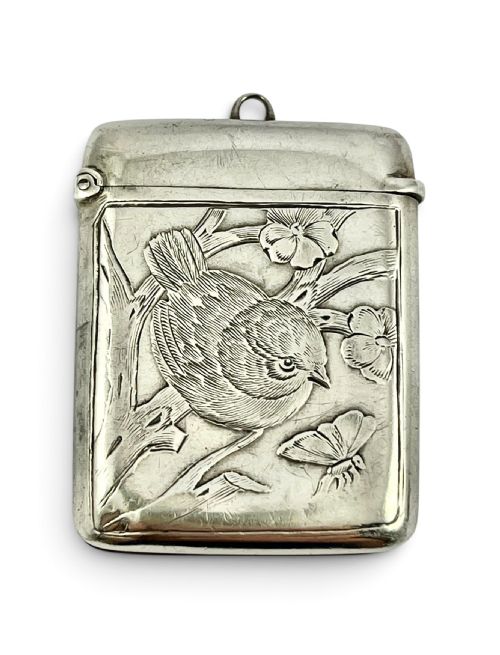
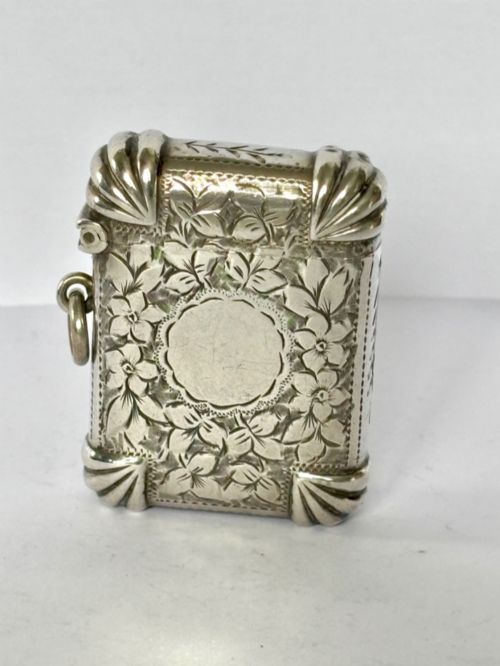
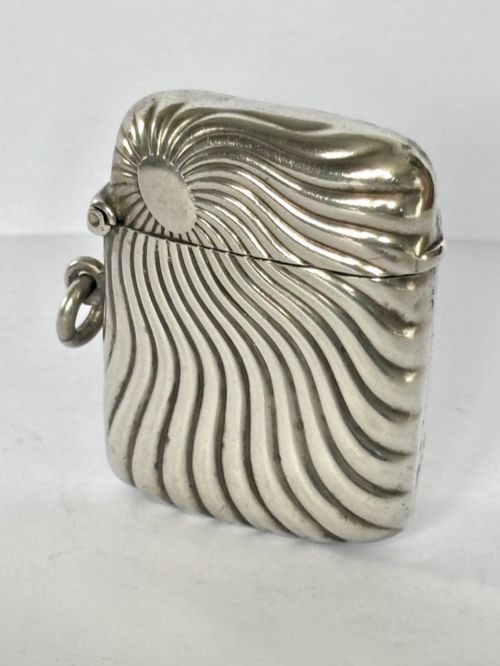
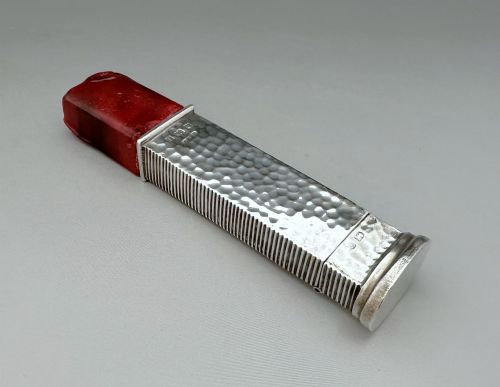
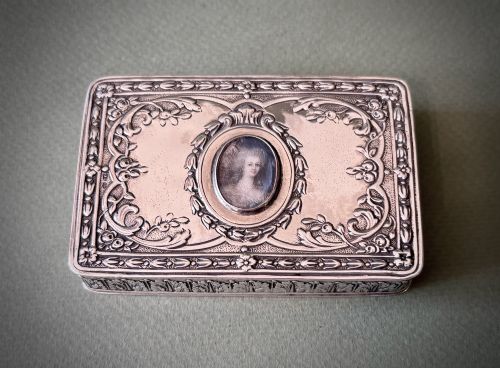
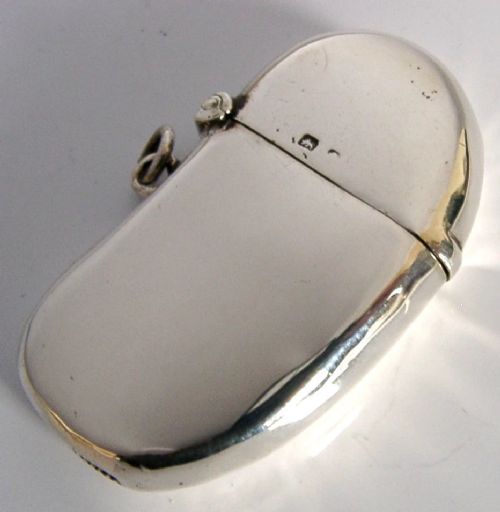
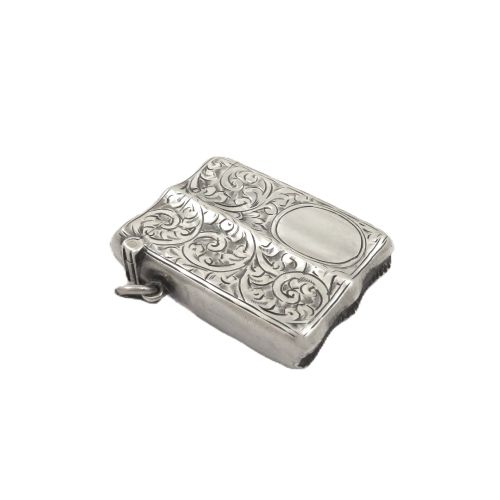
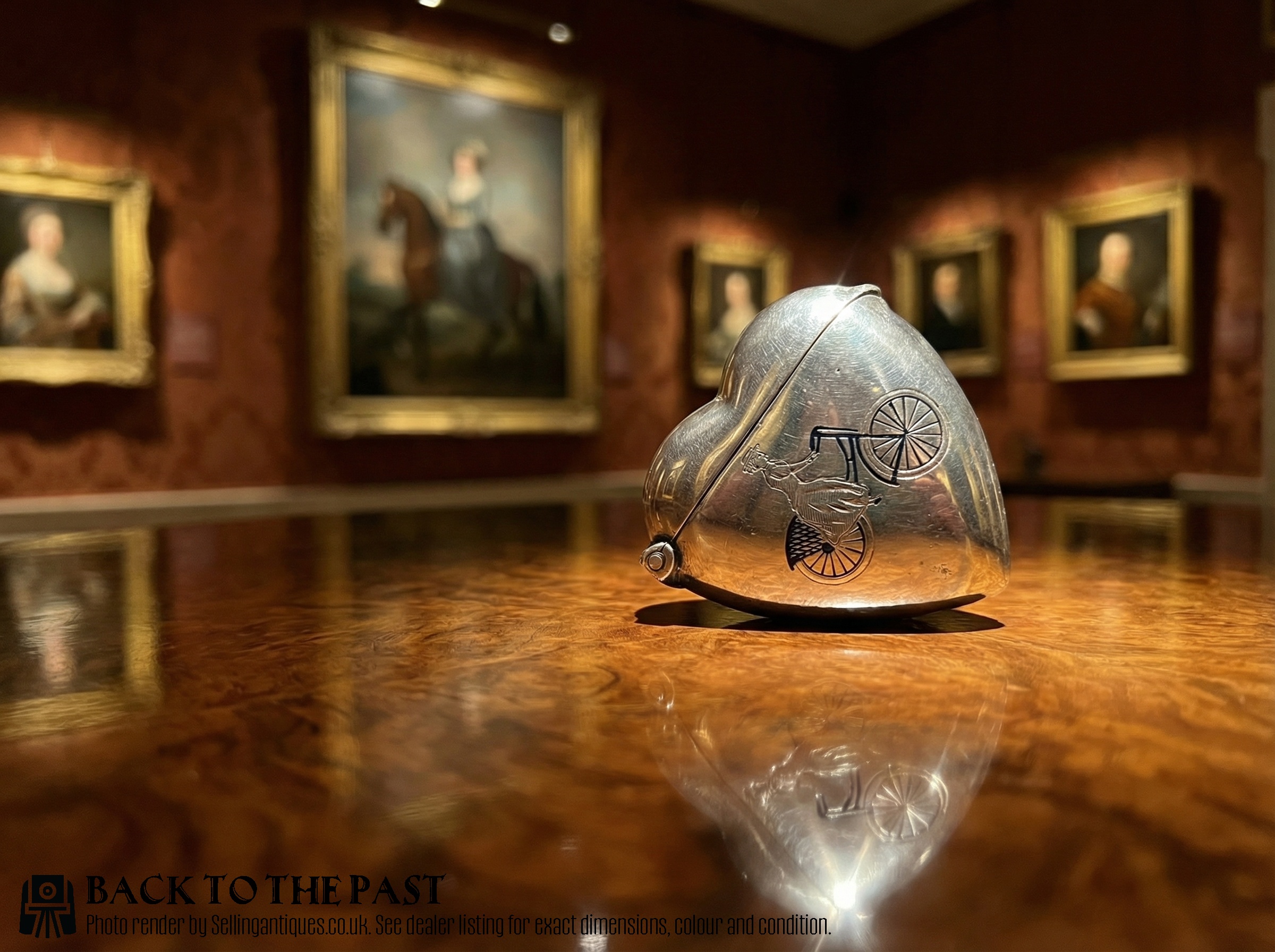
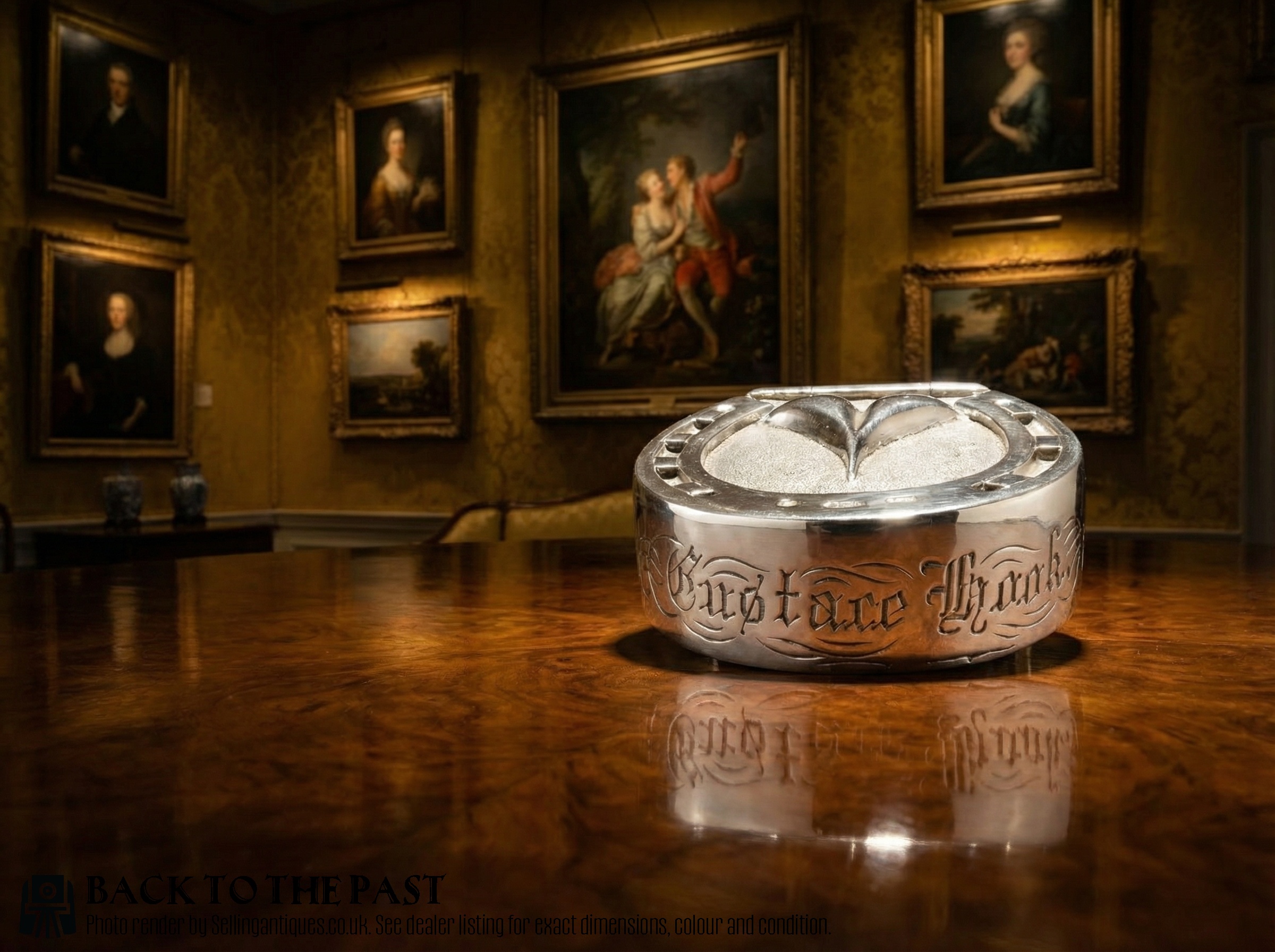
The plain, engraved or engine-turned rectangle is the version you'll meet most often. Around it sit circular, oval, heart, kidney and hexagonal bodies, planished and hammered Arts and Crafts finishes, and repouss o ten is a combination case, the body divided for a sovereign, stamp, snuff, cigar cutter or whistle alongside the matches.
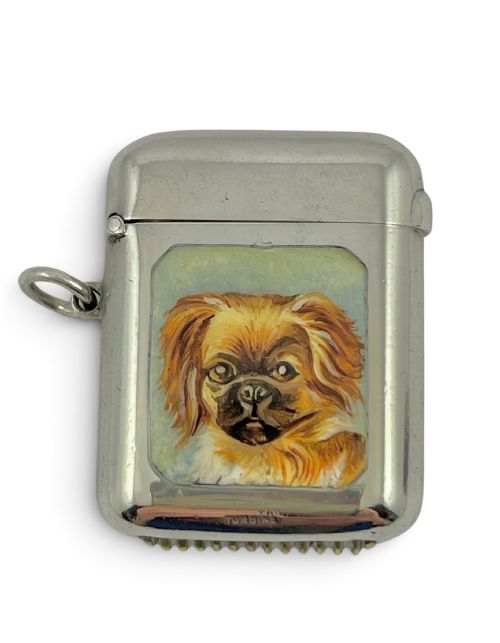
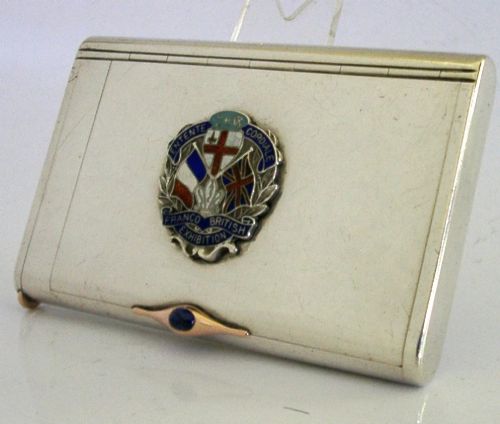
Two smaller seams run through. Enamelled cases carry painted dog heads, jockey colours, yacht club burgees and coats of arms. Novelty and figural forms cover a boar, an elephant, a cat, a golf ball, a padlock and a guardsman in a sentry box. Continental 800, French, Russian niello, American and Chinese export pieces appear only a handful of times.
What Sets Them Apart
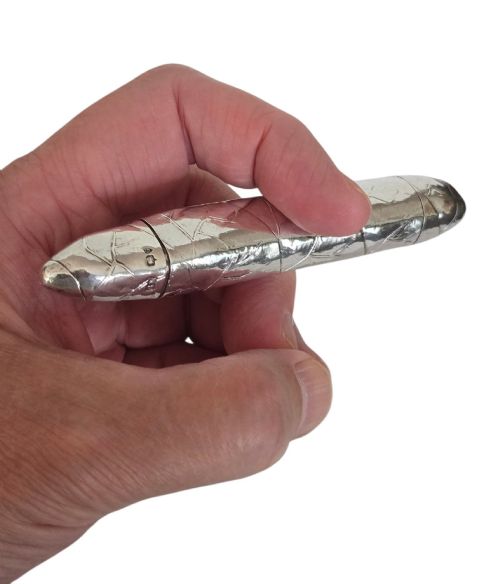
Decoration does the heavy lifting. Enamel sits at the top of the range: painted dogs, racing colours, burgees, a sentry. Figural and novelty forms do the same job, and a sarcophagus or a double-ended cigar case sits well above a plain rectangle of identical date and metal.
After that, complication. A body divided for a sovereign, stamp, snuff, whistle or cigar cutter clusters in the upper half, and one recorded case runs to vesta, sovereign, stamp, toothpick and pencil in a single shell. Size counts too: 'large' appears in 17 titles, and the outsize 'Goliath' cases are a recognised type with stated weights.
A named maker or designer in the title lifts a case above unattributed work of the same year. At the bottom sit the plain hallmarked pocket cases of the 1900s and 1910s, which is also what most of the archive is made of.
Antique Silver Vesta Cases Retail Price Guide 2026
Typical UK retail prices for silver vesta cases, calculated from the Sellingantiques database of over a million retail prices indexed since 2003. This retail price guide relies exclusively on Sellingantiques data; no external sources or auction records are used, so the figures do not describe the wider market.
Sampson Mordan is the name that turns up from the most dealers on Sellingantiques in this category.

Sampson Mordan
The Antique Silver Vesta Cases Glossary
- Vesta
- A short friction match, and by extension the case made to carry a handful of them.
- Striker
- The ribbed or serrated surface, usually on the base, that the match was drawn against.
- Sterling or solid silver
- The standard silver alloy. 'Solid' in a title is simply marking the case out from plated.
- Assay office
- The hall that tested and marked the silver. Birmingham dominates here, then Chester, then London.
- Combination case
- One body divided for two or more uses, most often vesta plus sovereign, and also stamp, snuff or cigar cutter.
- Goliath
- A dealer term in these titles for the outsize cases, one recorded at 2.25 inches and others heavier at 50 to 58 grams.
Antique Silver Vesta Cases: Frequently Asked Questions
Why are so many marked Birmingham or Chester?
Birmingham carries 74 of the 413 titles and Chester 51, between them 125. London manages 12.
The small silver trade worked to the provincial offices, and the vesta case is a provincial product on this evidence rather than a London one.
What is a match safe?
The same object under a different name. The term is used mainly for American examples, which turn up only a handful of times across the archive.
British listings stick to 'vesta case'.
How old are most of them?
The dealer dates run from 1860 to 1960, with the decade buckets tight on the 1910s, 1900s and 1920s. Edwardian and Victorian labels together cover more than half.
The 1880s, 1890s and 1930s are thin. Anything before about 1860 or after about 1935 is exceptional.
Titles are often more precise than the reign label, quoting an exact assay year. Birmingham 1906 alone appears in eight.
Which forms are the unusual ones?
Novelty appears in 13 titles and heart in 11. Beyond those, a boar, an elephant, a cat, a fish, a golf ball, a bean, a piano, a domino, a padlock and a life buoy each turn up.
One-offs include a mussel shell, a sarcophagus, a 1797 cartwheel penny mounted as a case and a maze puzzle case under Morton's Patent.
Are enamelled vesta cases common?
Enamel appears in 23 titles, about one in twenty of the archive, and more among current stock.
The subjects repeat: pug, bulldog and Jack Russell heads, yacht club burgees, coats of arms, jockey colours and hand-painted roses. Several of the highest-placed listings are enamelled.
Do military associations show up on these?
They run as a small steady seam. Seaforth Highlanders, 9th Lancers, Royal Inniskilling Fusiliers and the Duke of Wellington's Regiment all appear.
Naval examples include a submarine depot case and one for HMS Prince George.