




Antique Silver Decanter Labels
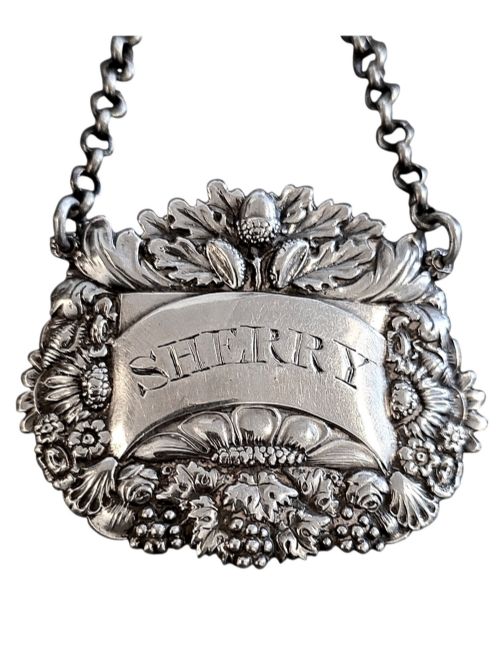
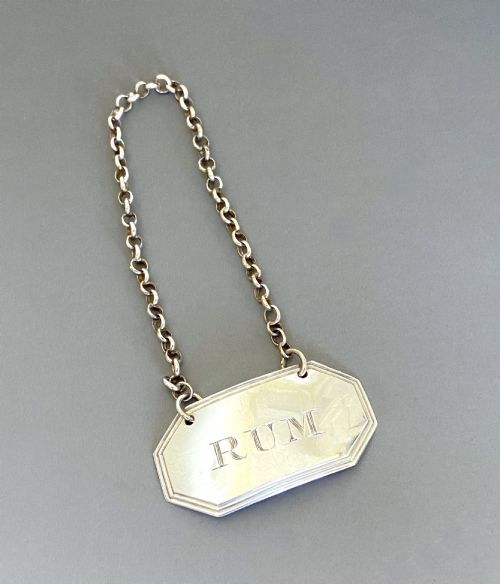
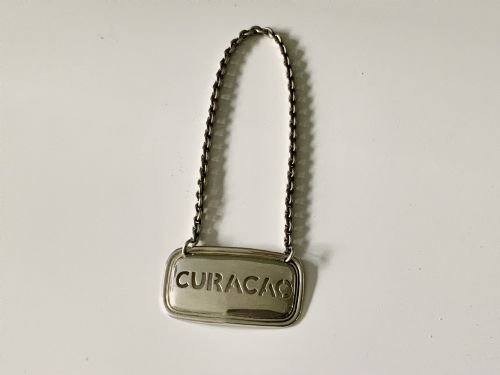
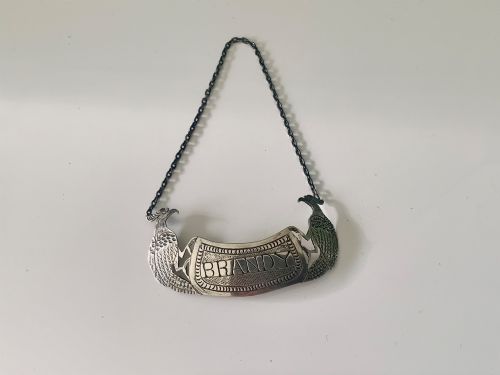
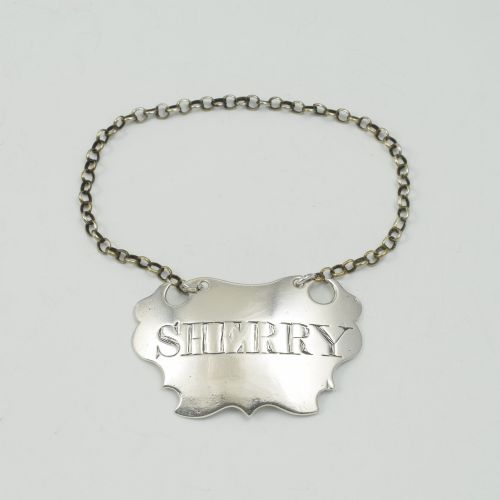
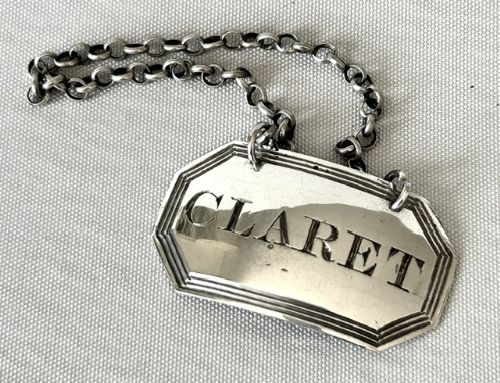
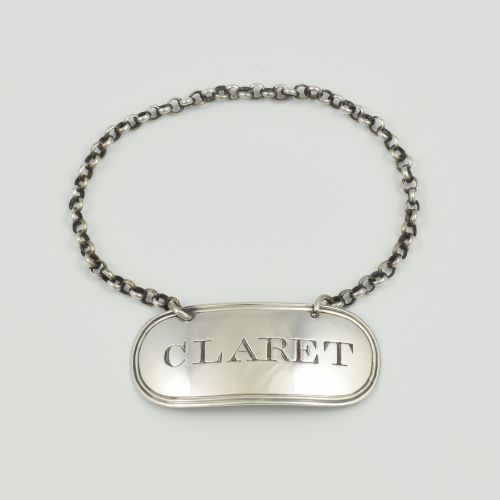
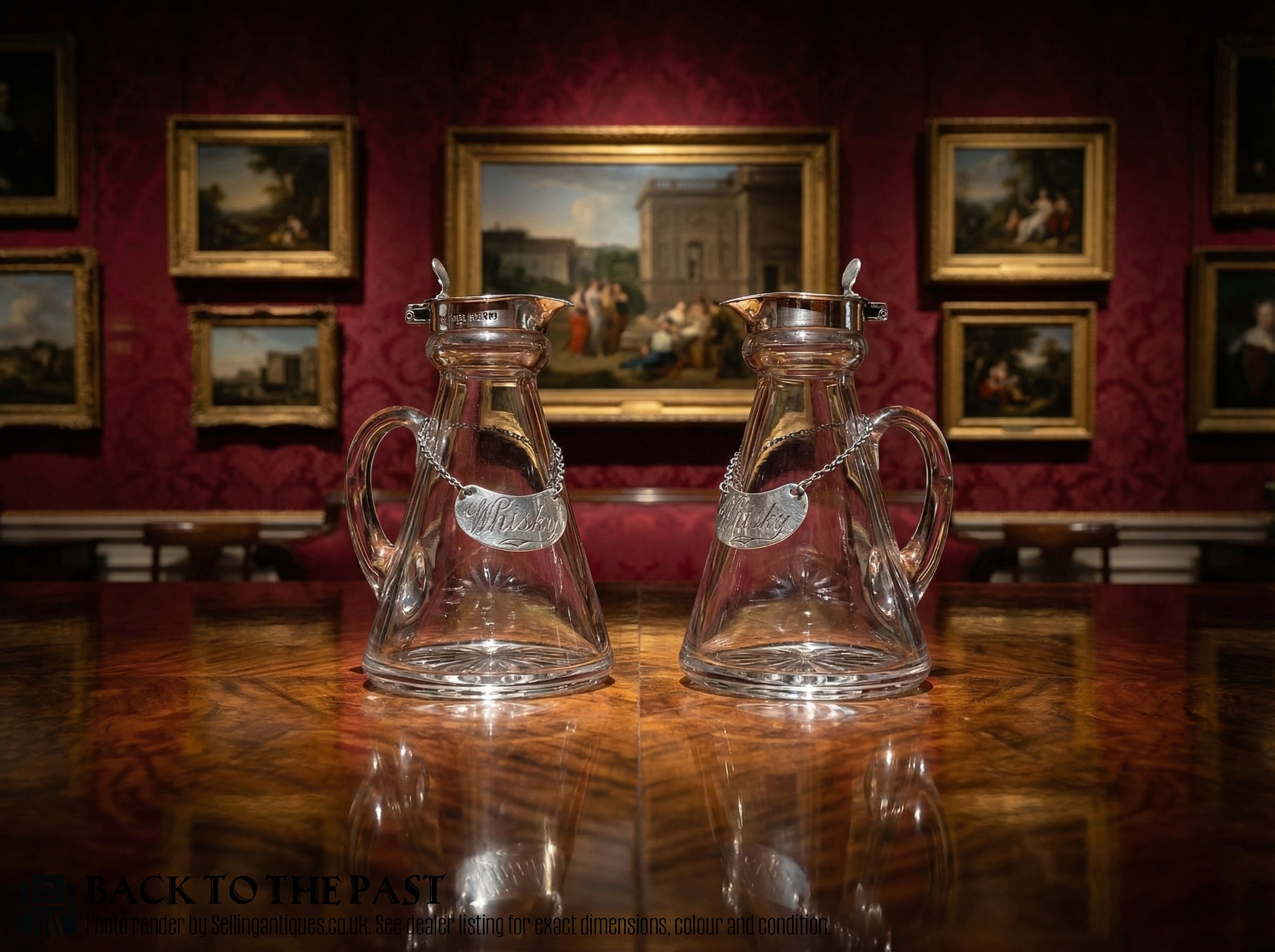
A small pierced silver plaque naming a drink, hung by a chain round the neck of a decanter or bottle so the contents could be told apart.
Antique Silver Decanter Labels
Silver bottle tickets came in around the middle of the eighteenth century, when wine and spirits were run off from casks into plain glass bottles and decanters that gave nothing away about what was inside. The label hangs on a chain and names the contents. Dealers call the same object a decanter label, a wine label or a bottle ticket.
What you will meet on Sellingantiques is a single English hallmarked label naming one drink. Georgian appears in fifty-six titles and Victorian in forty-four, and the drink names run Sherry first, then Brandy, Port, Whisky, Claret, Rum, Gin and Madeira. Plural 'labels' occurs in only twenty-three of two hundred and four titles, so pairs and sets of three, four or five are the exception.
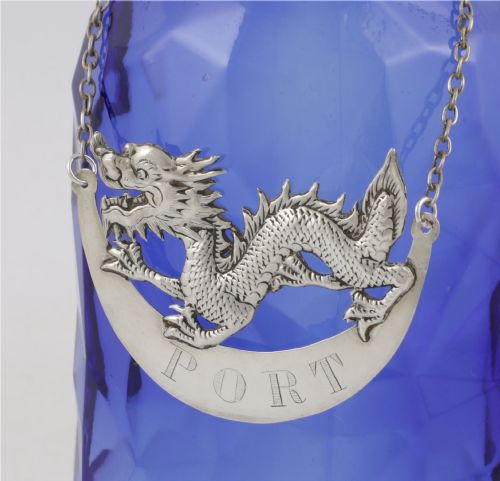
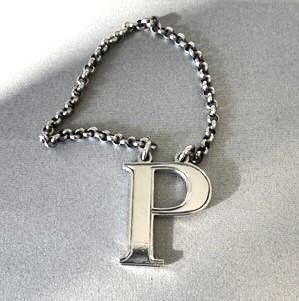
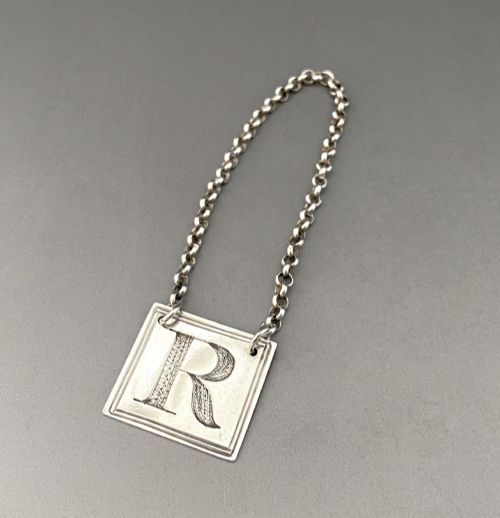
Around the edges of that come other things. Initial-only labels punched with a single letter such as M, S, B or G. A small family of vine-leaf labels with veining and tendrils, some of them gilded. Escutcheons, crescents, Bacchus-and-vine motifs and Prince of Wales feathers. Silver plate and Old Sheffield plate turn up, and Chinese silver twice: dragon-form bottle tags and a Hong Kong export set.
The dealers' own dating runs from 1750 to 1960. Many date only to a period rather than a year, which is why '1800s', '19th Century' and '18th Century' appear as buckets. The form kept being made and marked well into the twentieth century: enamelled labels of the 1950s, a Coronation set, gilt vine leaves hallmarked 1968. A handful of listings are not labels at all, but silver-mounted whisky noggins, tots, jugs and decanters sold with a label attached.

Where The Range Sits
A name does most of the work. Labels whose titles carry a silversmith sit noticeably higher in the sampled range than the plain 'Georgian Silver Decanter Label', and the makers list here is empty, so the anonymous label is the ordinary case. Hallmarked silver is stated as a selling point too, with 'solid' in twenty-seven titles and 'sterling' in nineteen, while the silver-plate and Old Sheffield plate entries sit at the very bottom.
Then the assay town. London is named most often, seventeen titles, and Birmingham is routine alongside it. York, Exeter, Edinburgh and early Sheffield are the ones dealers single out, and a single Scottish provincial label marked at Peterhead heads the whole sampled range.
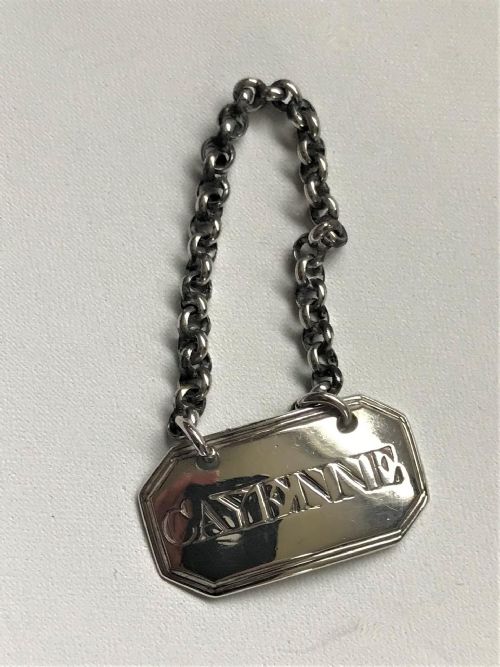
The drink itself separates one label from the next. Sherry, Brandy and Port are the everyday names and cluster low. One-off titles such as Bucellas, Moselle, Teneriffe, Shrub, Cayenne, Orange, Marsala and Amontillado sit higher. Sets and matched pairs occupy the upper part of the range, as do the cast and modelled forms: vine leaf, escutcheon, gilt, where plain rectangles are described in fewer words.
Antique Silver Decanter Labels Retail Price Guide 2026
Typical UK retail prices for silver decanter labels, calculated from the Sellingantiques database of over a million retail prices indexed since 2003. This retail price guide relies exclusively on Sellingantiques data; no external sources or auction records are used, so the figures do not describe the wider market.
Dealers on Sellingantiques date these labels anywhere from 1750 to 1960, so enamelled 1950s work sits in the same archive as Georgian silver.
The Antique Silver Decanter Labels Glossary
- Bottle ticket
- One of three names for the same object, alongside decanter label and wine label. All three are used across these titles, and none of them means anything different.
- Escutcheon
- A shield-shaped label outline, named in several titles and one of the recurring cast forms rather than a plain plaque.
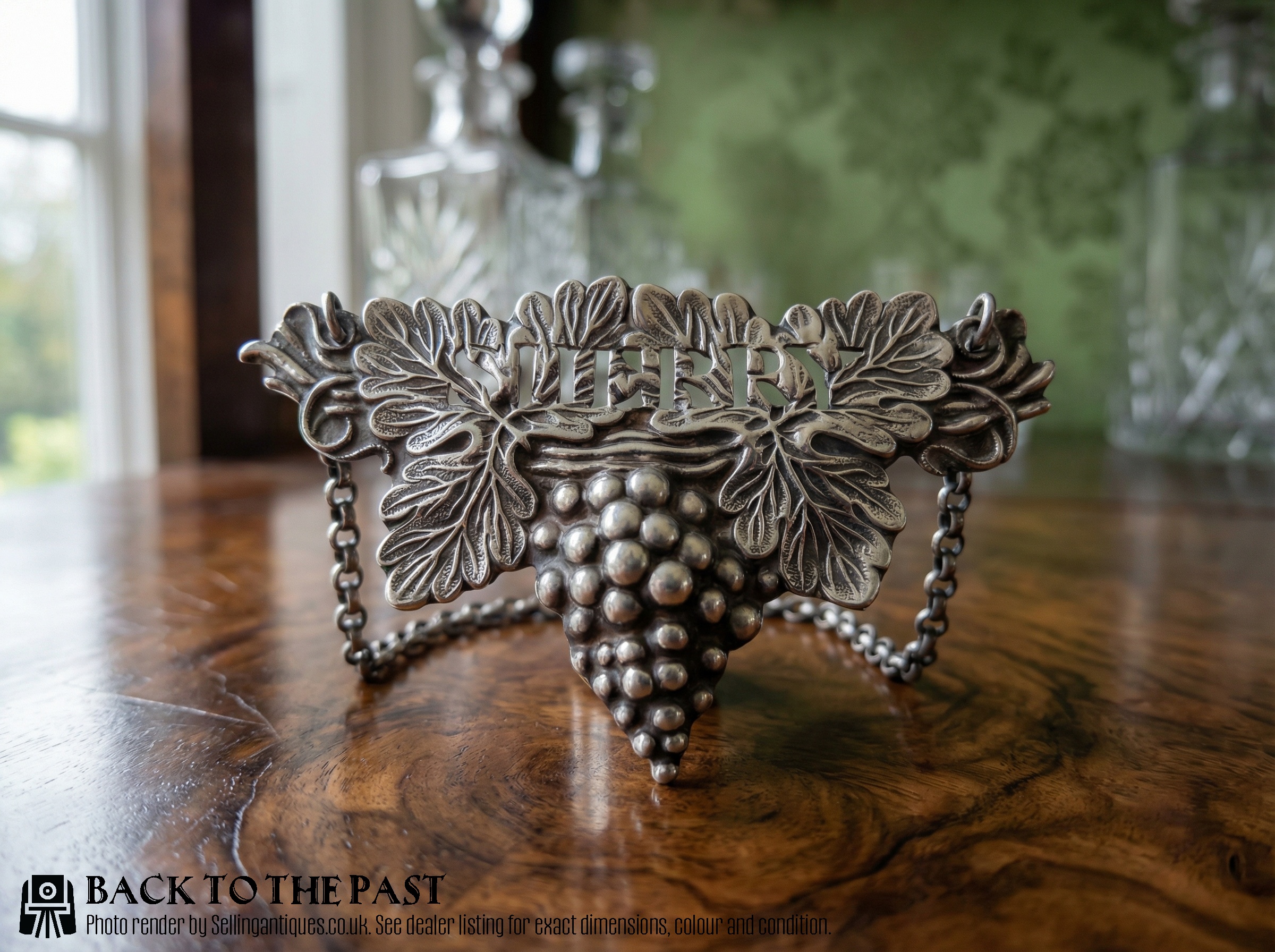
- Vine leaf
- A leaf-shaped label with veining and tendrils. The exact phrase appears in nine titles, and some of these are silver gilt.
- Sterling, solid
- Dealer shorthand for hallmarked silver, and stated as a point in favour: 'solid' in twenty-seven titles, 'sterling' in nineteen.
- Duty dodge
- A piece carrying an older hallmark moved in from elsewhere to sidestep duty. One Georgian claret label in this archive is described that way.
- Hollands
- The old name for Dutch-style gin, punched on labels the way Bucellas, Moselle, Teneriffe and Shrub are: period drink names that surface once each.
Antique Silver Decanter Labels: Frequently Asked Questions
How many come up for sale each year?
Thirty-nine dealers have listed silver decanter labels on Sellingantiques, and about twenty-three come to market in a year.
The archive runs to two hundred and four listings, which makes this a steady trickle rather than a category you sift through in bulk.
Which drink names appear most often?
Sherry leads, in thirty-two titles. Brandy, port, whisky, claret, rum, gin and madeira follow in that order.
Behind them sit names that surface only once each: Bucellas, Moselle, Teneriffe, Shrub, Cayenne, Orange, Marsala, Amontillado, Champagne and Hollands. Those one-offs are the ones dealers flag.
Are labels sold singly or in sets?
Singly, for the most part. The plural 'labels' occurs in only twenty-three of two hundred and four titles.
Where sets do appear they run to three, four or five, with the largest group recorded being a set of five. Matched pairs turn up as well, and both sets and pairs sit in the upper part of the sampled range.
What period do these labels date from?
The dealers' own dating spans 1750 to 1960. Georgian is the largest group at sixty-seven listings, Victorian next at forty-one, with Edwardian and Regency behind.
Only fifty-five listings carry a clean year. The rest are given as Georgian, Victorian, '1800s' or '19th Century', because many dealers date to a period rather than a date.
Decade tags are thin: a few from the 1850s and 1860s, a group of six from the 1950s.
Were decanter labels still made after the Georgian era?
Yes. The form carried on long past the Georgian period and well into the twentieth century.
This archive holds enamelled labels of the 1950s, a Coronation set, and gilt vine leaves hallmarked 1968.
Do any non-British labels turn up?
Chinese silver appears twice: dragon-form bottle tags of about 1890 and a Hong Kong export set of about 1920. Those are the only non-British origins recorded.
Everything else is English or Scottish hallmarked work, with London named most often as the assay town and York, Exeter, Chester, Sheffield, Edinburgh and one Peterhead provincial piece also present.