

Antique Silver Condiments
Small silver and plated wares for the table - mustard pots, pepper pots, open salts, cruet frames and the spoons that go with them - made to hold the seasonings at each place setting.
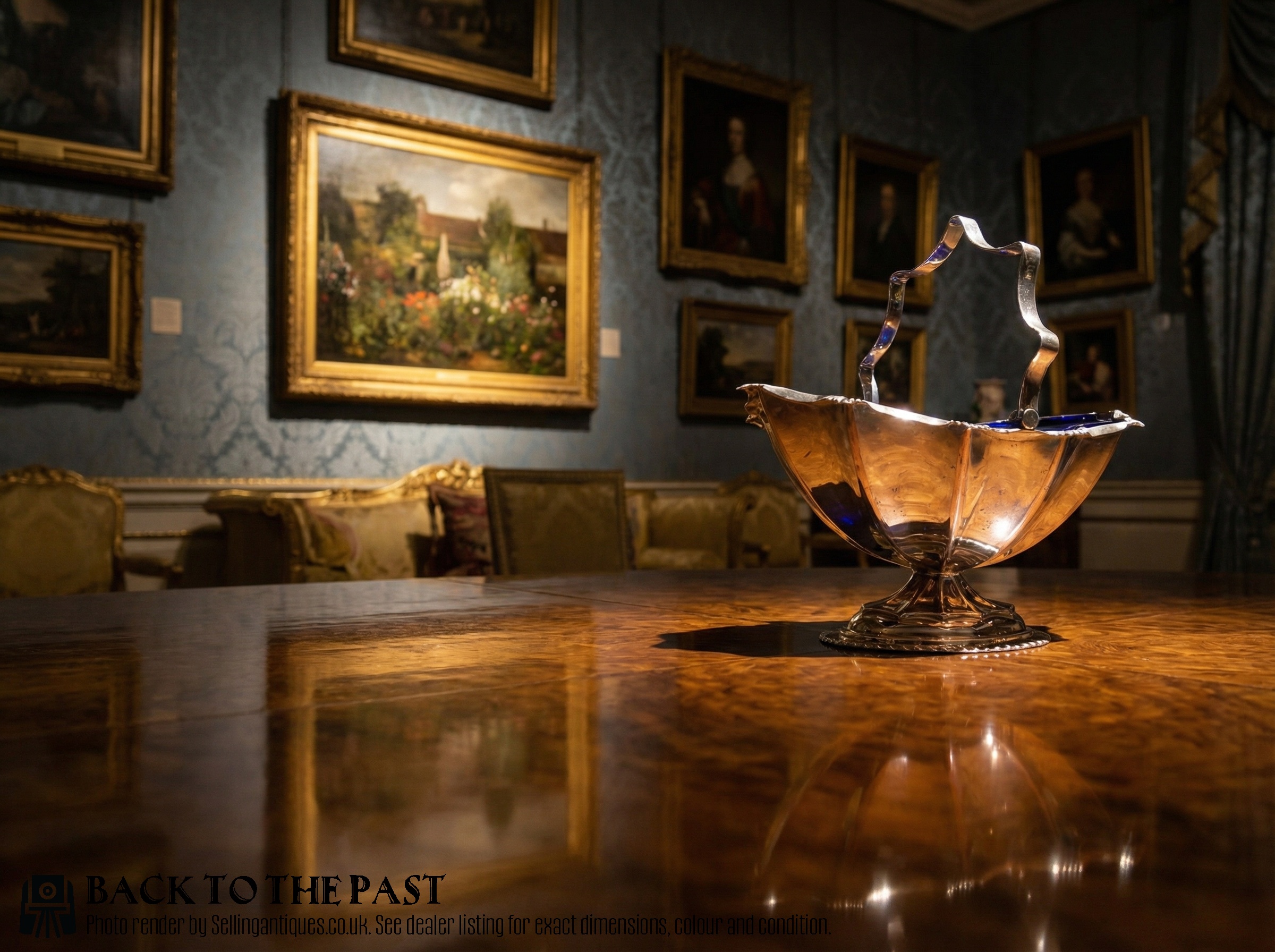
Antique Silver Condiments
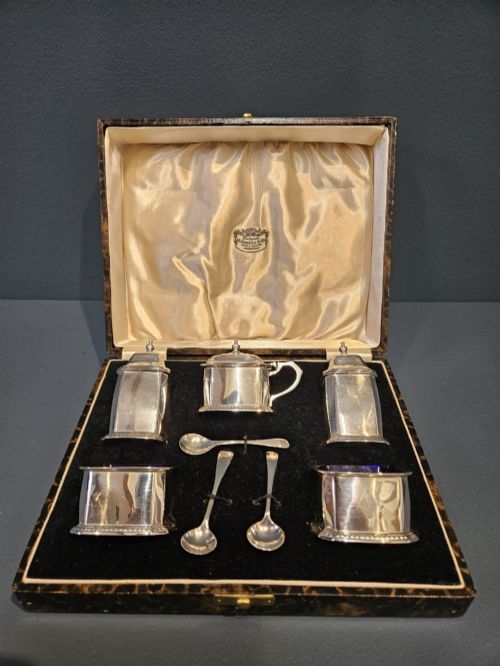
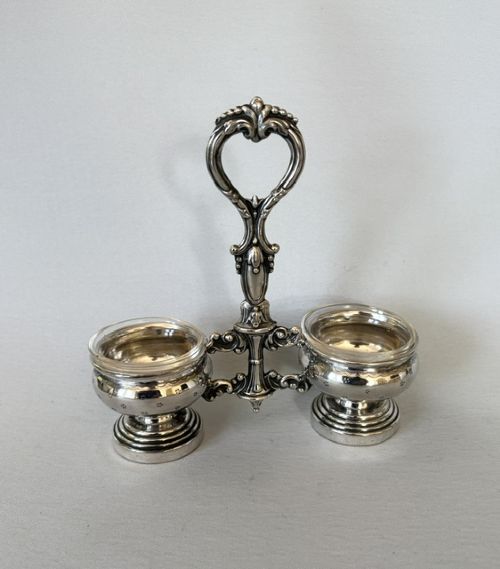
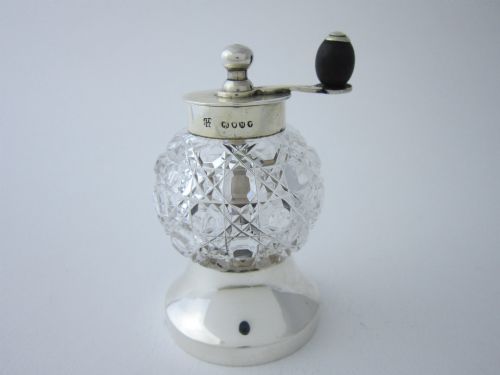
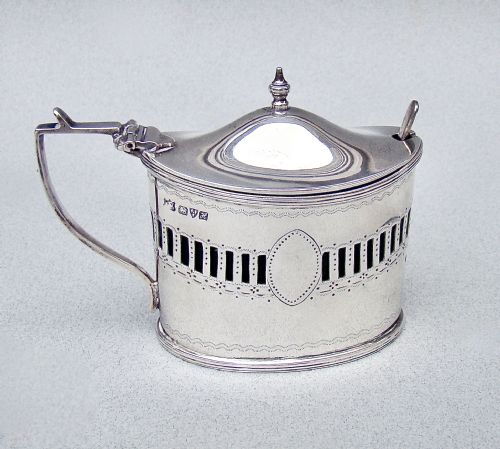
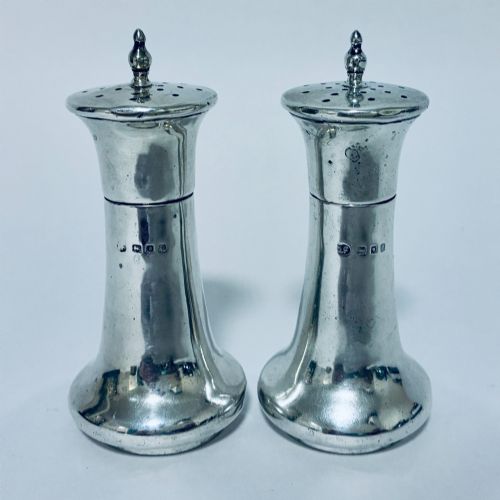
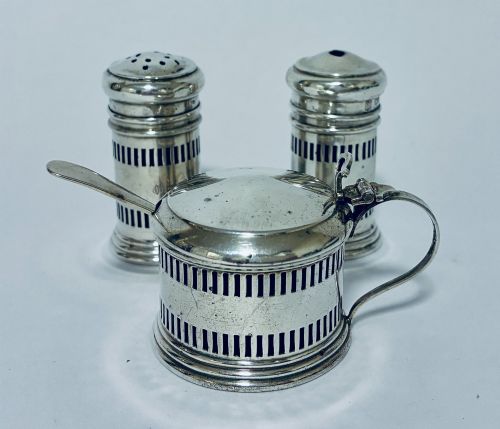
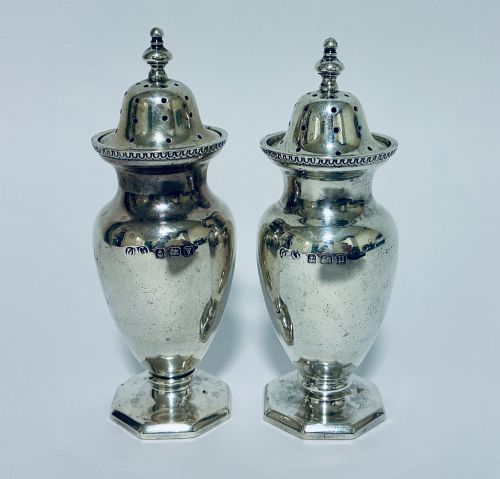
The heading covers the small vessels that carried salt, pepper, mustard and bottled sauces to the table: mustard pots with hinged lids and spoon slots, pierced-top pepper pots and pepperettes, open salts and salt cellars, cruet stands with their bottles and casters, and the shovels, ladles and spoons that served from them.
English-hallmarked sterling dominates the listings, with a smaller plated stream running alongside it. The single form you're most likely to meet is a Victorian or early 20th-century sterling mustard pot, pepper pot or pair of salts, often with a matching spoon and sometimes a glass liner. Victorian leads the period labels; Edwardian, the 1900s to 1930s and Georgian all follow behind it.
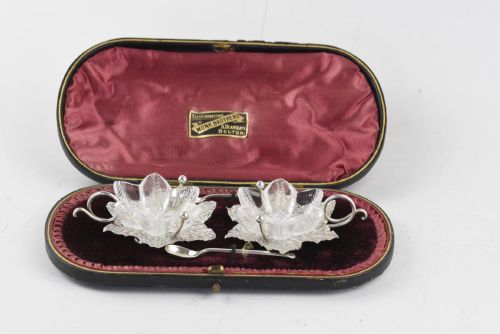
Separate vessels for each condiment developed as individual place settings spread, with open salts and lidded mustard pots established by the 18th century and multi-bottle frames arriving as table sauces multiplied. Pierced pots and open salts were given glass liners because salt and mustard attack silver, and coloured liners in cobalt, cranberry, ruby and amethyst all turn up.
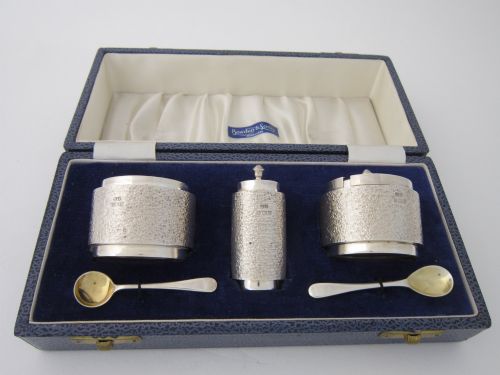
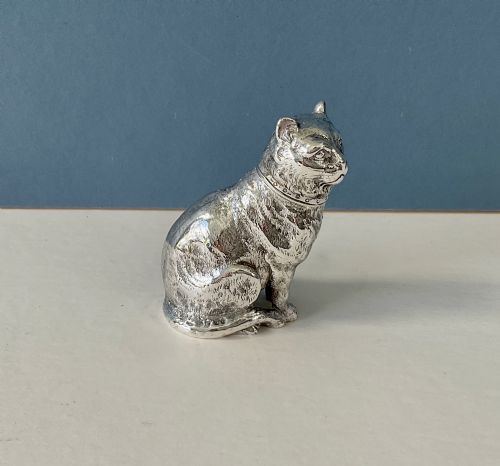
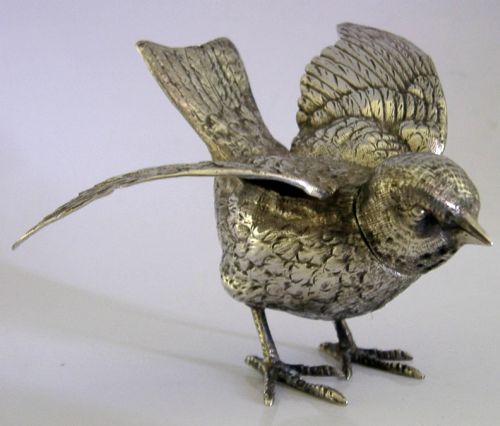
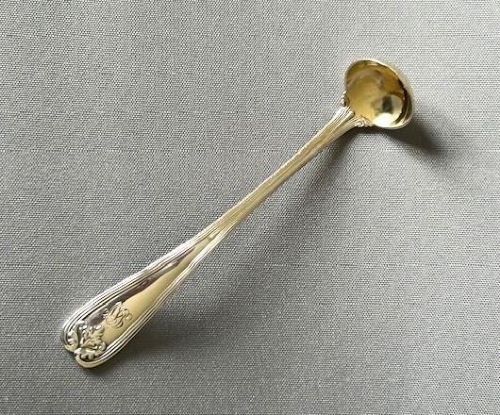
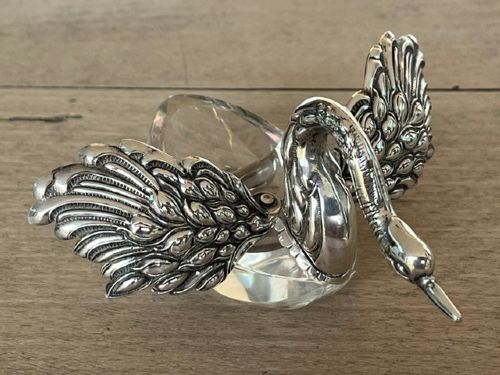
Sets are as common as singles. Cruet sets and boxed condiment sets, some in fitted cases, make up around a quarter of the listings, and pairs run right through the category. Condiment spoons, ladles, shovels and spades account for roughly one in seven. Novelty and figural pieces - owls, chicks, a fox, a squirrel, dragons, pigs, an elephant cart, a motor car - are a small stream but a conspicuous one.
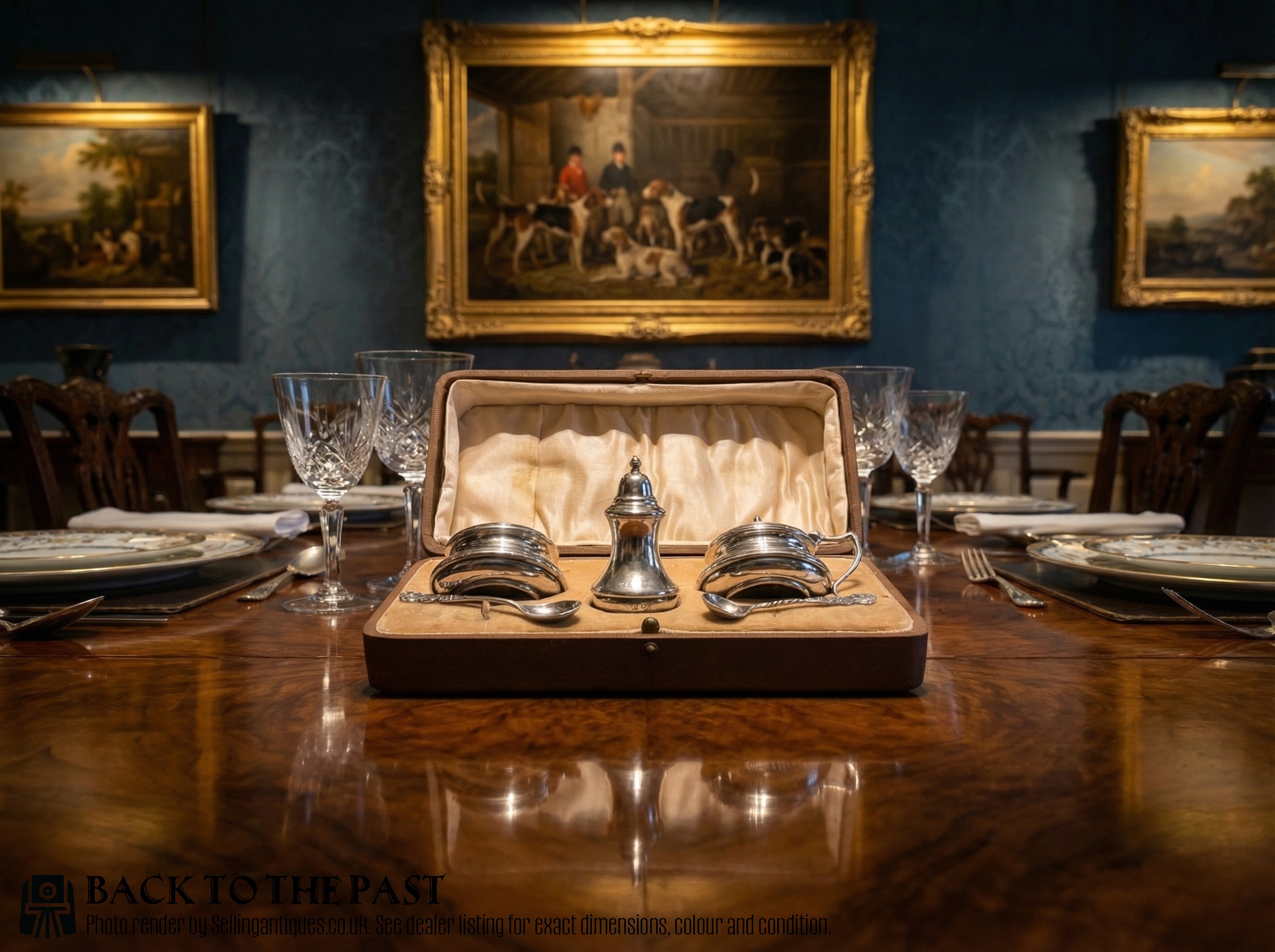
Where Value Sits
Modelling separates the top of the range from the rest. Cast figural novelties - birds, animals, the occasional vehicle - sit well above the plain drum mustard or the single condiment spoon, even though they're a small part of what's listed. A plain pot is judged on weight and form; a modelled one is judged on the modelling.
Completeness is the other lever. Titles that quote a piece count, or say fitted case or boxed, rank above loose single pots, and a cruet frame described as complete with its bottles and casters is a different proposition from an empty stand. Original matching spoons and original glass liners get named in titles for the same reason.
Metal and mass do the rest. Sterling and 'solid' are used as selling points and cluster above the plated pieces, which run through the lower and middle ground. A minority of listings quote gram weights or call a piece large or heavy, and those sit higher than the light, small work.
Antique Silver Condiments Retail Price Guide 2026
Typical UK retail prices for silver condiments, calculated from the Sellingantiques database of over a million retail prices indexed since 2003. This retail price guide relies exclusively on Sellingantiques data; no external sources or auction records are used, so the figures do not describe the wider market.
The heaviest piece with a stated weight to pass through Sellingantiques is a complete 1761 Warwick cruet frame, with its bottles and casters, at 830g.

The Antique Silver Condiments Glossary
- Cruet set
- A matched group of condiment vessels, usually on a stand or frame. The word appears in dozens of listings, sometimes with a piece count, sometimes cased.
- Mustard pot
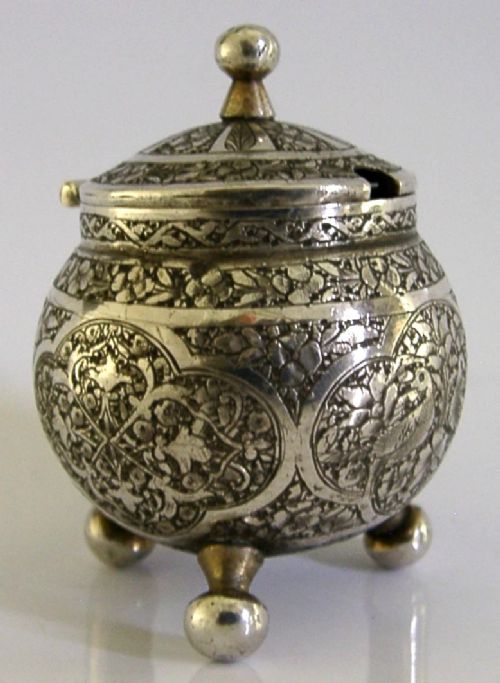
- Lidded pot, commonly with a hinged cover, thumbpiece and a slot in the rim for the spoon. The most frequent single form in the category.
- Pepper pot / pepperette
- Pierced-top caster for pepper. Both words are used in titles, and the smaller shaker forms take the second.
- Salt cellar / open salt
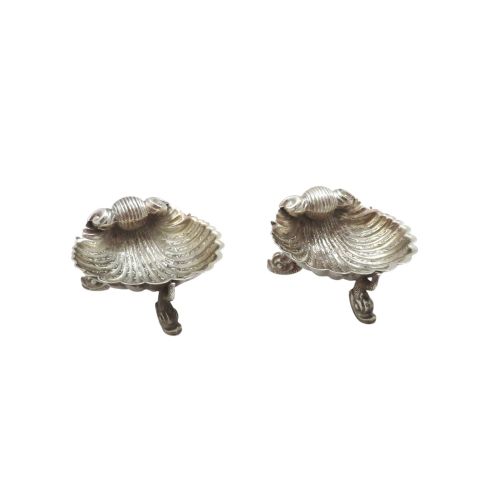
- Small open bowl for salt, frequently sold as a pair. Often lined, since salt corrodes silver.
- Liner
- Glass or gilt insert sitting inside a pierced pot or open salt. Blue, cobalt, cranberry, ruby and amethyst all appear, and cut glass is named in its own right.
- Warwick cruet
- An 18th-century frame with scroll supports carrying casters and bottles. One turns up in the listings, complete with its fittings.
Antique Silver Condiments: Frequently Asked Questions
What is a cayenne spoon?
A long-handled condiment spoon, named for the spice it served. It sits in the same family as mustard spoons, condiment shovels and spades.
Spoons and ladles of this sort make up roughly one in seven of the listings, sometimes on their own and sometimes as the fitting that came with a pot.
Which assay towns show up most?
Birmingham and London are named in equal measure and lead the field, with Sheffield, Chester and Glasgow recurring.
Provincial marks are the exception. Exeter, Newcastle and Arbroath each appear once, along with one piece described only as Scottish Provincial.
How old are these pieces?
The dated listings run from 1750 to 1960. Victorian is the largest single group, followed by a broad early-to-mid 20th-century band and then Georgian.
Many entries carry a period label rather than an assay year, so you'll see '19th Century', 'Regency' or 'Georgian' standing in for a date. Some hallmarked work reaches into the 1960s.
The earliest single dates in the listings are a 1738 pair of salts and a 1759 pair of butter shells.
Are non-British condiments common?
No. English sterling dominates, and the plated stream is English too.
Continental, French .950, Norwegian enamel, Dutch .833, German, Spanish, Japanese Meiji and Anglo-Indian Kutch pieces each surface only once or twice.
Why do salts and pepper pots have glass liners?
Salt and mustard corrode silver, so a glass or gilt insert was fitted to keep the contents off the metal. Pierced pots need one to hold anything at all.
Coloured liners are a quiet sub-theme in the listings: cobalt, cranberry, ruby, amethyst and plain blue, with cut glass named in its own set of titles.
What are silver bottle labels doing in this category?
They named the sauce in the bottle. Two 18th-century examples appear in the listings, one reading 'Soy' and one 'Harvey Sauce'.
It's a form that turns up only once in a blue moon under this heading.