
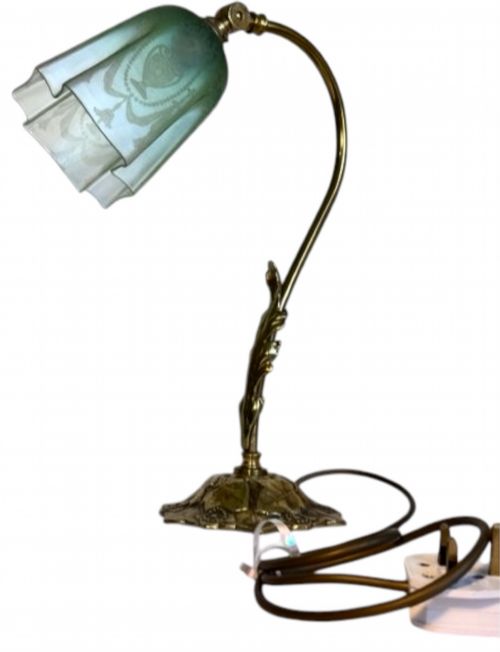


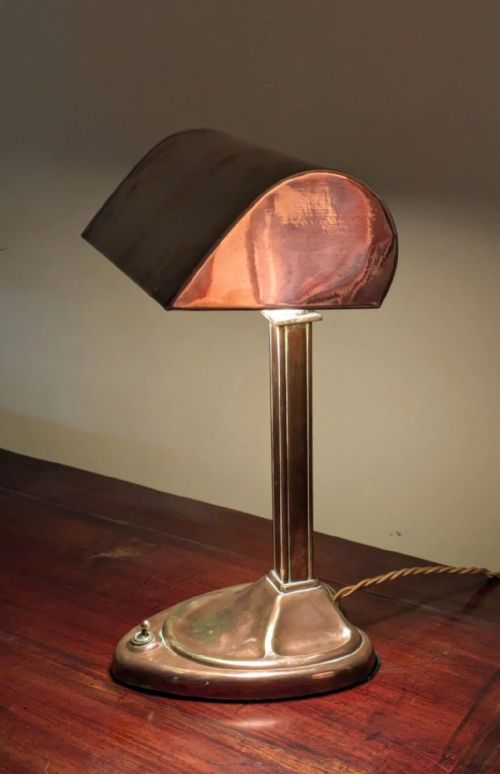


A 2026 Guide by Sellingantiques
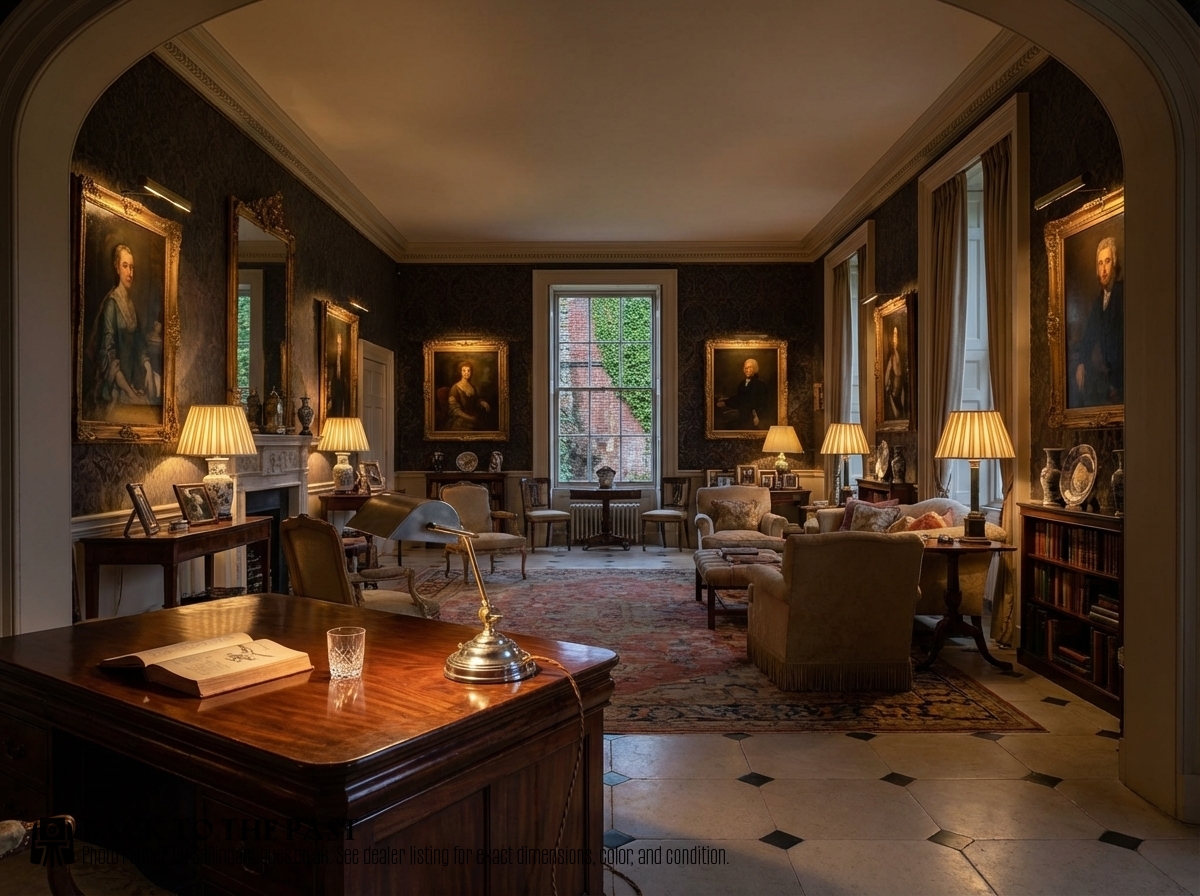
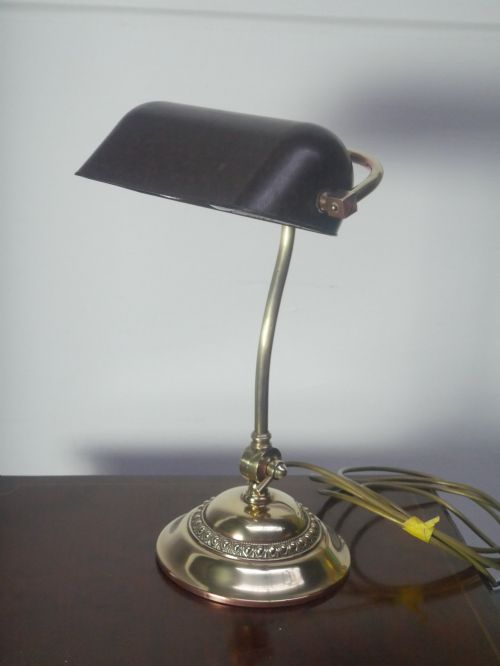
Adjustable Bankers Desk Lamp, 1920
Priced at £795 from Shackladys Antiques
Harrison D. McFaddin filed the original patent for the Emeralite design in 1909.
Banks bought them by the dozen. Financial institutions needed to light long rows of clerks' desks without blinding the staff opposite.
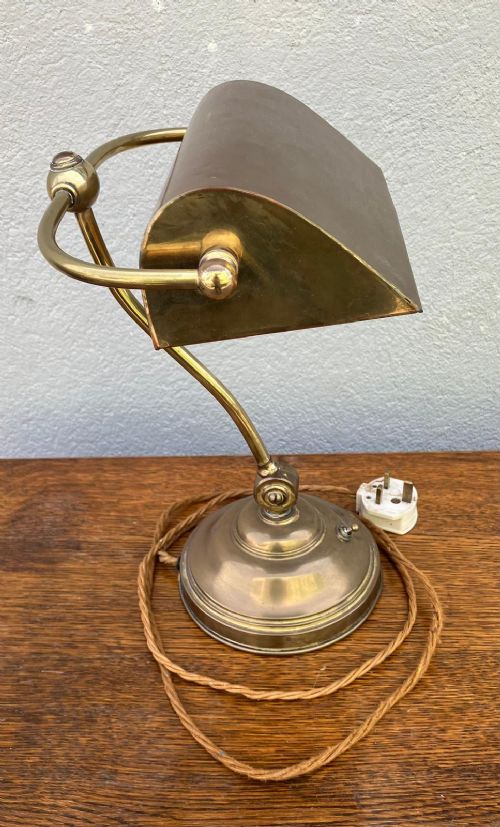
Look at the switch mechanisms. Pull chains often replaced the early turn-key switches as electric lighting became more common.
Production of these heavy brass fixtures dropped off sharply around the Second World War.
Antique bankers lamps eventually found their way into public libraries and university reading rooms.
H.G. McFaddin & Co. sold the famous Emeralite line from 1909 into the 1930s. They ordered shades from the J. Schreiber & Neffen glassworks in Moravia.
Faries Manufacturing Company produced industrial office lighting throughout the early twentieth century. Their brass articulated desk lamps are well documented.
Verdelite was another major competitor. Faries bought them out later on.
The 2026 retail price guide for Antique Bankers Lamps is drawn from a proprietary archive of over 1.1 million retail prices indexed by Sellingantiques since 2003. This guide relies exclusively on their own internal data; no external sources or auction records are used.
Analysing nearly 25 years of UK antique market history alongside current retail values, the data indicates that typical UK retail prices for Antique Bankers Lamps range between £300 and £1,000. Entry-level prices generally fall under £300 and premium examples upwards of £1,000.
Adjustable shade pivots are standard. Loosen a thumbscrew to angle the light exactly where you need it on the desk.
Heavy weighted footings stop the whole assembly from tipping forward.
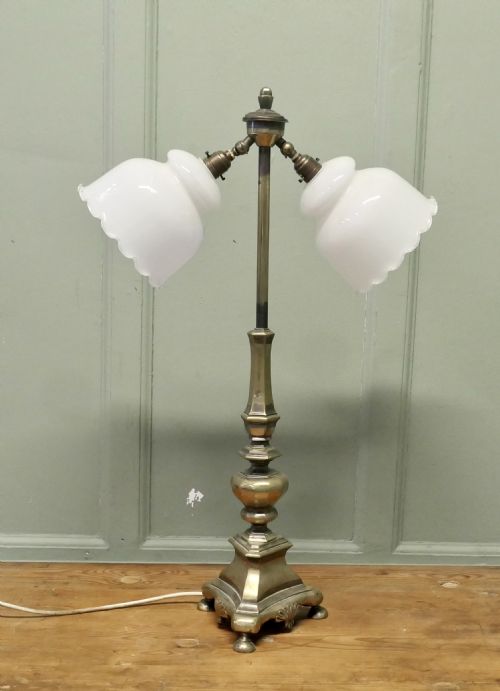
Green glass remains the most common shade colour. Some manufacturers offered amber or white alternatives.
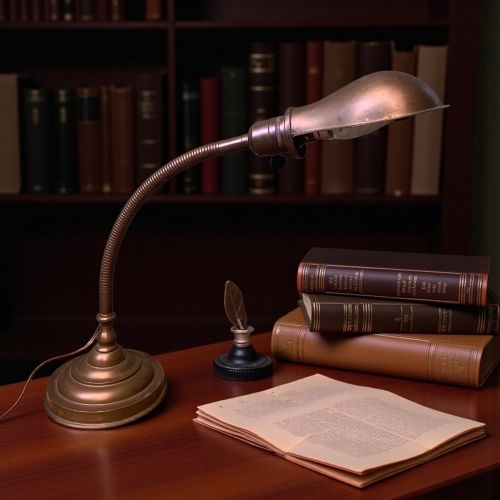
Early bases feature simple spun brass. Later models incorporated cast metal stems with elaborate decorative elements.
Glass shades required skilled mouth-blowing into wooden moulds. The ends were then ground smooth.
Armature designs shifted over time. The earliest clamped the glass from the outside, while later patents used internal spring clips.
"The green shade actually served a medical purpose. Opticians at the time believed the colour reduced eye strain for clerks working long hours."
"Some models feature inkwell slots cast straight into the base. This turned the lamp into a complete desktop workstation."
"You sometimes find a pen rest channel moulded into the front edge of the brass footing."
Based on almost 25 years of Sellingantiques UK antique market data, Antique Bankers Lamps appeared 189 times (out of 1,100,000 antiques) which gives it a rarity score of 96/100.
This score measures scarcity within the Sellingantiques archive only and is not a survey of the entire antiques market, so these statistics may not be indicative of the general availability of Antique Bankers Lamps elsewhere.
Dust the outer glass with a dry, soft cloth. Avoid abrasive chemical sprays. They can leave a cloudy residue on the surface over time.
If the white interior is dirty, wipe it gently using a damp cloth with mild soap. Dry it immediately to stop water dripping into the electrical fittings.
Dealers always recommend rewiring antique lighting. The original cloth or early rubber insulation dries out and crumbles, posing a serious fire risk.
Modern fabric-covered flex is available in period-correct colours like brown or gold. A qualified electrician can thread this through the original brass column and fit a safer modern bulb holder.
Updating the electrics makes the piece usable again. It will not hurt the appeal for buyers who want a functional desk light.
Yes, most antique bankers lamps have an adjustable pivot point. You usually find a knurled brass screw on the side of the shade mount.
Support the glass with one hand while loosening the screw slightly. Tilt the shade to your preferred angle, then tighten the screw back up to lock it in place.
Most dealers prefer to leave the tarnished surface exactly as it is. That dark, uneven patina took a century to develop and tells the history of the object.
Aggressive polishing with metal cleaners strips away this history. It leaves the brass looking harsh and new, which takes away from the antique character.
A light dusting is usually all it needs. If dirt is stuck in the decorative grooves, brush it out softly with a dry paintbrush.
Please note: This Antique Bankers Lamps guide and its associated pricing data are provided for general informational purposes only. It does not constitute formal financial, investment, or appraisal advice and should not be relied upon as the sole basis for any commercial activity, purchasing, or sales decisions. Sellingantiques.co.uk accepts no liability for any actions taken in reliance on this information. Always consult with a qualified professional or independent appraiser.
