
A 2026 Guide by Sellingantiques
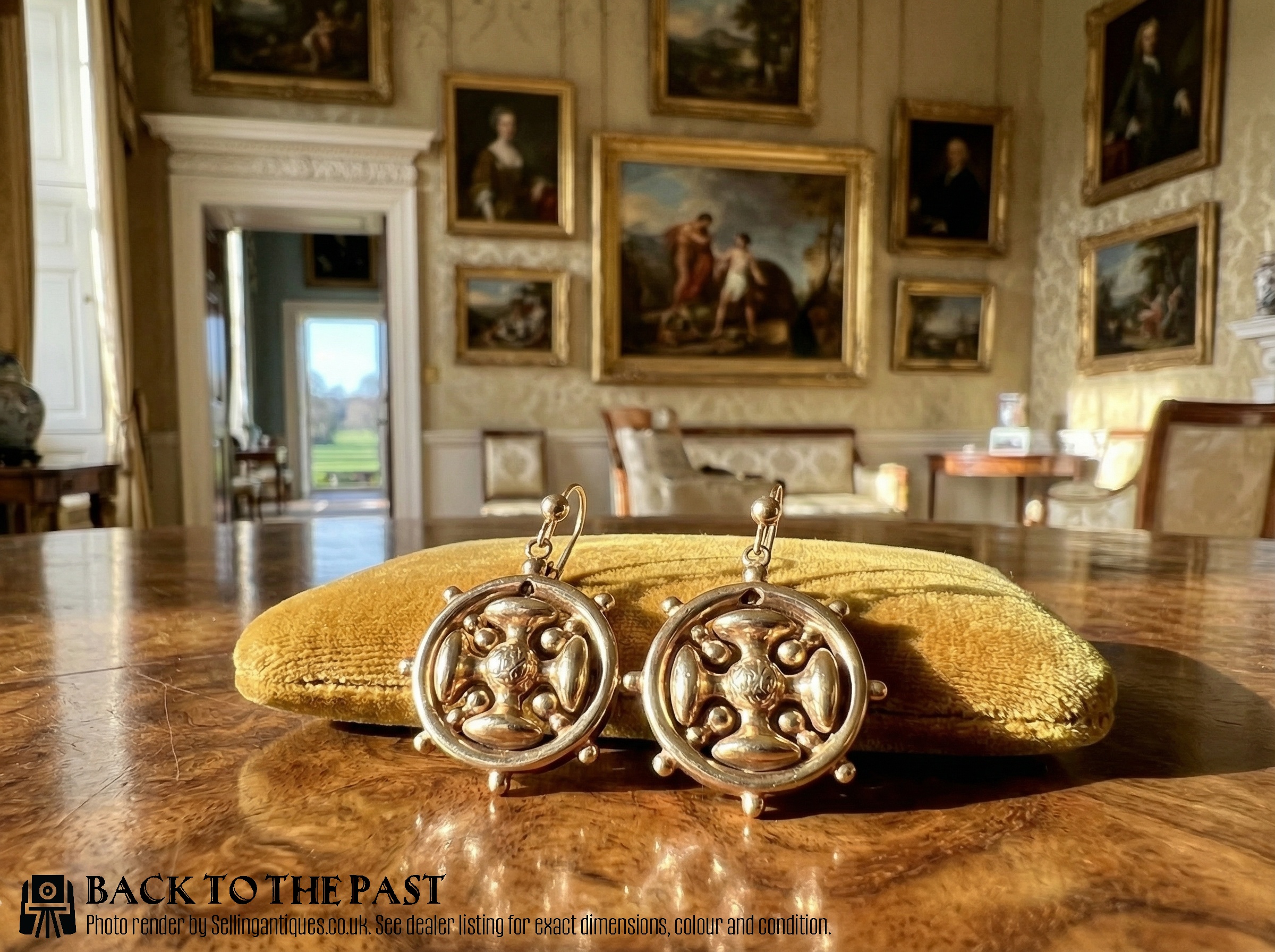
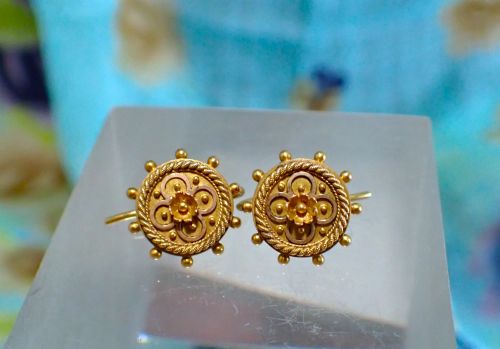
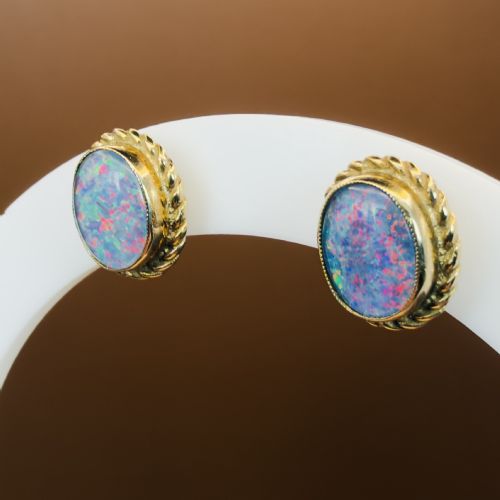
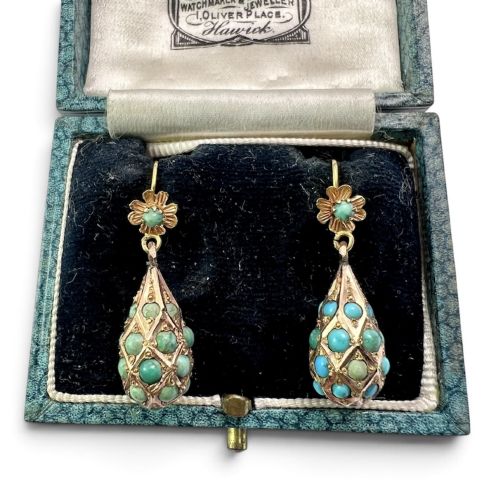
Victorian 9ct Gold Square Cross Wheel Earrings, Victorian
Priced at £465 from The Earring Curator
Styles shifted heavily when hairstyles changed. High Georgian wigs meant long, heavy antique earrings were needed so they'd stand out against powdered hair.
Look at the early nineteenth century. Hair was worn swept up, so day earrings became shorter, often simple cannetille gold work or small pearls.
Pierced ears fell out of favour in some Victorian circles. Screw-back fittings emerged later to hold unpierced lobes without the pinch of earlier clips.
Mourning customs dictated specific materials. Jet, vulcanite and black enamel appeared frequently in antique earrings after the death of Prince Albert.
Roman archaeological discoveries sparked a revival. Mid-Victorian jewellers copied ancient Etruscan gold granulation techniques for daytime wear.
Castellani dominated the nineteenth-century archaeological revival. They produced intricate gold antique earrings featuring micro-mosaic work and ancient Roman motifs.
Look for Carlo Giuliano pieces in late Victorian London. His workshop turned out enamel and gem-set pendant earrings blending Renaissance and neo-classical themes.
Regional trades produced most surviving examples. Unmarked Birmingham gold pieces make up a large portion of the commercial Victorian earrings you'll handle today.
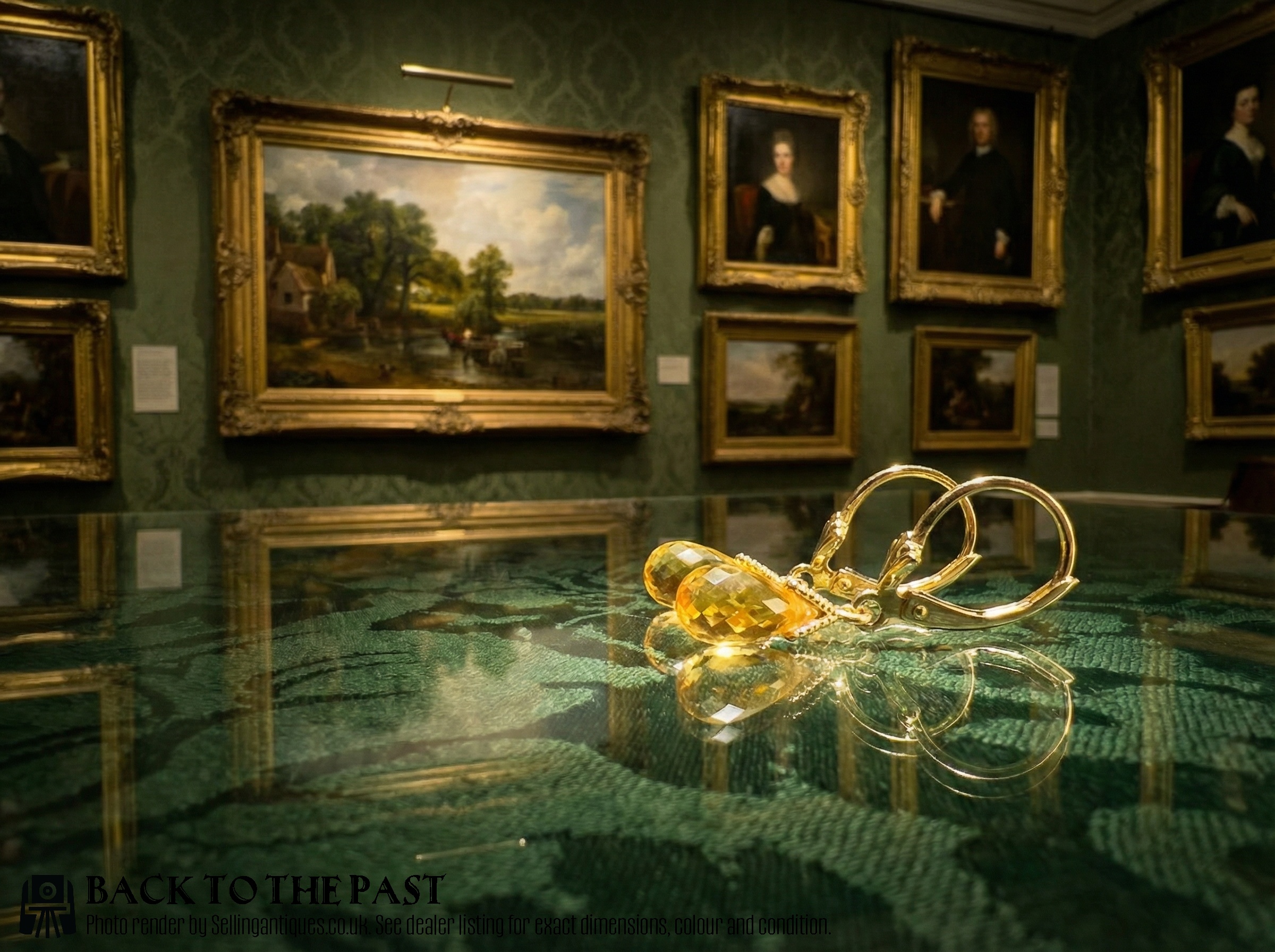
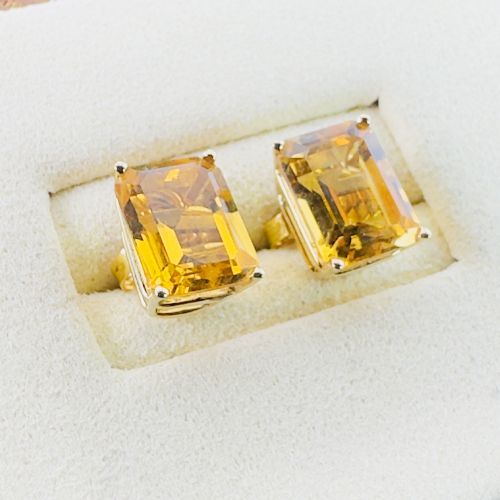
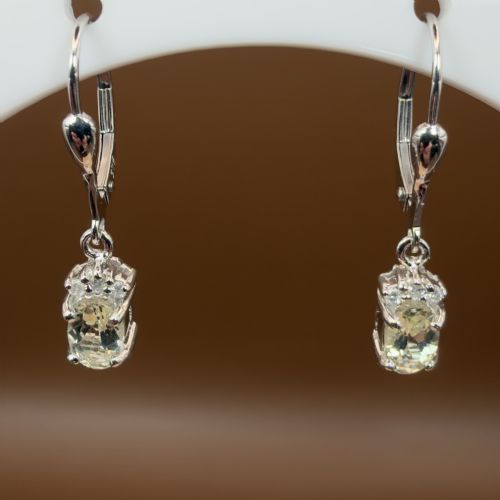
9ct Yellow Gold Hinged Lever Backs Faceted Citrine Drop Earrings, 1950
Priced at £285 from AgAu Jewellery
The 2026 retail price guide for Antique Earrings is drawn from a proprietary archive of over 1.1 million retail prices indexed by Sellingantiques since 2003. This guide relies exclusively on their own internal data; no external sources or auction records are used.
Analysing nearly 25 years of UK antique market history alongside current retail values, the data indicates that typical UK retail prices for Antique Earrings range between £300 and £3,000. Entry-level prices generally fall under £300 and premium examples upwards of £3,000.
Examine the hook clasps. Shepherd hooks are common on Victorian pieces, while earlier Georgian antique earrings sometimes have back-to-front closures threading from behind the lobe.
Articulated drops allow movement. A girandole style features a central bow or knot suspending three separate drops that catch the light when the wearer turns.
Closed back settings hide the reverse of the gemstone. Foil was placed behind the stone to reflect light outwards.
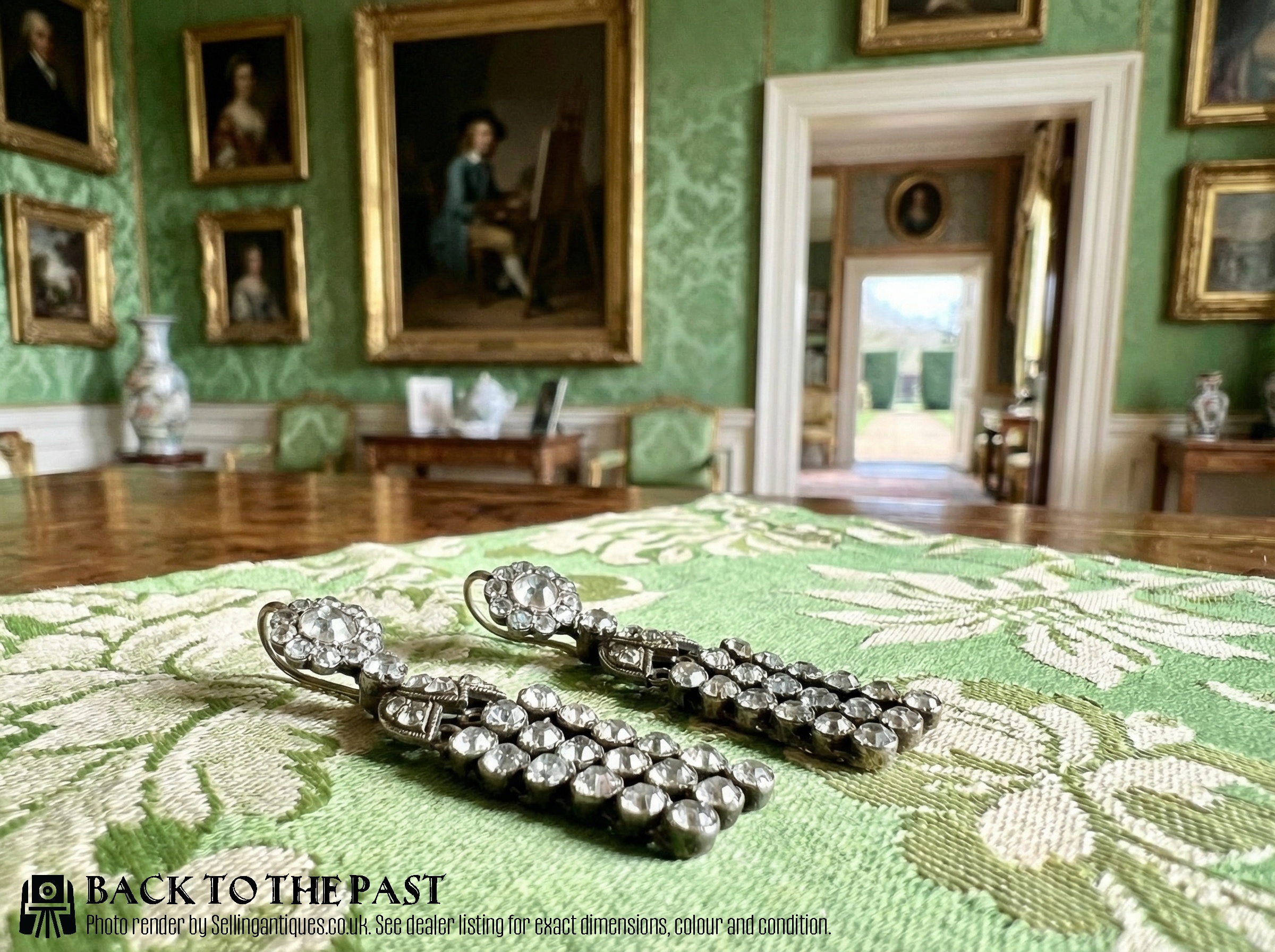
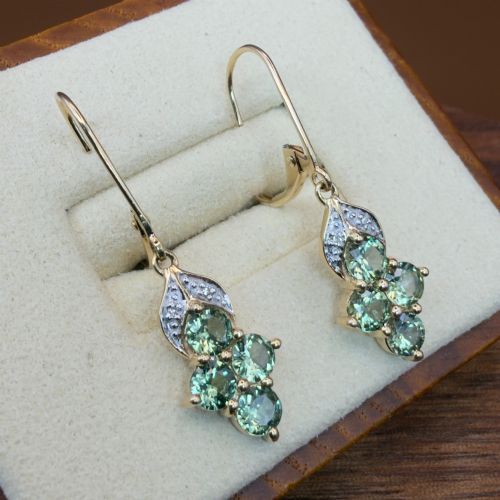
Victorian 9ct Gold Silver Paste Tassel Drop Earrings, Victorian
Priced at £485 from The Earring Curator
Early stones were cut by hand. Mine cut diamonds in Georgian antique earrings have irregular facets and deep pavilions compared to modern machine-cut gems.
Cannetille work involved twisting thin gold wires into filigree patterns. It allowed craftsmen to create large, showy pieces using very little precious metal.
Stamped gold became standard during the Industrial Revolution. Steel dies pressed thin gold sheets into hollow, lightweight drop earrings mass-produced in Birmingham.
"Day and night designs offered great versatility. The long pendant drops unhooked from the surmounts, leaving simple studs suitable for daytime activities."
"Hair-work pieces celebrated family bonds. Finely woven human hair was set under glass in gold mounts as a token of affection for the living."
"Natural pearls were once rarer than diamonds. Finding a matched pair of saltwater pearls for a set of antique earrings took years of sorting."
Based on almost 25 years of Sellingantiques UK antique market data, Antique Earrings appeared 4347 times (out of 1,100,000 antiques) which gives it a rarity score of 42/100.
This score measures scarcity within the Sellingantiques archive only and is not a survey of the entire antiques market, so these statistics may not be indicative of the general availability of Antique Earrings elsewhere.
Yes, finding replaced hooks on Victorian earrings is standard. The original wires were often too thick for modern piercings or wore thin over decades of use.
Jewellers frequently swapped them for standard modern wires.
As long as the solder work is neat and the gold colour matches the surmount, it rarely bothers collectors. It is accepted maintenance rather than damage.
Not at all. Mid-Victorian jewellers mastered the art of stamping thin sheets of gold into hollow forms. This made large, dramatic earrings comfortable enough to wear all day without pulling the earlobe down.
These hollow construction pieces are common and authentic to the period. They show how makers adapted to the demand for bulky styles while keeping the weight manageable.
Pinchbeck is an eighteenth-century alloy of copper and zinc. It mimics the look and weight of gold far better than standard brass.
Georgian makers used it widely for travel jewellery.
It allowed people to wear elaborate styles without risking their expensive gold pieces.
The grey metal is silver. Before the invention of the oxyhydrogen torch in the early twentieth century, jewellers could not melt platinum easily.
Silver was the best white metal available for setting diamonds. Makers knew it would tarnish over time, but they used it anyway because the dark oxidised silver made the diamonds look whiter and brighter by contrast.
The silver front was usually backed with gold to prevent the tarnish from rubbing off onto the skin or clothing.
Please note: This Antique Earrings guide and its associated pricing data are provided for general informational purposes only. It does not constitute formal financial, investment, or appraisal advice and should not be relied upon as the sole basis for any commercial activity, purchasing, or sales decisions. Sellingantiques.co.uk accepts no liability for any actions taken in reliance on this information. Always consult with a qualified professional or independent appraiser.
