


A 2026 Guide by Sellingantiques
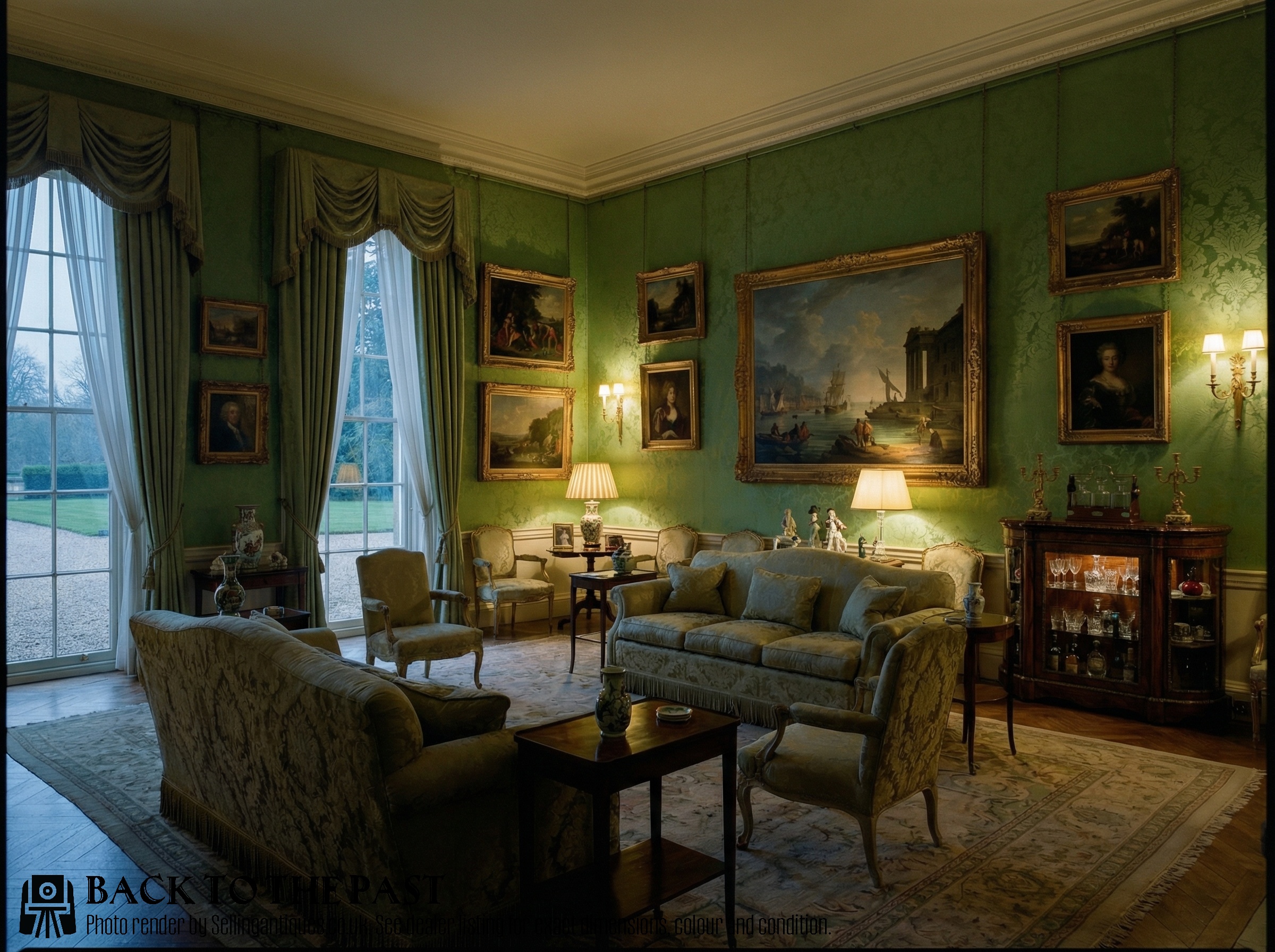
Edwardian Three Decanter Tantalus, Edwardian
Priced at £340 from Frank Craig Antiques
Early vessels evolved from simple serving bottles used to transport wine from the cellar.
By the eighteenth century, clear flint glass arrived. This changed the presentation of dinner tables across the country.
Look at the changing vessel shapes over the decades. Broad and flat bases replaced earlier rounded forms during the Georgian period.
Victorian tastes favoured heavier pieces. You often see elaborate cutting patterns replacing the lighter, engraved designs of earlier antique decanters.
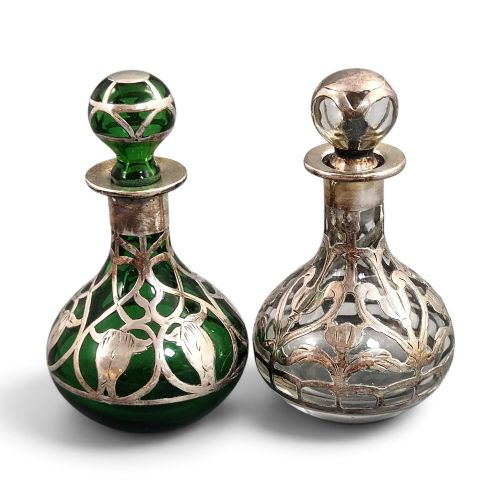
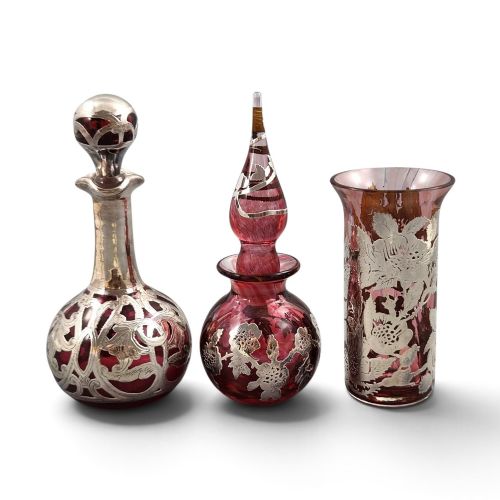
Coloured glass gained favour for fortified wines later in the nineteenth century.
Apsley Pellatt operated the Falcon Glass Works in the early nineteenth century. He is documented producing cut vessels and cameo encrustations.
Waterford turned out heavy cut glass in Ireland between the late eighteenth and mid-nineteenth centuries. Their pieces often feature deep diamond cutting.
Stevens & Williams worked in Stourbridge during the late nineteenth century. They produced intricate cameo glass and coloured antique decanters.
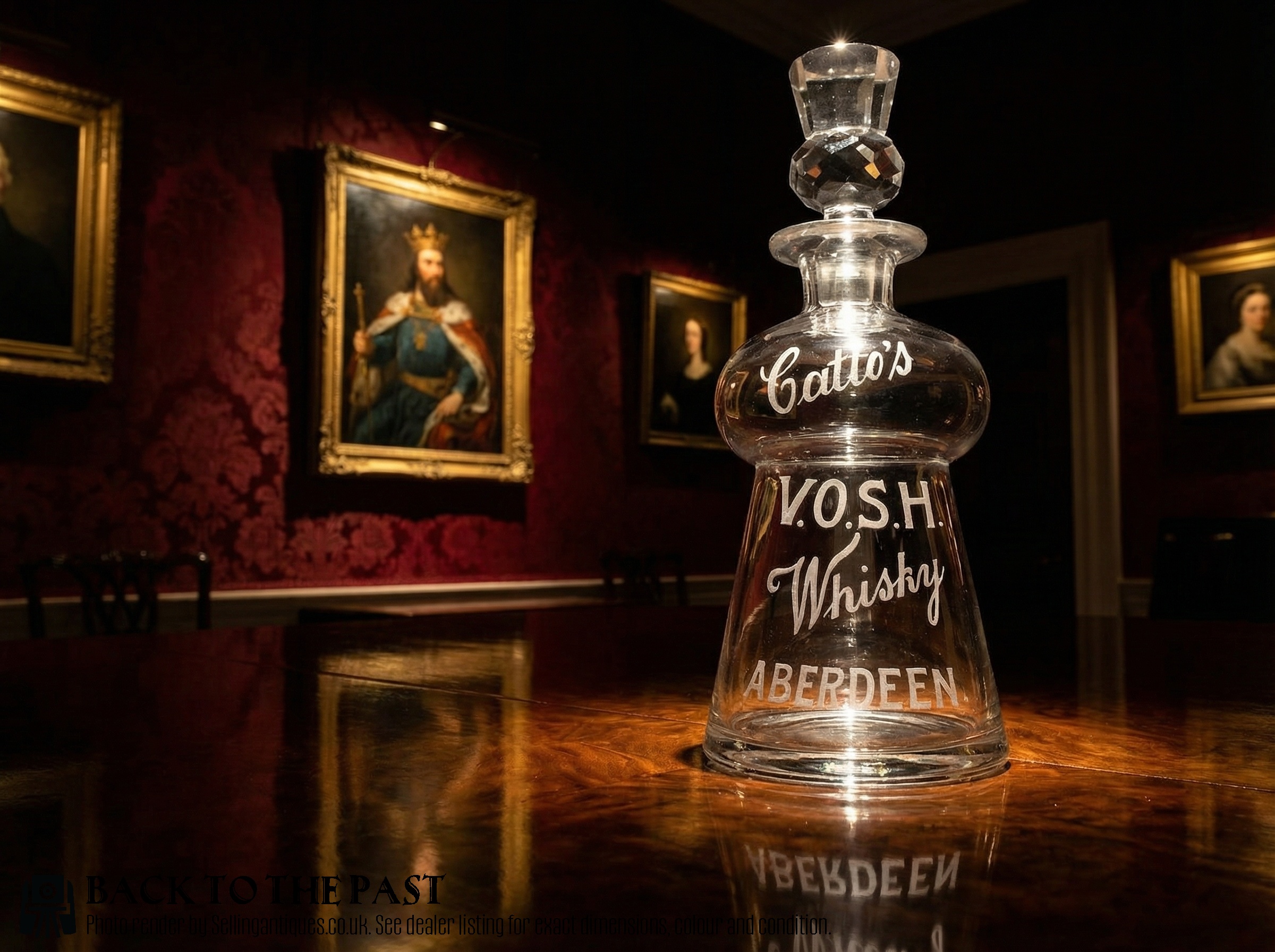
Rare Enamelled Aberdeen 19th Century Scottish "Cattos Vosh Whisky" Glass Decanter C1890, Victorian
Priced at £420 from Exhibit Antiques
The 2026 retail price guide for Antique Decanters is drawn from a proprietary archive of over 1.1 million retail prices indexed by Sellingantiques since 2003. This guide relies exclusively on their own internal data; no external sources or auction records are used.
Analysing nearly 25 years of UK antique market history alongside current retail values, the data indicates that typical UK retail prices for Antique Decanters range between £200 and £900. Entry-level prices generally fall under £200 and premium examples upwards of £900.
Stoppers need a tight grind. The friction fit between the peg and the inside of the neck forms a seal.
Neck rings are applied bands of glass. They provide a textured grip for pouring heavy antique decanters.
A polished pontil mark usually sits on the underside. This smooth depression marks where the glassblower detached the piece from the iron rod.
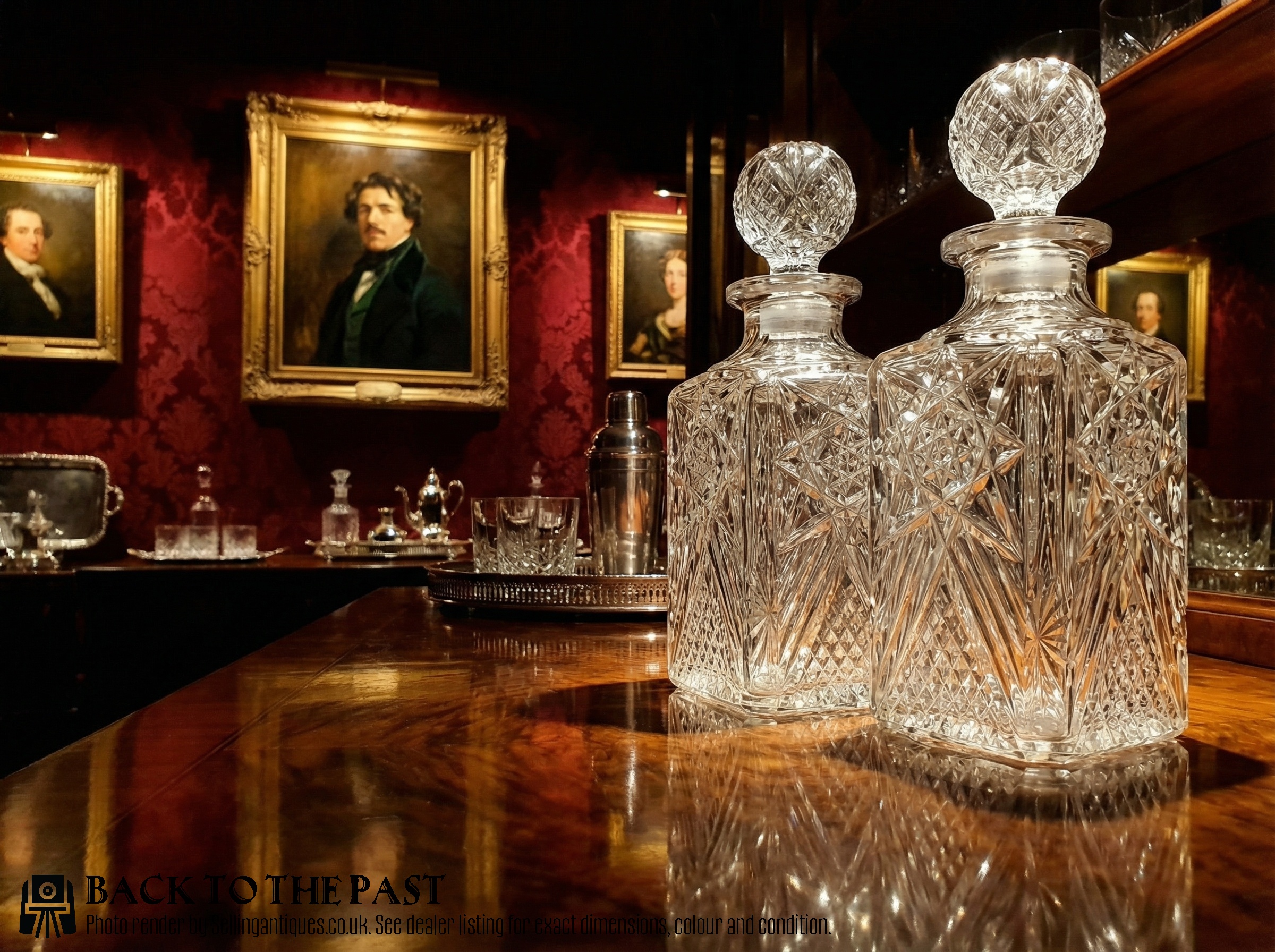
Pair of Edwardian Cut Glass Spirit Decanters – Circa 1905, Edwardian
Priced at £185 from Kingsdown Antiques
Early examples were free-blown by eye. This hand-worked method meant no two antique decanters were ever identical in profile.
Mould-blowing later allowed workshops to standardise shapes. The glass was expanded into a metal or wooden mould to set the basic pattern.
Cutting relied on abrasive wheels. Water and sand ground away the glass surface, followed by a polishing wheel to restore the gloss.
"Many were originally supplied in fitted wooden boxes. The wooden cases often featured brass handles and velvet linings."
"Look closely at the base of a stopper. Makers sometimes engraved a tiny number matching a number on the base to keep sets paired."
"Ship's decanters feature exceptionally broad bases. This geometric profile remains a familiar shape among maritime antiques."
Based on almost 25 years of Sellingantiques UK antique market data, Antique Decanters appeared 5112 times (out of 1,100,000 antiques) which gives it a rarity score of 36/100.
This score measures scarcity within the Sellingantiques archive only and is not a survey of the entire antiques market, so these statistics may not be indicative of the general availability of Antique Decanters elsewhere.
Storing spirits long-term in lead glass does carry risks. The lead can slowly leach into the liquid over several months.
Most people use them just for the duration of a dinner party. Pouring wine for an evening and washing the vessel afterwards poses no real issue.
That suggests a married piece. Over the years, original stoppers roll off tables or get broken, and owners find a replacement from another vessel that looks close enough.
A proper match sits flush and engages with the ground interior of the neck. If it wobbles or sticks up too high, it belongs to a different decanter.
That cloudiness is often a chemical change to the glass surface. It happens when liquids sit inside for years.
You can try swirling warm water, white vinegar and uncooked rice to scour the inside. If that fails, the glass needs professional polishing.
That is a snapped pontil mark. It shows where the glassblower broke the iron rod away from the base after shaping the vessel.
Earlier or simpler pieces often leave this scar rough and unfinished.
Please note: This Antique Decanters guide and its associated pricing data are provided for general informational purposes only. It does not constitute formal financial, investment, or appraisal advice and should not be relied upon as the sole basis for any commercial activity, purchasing, or sales decisions. Sellingantiques.co.uk accepts no liability for any actions taken in reliance on this information. Always consult with a qualified professional or independent appraiser.
