


A 2026 Guide by Sellingantiques
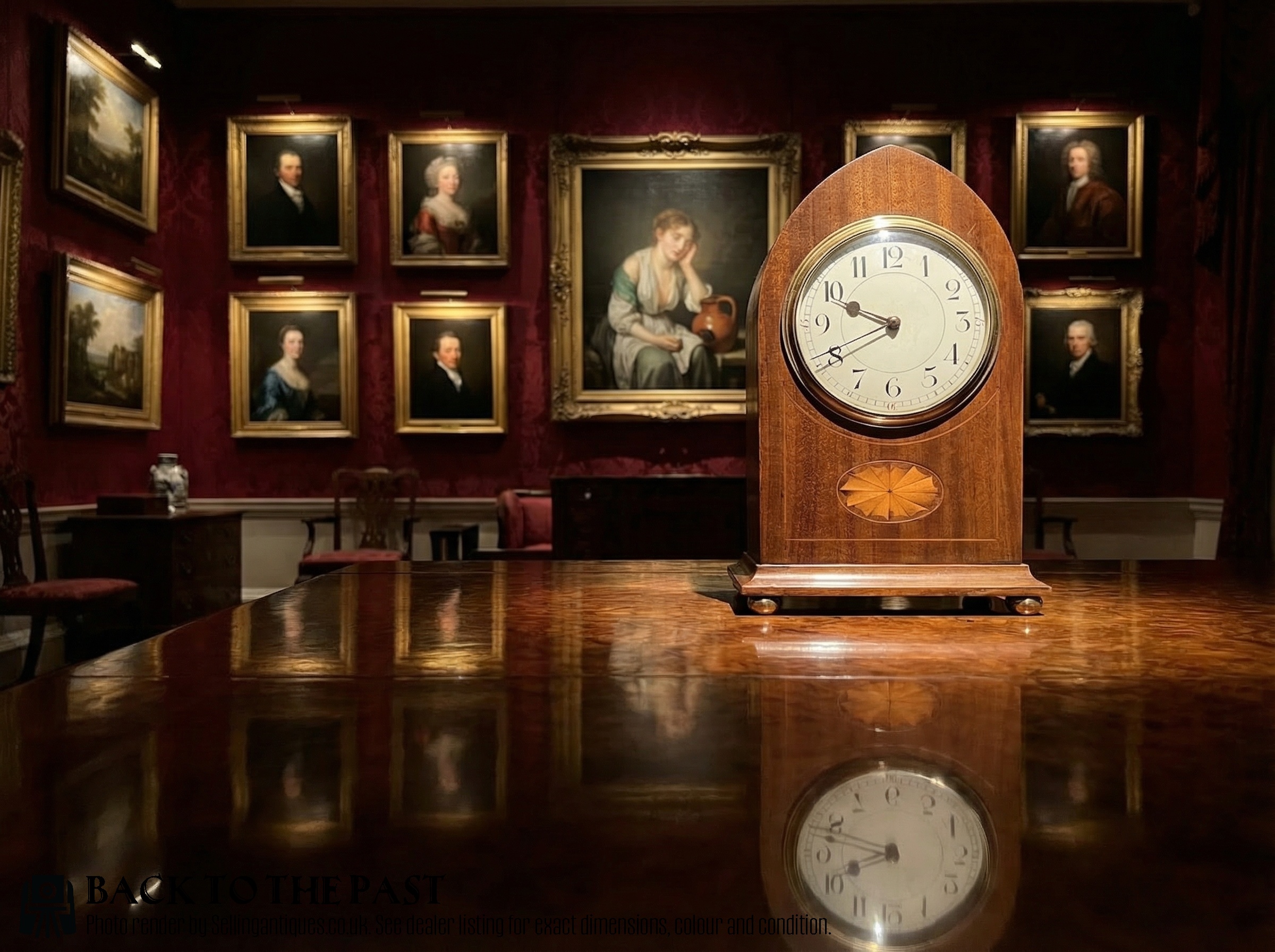
Antique Edwardian Quality Mahogany Inlaid Mantle Clock, 1900
Priced at £495 from Unique Antiques by Emma Jade
The period covers 1901 to 1910. Stylistically, the era often stretches up to the First World War.
Look at the transition from Victorian excess. Mantelpieces crowded with heavy dark marble gave way to smaller mahogany and oak cases.
Continental imports played a huge part. Many Edwardian clocks have English cases housing movements brought over from France or Germany.
Mass production changed the trade. Factories in the Black Forest supplied affordable workings to case-makers across Britain.
Winterhalder & Hofmeier supplied countless movements. This German firm exported heavily to Britain during the Edwardian period.
Retailer names often appear on the dial instead of the maker. Shops bought clocks wholesale and added their own branding.
French makers like Japy Frères provided many of the eight-day cylinder movements found in the smaller mantel clocks.
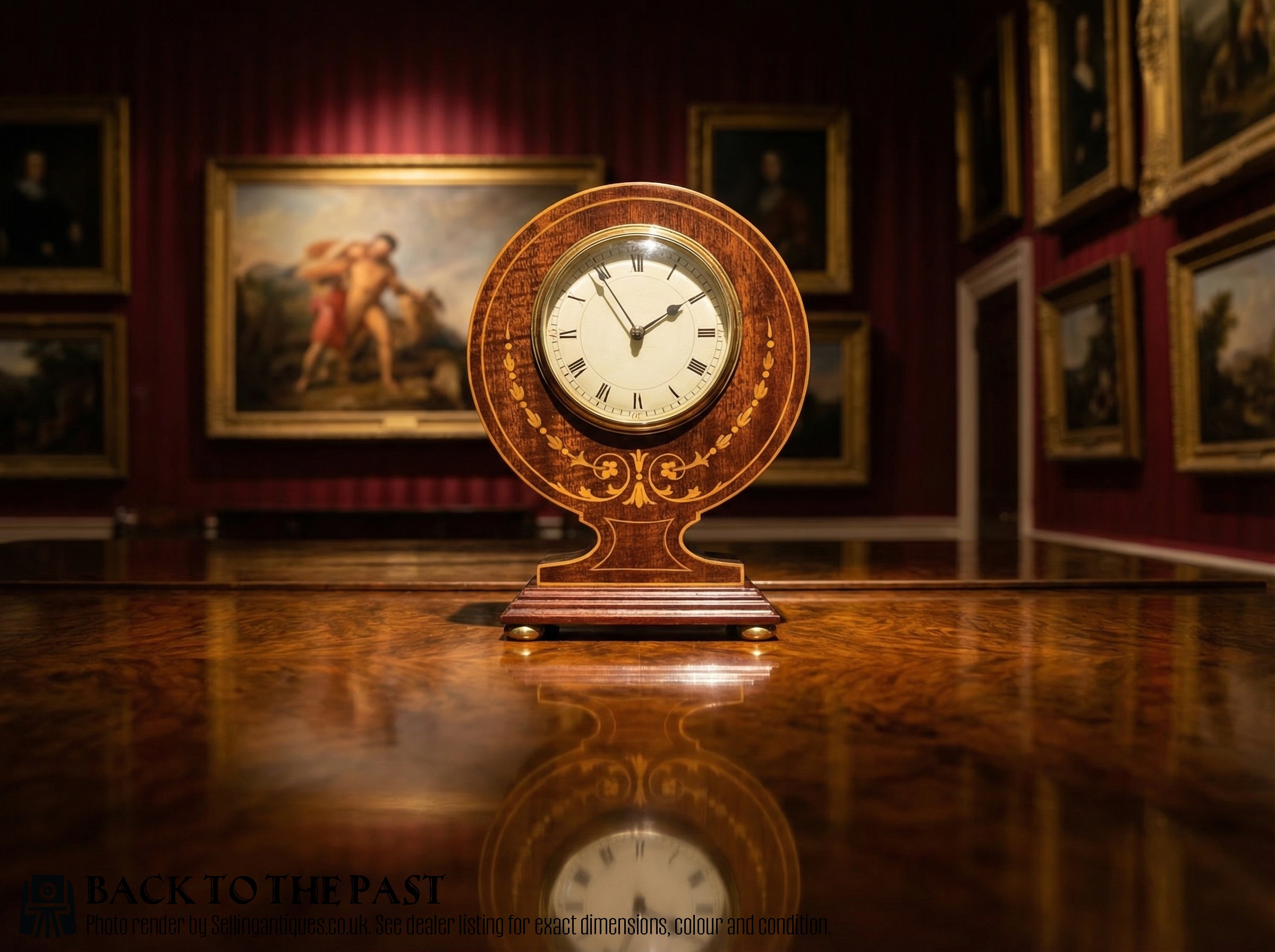
Antique Edwardian Mahogany Inlaid Mantle Clock, 1900
Priced at £985 from London City Antiques
The 2026 retail price guide for Edwardian Clocks is drawn from a proprietary archive of over 1.1 million retail prices indexed by Sellingantiques since 2003. This guide relies exclusively on their own internal data; no external sources or auction records are used.
Analysing nearly 25 years of UK antique market history alongside current retail values, the data indicates that typical UK retail prices for Edwardian Clocks range between £400 and £1,900. Entry-level prices generally fall under £400 and premium examples upwards of £1,900.
Balloon and lancet shapes are very common. These curved top cases were a direct reaction against the square styles of the previous century.
Check the feet. You usually find small brass bun feet or bracket feet raising the case slightly off the surface.
Spade hands are a standard marker. The hour hand has a distinct spade shape pointing to clear Arabic or Roman numerals.

Large Antique Edwardian Inlaid Mahogany Balloon Shaped Mantel Clock, 1900
Priced at £950 from London City Antiques
French polishing became the standard finish. Layers of shellac were applied by hand to build up a deep shine on mahogany cases.
Turn the clock around. The back doors are often simple flat boards with a basic brass catch, showing less care than the front.
Mechanical routing allowed for the curved balloon shapes. Steam power in workshops meant complex curved cases could be shaped faster than hand sawing.
"The mixed heritage makes them incredibly reliable today. A British-made case paired with a German engineered movement offers lasting daily use."
"Platform escapements allow them to be moved easily. Unlike pendulum clocks, these balance-wheel versions run smoothly on uneven shelves."
"Their small size was designed for the rise of flats. City living meant less space, making these compact timepieces highly practical."
Based on almost 25 years of Sellingantiques UK antique market data, Edwardian Clocks appeared 1716 times (out of 1,100,000 antiques) which gives it a rarity score of 71/100.
This score measures scarcity within the Sellingantiques archive only and is not a survey of the entire antiques market, so these statistics may not be indicative of the general availability of Edwardian Clocks elsewhere.
You need the correct key. Insert it into the dial hole and turn slowly until you feel resistance.
Most eight-day clocks have two winding holes. One powers the timekeeping and the other runs the strike. Wind both if you want it to chime.
The most common culprit is dirt in the movement. Over decades, old oil mixes with dust and dries into a sticky paste that slows the gears.
It might also be out of beat. If the clock has a pendulum, listen to the tick. It should sound even, like a heartbeat. If it limps, the case needs levelling.
A professional service every ten years is standard practice. The movement needs dismantling, cleaning, and fresh oil applied to the pivots.
Running a clock dry causes severe wear to the brass plates. It is cheaper to service it regularly than to replace worn gears later.
Standard glaziers usually cut flat glass. You need a clock material supplier or a specialist restorer to source a convex glass blank of the correct diameter.
The metal bezel may need gently warming to release the old putty holding the original glass in place. It is a delicate job.
Please note: This Edwardian Clocks guide and its associated pricing data are provided for general informational purposes only. It does not constitute formal financial, investment, or appraisal advice and should not be relied upon as the sole basis for any commercial activity, purchasing, or sales decisions. Sellingantiques.co.uk accepts no liability for any actions taken in reliance on this information. Always consult with a qualified professional or independent appraiser.
