



Antique Tavern Clocks
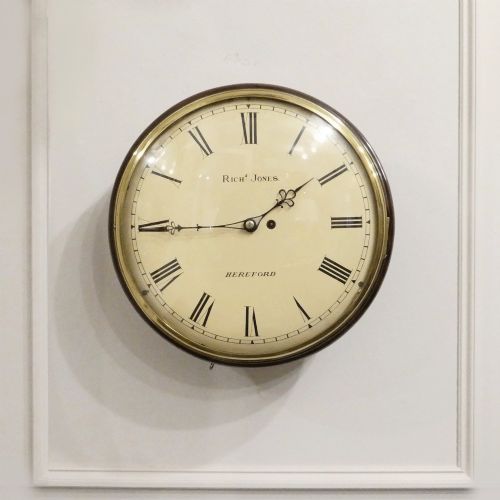
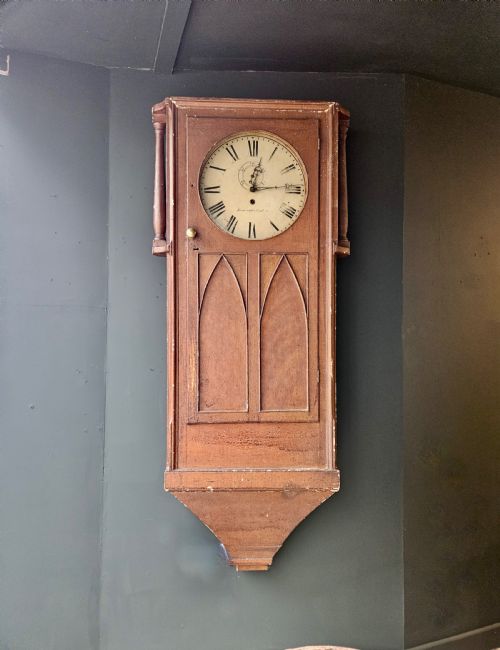
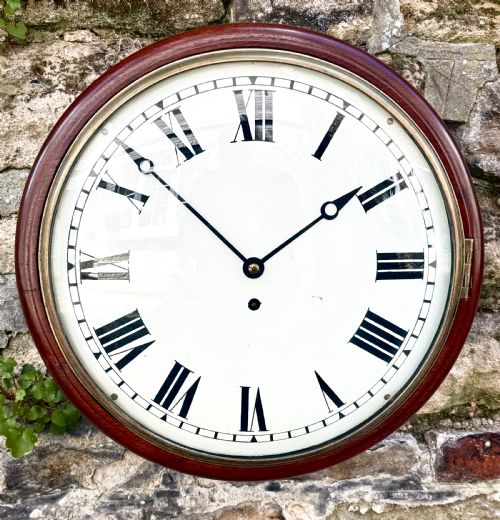
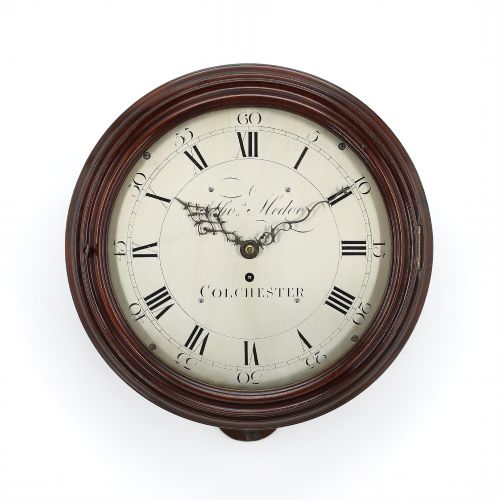
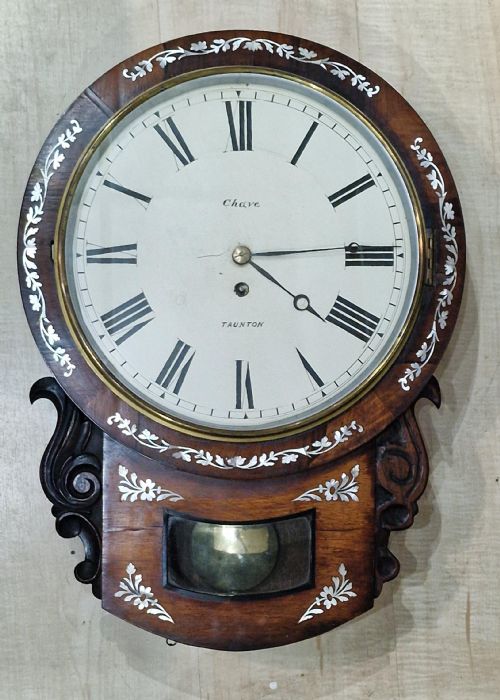
A big English wall clock, mahogany or oak, with a dial made to be read across a crowded room and a trunk or drop below holding the weight or pendulum.
Antique Tavern Clocks
Large wall clocks with oversized dials hung in inns, coaching houses and other public rooms in Georgian England, so travellers and drinkers could read the time from a distance. The nickname "Act of Parliament clock" attached to the broad-dialled trunk form from the late eighteenth century, though only two listings on Sellingantiques use that old name.
Under this heading the label sits loosely over several case shapes. Just over half the titles (27 of 48) call the piece a wall clock rather than a tavern clock, and several use both words at once. What dominates is a mahogany case with a sizeable dial: mahogany is named in twelve titles, "dial" in eleven.
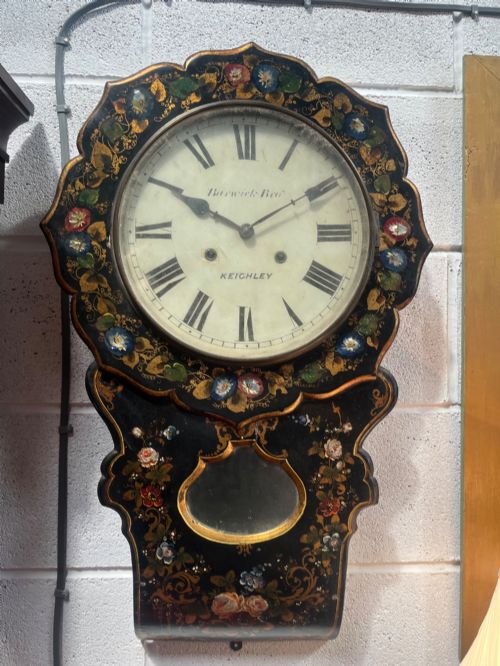
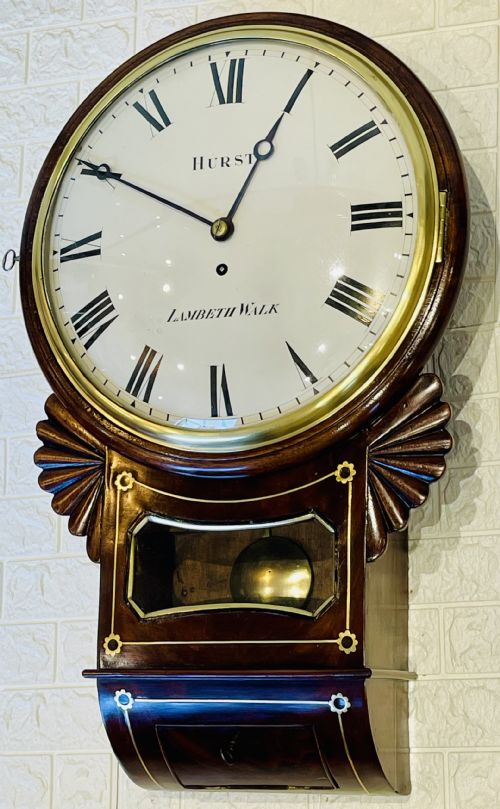
Beneath that, the drop-dial fusee wall clock is the most frequent named variant, with a short trunk dropping below the dial to house the pendulum. Plain dial clocks, essentially dial and movement box, form a smaller group. Norwich-type weight-driven wall clocks turn up three times, twice Regency and striking. Six listings have decorated cases, in chinoiserie, black lacquer or paint.
Dating is broad. Seventeen entries carry a clean year and the field runs 1790 to 1920, but the rest are period labels: 19th Century, 18th Century, 1800s, Georgian, Regency. Several titles hedge with "circa", the earliest to 1775. The two twentieth-century pieces, of 1910 and 1920, are isolated.

What Sets Them Apart
Age does most of the work. Every listing above the upper-middle of the range is dated 18th Century or Georgian, and the true broad-dialled trunk clocks cluster there. The two twentieth-century dates sit low. Regency and 19th Century entries fill the middle, where the drop-dial fusee form is thickest.
Then the case. Decorated cases are the rarity in this archive, and the four offering chinoiserie, black lacquer or a decorated George III case all sit high. A plain painted wall clock sits at the bottom. Timber follows the same line: flame mahogany above plain oak, and pine lower still.
Attribution and scale count for the rest. Titles naming a maker with a town gather at the top while unattributed "wall clock" titles gather at the bottom, though no clockmaker in the run appears more than once, so no name here carries a following of its own. "Large" and "of grand proportions" sit above average; "small" appears at both ends.
Antique Tavern Clocks Retail Price Guide 2026
Typical UK retail prices for tavern clocks, calculated from the Sellingantiques database of over a million retail prices indexed since 2003. This retail price guide relies exclusively on Sellingantiques data; no external sources or auction records are used, so the figures do not describe the wider market.
The top sale of the last year on Sellingantiques was a rare small tavern wall clock, in February 2026.
The Antique Tavern Clocks Glossary
- Tavern clock
- Large wall clock made for a public room. In this archive the term covers several different case shapes rather than one.
- Act of Parliament clock
- The older name for the broad-dialled trunk clock. Two listings use it, both Georgian and both toward the top of the range.
- Drop dial
- A case where a short trunk drops below the dial to house the pendulum. Named in five titles, usually alongside fusee.
- Fusee
- A cone-and-chain device that evens out the pull of the mainspring as it unwinds. Named in five titles.
- Weight driven
- Powered by falling weights rather than a spring. One title says so outright, another names brass weights.
- Timepiece
- A clock that shows the time only and does not strike. Striking is specified in three titles, one of them bell striking.
Antique Tavern Clocks: Frequently Asked Questions
Why are so many listed as wall clocks?
The heading gathers a family of English wall-hung clocks, and dealers describe them by case. Of 48 listings, 27 say wall clock rather than tavern clock.
Several use both at once, in the form "tavern clock / wall clock". The doubled wording is common enough to count as the standard description in this category.
What does Act of Parliament clock mean?
It's the old name for the broad-dialled trunk clock hung in inns and coaching houses, and it attaches to the type from the late eighteenth century.
On Sellingantiques it's uncommon. Only two listings in the whole run use it, both Georgian and both toward the upper end of the range.
How many come up for sale?
It's a small category. Around four come to market in a year.
Twenty-nine different dealers have listed one, so almost no dealer has handled more than a single example.
Which timbers turn up most?
Timber is named in a quarter of the titles. Mahogany leads with twelve, two of those described as flame or flamed.
Oak appears twice and pine once, and those sit in the lower half of the range. Painted, lacquered and chinoiserie cases make up a separate group of six.
Are these clocks striking or timepiece?
Both. Three titles specify striking, one of them bell striking, and two of those are Norwich-type weight-driven clocks labelled Regency.
A timepiece shows the time only. Fusee movements are named in five titles, mostly on the drop-dial form.
Do makers' names matter in this category?
Titles that name a maker and a town gather at the top of the range, while plain unattributed "wall clock" titles gather at the bottom.
But no clockmaker in the archive appears more than once across 48 listings. There's no maker here with a settled following, only individual attributions.