


A 2026 Guide by Sellingantiques
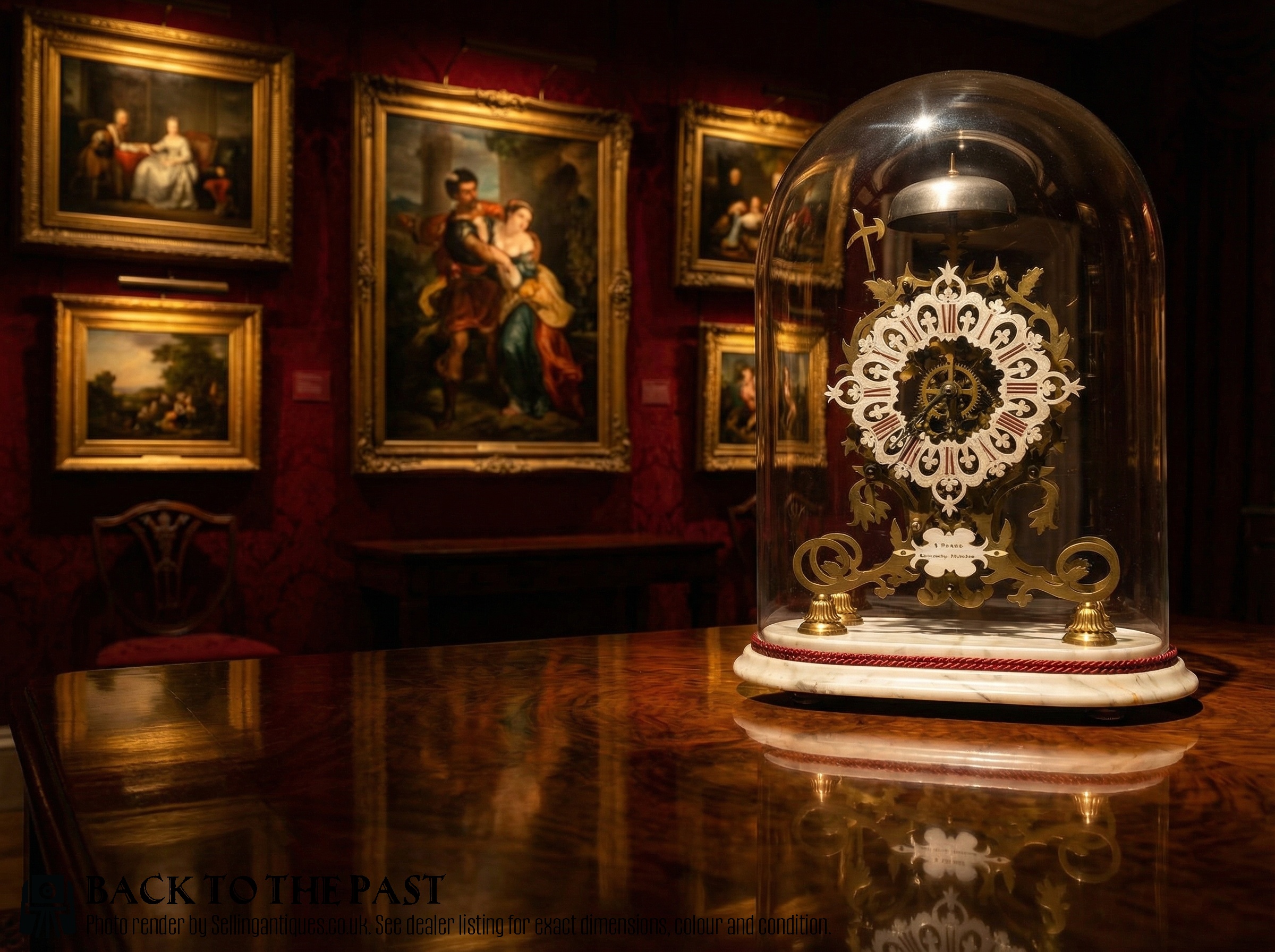
Fine 19th Century, Skeleton Clock, Circa 1875, Striking , Library, Mantel,clock, Victorian
Priced at £1,500 from Frank Craig Antiques
French clockmakers began exposing the gear trains during the late eighteenth century.
British production took off around the 1820s, spurred by a growing fascination with mechanical engineering.
Look for designs mimicking Gothic cathedrals. They became a staple pattern for English makers.
Peak popularity during the Victorian Great Exhibitions of the mid-nineteenth century.
Demand waned by the early twentieth century as enclosed mantel clocks grew cheaper to produce.
John Pace of London worked during the early nineteenth century and produced some notable early examples.
William Smith of Musselburgh made distinctive antique skeleton clocks with complex striking trains between 1830 and 1860.
Evans of Handsworth supplied rough movements to the trade across the mid-Victorian period.
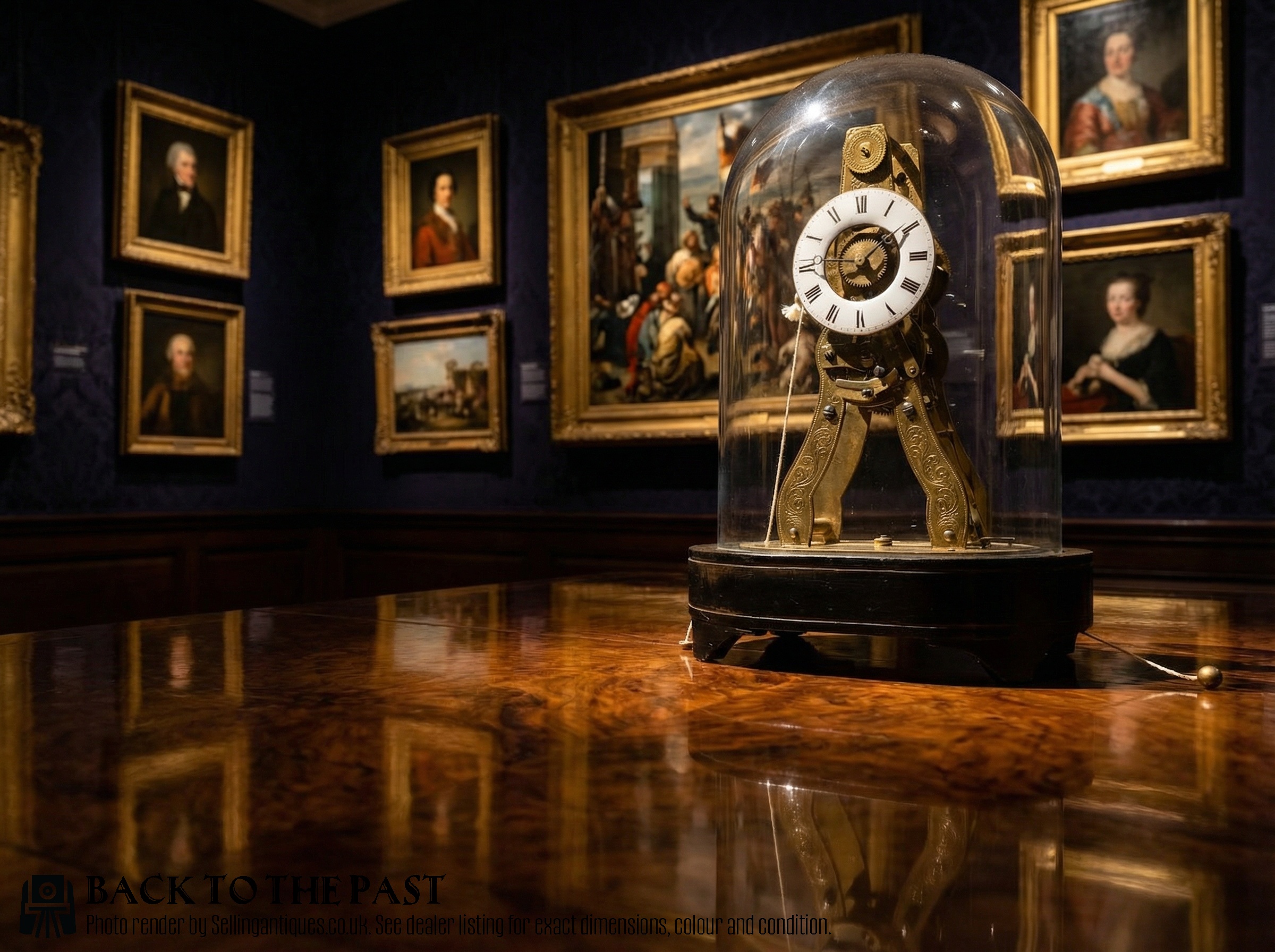
Great Exhibition Clock 1860, Victorian
Priced at £750 from Samuel Orr Antique Clocks
The 2026 retail price guide for Antique Skeleton Clocks is drawn from a proprietary archive of over 1.1 million retail prices indexed by Sellingantiques since 2003. This guide relies exclusively on their own internal data; no external sources or auction records are used.
Analysing nearly 25 years of UK antique market history alongside current retail values, the data indicates that typical UK retail prices for Antique Skeleton Clocks range between £1,000 and £4,600. Entry-level prices generally fall under £1,000 and premium examples upwards of £4,600.
The fretted frame remains the defining characteristic of antique skeleton clocks.
Blown glass domes protect the exposed mechanism from atmospheric dust.
Expect an open silvered chapter ring rather than a solid dial. It lets you see the motion work behind.
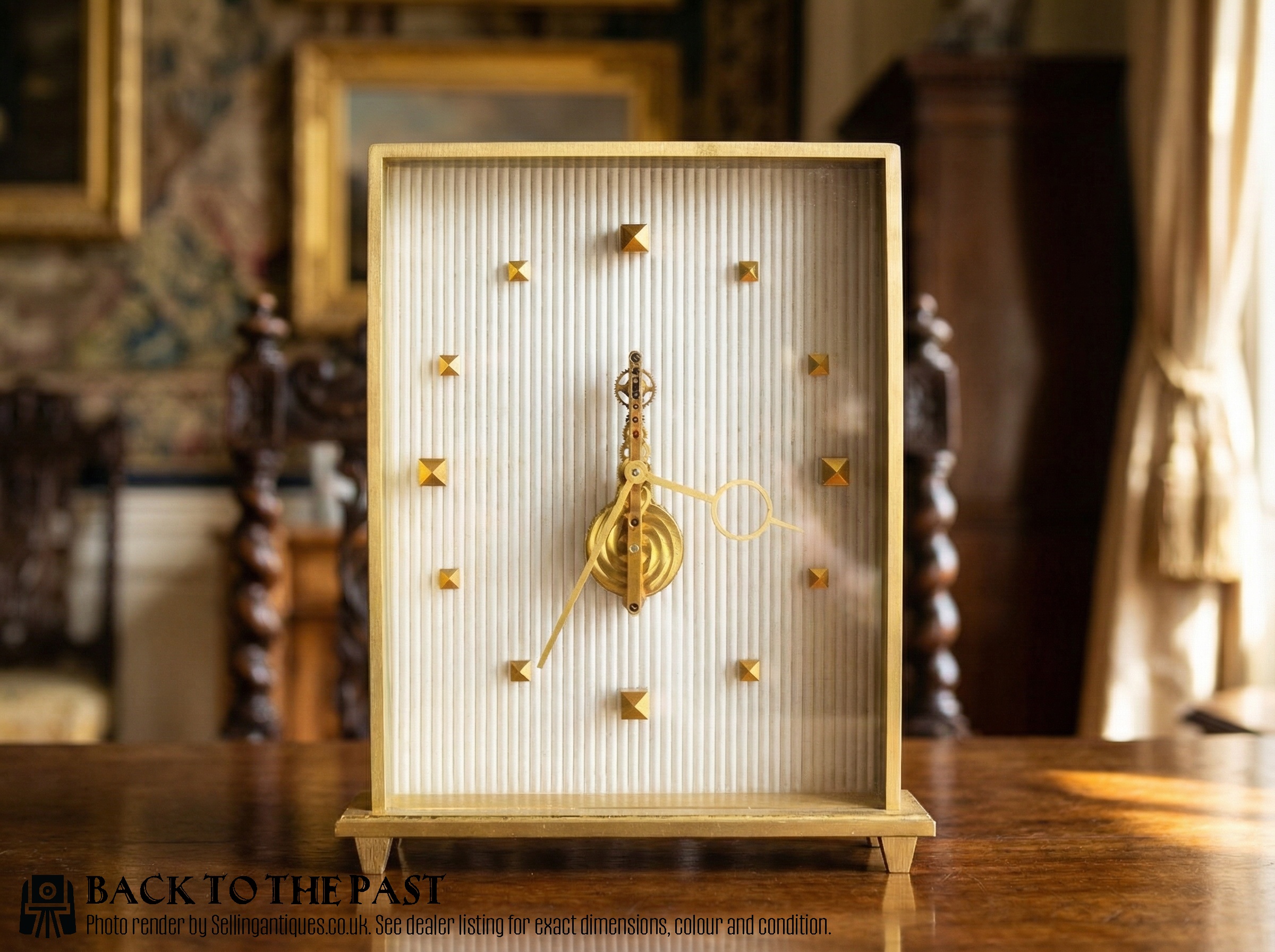
Jaeger Lecoultre Inline Skeleton Clock, 1960
Priced at £1,950 from Chalfont Clocks
Early examples feature scroll designs cut by hand using a piercing saw.
Victorian makers adopted architectural forms. They reproduced famous facades like York Minster in brass.
Industrial casting methods eventually replaced hand-piercing for the main frames of later mass-produced clocks.
"Some rare models incorporate complex musical trains playing tunes on nested bells."
"Passing strike mechanisms hit a single bell at the hour without needing a dedicated striking train."
"The pierced frames occasionally mirror the shape of local bridges."
Based on almost 25 years of Sellingantiques UK antique market data, Antique Skeleton Clocks appeared 366 times (out of 1,100,000 antiques) which gives it a rarity score of 93/100.
This score measures scarcity within the Sellingantiques archive only and is not a survey of the entire antiques market, so these statistics may not be indicative of the general availability of Antique Skeleton Clocks elsewhere.
Most require a specific key that fits the winding square on the great wheel arbor. Turn it carefully to coil the mainspring.
Don't force it past the point of resistance. Doing so can break the spring or damage the gear teeth.
The clock functions mechanically without the cover. It runs just the same in open air.
Dust acts as an abrasive on the brass and steel pinions. A dome prevents this grit from sticking to the oiled pivots.
Direct sunlight causes temperature fluctuations that affect the metal. Steel pendulums expand as they warm up, which makes the clock run slow.
Ultraviolet light also degrades the lacquer on the brass plates. The base timber might warp or fade if left baking in a south-facing window.
Maintenance depends on the gear train rather than the plate shape. A simple timepiece mechanism is straightforward to service regardless of whether the frame looks like a church or a scroll.
Striking or chiming mechanisms add complexity. Those need more time on a horologist's bench when they require cleaning.
Please note: This Antique Skeleton Clocks guide and its associated pricing data are provided for general informational purposes only. It does not constitute formal financial, investment, or appraisal advice and should not be relied upon as the sole basis for any commercial activity, purchasing, or sales decisions. Sellingantiques.co.uk accepts no liability for any actions taken in reliance on this information. Always consult with a qualified professional or independent appraiser.
