
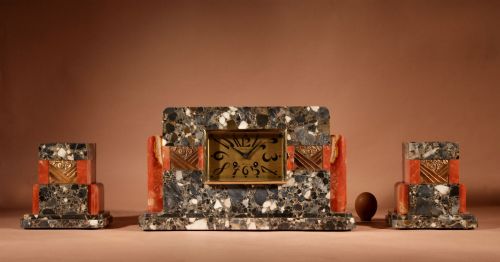
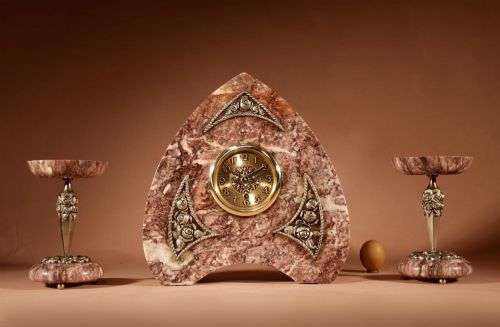
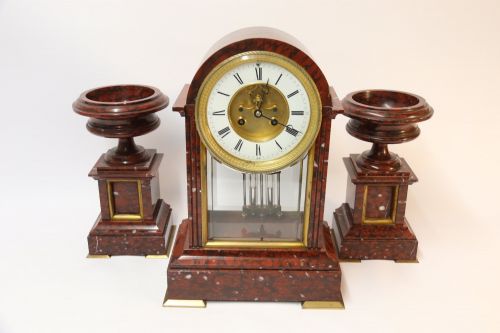


A 2026 Guide by Sellingantiques
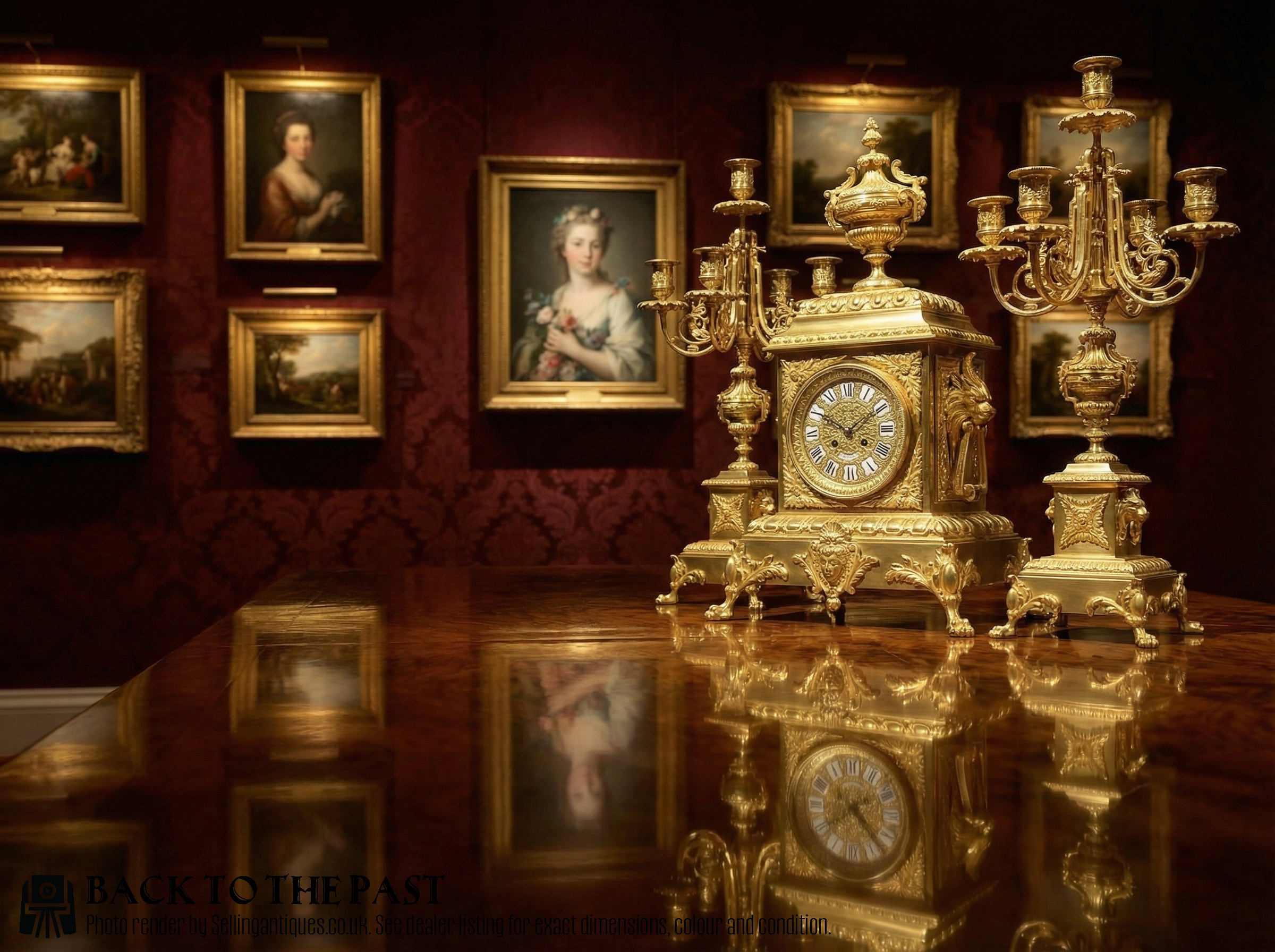
C19th French Gilded Ormolu Clock Set., 19th Century
Priced at £3,800 from Patrick Moorhead Antiques
These suites emerged when fireplaces became the focal point of the Victorian drawing room.
Look at French foundries for the bulk of nineteenth-century production.
Clock sets dominated the main reception rooms of affluent nineteenth-century homes.
Workshops scaled up production rapidly during the middle of the nineteenth century.
A shift in domestic architecture. Sets slowly fell out of favour during the early twentieth century.
Japy Frères supplied thousands of reliable movements to Parisian case makers during the nineteenth century.
Check the brass backplate for the round Samuel Marti production stamp.
Vincenti et Cie is another common name found stamped on good quality mechanical movements.

French Clock Garniture Set Under Glass Domes, 19th Century
Priced at £950 from Sinclairs Antiques and Interiors
The 2026 retail price guide for Antique Clock Sets is drawn from a proprietary archive of over 1.1 million retail prices indexed by Sellingantiques since 2003. This guide relies exclusively on their own internal data; no external sources or auction records are used.
Analysing nearly 25 years of UK antique market history alongside current retail values, the data indicates that typical UK retail prices for Antique Clock Sets range between £1,300 and £4,500. Entry-level prices generally fall under £1,300 and premium examples upwards of £4,500.
Flanking ornaments known as garnitures. You'll typically find them cast as vases or tall candelabra.
Matching decorative motifs run across all three components to tie the suite together.
Expect the central case to house a spring-driven movement designed to strike on a bell.
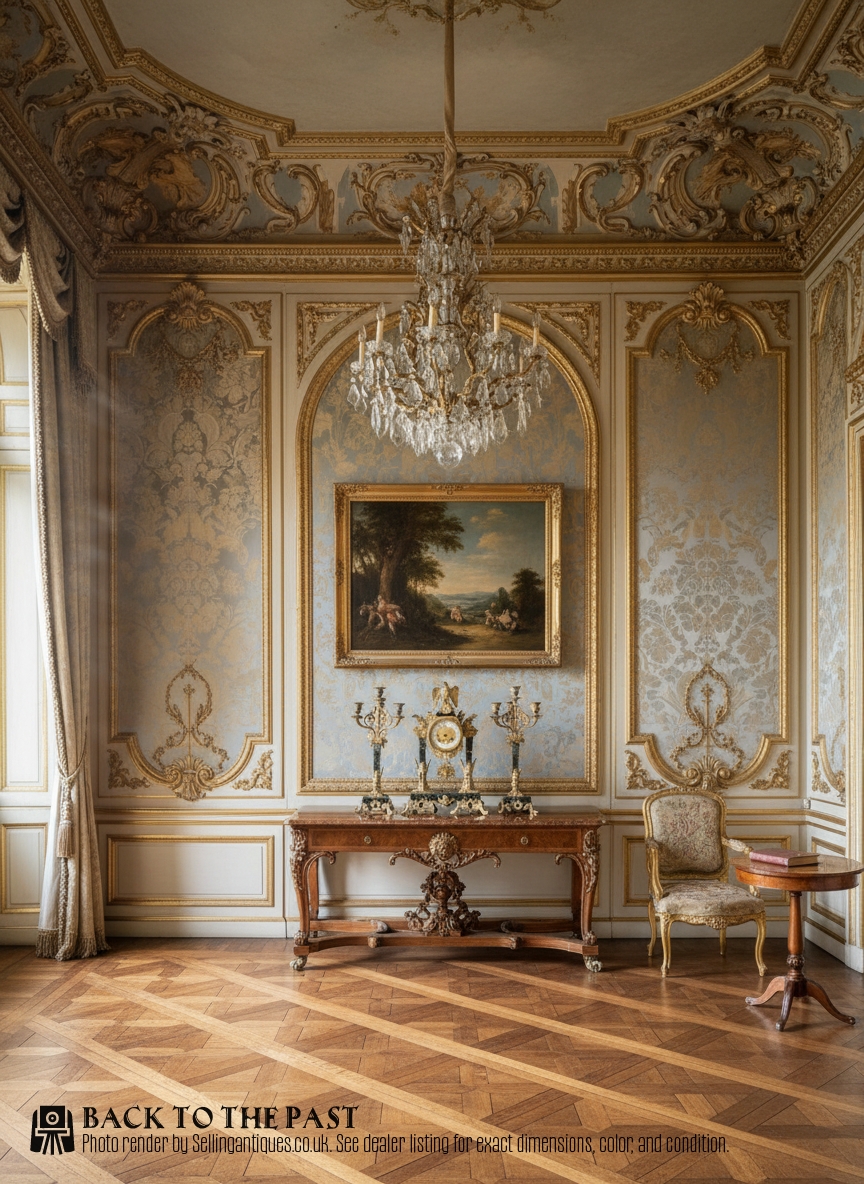
Outstanding Quality Antique Victorian Ornate French Clock Set
, 1860
Priced at £3,350 from London City Antiques
Case makers cast liquid brass into sand moulds before chasing the cooled metal by hand.
Carving troughs into the brass. Workers filled these gaps with coloured glass paste to create champlevé enamel decoration.
Heavy slate sections were pinned and glued together to form rigid architectural bases.
"The flanking candelabra often contain removable snuffers sitting in the central candle nozzle."
"Buying an intact suite gives a room an instant sense of deliberate architectural symmetry."
"Look for hidden brass carrying handles cast into the side mounts of large slate sets."
Based on almost 25 years of Sellingantiques UK antique market data, Antique Clock Sets appeared 1242 times (out of 1,100,000 antiques) which gives it a rarity score of 78/100.
This score measures scarcity within the Sellingantiques archive only and is not a survey of the entire antiques market, so these statistics may not be indicative of the general availability of Antique Clock Sets elsewhere.
Most nineteenth-century movements run for eight days on a full wind.
You should wind both the time and strike mainsprings once a week. Pick a specific day to build a routine.
Turn the key steadily. Stop turning the moment you feel firm resistance.
Architectural slate and marble sets are heavy. You must ensure your shelf is bolted directly into the masonry wall behind the plaster.
Keep the heavier central clock directly over the chimney breast structural supports.
Spread the side garnitures wider towards the shelf brackets. This helps distribute the load evenly.
Yes. The pendulum needs to swing evenly to keep reliable time.
Listen to the tick. An uneven beat means the shelf isn't level.
Never carry a mechanical clock with the pendulum attached. The swinging weight will damage the delicate suspension spring holding it at the top.
Open the back door and carefully unhook the pendulum first.
Carry the empty case and the pendulum separately to the new room. You can rehang the weight once the heavy case is safely in position.
Please note: This Antique Clock Sets guide and its associated pricing data are provided for general informational purposes only. It does not constitute formal financial, investment, or appraisal advice and should not be relied upon as the sole basis for any commercial activity, purchasing, or sales decisions. Sellingantiques.co.uk accepts no liability for any actions taken in reliance on this information. Always consult with a qualified professional or independent appraiser.
