



Antique Oak Chests
A lidded oak storage chest, listed almost always as a coffer, built to hold linen, bedding, grain, documents and plate before fitted cupboards and chests of drawers took over.
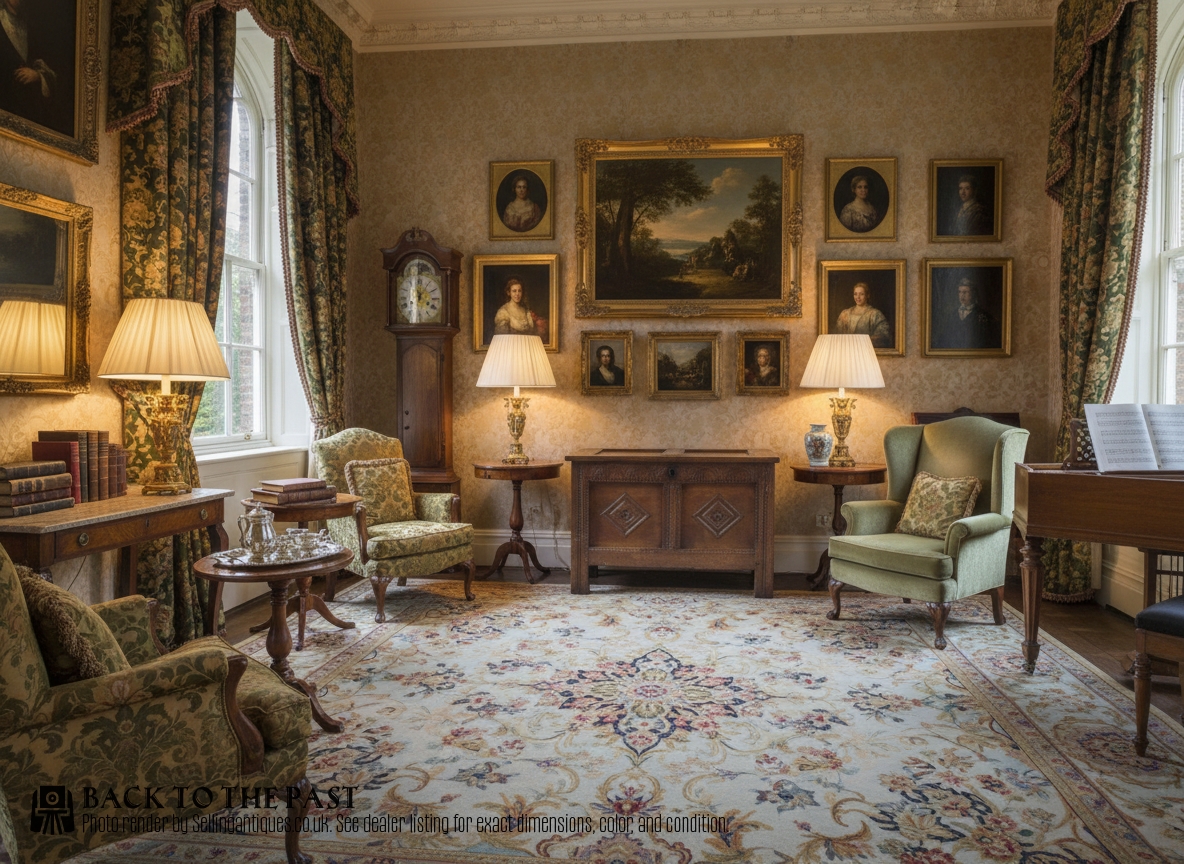
Antique Oak Chests
One word covers the ground: coffer appears in 1,645 of 2,359 titles on Sellingantiques, so a search for "chest" alone misses two thirds of the category. The rest arrive as blanket boxes, bedding boxes, mule chests, kists and, in Wales, coffer bach.
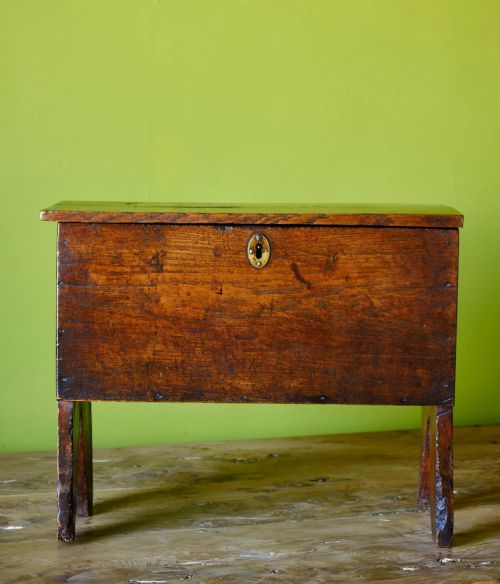
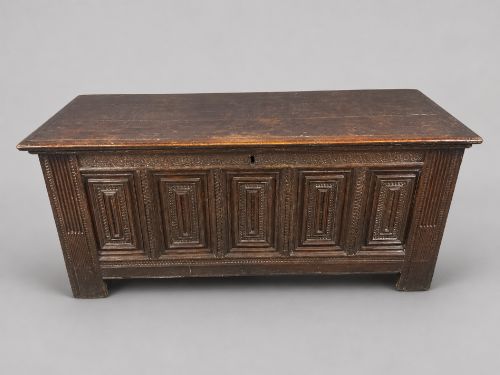
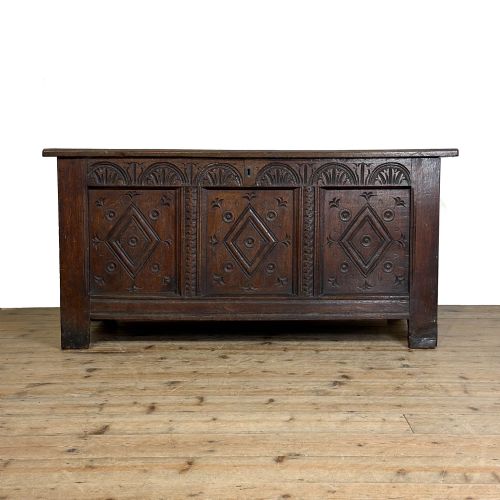
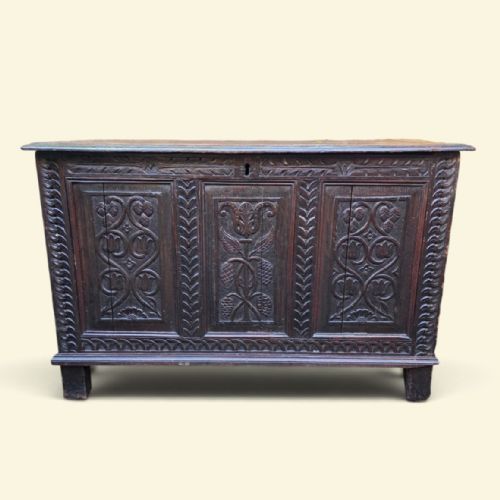
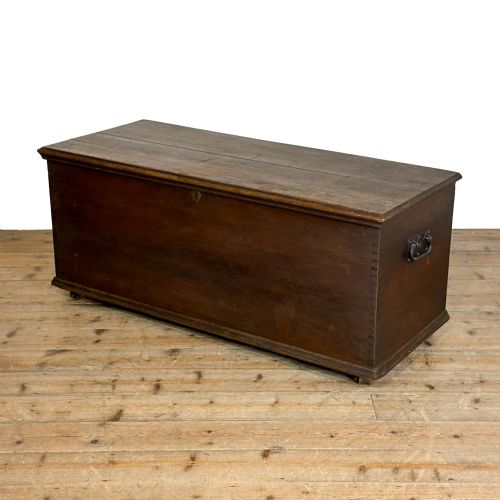
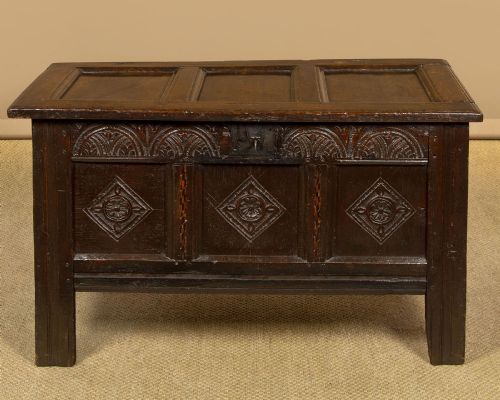
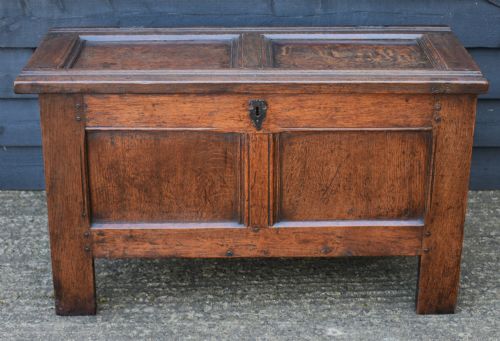
Construction splits two ways. Framed-and-panelled work, described as joined, panelled, or two-, three- and four-panel, is the largest identifiable group. Against it sit boarded chests made from a few wide planks, usually named as six-plank, occasionally five. Boarding came first; panelled joinery became normal as those methods spread.
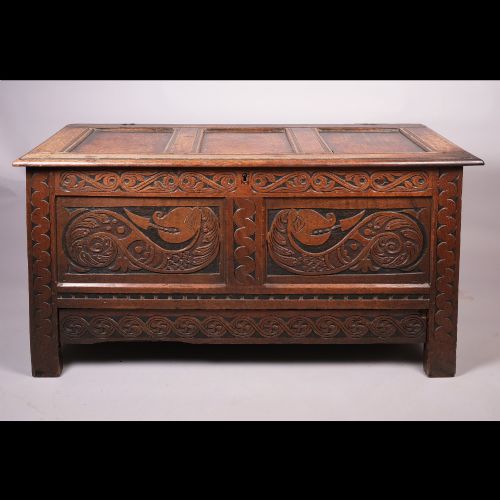
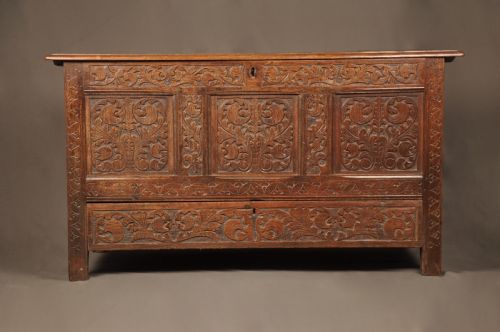
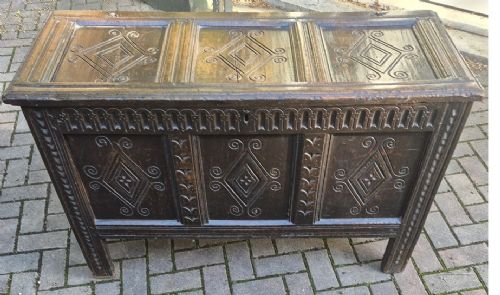
The piece you're most likely to meet is a panelled or plank-fronted coffer described as 17th or 18th century, often with a size word attached. Those two centuries carry the bulk: 626 listings are filed to the 18th, 617 to the 17th. Carving is named in 446 titles.
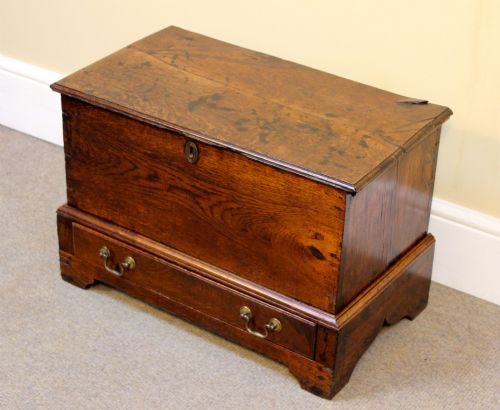
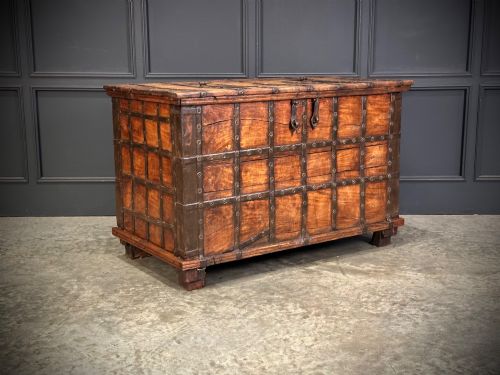
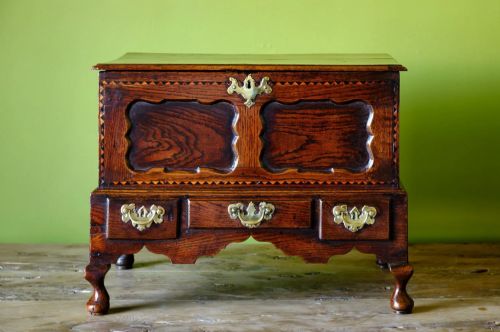
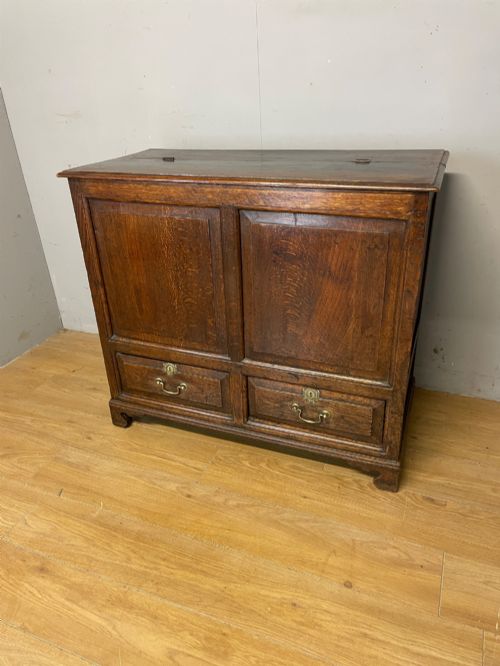
Around one in nine is a mule chest, a coffer with one or two drawers in the base, a step on the way to the chest of drawers. Beyond the main population sit metal-bound silver chests, long narrow sword chests, deed and bible boxes, dome-top and campaign trunks, and a 20th-century tail of plain limed and blonde oak blanket boxes, 63 of them filed to the 1920s.
What Sets Them Apart
Date claimed in the title does most of the sorting. The top of the range is held by 16th- and early-17th-century chests, linenfold, parish and Tudor pieces among them, while the plain 1900-1940 oak blanket and bedding boxes anchor the bottom. Between those, the vague labels dominate: "18th Century", "Georgian", "Before 1700".
Surface decoration and named construction both push upward. Carved fronts, inlay, marquetry, ebonising and geometric mouldings read higher than a chest listed simply as an oak box. So does construction stated rather than left open, with joined, panelled and explicitly six-plank work sitting above unspecified boxes.
Two other things lift a listing. A firm regional attribution is one, and the names cluster in the north and west: Lakeland, Leeds, Lancashire, Yorkshire, Westmorland, the Dales, Dorset, the West Country, Montgomeryshire and South Wales. A carved year is the other, and only 34 titles say dated. Size counts at both extremes, with miniature, baby and cottage-size at one end and monster and huge at the other.
Antique Oak Chests Retail Price Guide 2026
Typical UK retail prices for oak chests, calculated from the Sellingantiques database of over a million retail prices indexed since 2003. This retail price guide relies exclusively on Sellingantiques data; no external sources or auction records are used, so the figures do not describe the wider market.
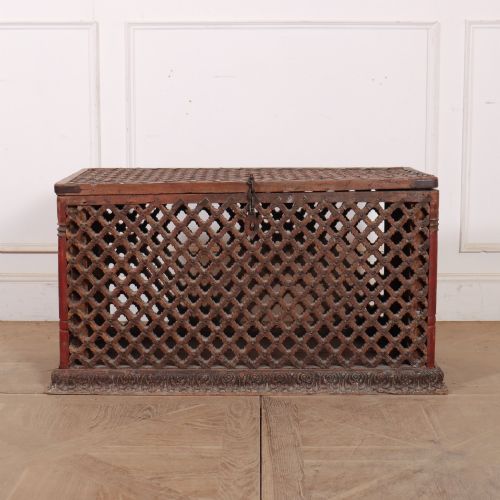
Among the one-offs to pass through: an arrow box, a churchwardens' coffer, a boat builder's tool chest and a mail carriage strong box.
The Antique Oak Chests Glossary
- Coffer
- The trade word for a lidded oak storage chest, and the heading on more than two thirds of listings in the category.
- Mule chest
- A coffer with one or two drawers built into the base, transitional between the plain chest and the chest of drawers.
- Plank or six-plank
- Boarded construction from a few wide boards rather than framed panels. Five-plank examples appear too.
- Panelled or joined
- Framed construction with panels set into stiles and rails, commonly given as two, three or four panel.
- Coffer bach
- Welsh term for a small chest, sometimes on a stand. Spellings wander between coffer bach, coffor bach and coffr bach.
- Clamp front
- A boarded chest whose front board is held between upright end members, a form seen on the earliest pieces.
Antique Oak Chests: Frequently Asked Questions
What is the difference between a coffer and a mule chest?
A coffer is the plain lidded box. A mule chest adds one or two drawers in the base, so you get storage under the lid and drawer space below.
Mule appears in 277 titles, about one in nine. Many are described as Georgian, often with two drawers.
Why do so many listings say coffer instead of chest?
Coffer is the standard trade word for this form and it sits in 1,645 of 2,359 titles on Sellingantiques.
Blanket box, bedding box and kist cover much of the rest, with blanket alone in 220 titles. Searching on one word only will cut out a large part of the category.
How old are most oak coffers on the market?
The dated field runs from 1597 to 1940, and the middle two centuries do most of the work: 626 listings filed as 18th century, 617 as 17th.
Around them sit looser labels, Georgian, 19th Century, Before 1700, Victorian. A 20th-century group of plain oak blanket boxes runs to 1940.
What is a coffer bach?
It's the Welsh name for a small chest, sometimes raised on its own stand.
Welsh appears in 132 titles and bach in 88, with spellings shifting between coffer bach, coffor bach and coffr bach. South Wales and Montgomeryshire both turn up as attributions.
Are the dates carved on some chests part of the title?
Only 34 titles use the word dated, and the carved years that appear include 1643, 1658, 1670 and 1678.
Those pieces sit almost entirely at the top of the range. A carved year and a named region together are the two things that lift a listing furthest.
Does the listed date always match the title?
Not always. The samples show a "17th century Oak Coffer" filed under 16th Century and a George II piece filed under Regency.
Title and dated field are worth reading together, since many entries are vague by nature rather than precise.