




Antique Chinese Chests
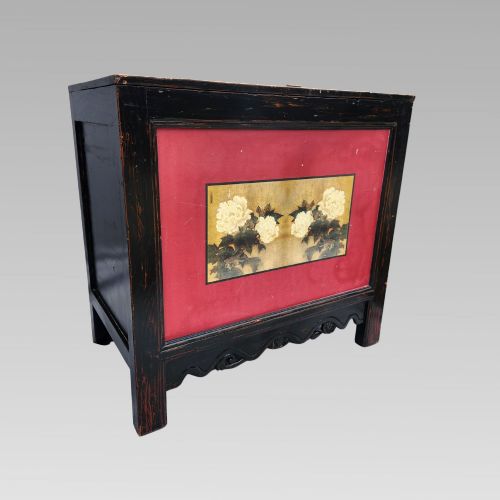
A lidded Chinese chest, most often in aromatic camphor wood, made for keeping textiles and for travelling.
Antique Chinese Chests
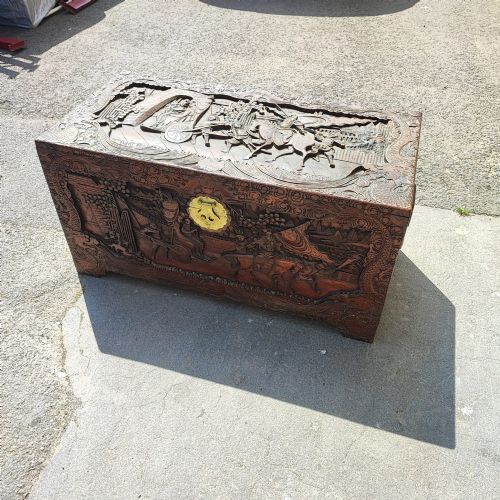
Camphor wood dominates to the point of definition: 102 of the 166 listings name it in the title, spelled as two words in 71 and run together as "camphorwood" in 16. The timber was chosen because its scent deters insects, which suits the keeping of blankets and clothes.
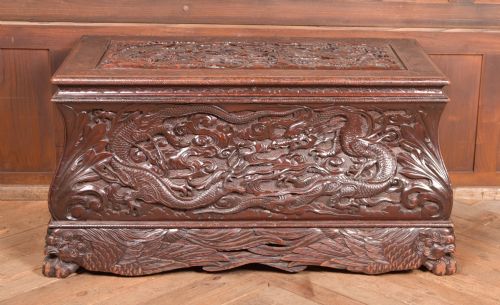
The default form is a rectangular chest with a flat or slightly domed lid, carved on the front and lid, and it accounts for roughly half the category. Dealers name it loosely: trunk in 82 titles, box in 38, blanket box in 19, storage box in 10, and a few are offered outright as coffee tables.
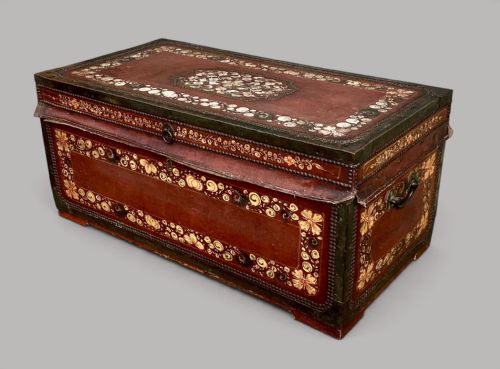
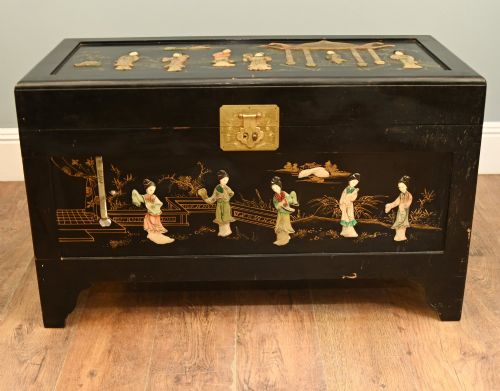
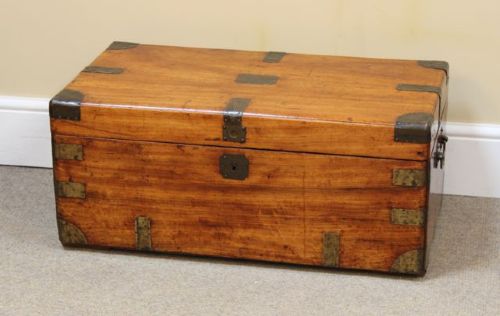
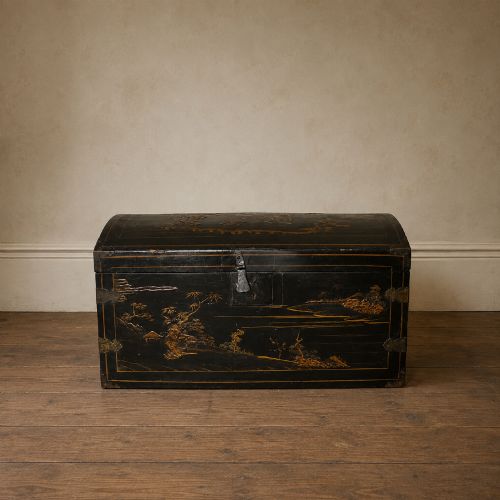
The second strand is the brass-bound export or travelling trunk, around a fifth of the category. Chests of this kind were made in Chinese coastal workshops from the later eighteenth century onward for Western buyers, brass strapping and corners suiting shipboard and campaign use. Smaller strands are covered in leather, vellum, parchment or pigskin, or finished in lacquer and paint, each about one in ten. Hardwood and elm chests, some on stands, make up a smaller group again.
Dealer dates run from 1800 to 1930, and 101 listings carry a clean year. The busiest single decade is the 1920s at 37 listings, followed by the 1900s and 1910s, though the largest bucket of all is the vague "19th Century" at 44. Eighteenth-century attributions are the rarest, at six. Around 18 of these chests come to market on Sellingantiques in a year, listed by 63 different dealers rather than a handful of specialists.
Top And Bottom
The bottom of the range is plain. The cheapest sampled titles are camphor wood storage and blanket boxes with no carving, no brass and no covering named, sold on the timber and the lid alone.
What lifts a chest is applied decoration. Brass binding and mounts push upward, and the phrase "export brass" turns up nine times, clustering in the upper half. Above that sit trunks worked over the carcass: polychrome-painted, gilt-decorated, leather-and-brass export examples and lacquer coffers, one eighteenth-century export lacquer coffer holding the very top of the range.
Carving is less decisive than it looks. It appears in 42 titles and spreads across the whole range, from the plainest chests to freestanding carved examples near the top. Scale counts, with "large" in 11 titles and larger export trunks sitting high, as do stands and the scarce matched pairs, of which only two pairs and one near pair appear.
Antique Chinese Chests Retail Price Guide 2026
Typical UK retail prices for chinese chests, calculated from the Sellingantiques database of over a million retail prices indexed since 2003. This retail price guide relies exclusively on Sellingantiques data; no external sources or auction records are used, so the figures do not describe the wider market.
Camphor wood is named in more Chinese chest titles on Sellingantiques than any other timber, spelled as two words far more often than one.
The Antique Chinese Chests Glossary
- Camphor wood
- Aromatic, insect-repellent timber used solid or as a lining, and written both "camphor wood" and "camphorwood" in titles.
- Trunk
- The commonest word in this category for a travelling or storage chest, used interchangeably with chest and box.
- Brass bound
- Strapped and cornered in brass for travel, a description carried by 17 titles.
- Chinese export
- Made in China for Western sale; 24 titles use the word export, far more than name Canton or Hong Kong.
- Campaign trunk
- A travelling chest of military pattern, appearing in 10 titles.
- Coffre fort
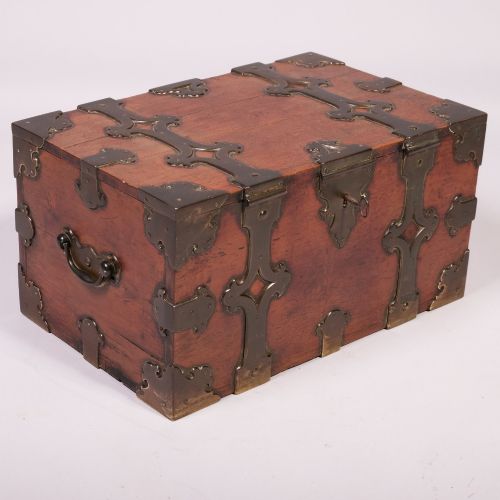
- A strongbox form. One Chinese export example appears in the archive and nowhere else.
Antique Chinese Chests: Frequently Asked Questions
Why are so many of these made of camphor wood?
Camphor is aromatic and repels insects, so it suits the storage of textiles. That is why chests of this kind were built from it, solid or as a lining.
Its hold on the category is near total: 102 of 166 listings name camphor wood in the title.
What's the difference between a trunk, a chest and a blanket box?
Often nothing. The same object is listed as a trunk, a chest, a storage box or a blanket box depending on the dealer, and a few are offered as coffee tables.
The counts show how unsettled the naming is: trunk in 82 titles, box in 38, blanket in 19, storage in 10.
How old are Chinese camphor chests usually?
Dealer-supplied dates run from 1800 to 1930. Precisely dated pieces cluster in the early twentieth century, with 37 in the 1920s, 25 in the 1900s and 15 in the 1910s.
A quarter of the category is dated only to "19th Century", 44 listings in all. Eighteenth-century attributions number just six, and one title carries a carved date that disagrees with the dealer's date field.
Are leather or pigskin covered chests common?
About one in ten of the category is covered in skin of some kind, leather being named in 17 titles.
The more unusual coverings almost never repeat. Parchment, red vellum, embossed leather and black-lacquered pigskin each appear on a single trunk.
Do these chests carry maker's names?
Effectively not. No workshop or firm names run through the category, and the only signature-like text across the whole sample is one trunk marked with a name and one described simply as signed.
Origin labels stand in instead: export in 24 titles, against Canton or Cantonese in three and Hong Kong in one.
Were they made as marriage or dowry chests?
Some are sold that way, but it is a minority label. Only four titles in the whole sample invoke the marriage, wedding or dowry tradition.
The great bulk are described as storage or travelling pieces, and the export and campaign trunks were made for shipboard use.