


Antique Georgian Bureau
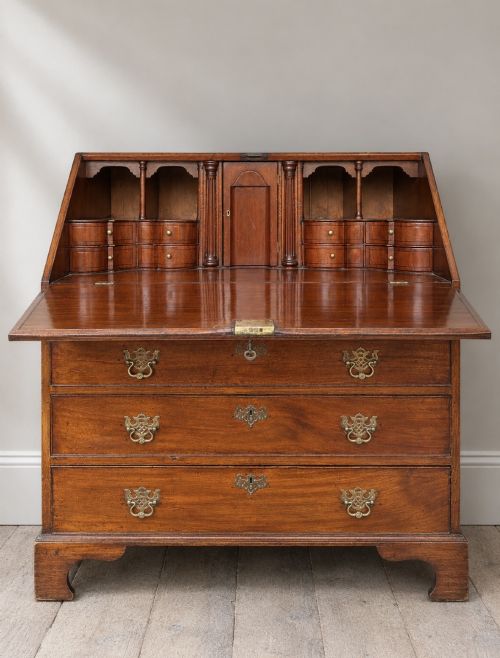
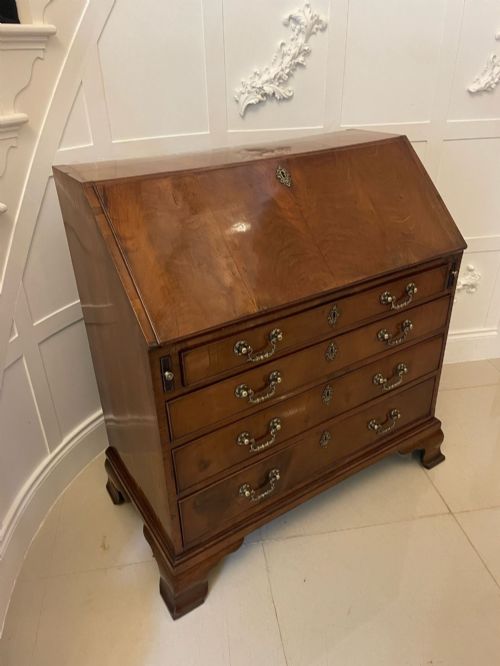
A sloping fall-front writing desk on a base of drawers, made in Britain through the eighteenth and early nineteenth centuries to give a household one lockable place to write and keep papers.
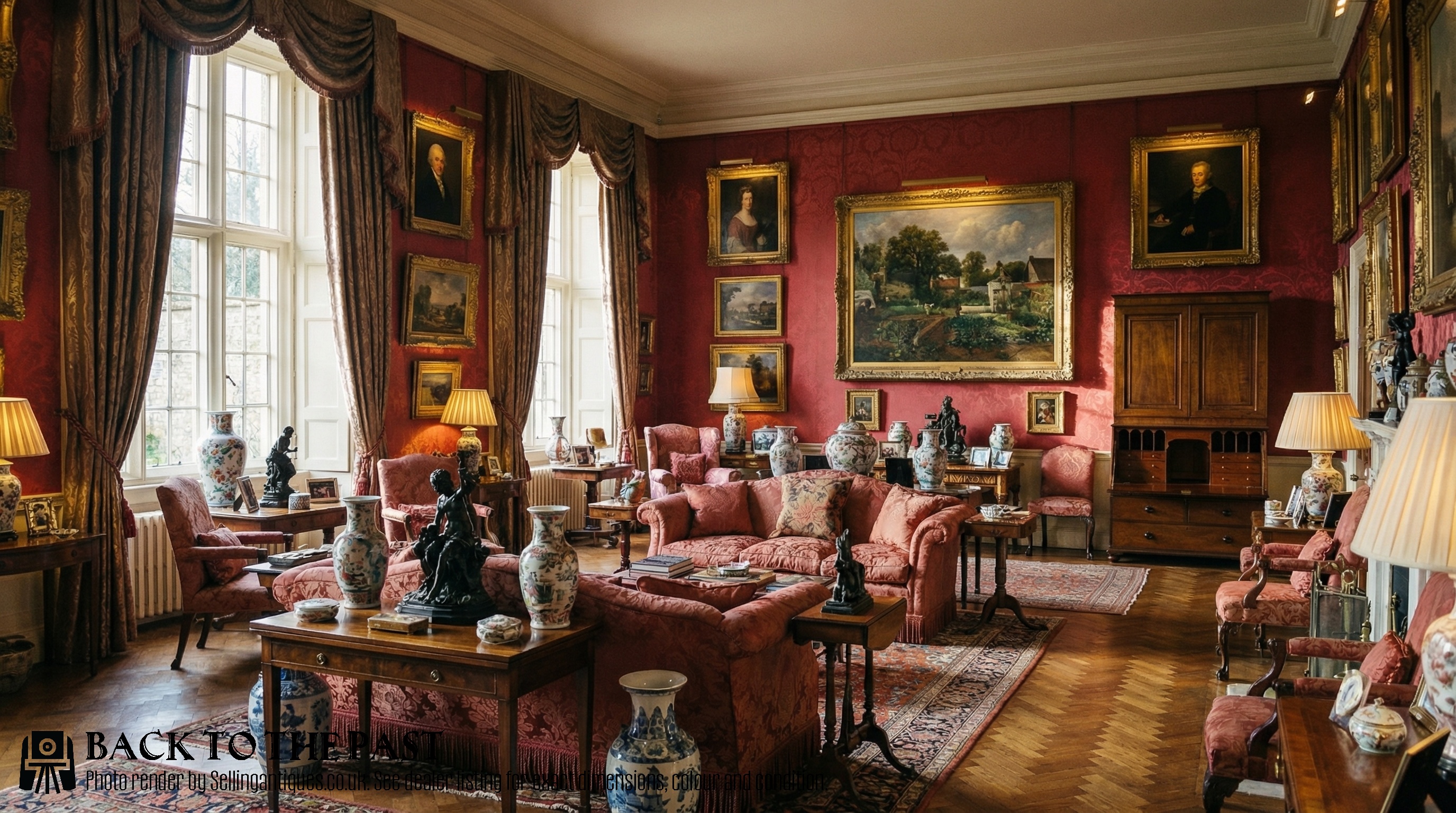
Antique Georgian Bureau
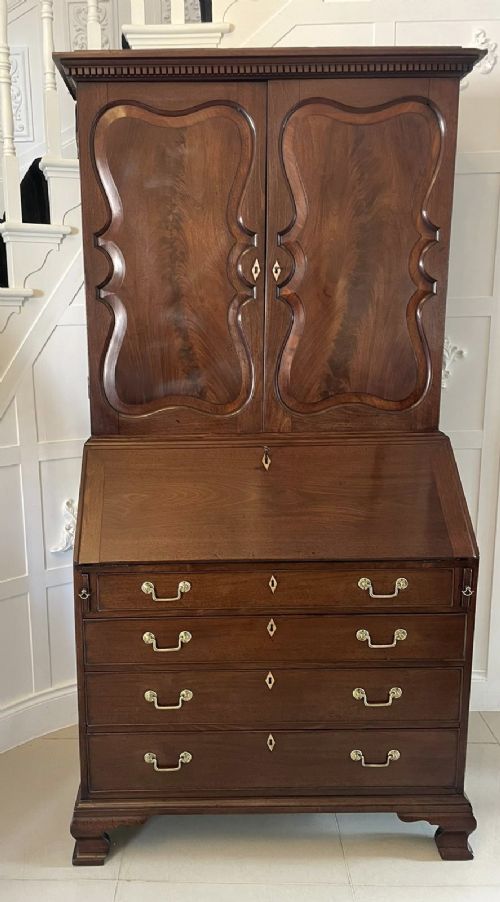
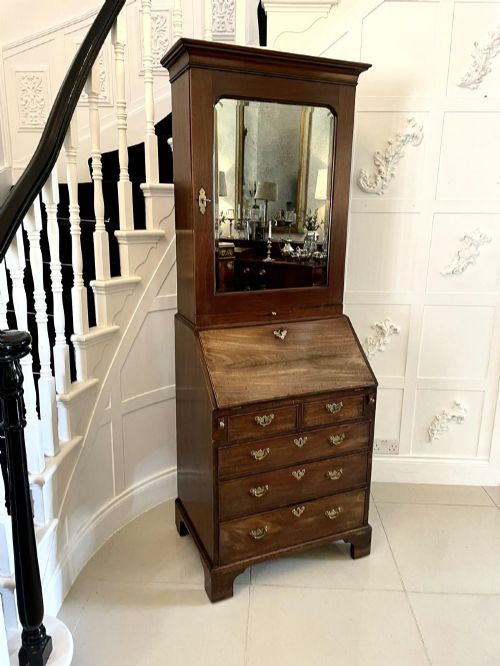
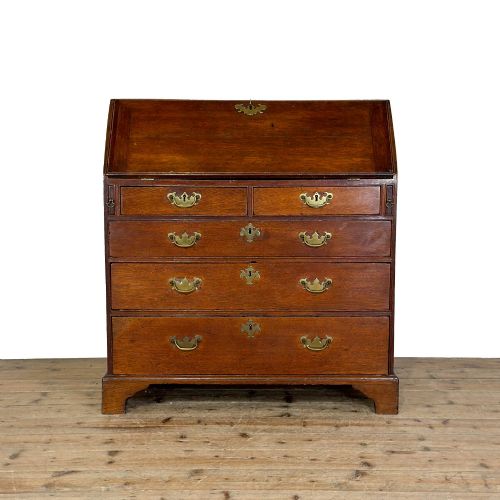
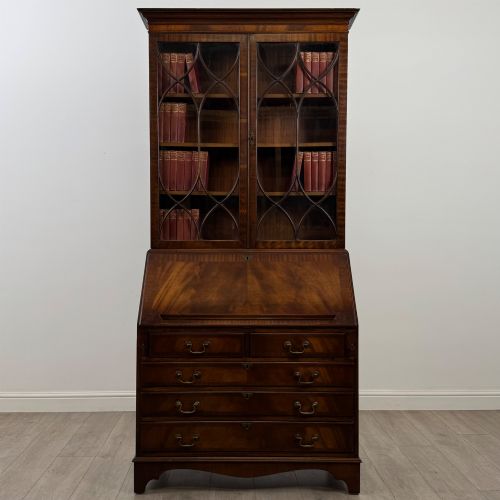
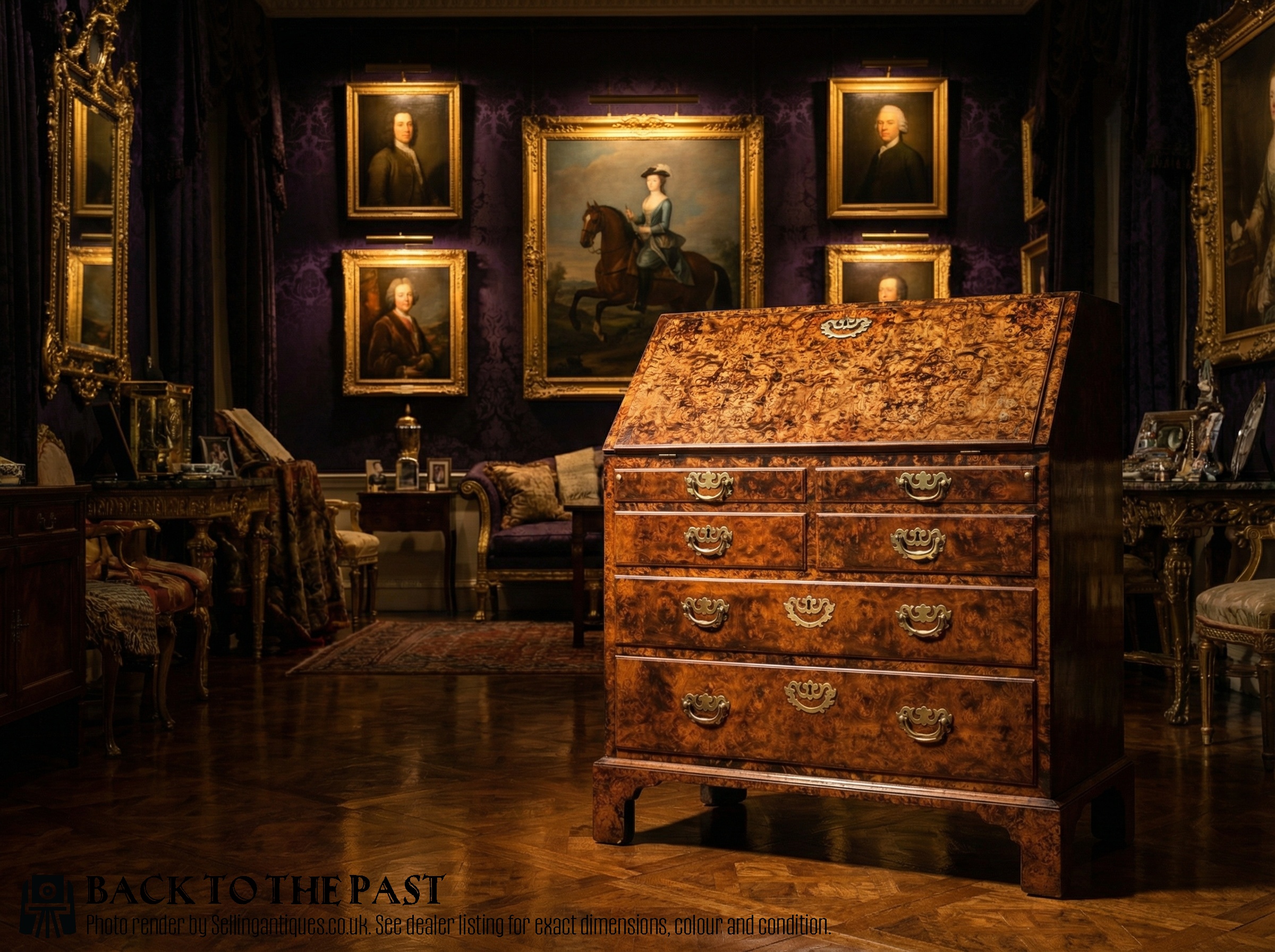
The form settled into its familiar British shape around the turn of the eighteenth century: a chest of drawers with a hinged sloping fall that drops to make a writing surface, opening onto pigeonholes and small drawers. Add a glazed or panelled upper stage and it becomes a bureau bookcase.
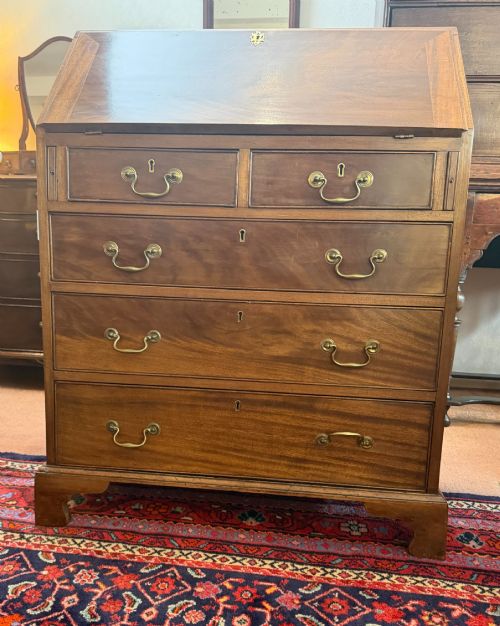
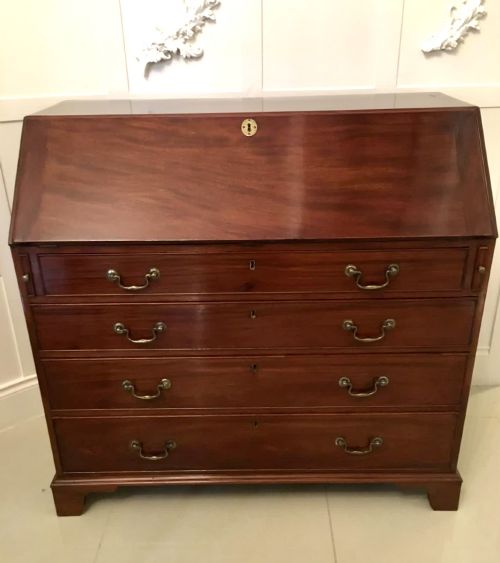
The one you're most likely to meet is a plain mahogany fall-front bureau with no upper stage, three feet or less in width, the interior over two short and three long drawers. Mahogany names itself in 327 of 709 titles on Sellingantiques, against 143 for oak and 148 for walnut. Between them those three woods cover nearly every piece; elm, yew, fruitwood, cherry, satinwood, rosewood and cedarwood turn up only a handful of times.
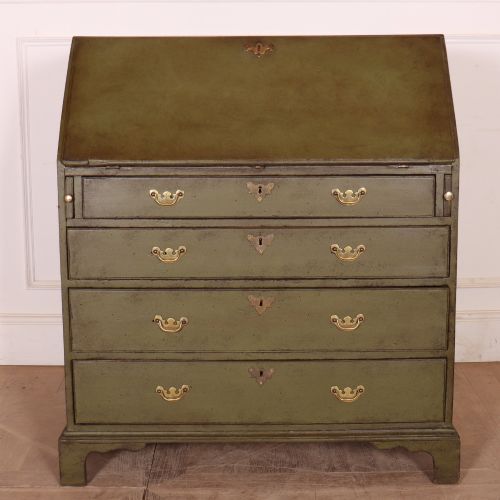
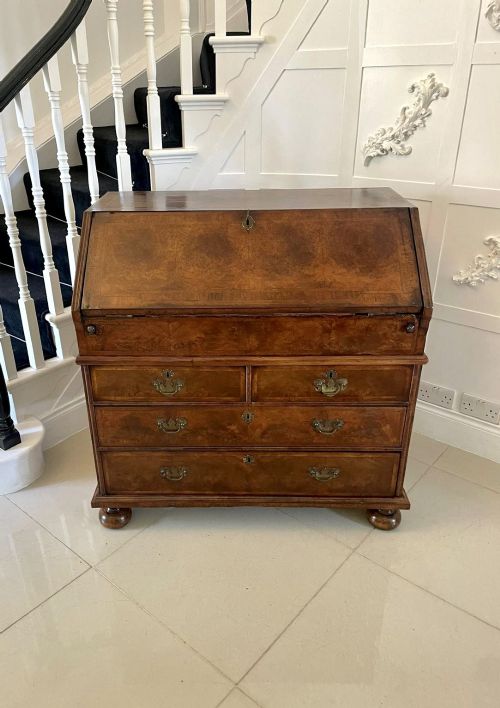
Four other strands run through the category. Oak and country bureaux, including Welsh and painted examples, make up about a fifth. Walnut, often burr or feather-banded, sits at the early-eighteenth-century end. Bookcase appears in 162 titles. Georgian Revival and 1920s copies account for under one in ten.
Dating is loose by nature. Of 709 listings only 182 carry a clean year, the rest falling back on "Georgian" or "18th Century", and the years that do appear cluster on round numbers like 1750 and 1790. The spread runs 1700 to 1930, because revival bureaux are catalogued alongside the originals, and a few dated fields disagree with their own titles, so read the title and the date together.
Where The Range Splits
Timber and figure do most of the work. Burr and figured walnut, satinwood, mulberry, padauk and yew sit at the top, and the rarest of those appear once or twice in the whole archive. Plain oak, plain mahogany and pine hold the bottom.
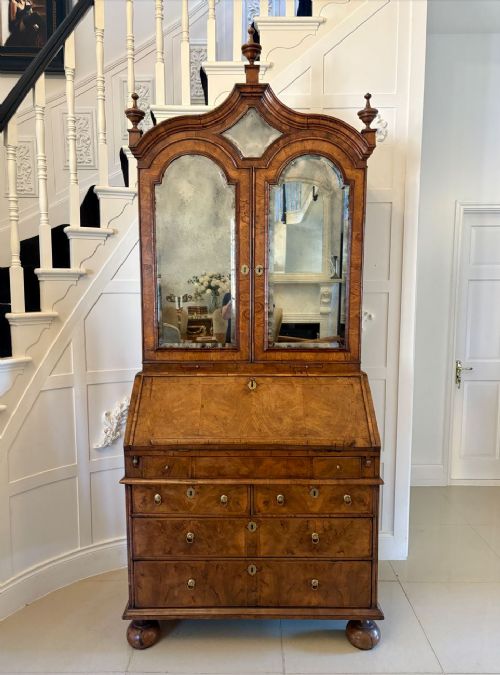
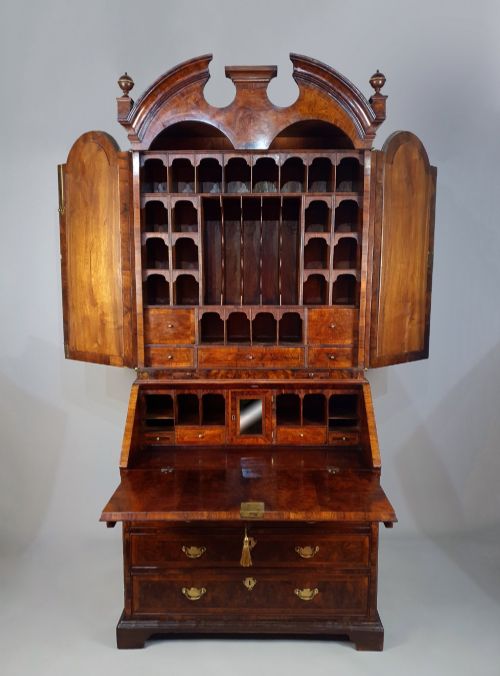
An upper stage lifts a piece well above a plain bureau. Bureau bookcases and secretaire bookcases dominate the upper half of the range, and the highest-priced pieces are almost all early-eighteenth-century walnut bureau bookcases, several double-dome or with original mirrored doors. Date works the same way: Queen Anne and George I carcases cluster high, while 1920s "Georgian Style" burr walnut bureaux sit low.
Decoration pushes upward too. Inlaid appears in 45 titles, and floral or Dutch marquetry, lacquer and gilt chinoiserie, scarlet japanning and parquetry all belong to the upper range. Small scale cuts both ways: "small" is stated in 79 titles, joined by petite, dinky, diminutive, neat and tiny, and it appears at the cheap oak end as readily as on premium walnut bookcases described as of small proportions.
Antique Georgian Bureau Retail Price Guide 2026
Typical UK retail prices for georgian bureau, calculated from the Sellingantiques database of over a million retail prices indexed since 2003. This retail price guide relies exclusively on Sellingantiques data; no external sources or auction records are used, so the figures do not describe the wider market.
The most expensive Georgian bureau ever sold on Sellingantiques was a Georgian mahogany secretaire bookcase, in January 2026.
The Antique Georgian Bureau Glossary
- Fall front
- The hinged sloping flap that drops to make the writing surface. It gives the form its name and appears in titles as fall or fall front.
- Fitted interior
- The pigeonholes, small drawers and often a central cupboard revealed when the fall is down.
- Bureau bookcase
- A bureau with a glazed or panelled upper stage on top. Bookcase is in 162 titles, roughly a fifth of the category.
- Secretaire
- A writing drawer with a flat pull-out front rather than a sloping fall. Named in 25 titles, sometimes as a secretaire bookcase.
- Feather banding
- Two narrow strips of veneer laid in a herringbone, a border of the walnut period. Crossbanding, laid at right angles to the main grain, is named on both oak and mahogany.
- Double-dome
- A twin-arched top to a bookcase stage, a phrase attached to several of the early walnut examples at the very top of the range.
Antique Georgian Bureau: Frequently Asked Questions
What wood are most Georgian bureaux?
Mahogany leads, named in 327 of the 709 titles on Sellingantiques. Oak and walnut follow, at 143 and 148 titles.
Everything else is scarce. Elm, yew, fruitwood, cherry, satinwood, rosewood, padauk, mulberry and cedarwood turn up only a handful of times apiece, and the rarest of them sit at the top of the range.
How wide is a typical example?
Narrow. Titles repeatedly specify 2'6" or 3ft widths, and the usual piece is three feet or less across.
The trade treats that narrowness as the selling point. "Small" appears in 79 titles, with petite, dinky, diminutive, neat and tiny doing the same job elsewhere.
Why are 1920s pieces filed as Georgian?
Because they're revival work. Titles such as "Georgian Style" and "in the Georgian Taste" sit inside the category alongside the originals.
That's why the dated years run from 1700 to 1930, a 230-year spread. Revival and Edwardian examples make up under one in ten of the listings.
What is the difference between a bureau and a secretaire?
A bureau has a hinged sloping fall that drops forward to make the writing surface. A secretaire has a flat pull-out drawer front instead.
Secretaire appears in 25 titles, secretaire bookcase in nine. A third variant, the cylinder or tambour, closes the writing space with a curved solid or slatted shutter, and shows up in eleven titles.
Are corner bureaux common in this category?
No. Three exist in the whole archive: a Welsh oak one, a George I oak one and a walnut corner bureau bookcase.
Miniature and child-size pieces are a slightly stronger strand, with a Welsh oak miniature from Glamorgan, a George III child's bureau and two miniature mahogany examples.
How often do these come up for sale?
Around 74 Georgian bureaux are listed on Sellingantiques in a year.
Across the archive 176 different dealers have handled one, which makes this a form almost every general furniture dealer touches at some point.