
A 2026 Guide by Sellingantiques
Developed in the late seventeenth century from earlier portable writing boxes placed on stands.
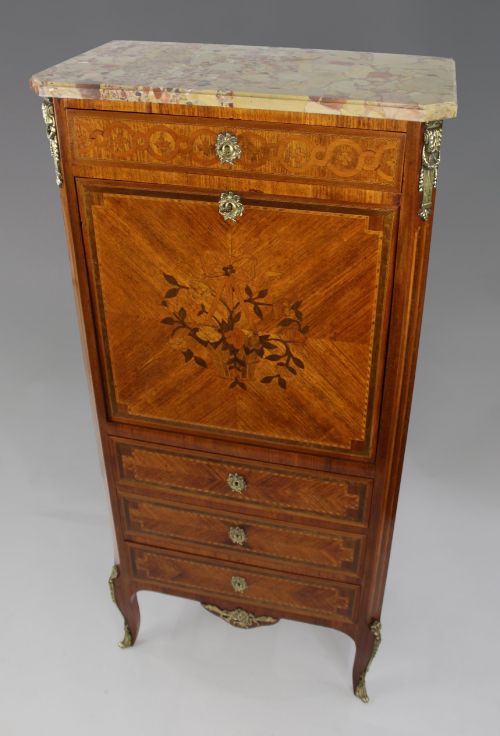
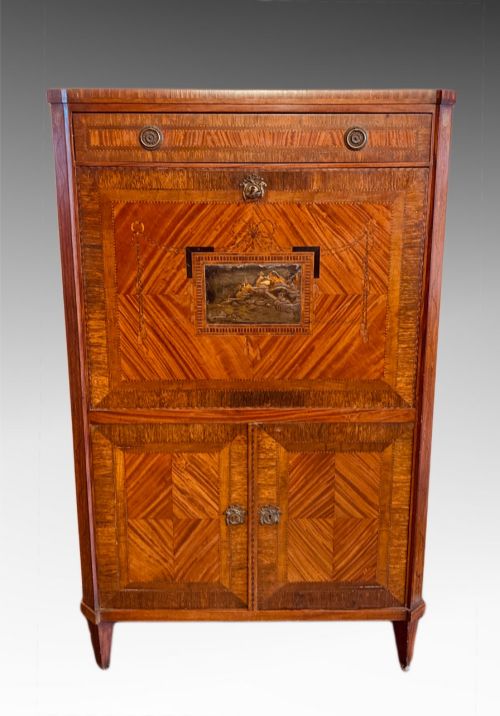
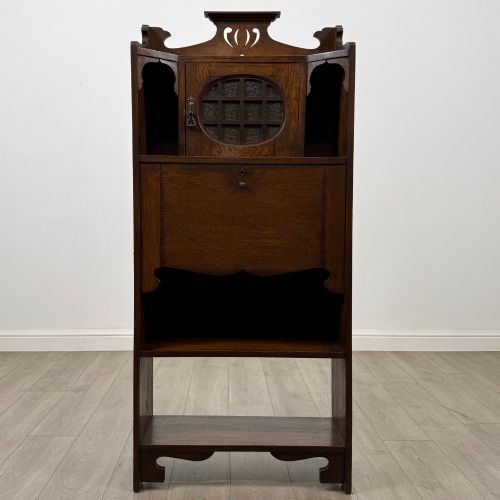
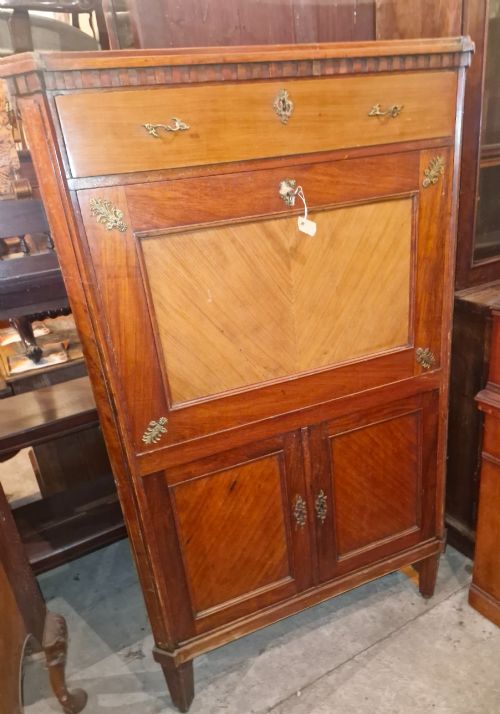
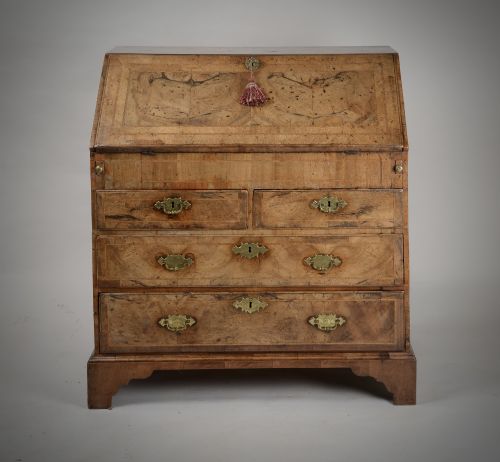
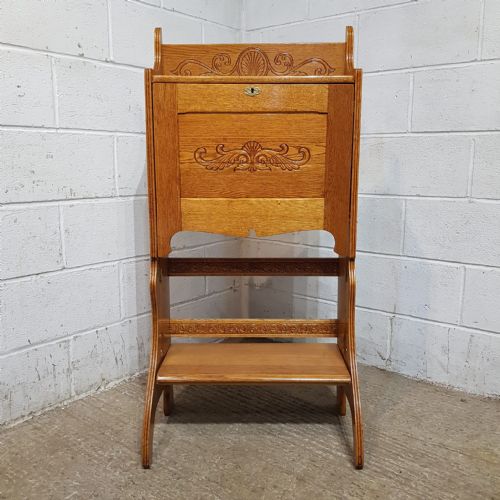
By the Georgian period, the antique fall front bureau became a standard fixture in wealthy households.
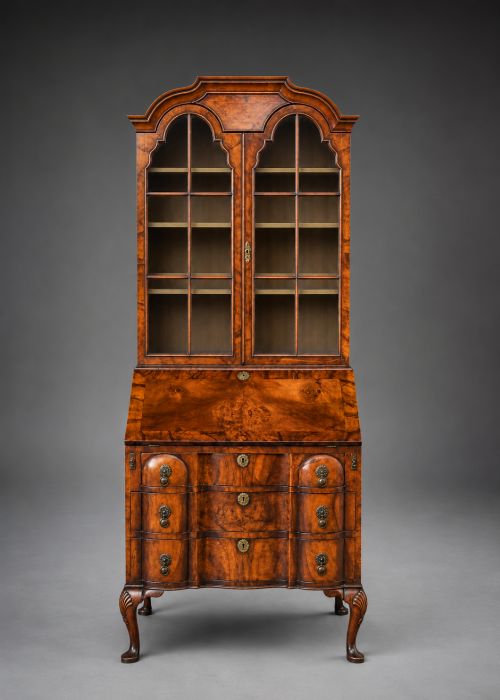
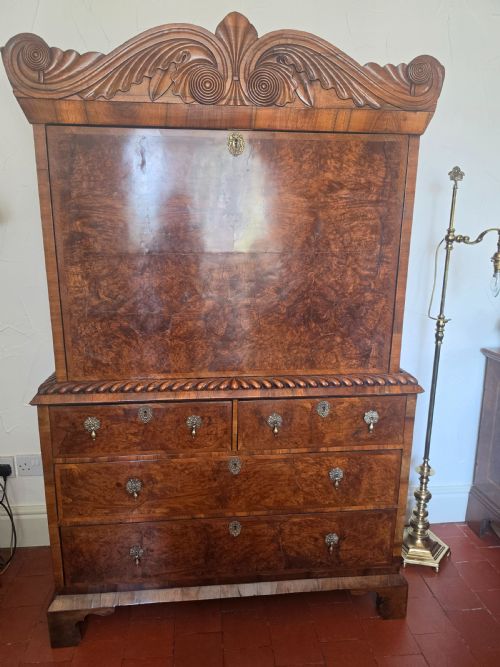
Look at the evolution of the form. They grew taller and gained deeper lower sections.
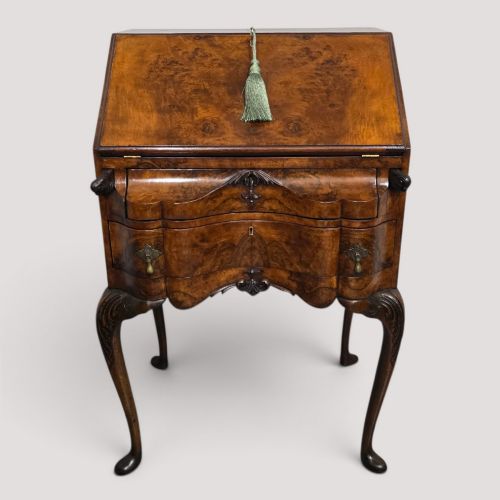
Regional variations emerged quickly across Britain. Provincial workshops often simplified complex London designs to save time.
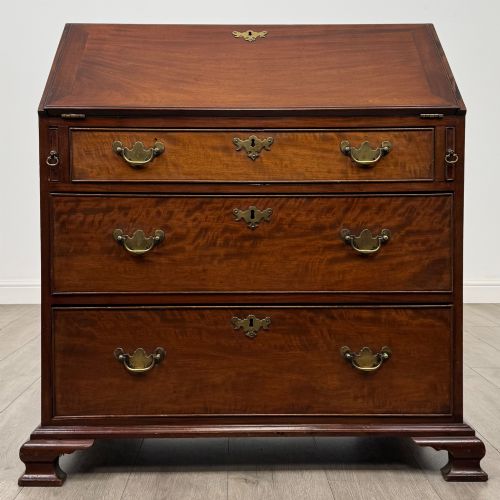
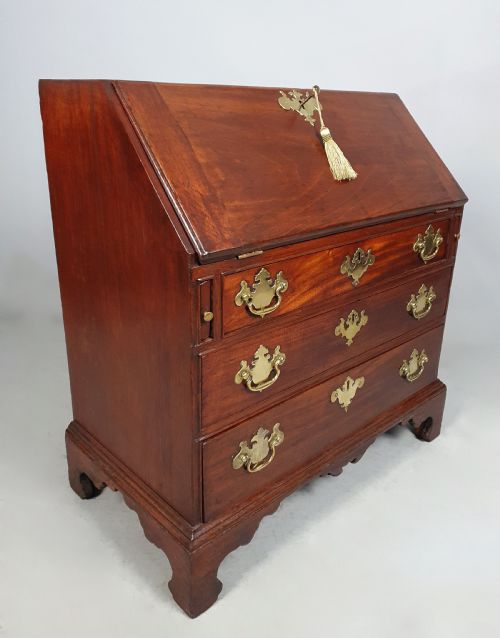
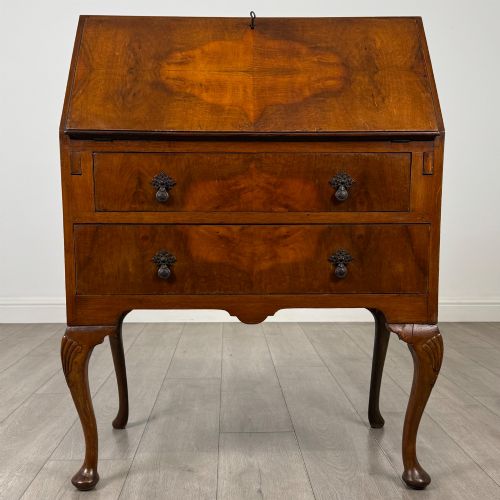
Some early models sit on bun feet rather than bracket feet.
Thomas Chippendale supplied several high-status mahogany variations of the antique fall front bureau to aristocratic clients.
Gillows of Lancaster produced hundreds of these through the late eighteenth century, sometimes stamping the drawer edge.
Mostly, you will find these were built by anonymous cabinet makers catering to local markets.
The 2026 retail price guide for Antique Fall Front Bureau is drawn from a proprietary archive of over 1.1 million retail prices indexed by Sellingantiques since 2003. This guide relies exclusively on their own internal data; no external sources or auction records are used.
Analysing nearly 25 years of UK antique market history alongside current retail values, the data indicates that typical UK retail prices for Antique Fall Front Bureau range between £700 and £7,300. Entry-level prices generally fall under £700 and premium examples upwards of £7,300.
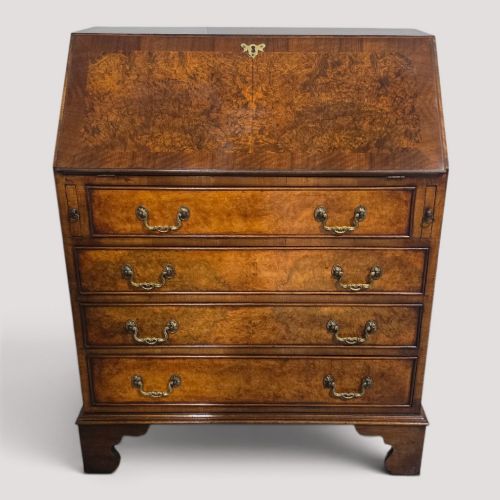
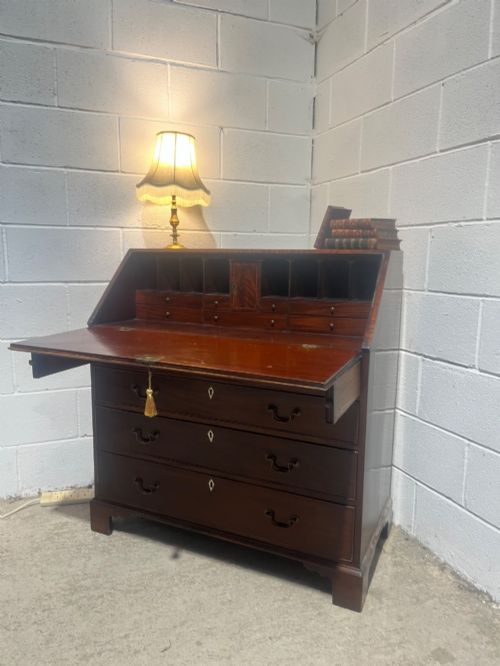
The sloping hinged flap rests on pull-out lopers to support the weight of writing arms.
Inside the writing section, a central cupboard is often flanked by pigeonholes and small stacked drawers.
Expect three or four long graduated drawers in the lower carcase.
Hand-cut dovetails secure the drawers on an authentic antique fall front bureau, showing slight saw angles.
Veneering techniques shifted. Thick walnut cuts on early pieces gave way to thinner slices later.
Observe the back boards. They are often left rough from the saw because they face a wall.
"Many feature false drawer fronts inside the central compartment that slide out to reveal concealed storage."
"The varying drawer depths in the lower carcase were proportioned to create an optical illusion of height."
"Some provincial examples incorporate regional inlay patterns that help identify which county the piece was made in."
Based on almost 25 years of Sellingantiques UK antique market data, Antique Fall Front Bureau appeared 1091 times (out of 1,100,000 antiques) which gives it a rarity score of 80/100.
This score measures scarcity within the Sellingantiques archive only and is not a survey of the entire antiques market, so these statistics may not be indicative of the general availability of Antique Fall Front Bureau elsewhere.
Carefully pull it forward while wiggling it side to side. Damp weather causes the wood to swell, making them bind in their channels.
Once out, rub a plain wax candle along the top and bottom edges of the slider. This lubricates the wood without damaging the finish.
The uneven flap is usually caused by the brass hinges bending over time or the wooden lopers wearing down. It happens when heavy weights rest on the unsupported edges of the lid.
You can often adjust the level by replacing worn hinge screws or adding a thin timber shim above the lopers.
The small internal drawers held writing sand and sealing wax. They kept the dusty elements of letter writing away from clean paper.
Larger documents sat in the open pigeonholes, while the central cupboard secured private correspondence.
Never force the flap with a lever. You will split the grain or shatter the lock keep entirely.
A local locksmith can usually pick a basic antique lever lock in minutes. They can then cut a new key to fit the original mechanism, keeping the piece intact and functional.
Please note: This Antique Fall Front Bureau guide and its associated pricing data are provided for general informational purposes only. It does not constitute formal financial, investment, or appraisal advice and should not be relied upon as the sole basis for any commercial activity, purchasing, or sales decisions. Sellingantiques.co.uk accepts no liability for any actions taken in reliance on this information. Always consult with a qualified professional or independent appraiser.
