


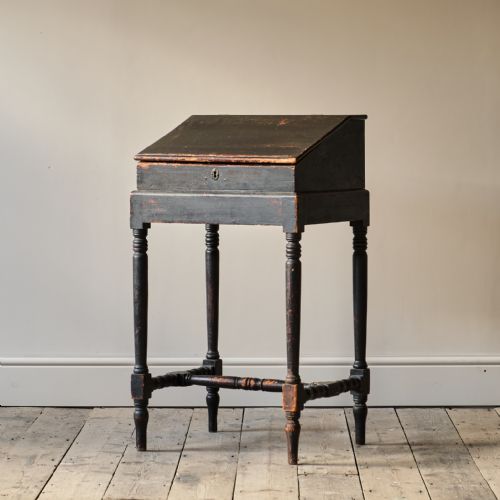
A 2026 Guide by Sellingantiques
Baltic timber imports drove rural furniture production from the late eighteenth century onwards.
Many early nineteenth-century examples sat in farm offices, giving estate managers a locked space for wages and handwritten ledgers away from the main house.
Paint or scumble glaze originally covered the wood on most antique pine bureaus, mimicking mahogany.
Check the backboards. Wide, single-plank cuts often point to early Victorian or Georgian origins.
Stripping these pieces bare became a major trend in the nineteen-seventies, altering how buyers view country furniture.
Provincial carpenters built almost every antique pine bureau you'll find, working from generic pattern books.
Estate workshops produced hundreds of these for local use, skipping maker marks.
Town directories list endless cabinetmakers turning out functional softwood pieces for everyday use, yet tracing a specific desk back to an individual workshop remains rare.
The 2026 retail price guide for Antique Pine Bureau is drawn from a proprietary archive of over 1.1 million retail prices indexed by Sellingantiques since 2003. This guide relies exclusively on their own internal data; no external sources or auction records are used.
Analysing nearly 25 years of UK antique market history alongside current retail values, the data indicates that typical UK retail prices for Antique Pine Bureau range between £600 and £1,900. Entry-level prices generally fall under £600 and premium examples upwards of £1,900.
The sloping fall rests on two pull-out lopers when open, providing a flat writing surface.
Small pigeonholes and internal drawers fill the stepped interior section.
Bracket feet usually support the base, though turned bun feet appear on later nineteenth-century variations.
Through-dovetails join the carcase corners on earlier country pieces, leaving the end grain visible.
Hand-forged iron nails often secure the backboards, driven straight into the rebated frame.
Run your fingers along the drawer bottoms. You'll feel thick chamfered boards slotted into grooves.
"Secret compartments slide out from behind the central decorative column on many country interiors."
"The soft timber readily absorbs natural beeswax, building up a rich patina over generations."
"Finding one with its original scumble glaze intact transforms a basic provincial desk into folk art."
Based on almost 25 years of Sellingantiques UK antique market data, Antique Pine Bureau appeared 161 times (out of 1,100,000 antiques) which gives it a rarity score of 97/100.
This score measures scarcity within the Sellingantiques archive only and is not a survey of the entire antiques market, so these statistics may not be indicative of the general availability of Antique Pine Bureau elsewhere.
Pull the drawer below it out first. Reach up inside the carcase and check for swelling or accumulated debris along the wooden runner.
Rubbing a block of dry paraffin wax along the sliding surfaces often cures the binding. Avoid liquid oils, as they soak into the softwood and attract dust.
Leave the drawers open in a dry, well-ventilated room for a few weeks. Fresh air draws out most minor odours trapped in untreated softwood.
Place a shallow bowl of white vinegar or baking soda inside the main carcase with the fall closed. Swap it out every few days until the smell fades. Don't spray chemical deodorisers directly onto the wood.
Yes. Most country pine furniture originally carried paint to cover knots and uneven grain.
Use a standard wood primer first. Milk paint or traditional chalk finishes suit the provincial character well.
Check the hinges first. Loose screws allow the fall to sag forward, throwing off the level. Tightening them or packing the holes with wood slivers might fix the angle.
Look at the lopers next. Years of sliding wear down the top edges where the fall rests. A cabinetmaker can glue thin timber shims to the top of the lopers, raising the contact point back to horizontal.
Please note: This Antique Pine Bureau guide and its associated pricing data are provided for general informational purposes only. It does not constitute formal financial, investment, or appraisal advice and should not be relied upon as the sole basis for any commercial activity, purchasing, or sales decisions. Sellingantiques.co.uk accepts no liability for any actions taken in reliance on this information. Always consult with a qualified professional or independent appraiser.
