

A 2026 Guide by Sellingantiques
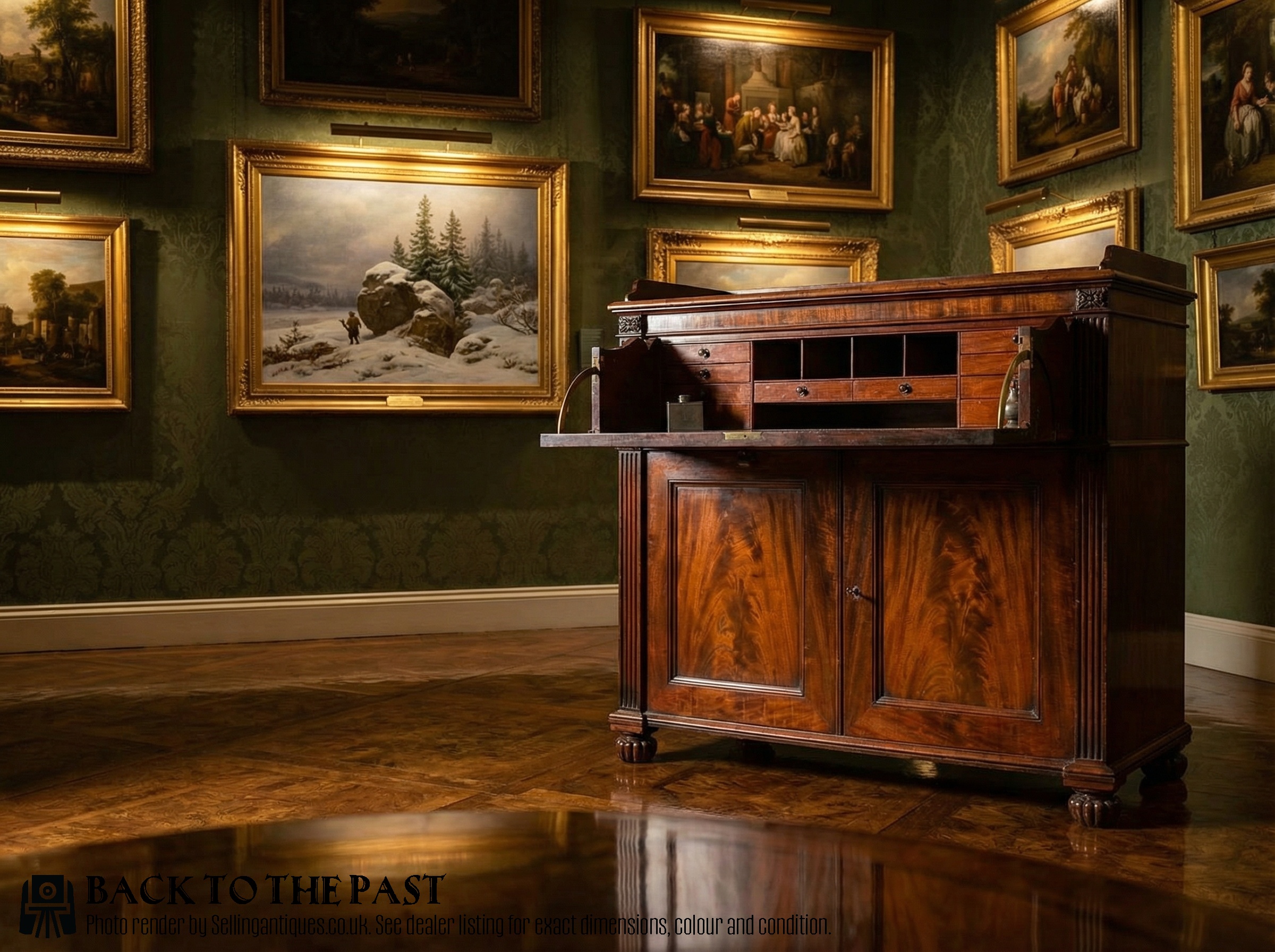
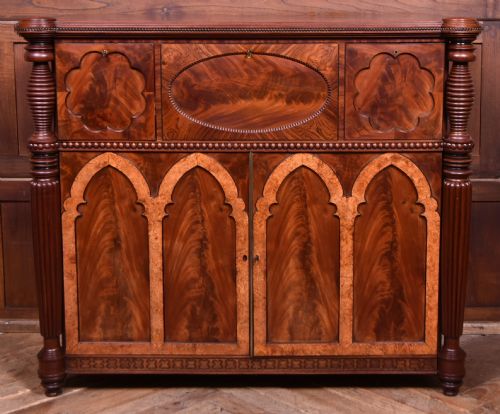
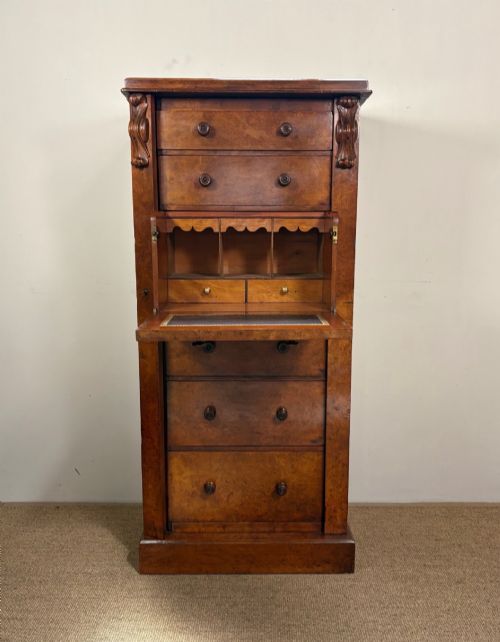
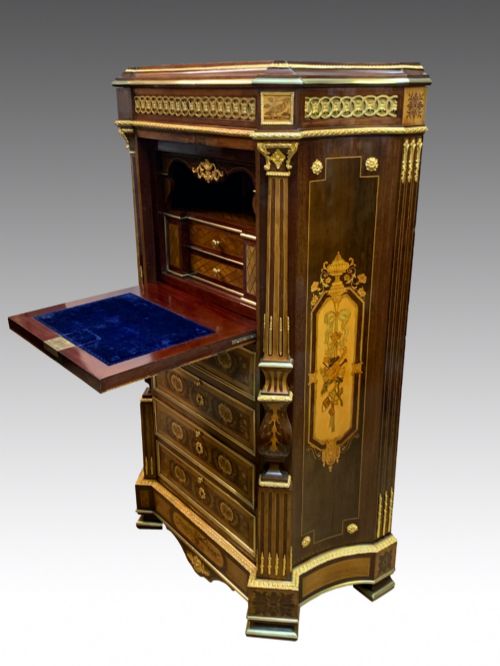
Antique English Regency Flame Mahogany Secretaire Desk Bureau Chest of Drawers by Gillows of Lancaster (Circa 1830), 19th Century
Priced at £9,850 from Yolanda Gray Antiques
These forms emerged in France during the eighteenth century as society demanded dedicated writing furniture.
Pull down the front of an early secretaire and you find a secure space meant for private correspondence.
They became a staple in Georgian England. Space was at a premium in townhouses, so combining storage with a desk made sense.
Continental designs often favoured the tall, upright shape over the English chest format.
Most nineteenth-century examples reflect the growing middle-class need to lock away household accounts.
Thomas Chippendale supplied several elaborate secretaire cabinets to grand houses like Dumfries House in the 1750s.
Gillows of Lancaster produced hundreds of these during the late eighteenth and early nineteenth centuries. Their stamps sometimes appear on the drawer edges.
French makers like Jean-Henri Riesener defined the high-end output, covering them in complex marquetry and gilt-bronze mounts.
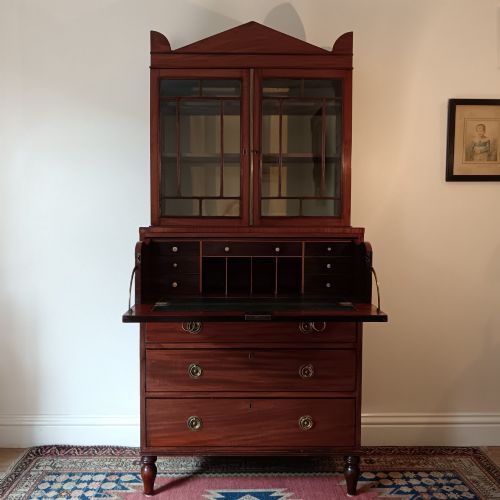
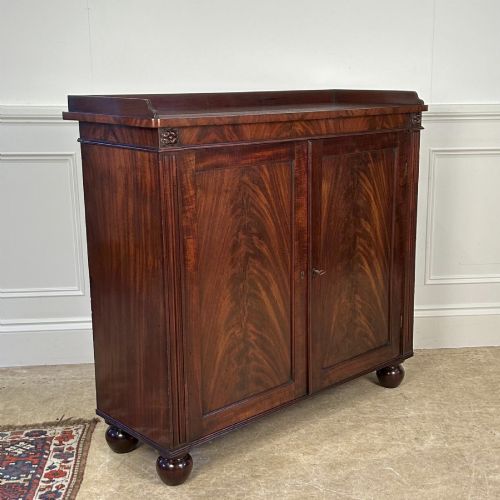
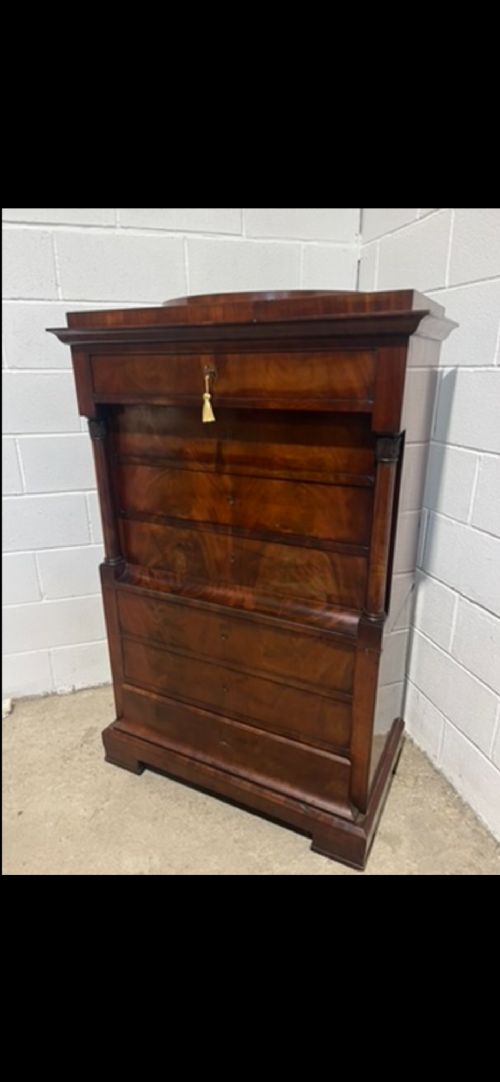
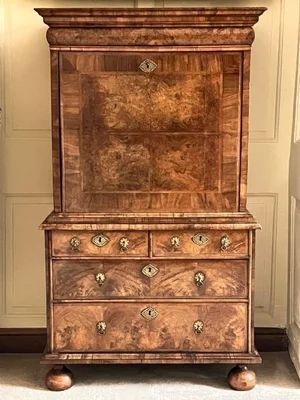
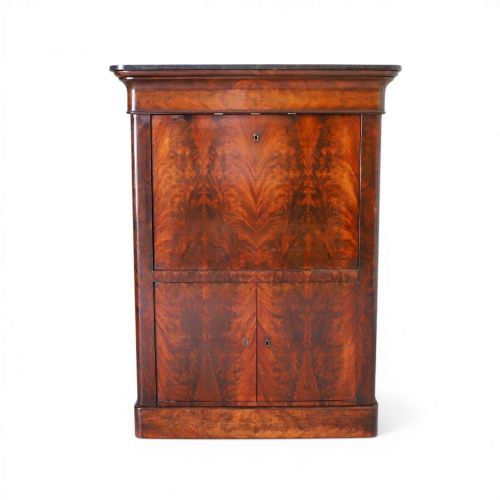
Georgian Secretaire Tallboy, 18th Century
Priced at £1,850 from Millers Antiques
The 2026 retail price guide for Antique Secretaires is drawn from a proprietary archive of over 1.1 million retail prices indexed by Sellingantiques since 2003. This guide relies exclusively on their own internal data; no external sources or auction records are used.
Analysing nearly 25 years of UK antique market history alongside current retail values, the data indicates that typical UK retail prices for Antique Secretaires range between £1,200 and £6,000. Entry-level prices generally fall under £1,200 and premium examples upwards of £6,000.
The disguised top drawer is the main giveaway. It looks like a standard drawer front until the brass buttons release the catch.
Check the interior fittings. You usually find a central cupboard flanked by pigeonholes and tiny drawers for ink and pounce.
Secret compartments are fairly common. They hide behind false backs in the central prospect door or beneath sliding bases in the pigeonholes.
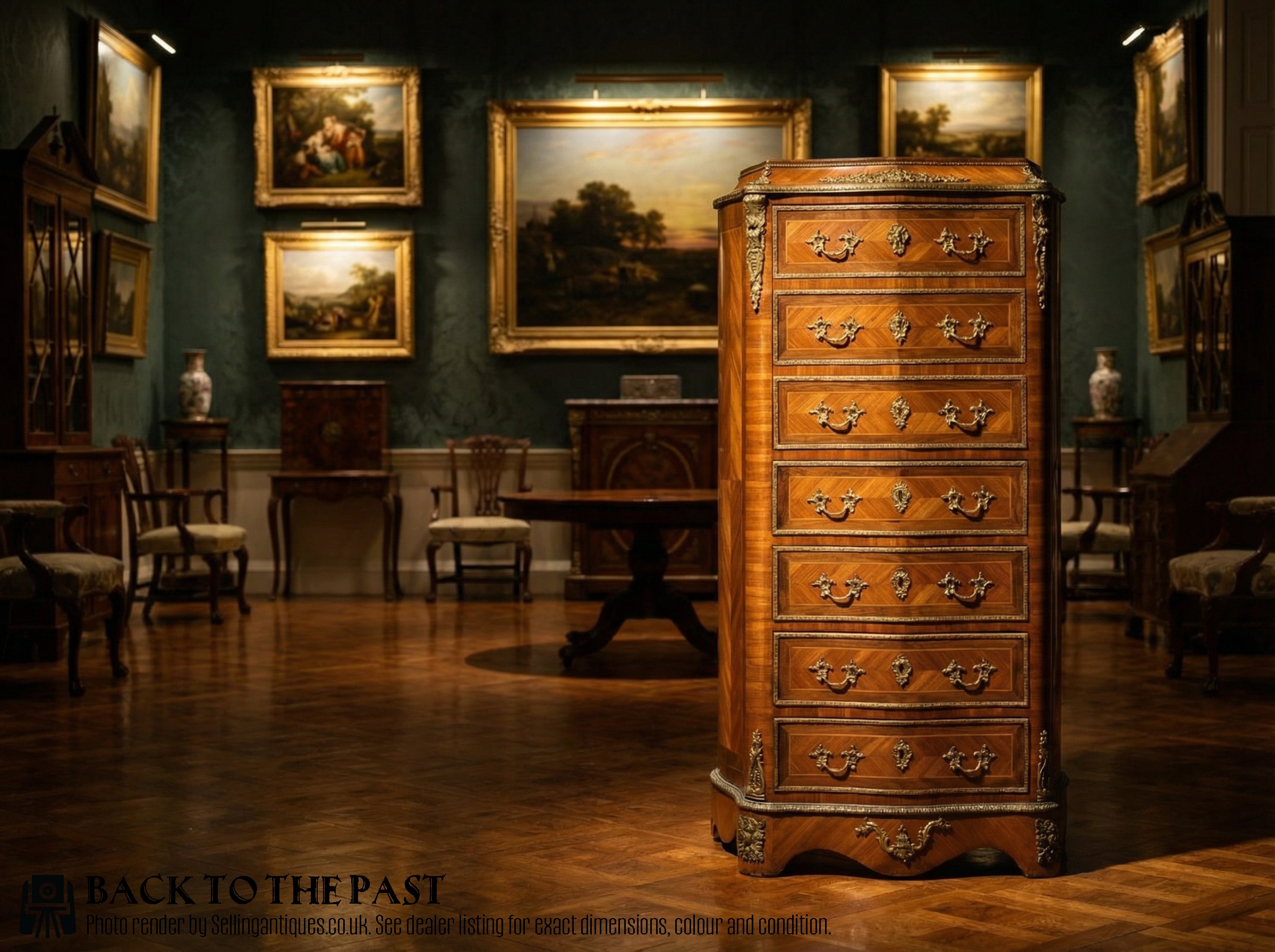
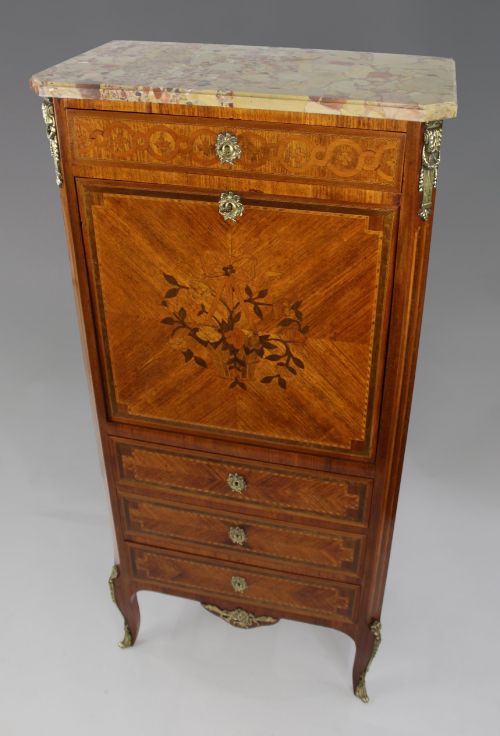
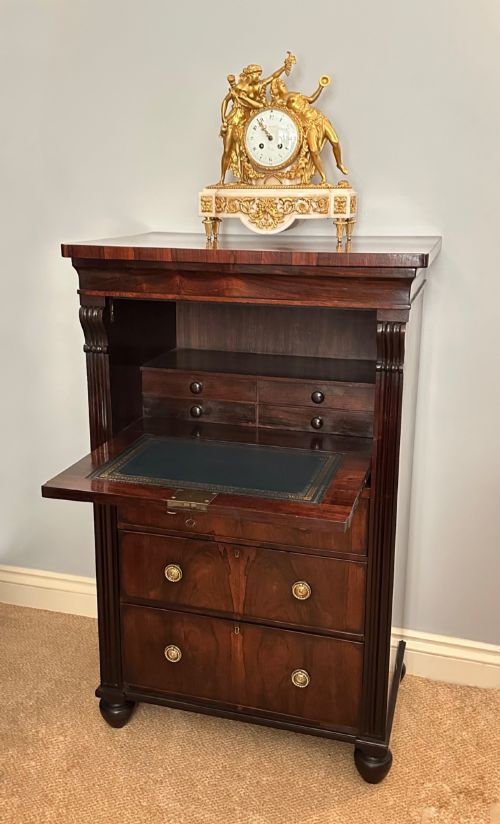
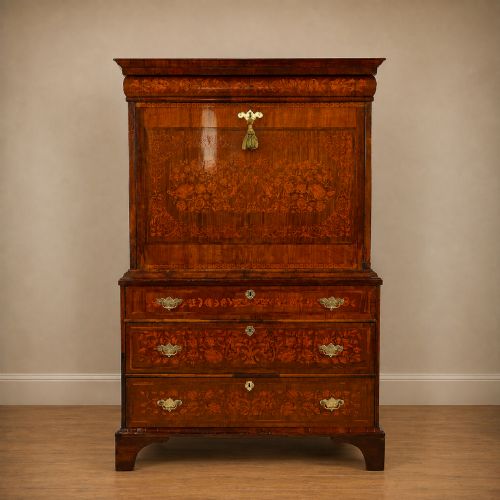
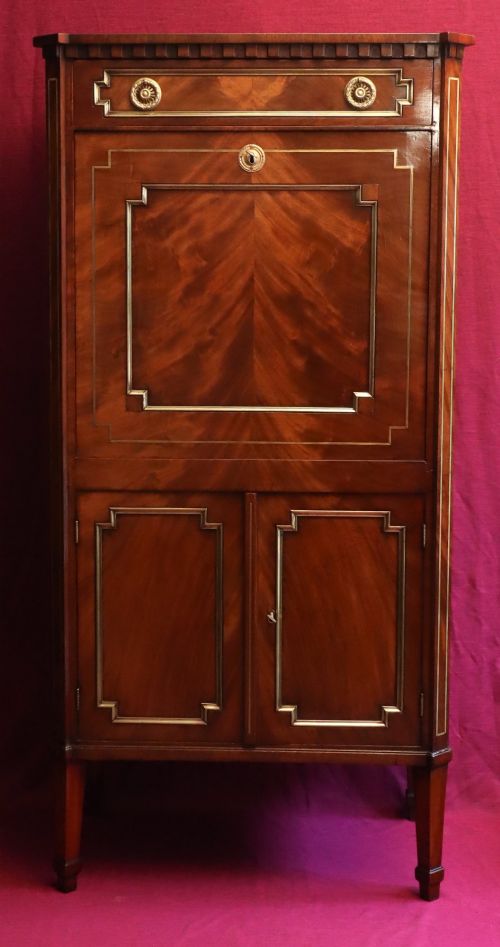
Kingwood Secretaire Abattant, 1900
Priced at £2,295 from Shackladys Antiques
Early examples rely on solid timbers and heavy hand-cut dovetails to hold the carcase together under the weight of the upper sections.
Veneering techniques shifted during the Regency period. Cabinetmakers started applying much thinner cuts of exotic timber to achieve mirrored grain patterns.
Locking mechanisms grew more complex over time. A good nineteenth-century lock shoots bolts in multiple directions to secure the drop front.
"Small drawers were originally designed to hold specific items like sealing wax and sand, rather than standard modern stationery."
"Some variations include a hidden weighted mechanism. Pushing a specific button causes a concealed bank of drawers to pop up automatically."
"Leather writing inserts were often tooled with gold leaf, adding a flash of luxury that was only visible when in use."
Based on almost 25 years of Sellingantiques UK antique market data, Antique Secretaires appeared 3374 times (out of 1,100,000 antiques) which gives it a rarity score of 51/100.
This score measures scarcity within the Sellingantiques archive only and is not a survey of the entire antiques market, so these statistics may not be indicative of the general availability of Antique Secretaires elsewhere.
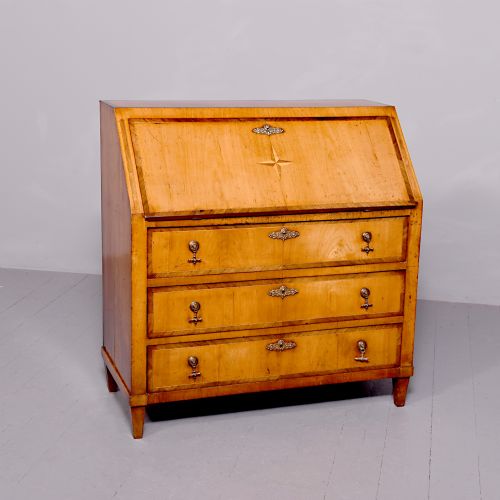
A bureau typically has a sloping fall front that rests at an angle when closed. You look at it and instantly know it functions as a desk.
A secretaire disguises its purpose. The writing section sits behind a vertical panel that looks just like a top drawer until you drop it down.
Go easy with modern oils. They often attract dust and grit, which eventually forms a grinding paste inside the moving parts of the brassware.
A tiny drop of light machine oil on a cotton swab is usually enough. Work the hinge back and forth gently. If the quadrant hinges are bent, oil will not solve the problem.
Most fitted interiors are built as a single structural unit. They slide into the carcase from the front during construction.
Taking them out means dismantling the backboards. It is rarely worth the disruption.
Leather naturally dries out and turns brittle over the decades. The fold takes the brunt of the stretching every time the desk is opened and closed.
You can apply a conservation-grade leather dressing to the flat surfaces to restore some moisture.
Once the fibres on the crease begin to split, the damage is structural. Most dealers leave it alone until a full replacement is strictly necessary.
Please note: This Antique Secretaires guide and its associated pricing data are provided for general informational purposes only. It does not constitute formal financial, investment, or appraisal advice and should not be relied upon as the sole basis for any commercial activity, purchasing, or sales decisions. Sellingantiques.co.uk accepts no liability for any actions taken in reliance on this information. Always consult with a qualified professional or independent appraiser.
