It was listed by M. C. Taylor. Sold pieces stay on Sellingantiques as a record of what has passed through, and the next one is rarely far away.
M. C. Taylor has dated this piece to the 17th Century.
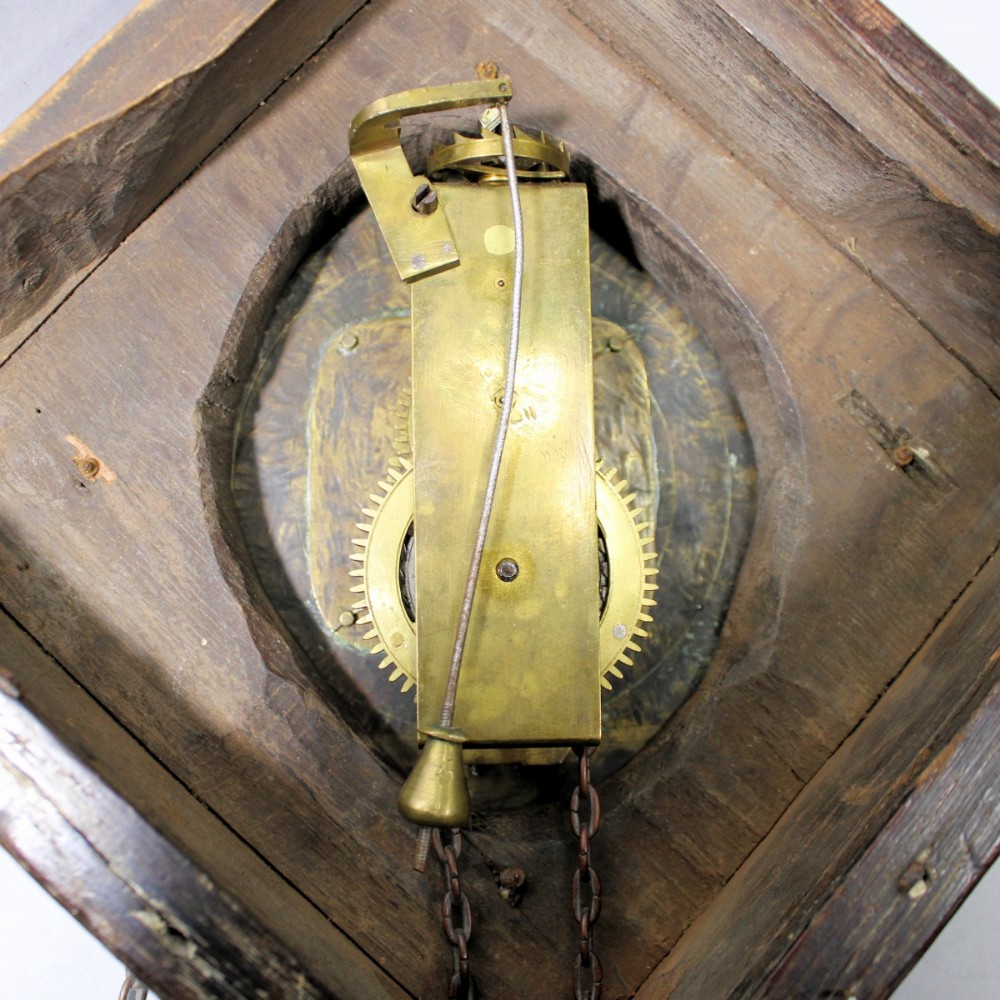
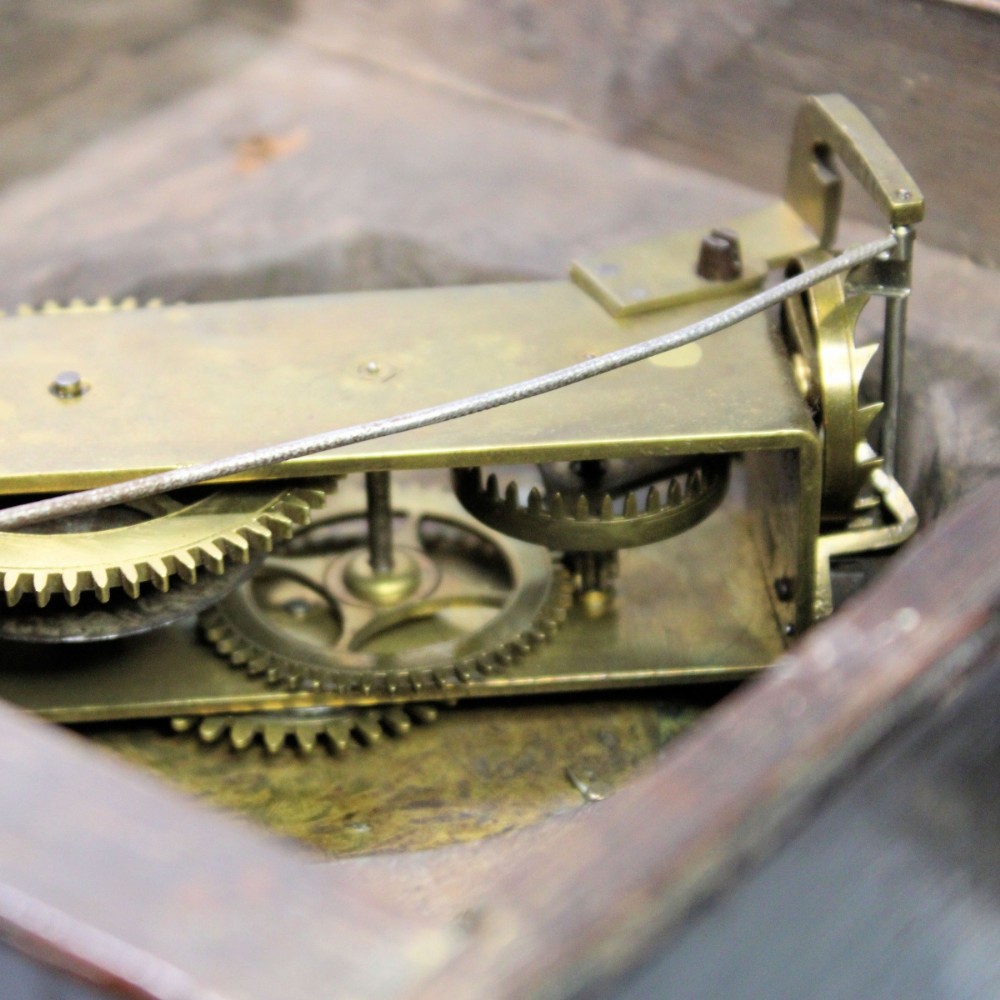
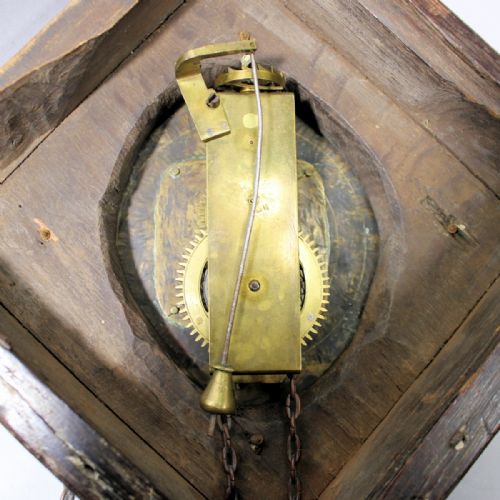
It has no pillars but is held together by the plates being folded at right angles. It is driven by a brass-cased lead weight hanging from the great wheel sprocket. It is fixed to the dial by the hooks-and-pins method and the hour wheel is neatly sprung between the movement and dial. Regulation is carried out by turning the pear drop bob up or down the rod.
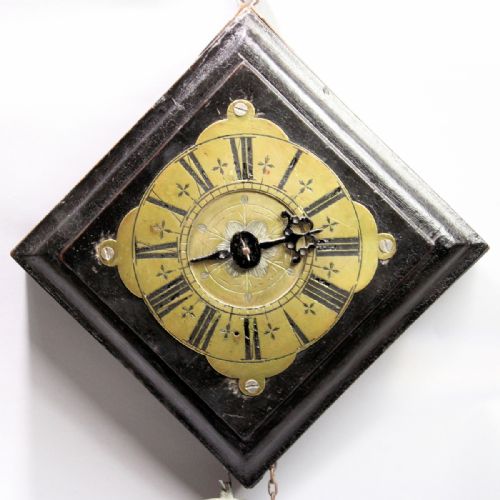
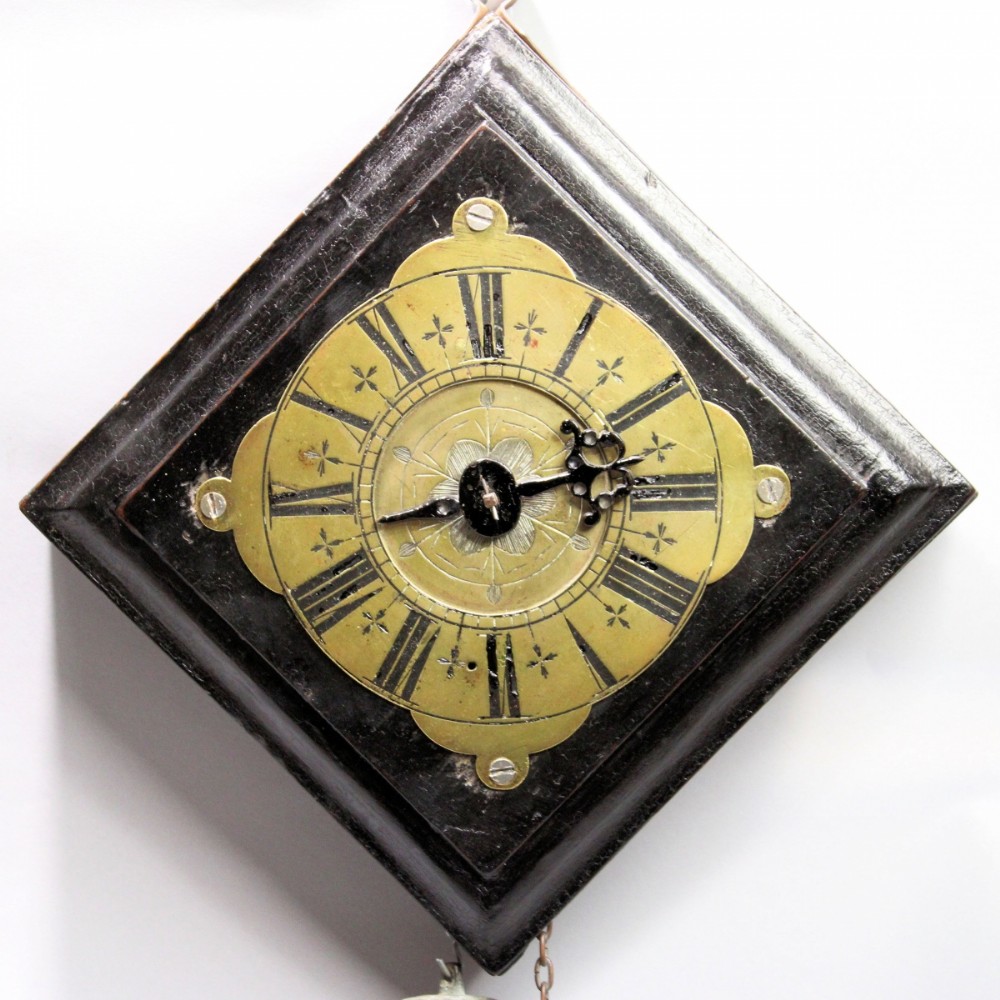
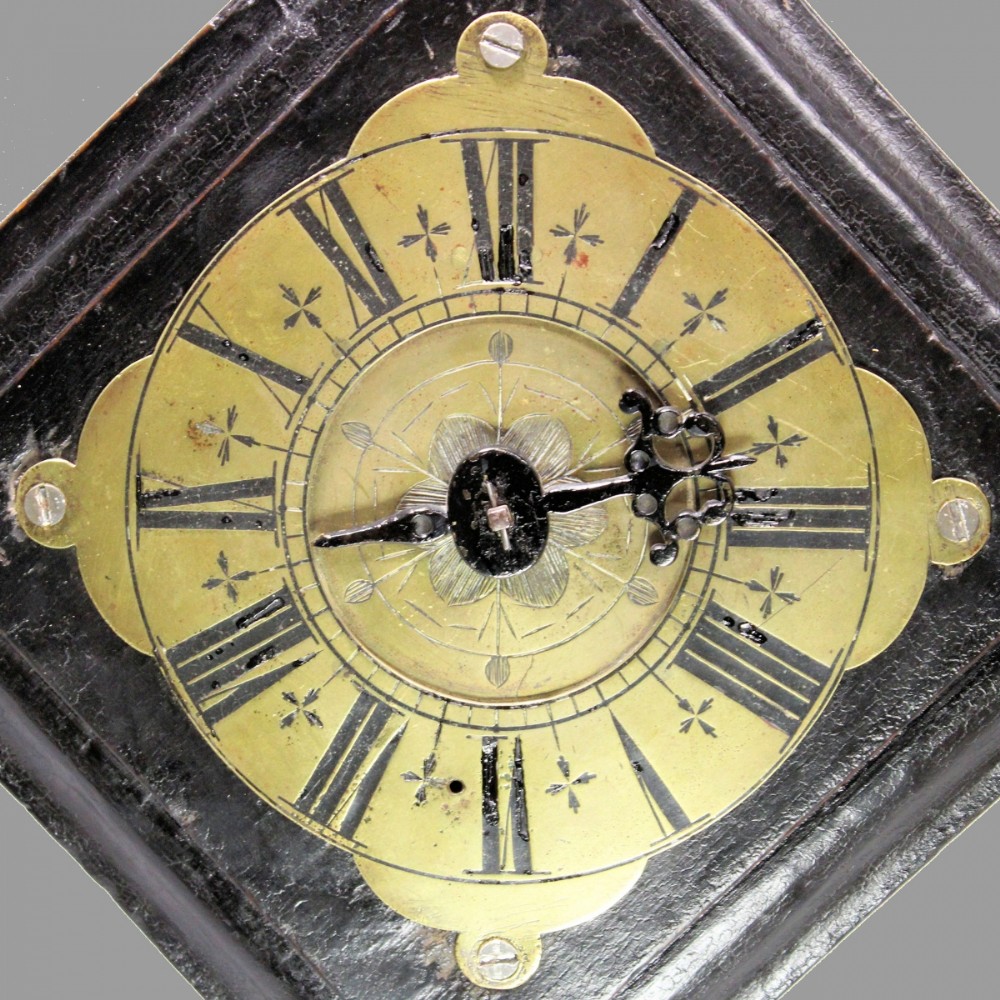
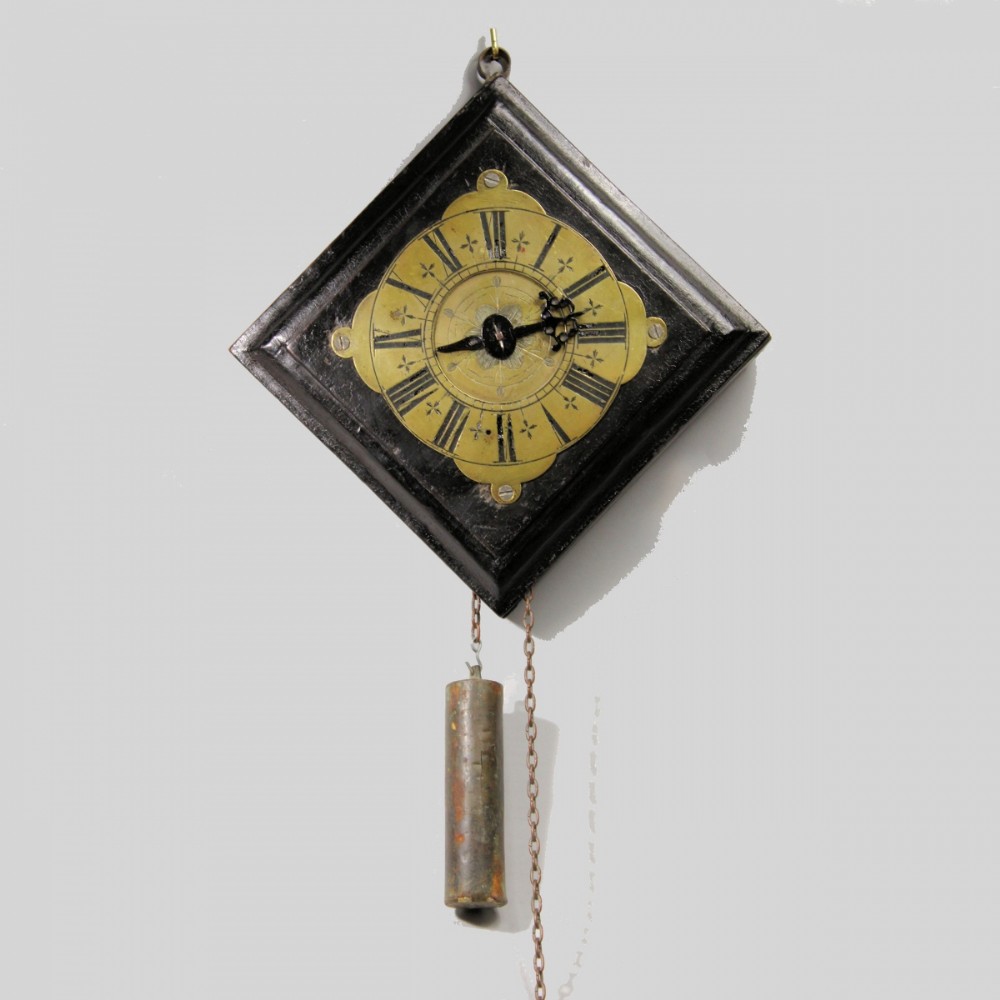
The single piece, shaped diamond brass dial has a 5 7/8" diameter chapter with outer wax-filled circle, large Roman hour numerals, half hour cruciform markings and inner, divided quarter hour track. The recessed centre has a large tulip head motif. The dial and movement are fixed to the case at the extended XII, III, VI and IX points with large screws. The single hand is painted black and has a decoratively pierced head and a shaped tail.
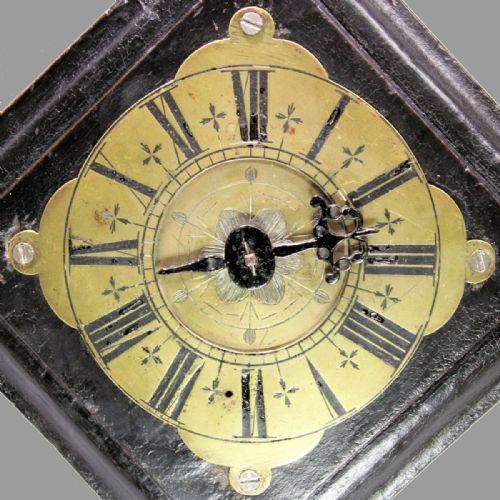
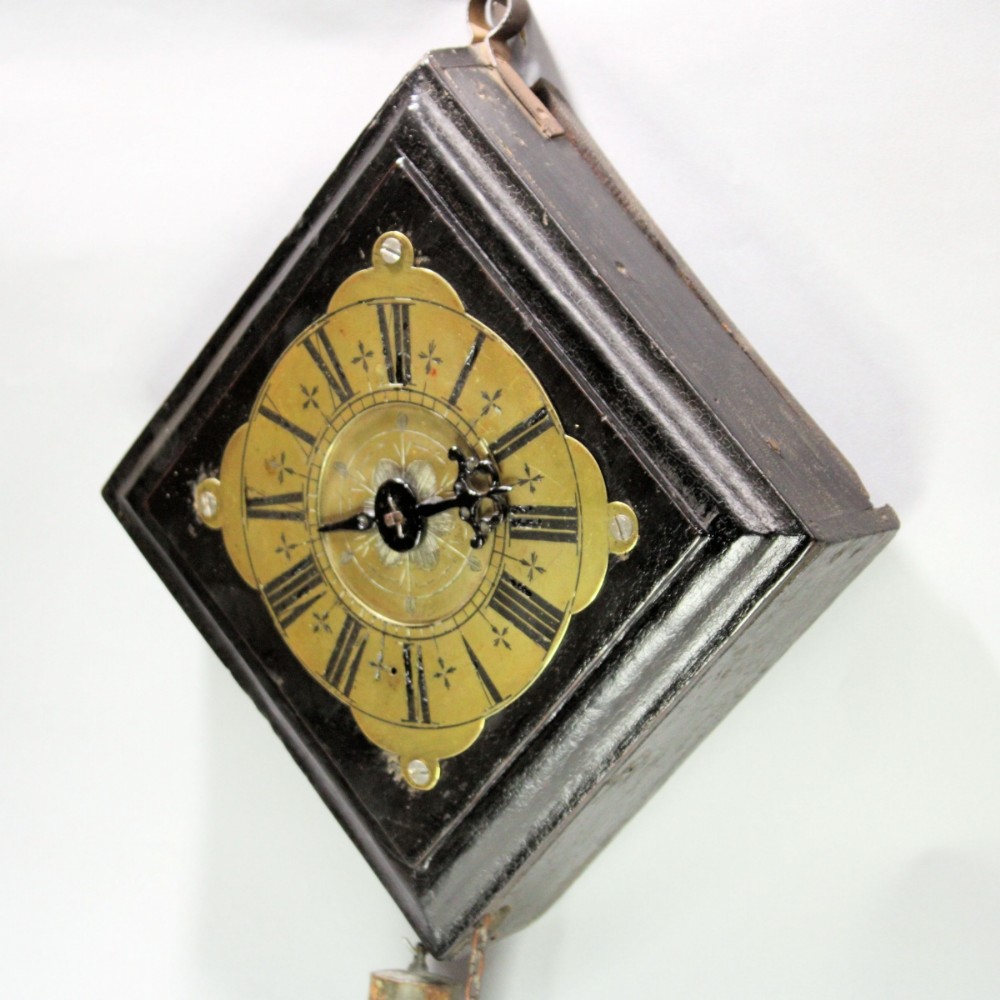
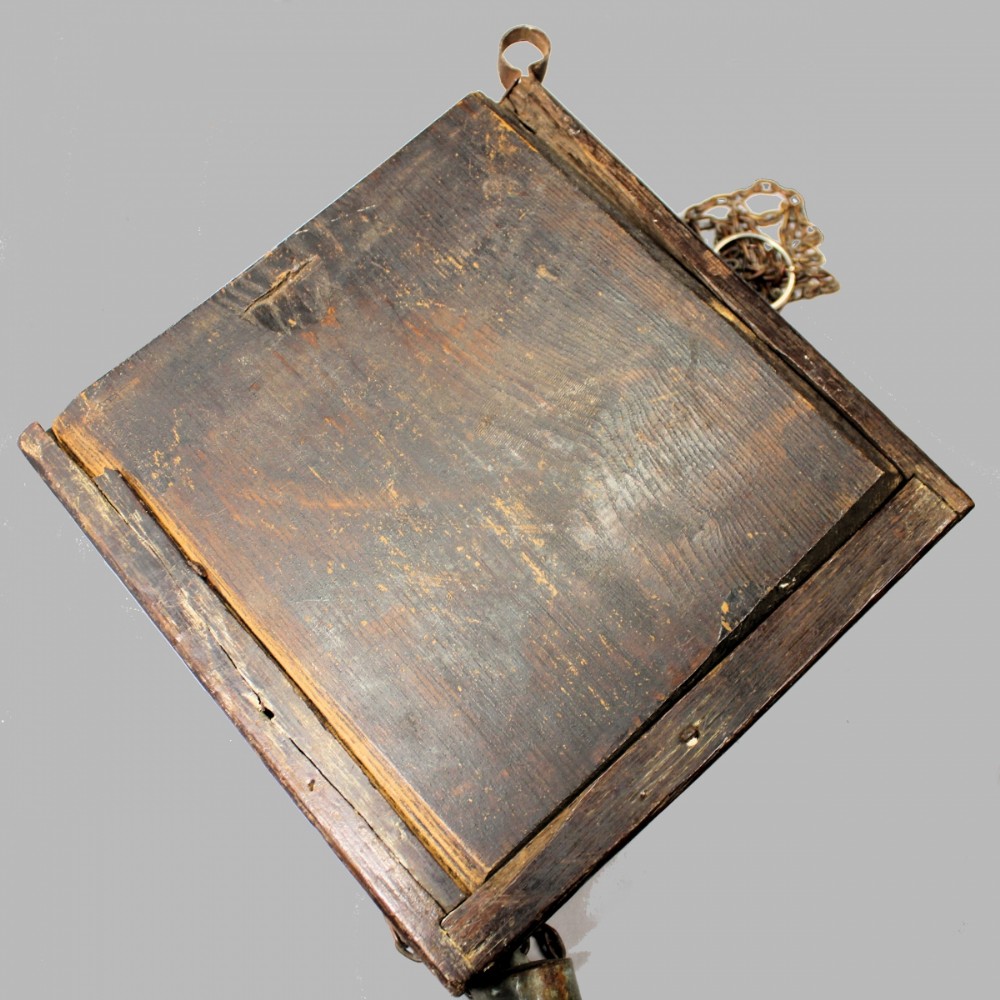
The ebonised oak case has a large ogee moulding around the front edge and flat sides. It has a sliding rear access door, forged iron hanging loop to the top and chain exit holes to the bottom corner.
This type of wall timepiece is extremely rare and not many exist today. An example is known that was made by Ahaseurus Fromanteel. Research by my favourite researcher, Brian Loomes shows an example made by Thomas Ban(n)ister of Norton Canon, just a few miles West of Hereford. The movements are uncannily similar in construction therefore, I am suggesting that this example was also made by him but a little bit earlier.
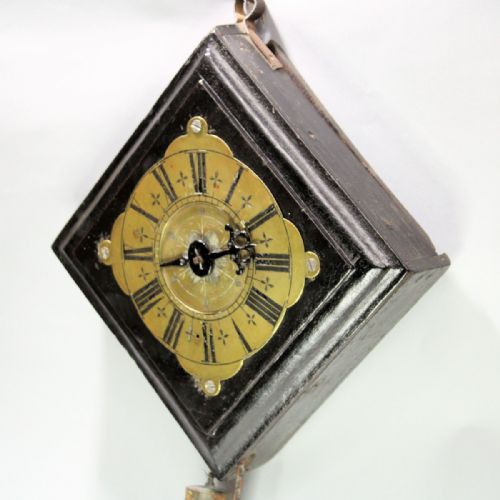
Dimensions: 11" x 11" across the corners and 7 3/4" x 7 3/4" across the sides x 3" deep.
Condition: Whilst the movement is working and keeping to time, it would greatly benefit from a non-cosmetic overhaul. The chain runs well but has been shortened and only has a duration of 21 hours. The dial was originally wax-filled and silvered which has worn away and some of the waxed engraved areas have lost the filling. The case has it's original ebonised finish that though cracked, is sound and must be conserved.
Price: The price is for the clock in it's current condition. A price and timescale for any work required by the purchaser can be advised upon enquiry.
For further information please contact us at:
info@bournemouthclocks.co.uk
M. C. Taylor has dated this piece to the 17th Century.
Clockmakers and restorers established 1987
You can view the stock and full dealer information on the M. C. Taylor Profile Page
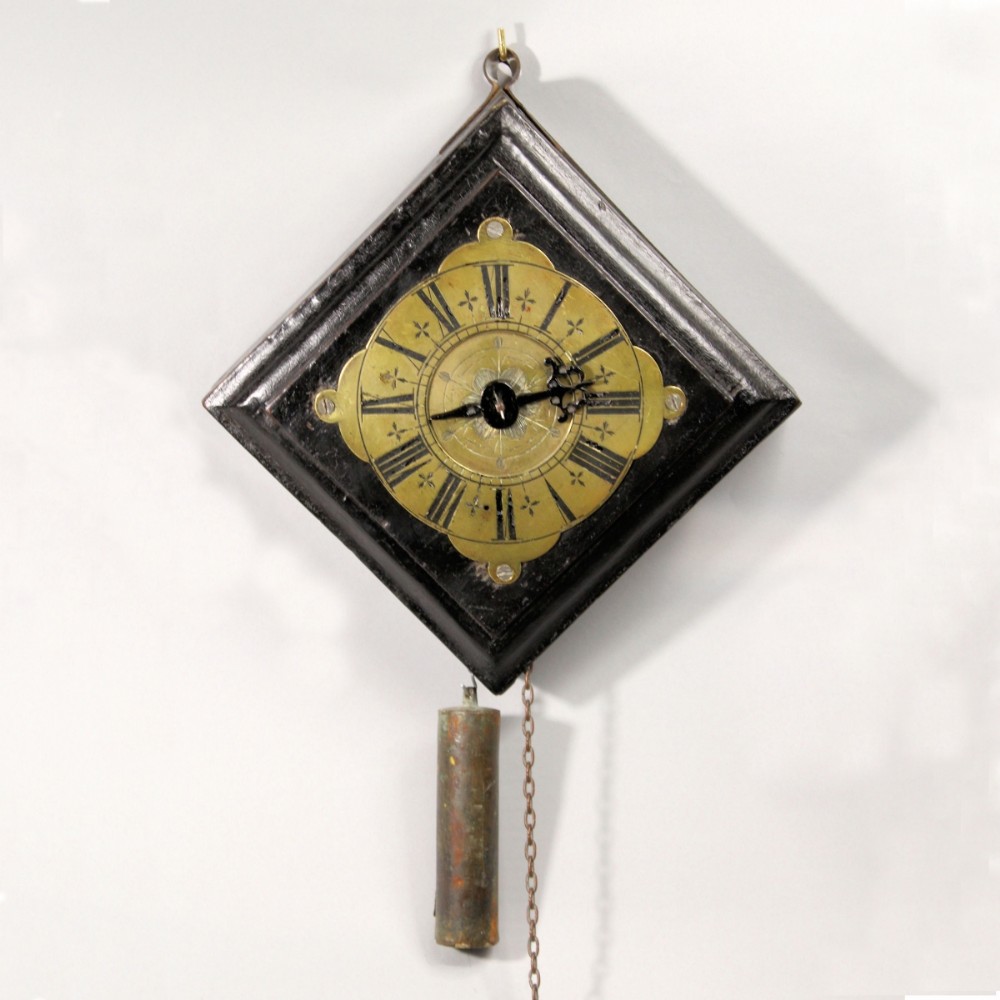
A Rare and Early English Wall Timepiece with Verge Escapement and in Original Lozenge Shaped Oak Case. Circa Late 17th Century.