It was listed by M. C. Taylor. Sold pieces stay on Sellingantiques as a record of what has passed through, and the next one is rarely far away.
M. C. Taylor has dated this piece to the 19th Century.
The eight day duration, five pillar, double fusee movement with Anchor Recoil escapement.
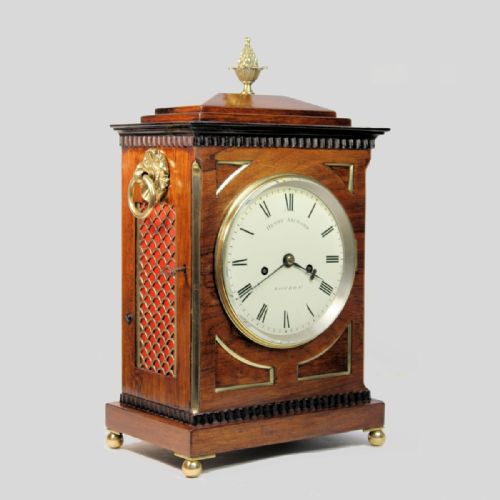
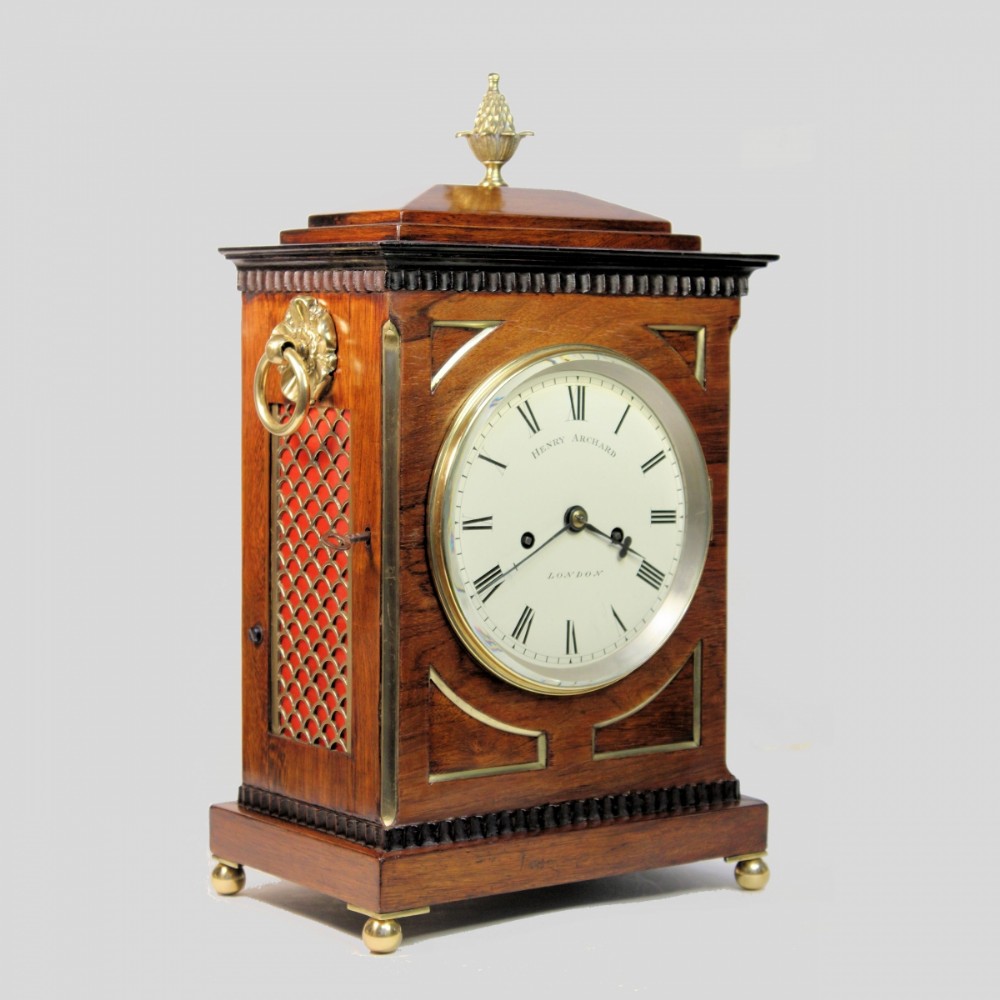
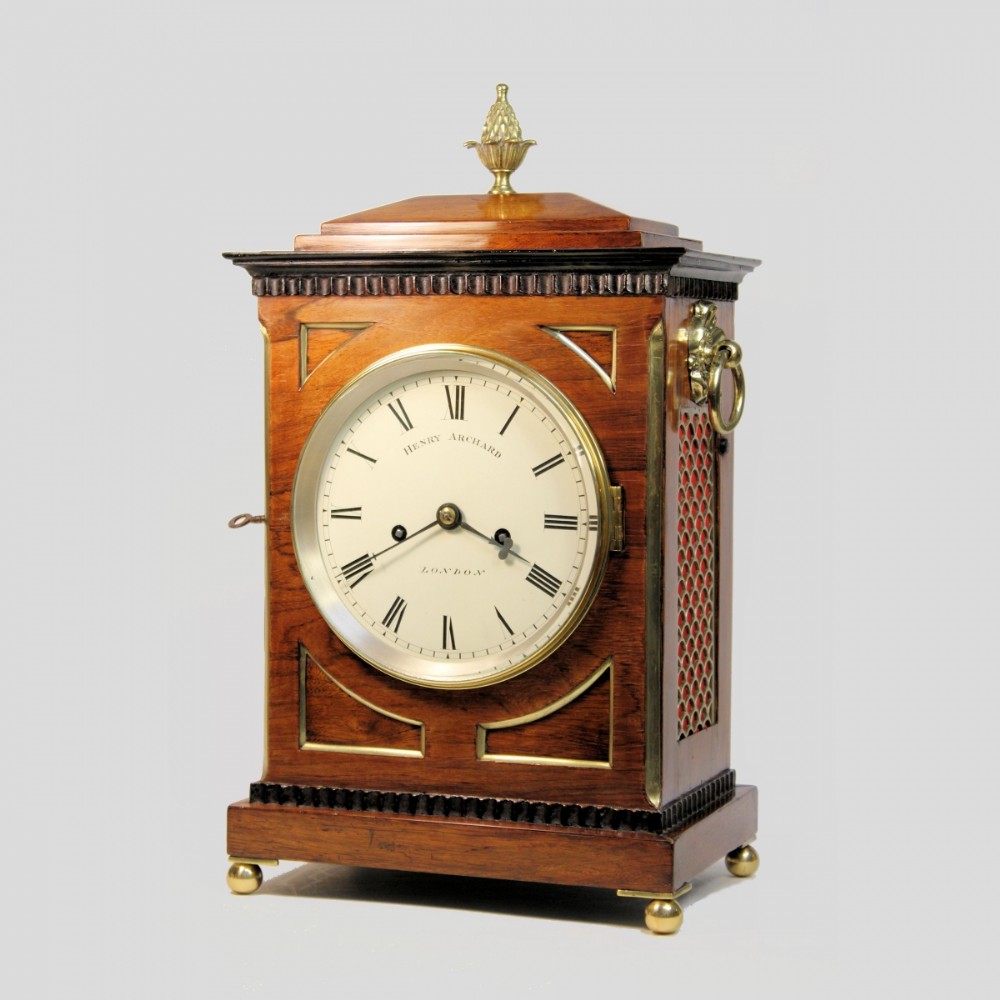
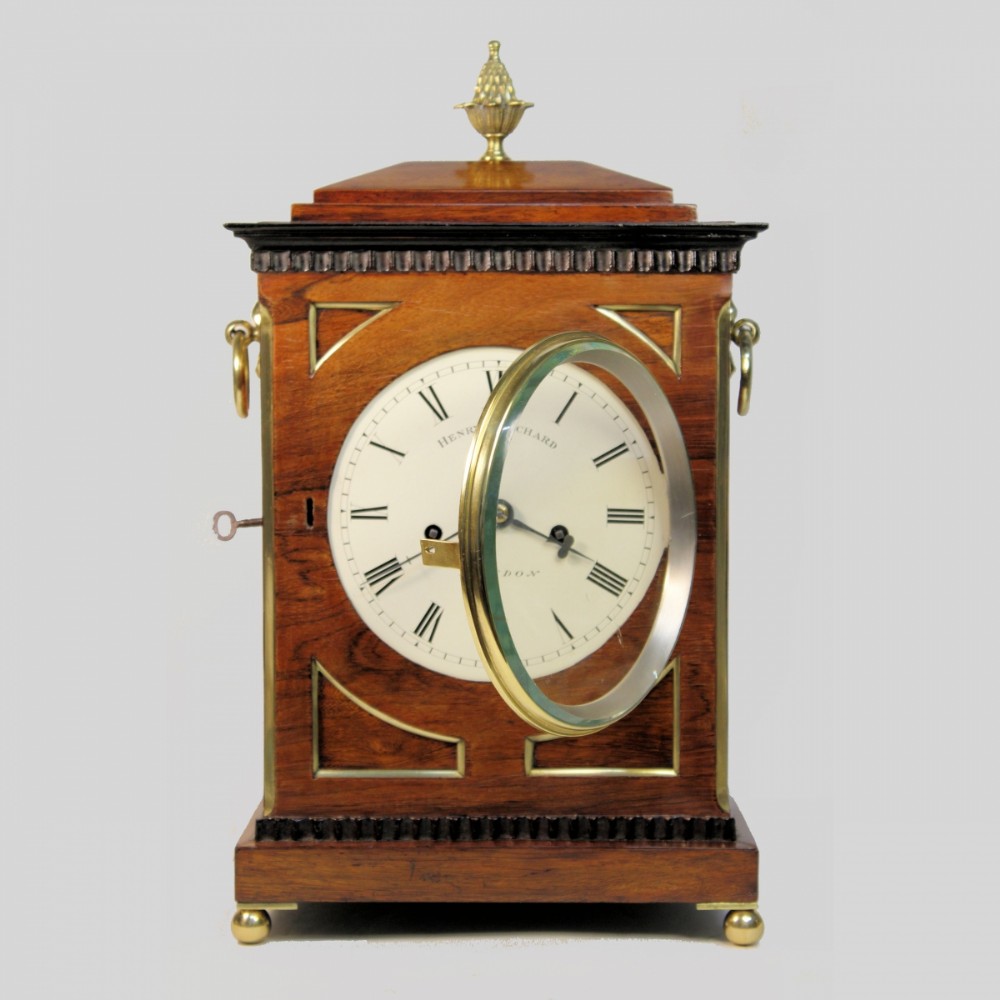
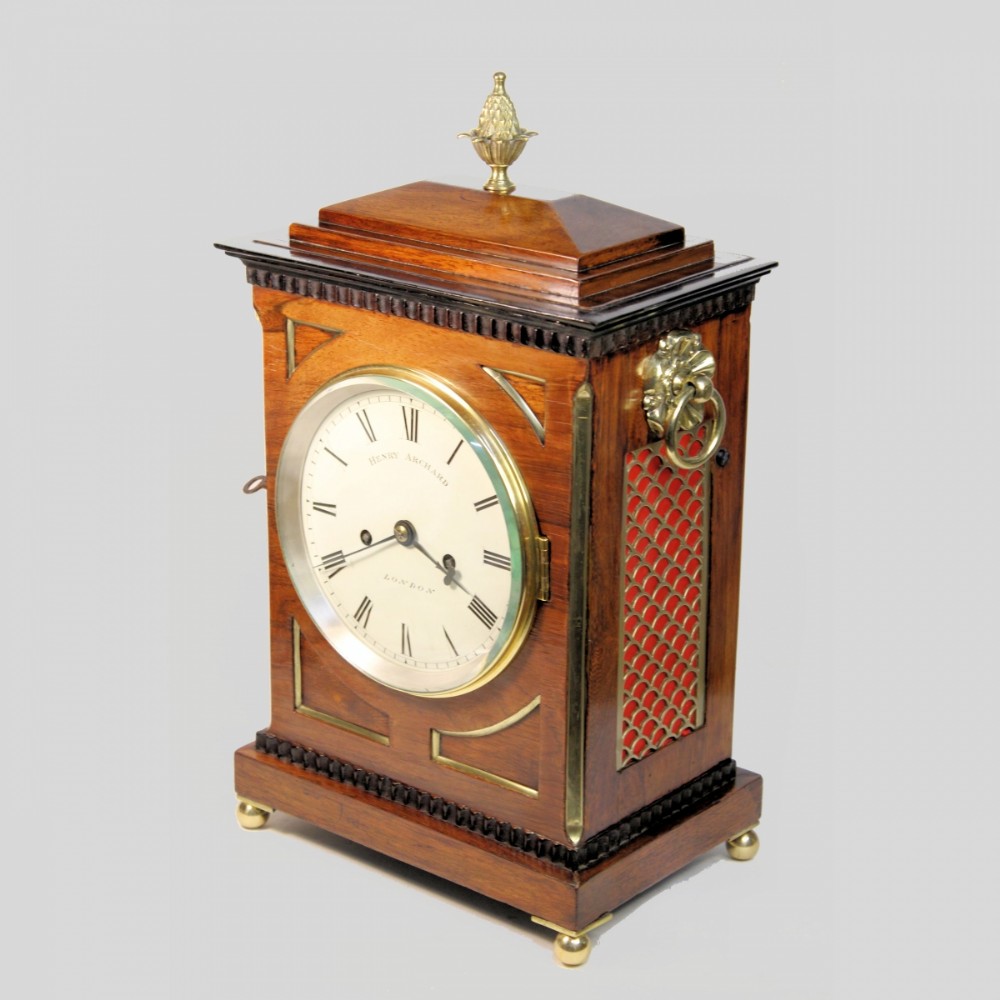
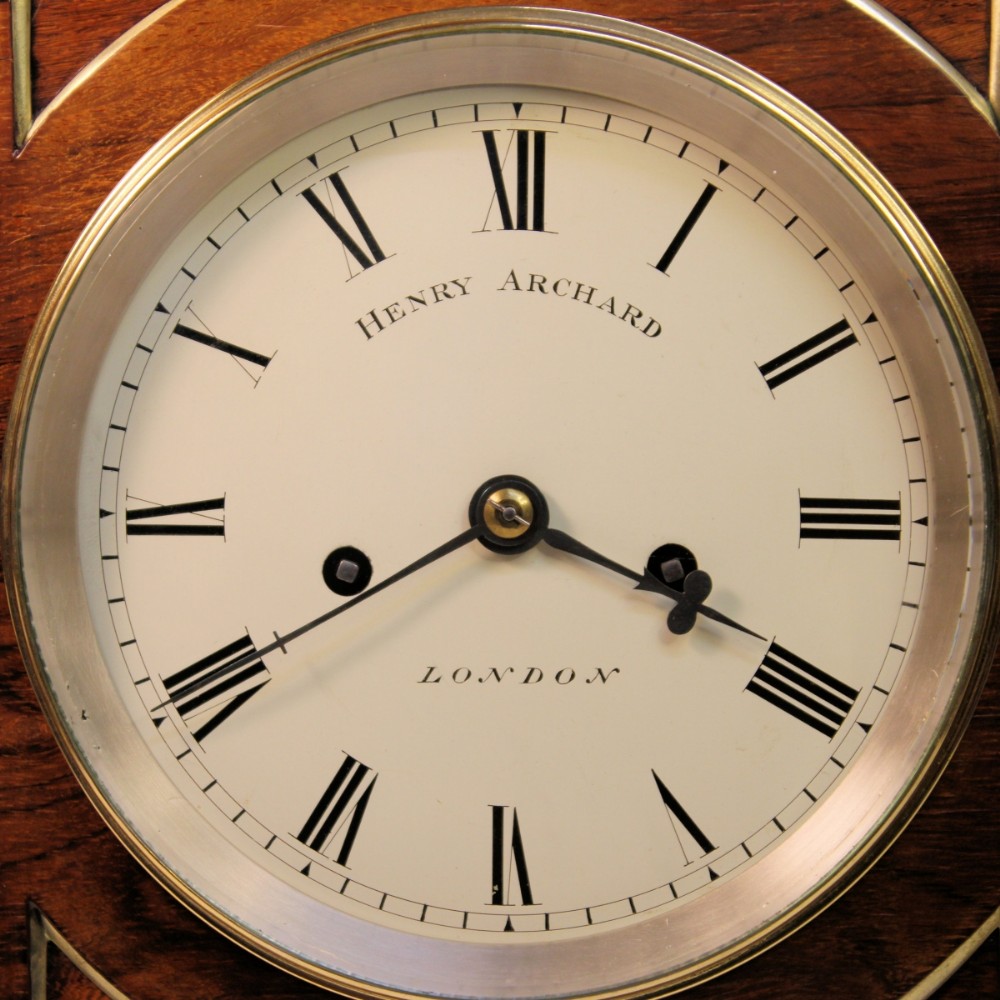
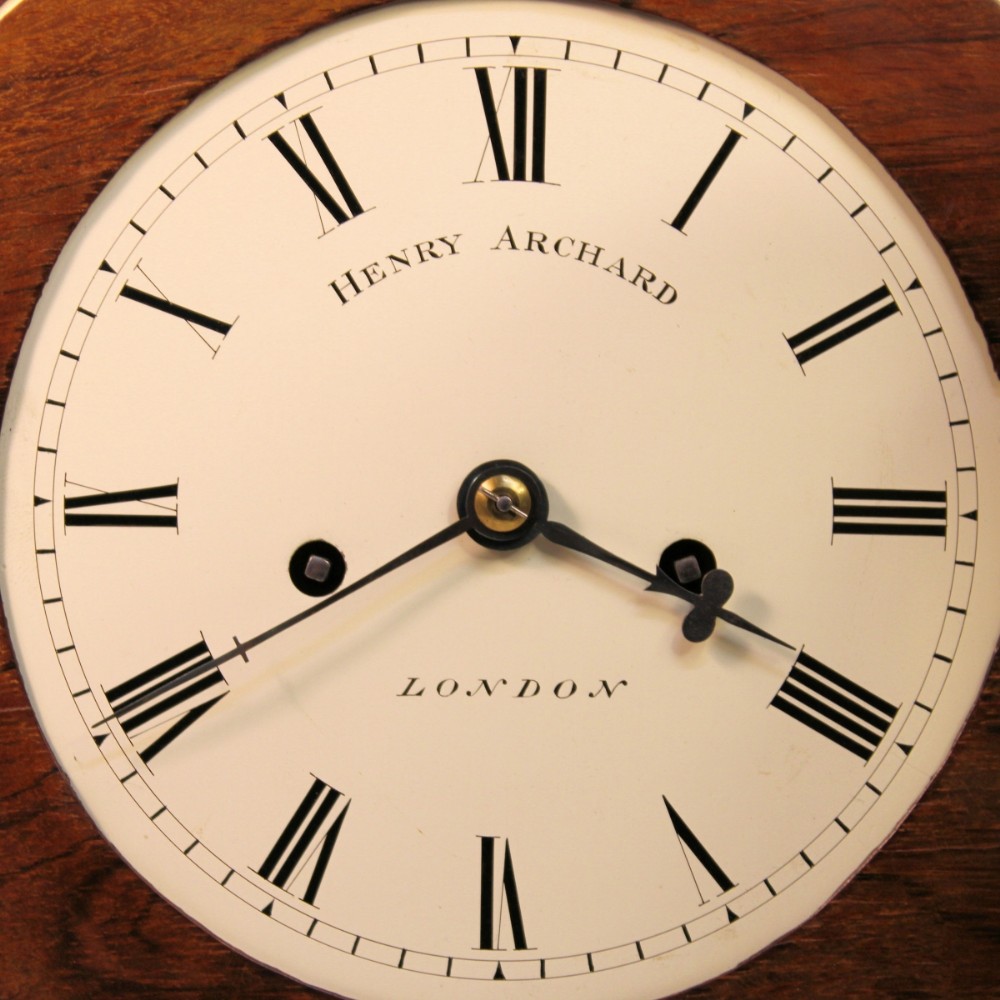
Behind a 5 1/4" (visible) diameter, flat painted iron dial with off-white base colour, outer minute track and inner, Roman hour numerals. The upper portion is signed "HENRY ARCHARD" in a curve and the lower portion bears "LONDON". The original blackened steel hands are 'Lance and Pike' style. This is behind a heavily cast brass, locking bezel with a silvered sight ring and thick bevelled glass.
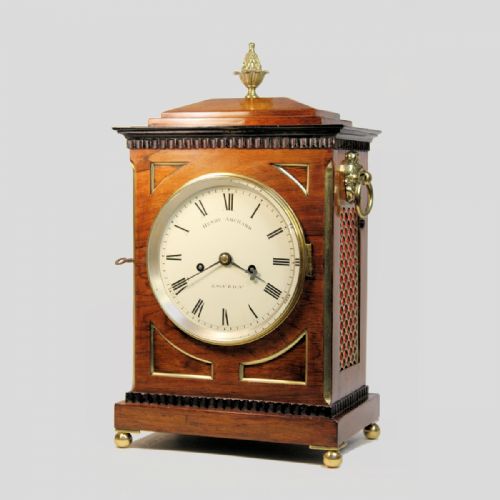
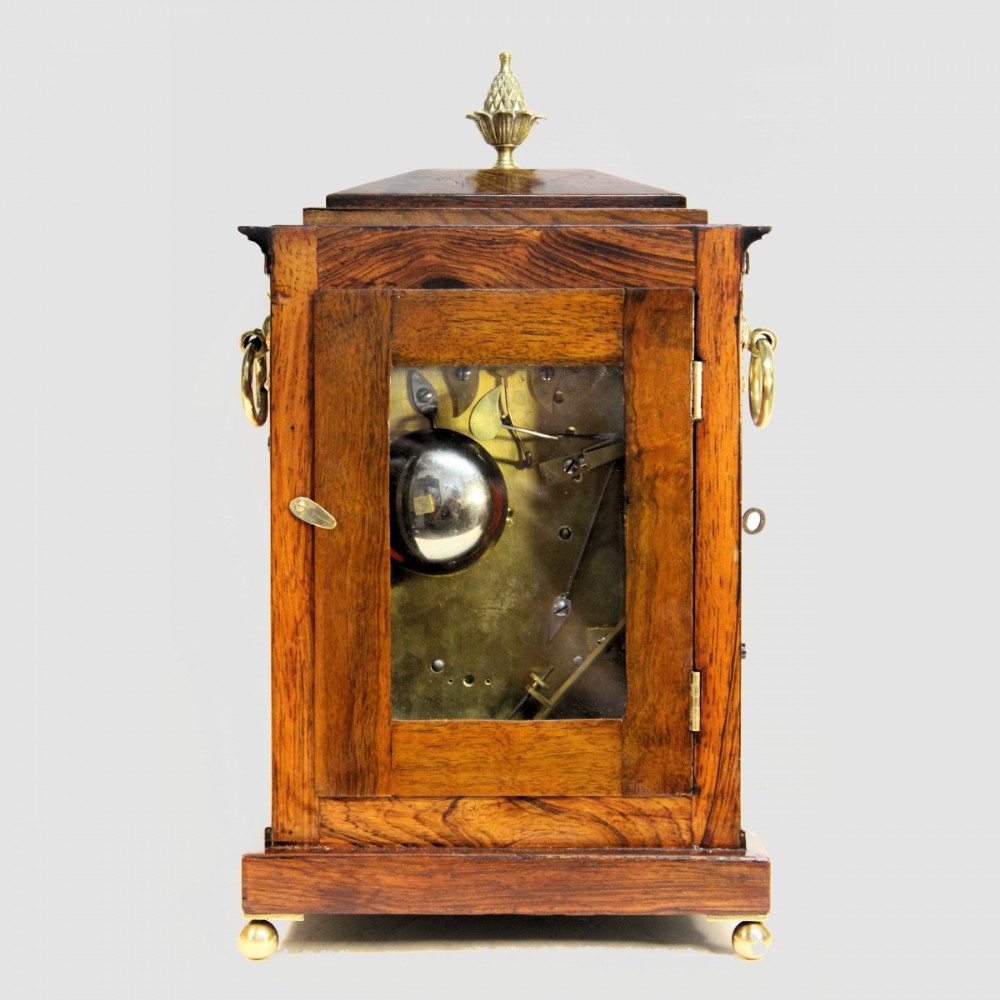
In a small and classic style 'Chamfer-top' rosewood case. The stepped top has a cast brass, pineapple finial. The trunk has an ebonised top moulding over a ribbed strip. The front has four, quadrant inset panels that are framed with cast brass. The front edges are softened with cants that have brass strips. The sides have brass ringed carrying handles that are over rectangular sound apertures with red cloth-backed, brass fishscale frets. The rear has a glazed door and the all-round plinth has a ribbed top moulded strip and sits upon four, cast brass, ball-and-plate feet.
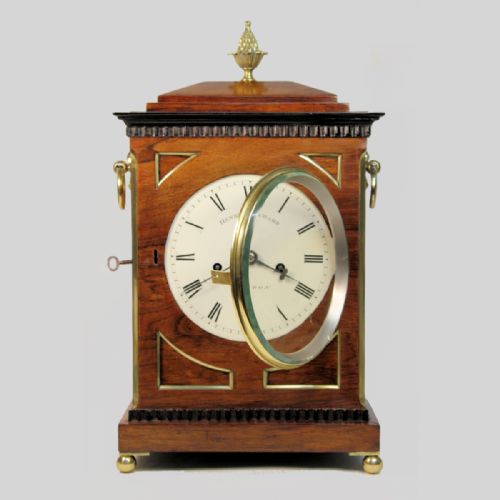
Henry Archard is listed as working from 1851 to 1875. The first thing that strikes you about this clock is the crispness of it, it is substantially made and the weight when lifted is surprising. It is of pleasing colour with a nice patina.
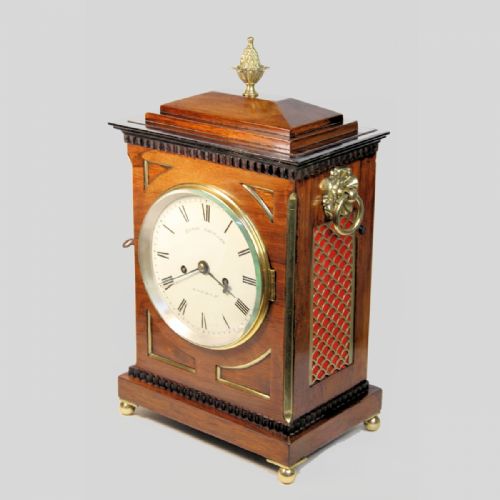
The dial and case are restored and though the movement has been historically maintained, it needs minor attention to ensure it will be working.
The price is for the clock in working order, however the movement would benefit from an overhaul and this would be an additional cost which can be advised upon enquiry.
For further information please contact us at info@bournemouthclocks.co.uk
M. C. Taylor has dated this piece to the 19th Century.
Clockmakers and restorers established 1987
You can view the stock and full dealer information on the M. C. Taylor Profile Page
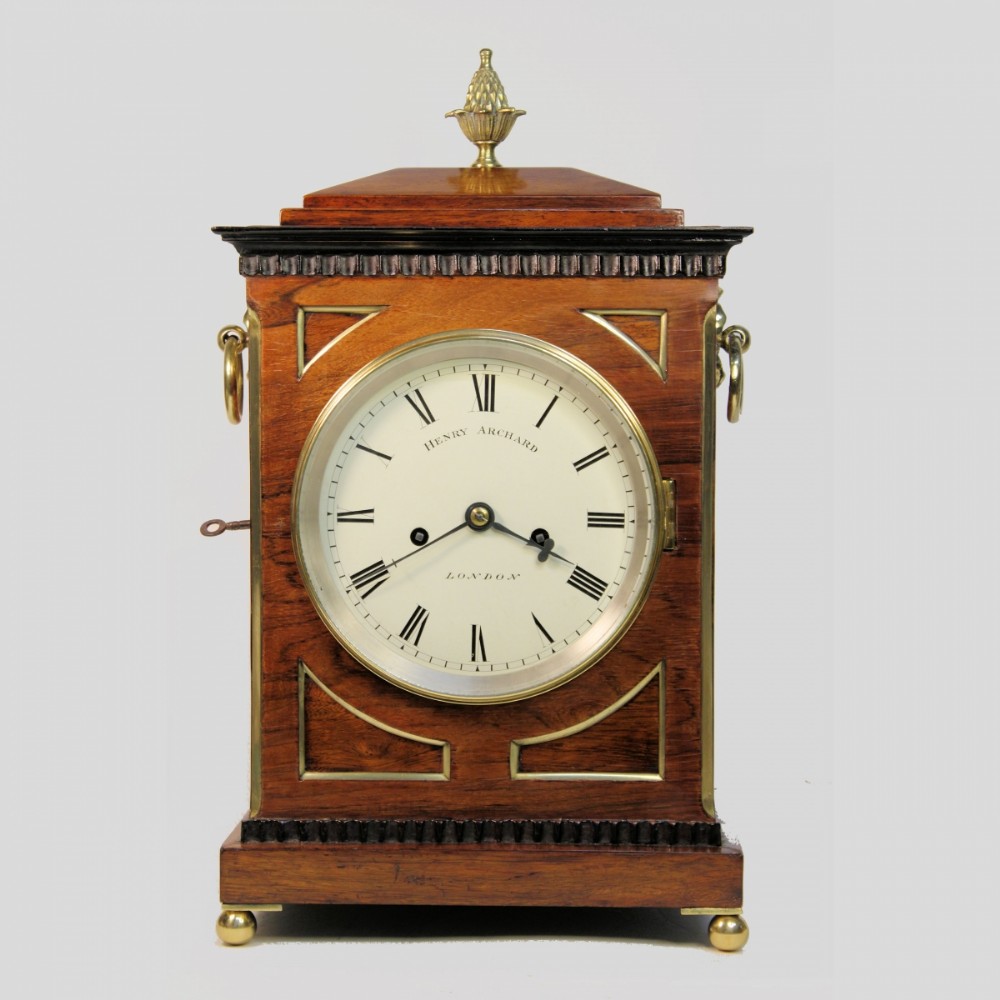
A Small, Chamfer Top, Striking Bracket Clock in a Rosewood Case by Henry Archard, London. Circa 1860.