It was listed by M. C. Taylor. Sold pieces stay on Sellingantiques as a record of what has passed through, and the next one is rarely far away.
M. C. Taylor has dated this piece to the 17th Century.
It also has ‘bolt and shutter’ maintaining power, an early high bell and also internal latches for the dial feet.
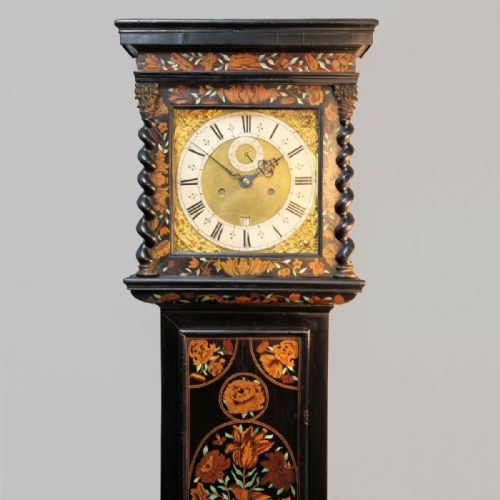
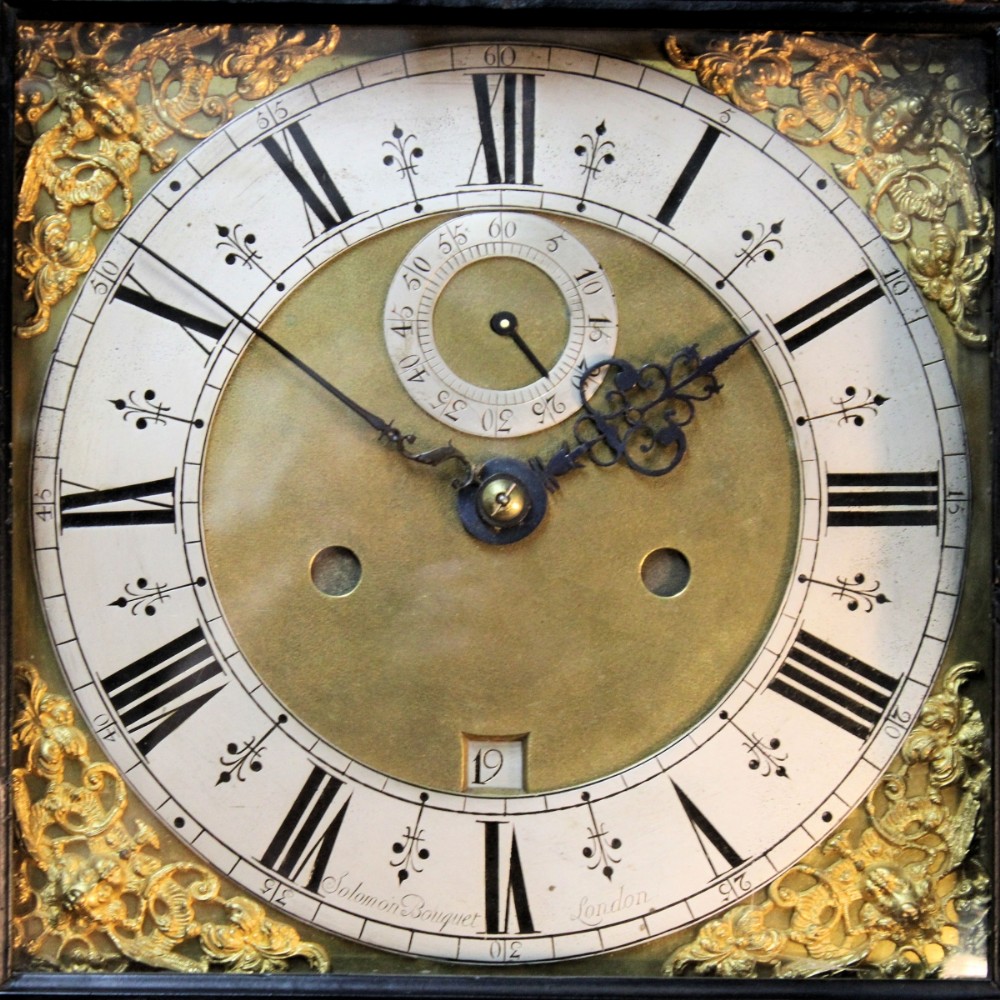
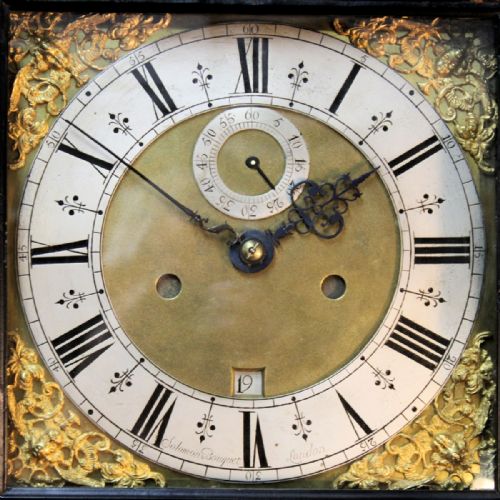
It has an exactly 10” square brass dial with elaborate cast winged cherub corner spandrels, a matted centre and winding shutters. The silvered chapter ring has outer minute divisions within a track and Arabic fives. It has Roman hour numerals and Fleur-de-lys half hour markings and the lower Roman area has the maker's signature "Solomon Bouquet" (of) "London". It also has a silvered subsidiary seconds ring with Arabic fives and inner divisions. The matted centre has a square chamfered calendar date aperture. The blued steel cut hands are well-executed.
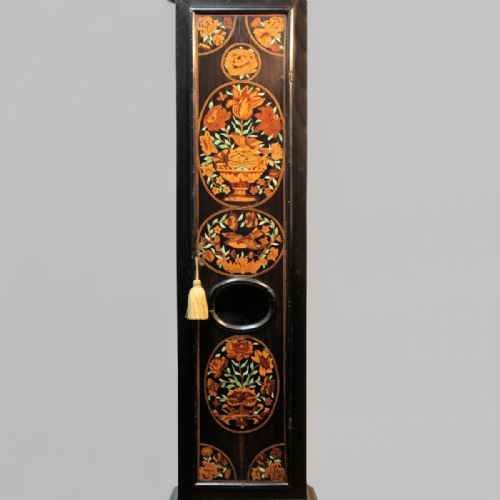
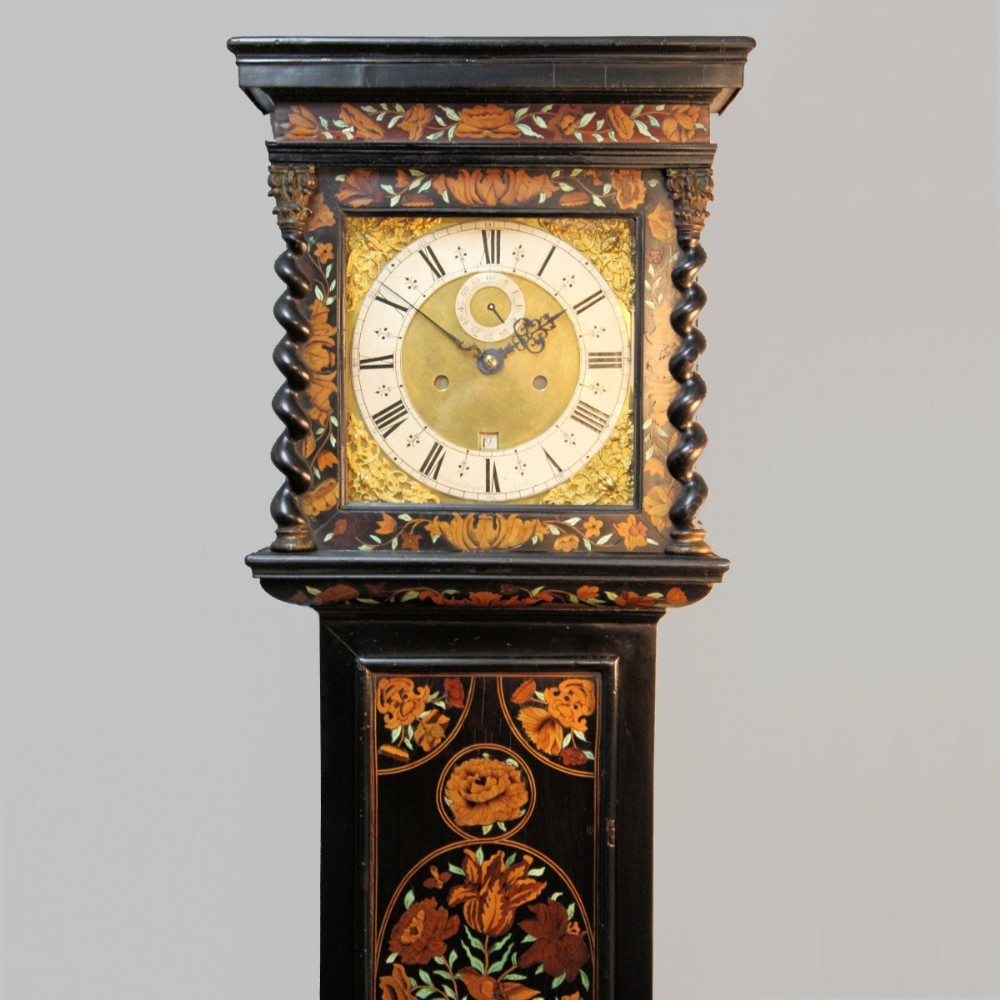
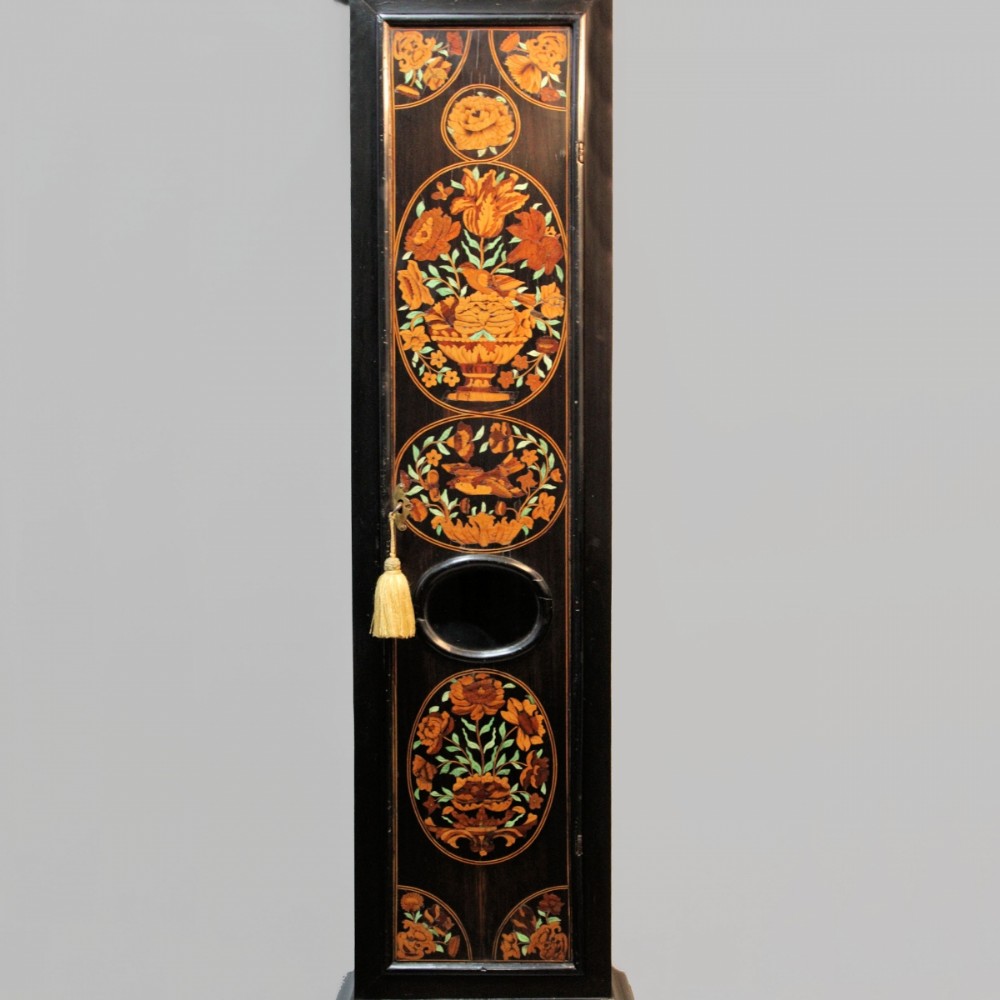
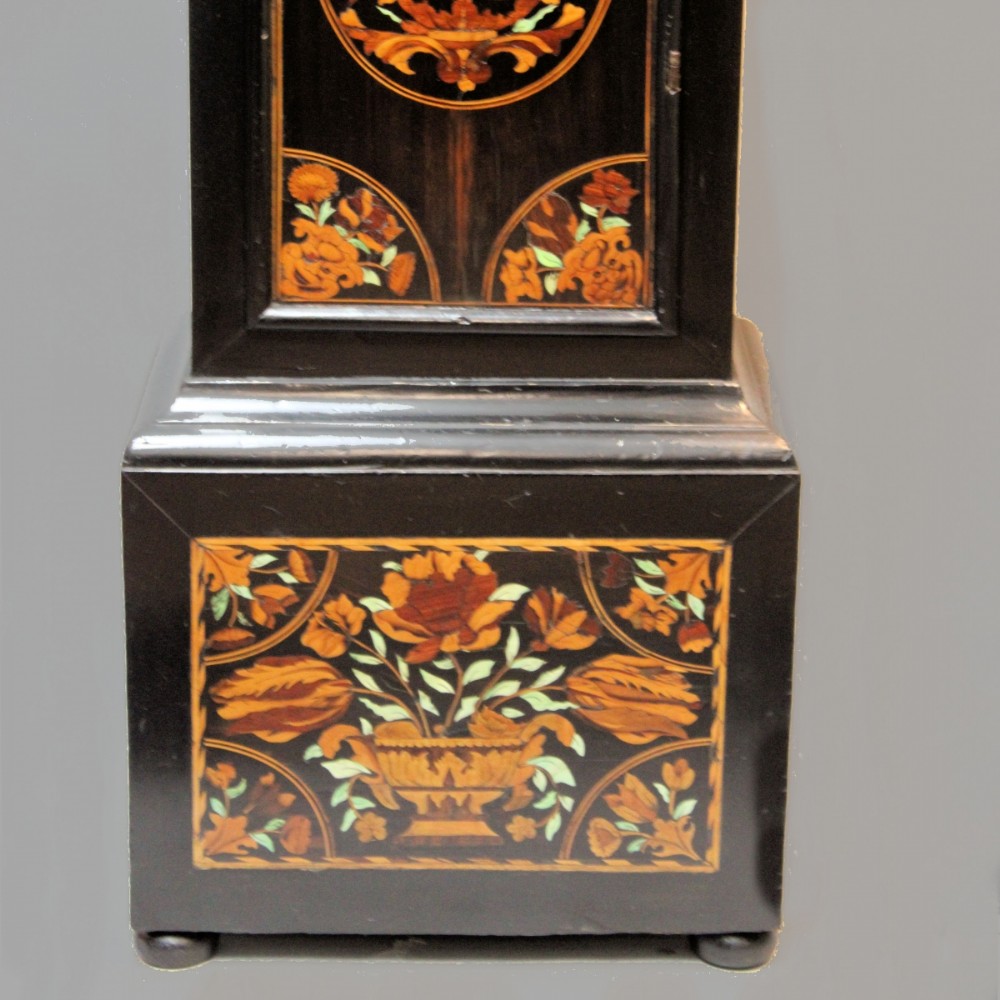
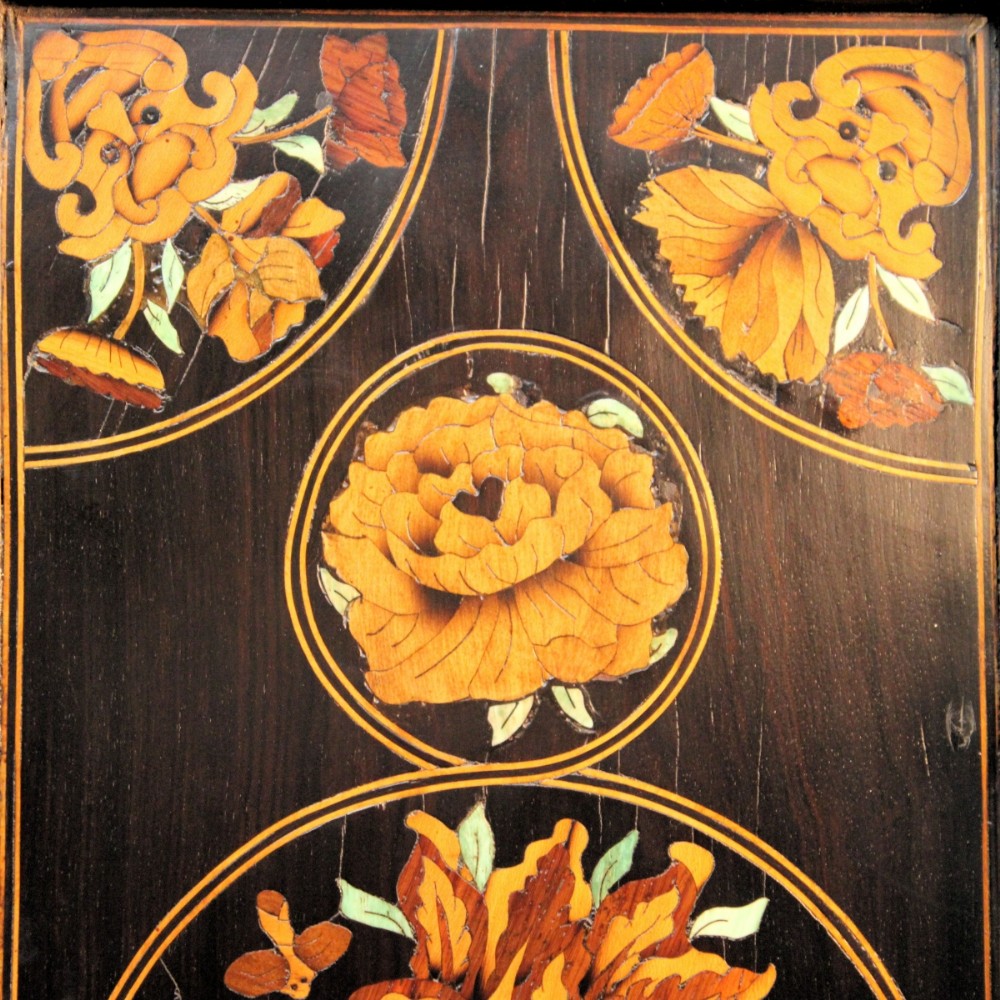
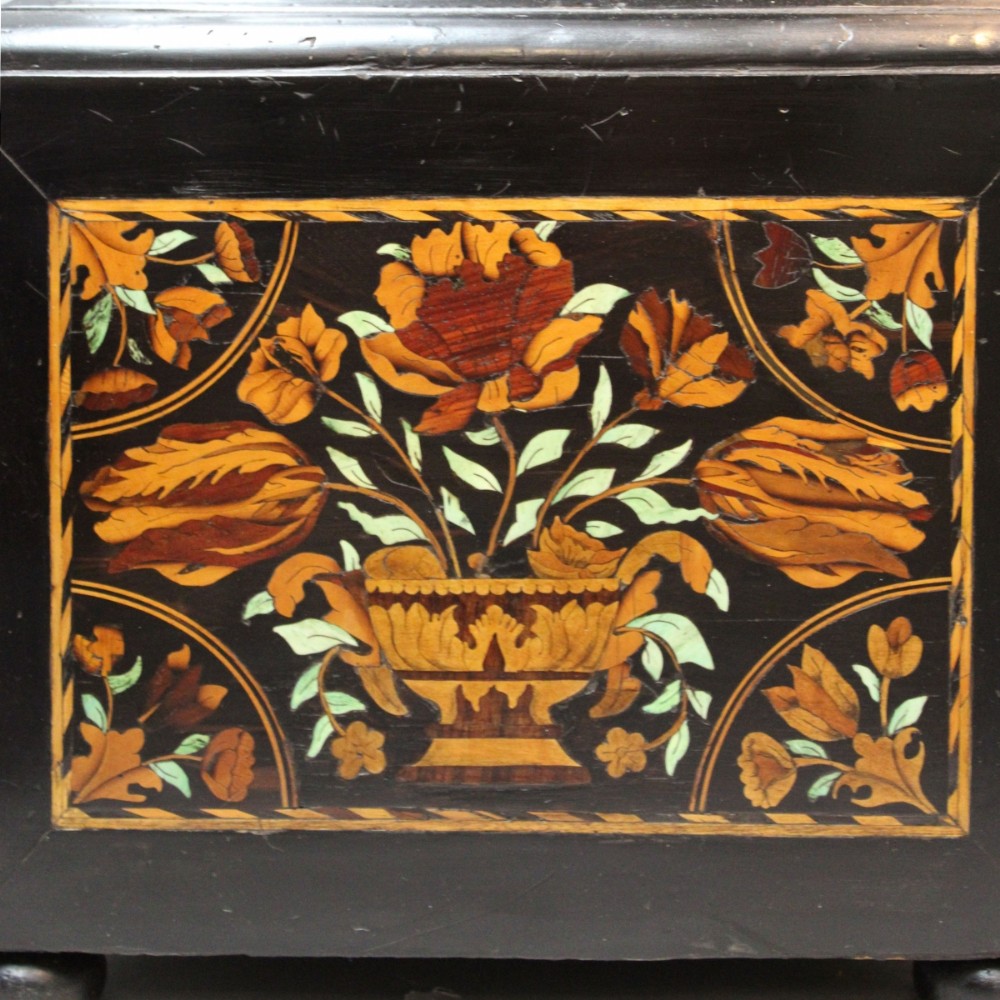
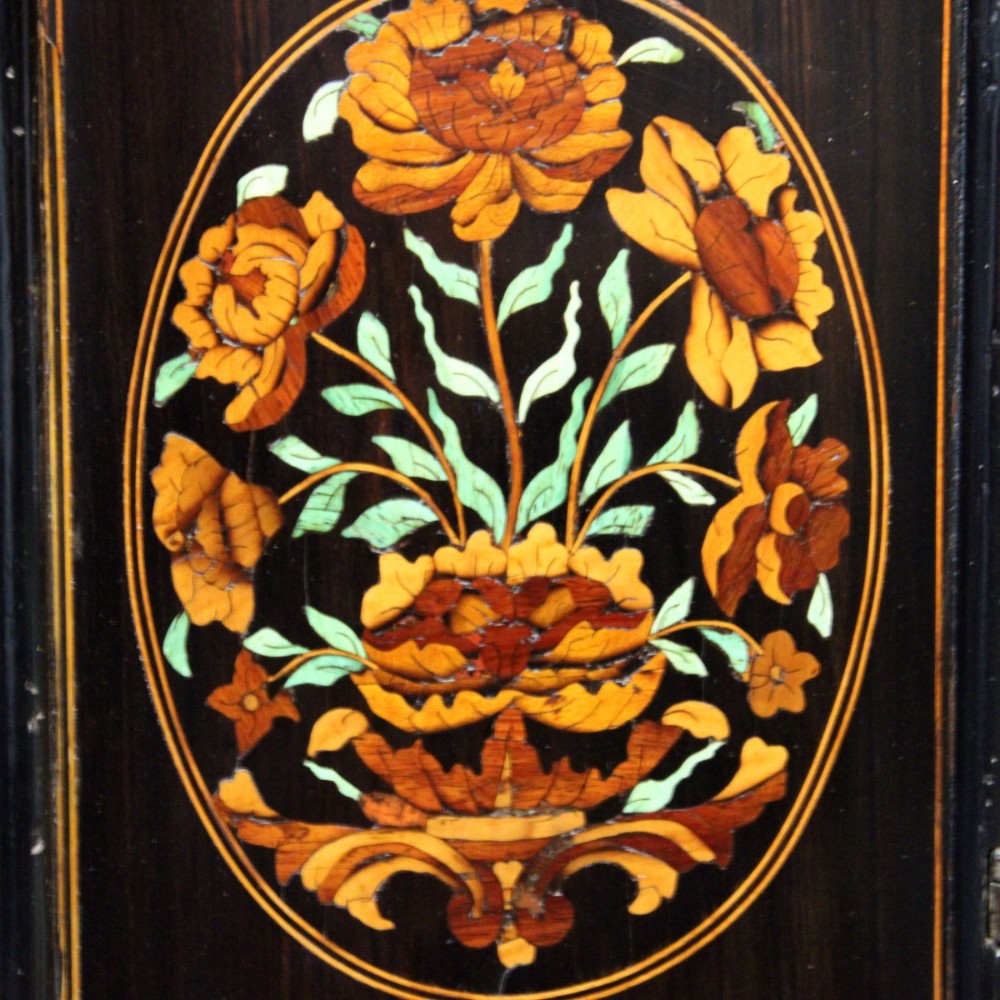
In an extremely rare, inlaid case. The flat top to the rising hood has an ebonised moulding over the 'drip sheet' which in turn is over a frieze with inlaid tulip flowers and green-dyed bone leaves. A further ebonised moulding is over the frontal glazed frame which is also fully inlaid and has fine barley twist pillars with metal Corinthian top capitals and shaped lower ones. The sides have glazed apertures and rear, conforming quarter pillars. The lower hood moulding sits over the convex throat which is also inlaid. The trunk is plain ebony veneer except for the full-length rectangular locking door which has a glazed oval lenticle just below centre, half-round edge moulding and inlay of a triple strung edge and panel borders. The panels consist of quarter corners, a small circular upper connected to a large oval which in turn is connected to a third opposing oval above the lenticle. There is a further single oval below the lenticle. The trunk joins the base with an elaborated large ebonised moulding and the plain plinth has a single rectangular, inlaid panel with a chevroned border, quarters and centre design of tulips blossoming out from an urn. The case sits upon four squashed bun feet that are fitted into the original, holed corner blocks.
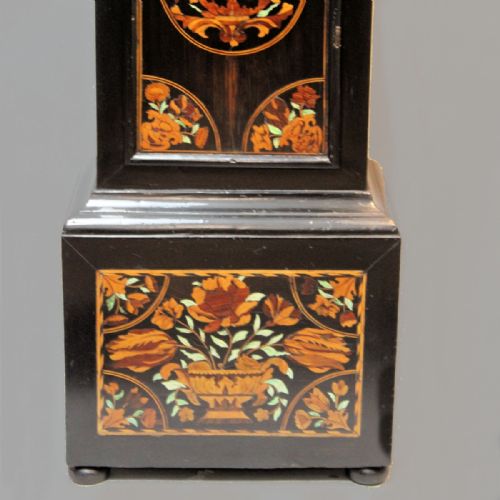
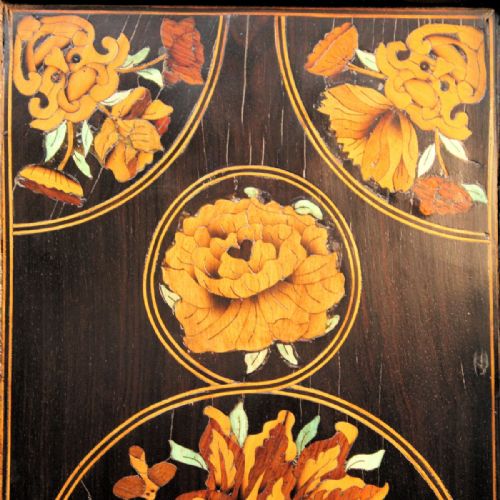
This clock has been very well maintained throughout its long life most of which has been spent in the care of one family. It has had running repairs to the case probably due to worm and damp however, the inlay and green colour to the bone is original. Resembling marquetry, it is actually inlaid, meaning that the panels are not put together as one veneer and then glued to the oak boards but rather, a thick single veneer has been laid and then carefully cut out around very thick, separate pieces of cut veneer which are then laid in. We purchased it privately and have been assured that it has not been sold within the last three centuries. Another such example cannot be found anywhere and Tim, who sources our stock, states that he has seen only one other - forty years ago! This longcase clock really does tick so many boxes, it is original, should be priceless and is probably one of the rarest available. This is the elusive 'Black Marquetry' longcase clock that only a few of us Horologists have even heard of. It jumps out at you even when stood next to other good, marquetry longcase clocks.
Solomon Bouquet (II) was a Huguenot, the son of Solomon Bouquet (I) and was born in 1659. He became free of the Clockmaker's Company by patrimony in March 1682. One of his apprentices was transferred to no other than Thomas Tompion. In 1685 aged 26, he married. In 1694 he lived in White's Alley in Grub Street, London. He signed the Clockmaker's Oath of Allegiance in 1697. He died in 1727 aged 68.
The price is for the clock in its present excellent condition. Any work required by the purchaser can be discussed upon request. I value this item, once restored to be in excess of £48,000.
For further information, please contact us at info@bournemouthc
M. C. Taylor has dated this piece to the 17th Century.
Clockmakers and restorers established 1987
You can view the stock and full dealer information on the M. C. Taylor Profile Page
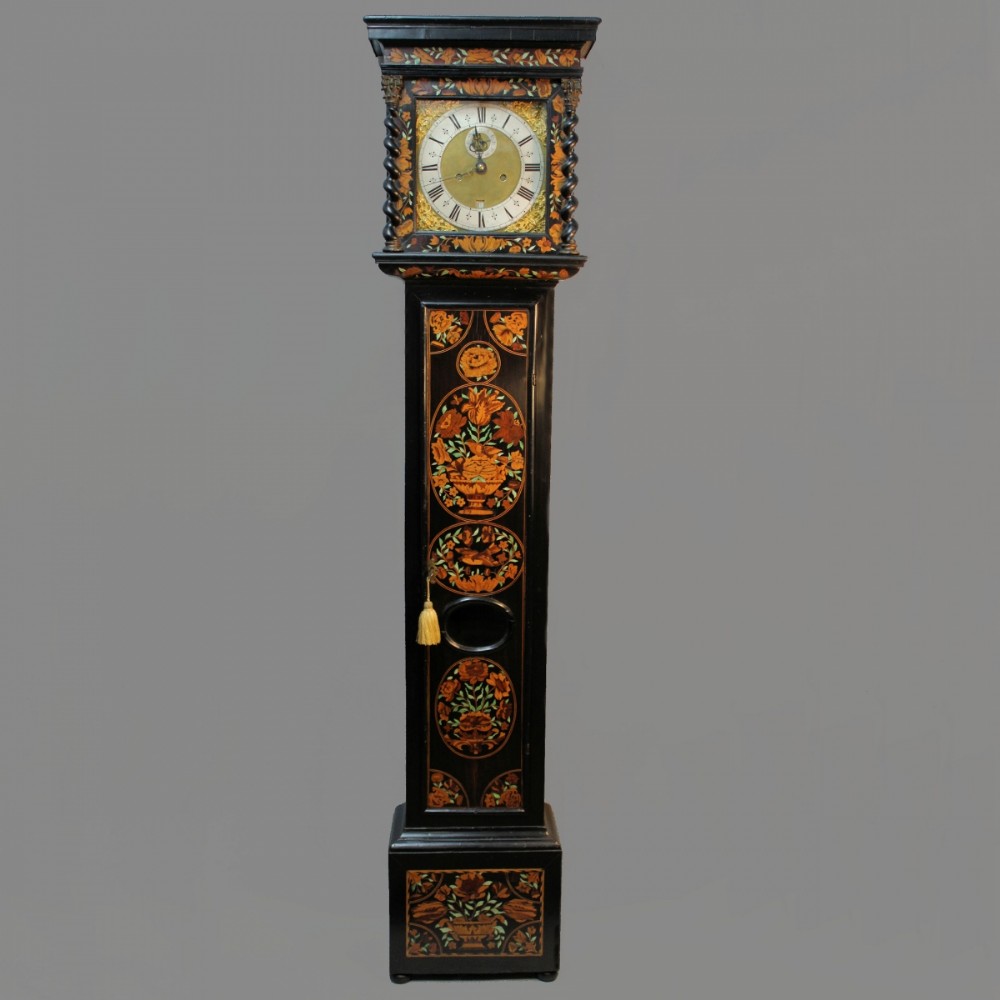
A Fine and Rare, Early English 'Black Marquetry' Longcase Clock by Solomon Bouquet. Circa 1685. (Long Case)