It was listed by M. C. Taylor. Sold pieces stay on Sellingantiques as a record of what has passed through, and the next one is rarely far away.
M. C. Taylor has dated this piece to the 18th Century.
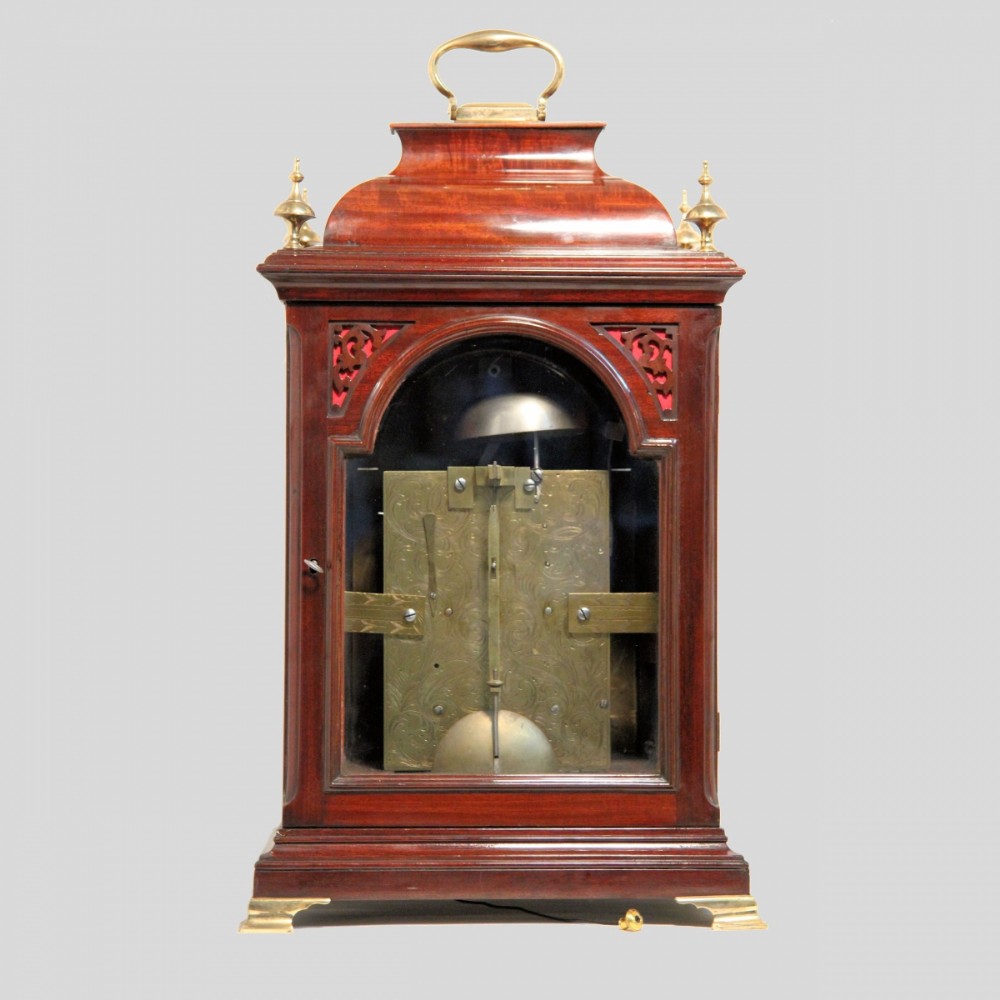
Also, a fully engraved floral 'Rococo' style backplate, strike/silent feature and pull strike repeating.
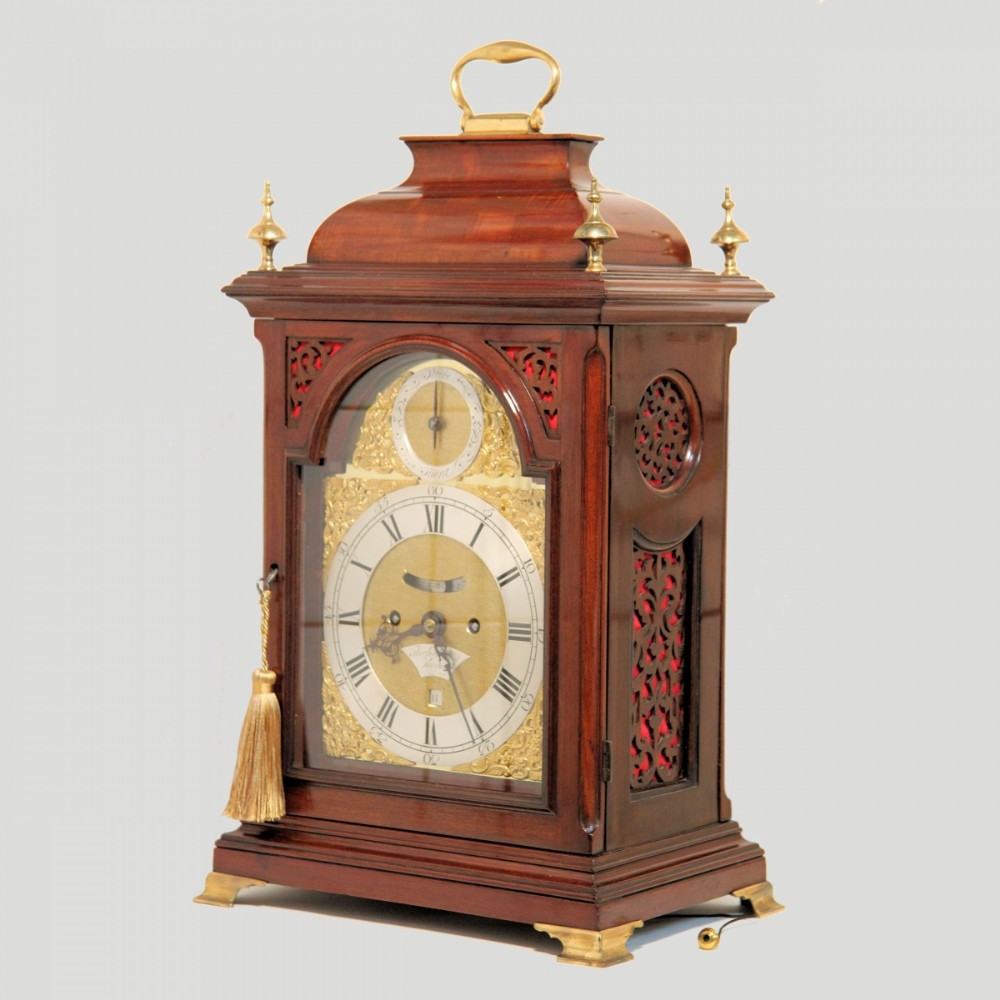
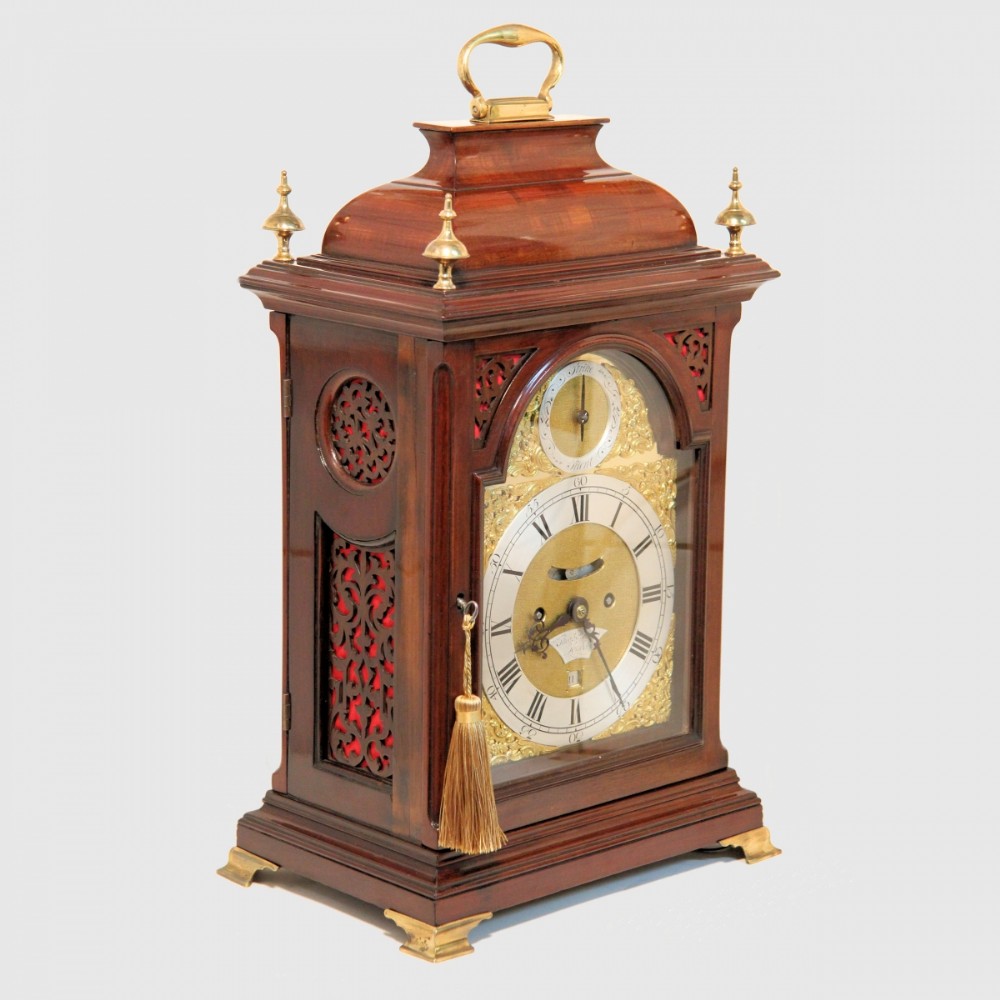
Behind a 7 inch wide, break-arch brass dial with engraved, wax-filled and silvered chapter ring that has Roman hour numerals, minute ring and outer Arabic 5 minute numerals. Strike/Silent chapter ring encircling a matted centre to the arch. Calendar date ring through a square chamfered aperture and shaped maker's name plaque to the lower centre that bears "Theop.(hilu)s Holdred (of) London". Also, a Tudor rose false pendulum bob and scrolled backing plate within the curved aperture to the matted centre. The polished outer portion of the dial-plate carries 6, matching gilt, Rococo style spandrels and the pierced and shaped hands are blued steel.
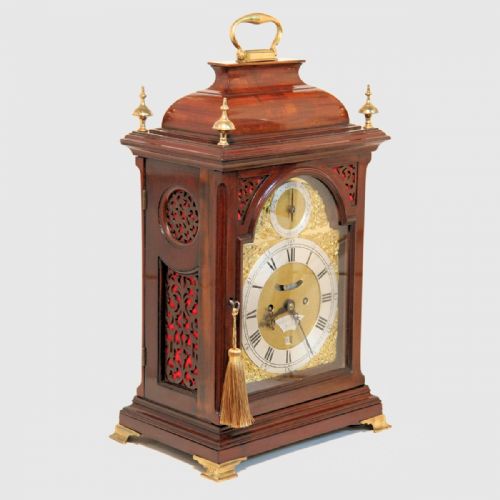
Within a plain mahogany case of good colour, patina and finish. The inverted bell top having a cast brass swinging handle and the four top corners have polished inverted urn finials. Both locking doors have break-arch glazing, full aperture edge moulding and top corner, triangular, pierced mahogany and silk-backed sound frets. The sides have conforming round-over-dropped arch frets with moulded framing. All of the side corner edges have rounded quadrant moulding that terminates with 'lamb's ears'. The short and top-moulded plinth sits upon 4 cast brass, splayed feet allowing the pull repeating cord to exit through the bottom towards the right hand edge.
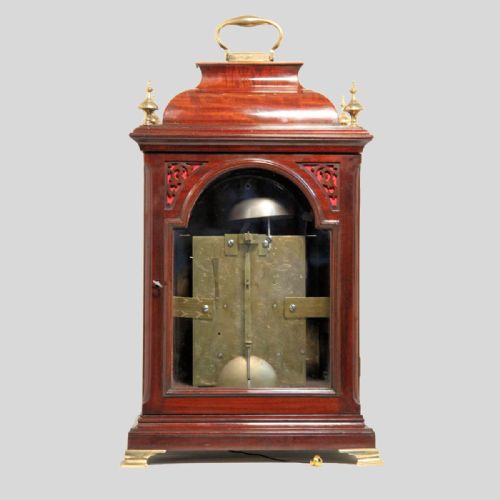
This is a very smart looking George II or III clock - it was made right at the time change of the two kings. The mahogany used is of the earlier type sometimes referred to as 'Plum pudding' because of its grain and colour and this example has survived in almost perfect and original condition except for the Victorian era 'improvement' of the escapement from 'Verge' to 'Anchor Recoil'. Originally, it could be carefully carried from room to room still ticking as to not lose any time because of its very robust 'Verge' escapement and attached pendulum however, during the 19th century, accurate timekeeping was more desirable so great numbers of these clocks had their accuracy improved by fitting an 'Anchor Recoil' escapement. This is often considered to be an historically accepted alteration but can be converted back very authentically during the movement overhaul prior to selling. We intend to restore the movement with the present escapement unless the new owner prefers it changed back.
We have researched this maker and it appears that there were three generations of the same name of which this can only be assumed was the grandfather. The grandson was as very well-educated and accomplished mathematician which is well documented. Information at the National Archives suggests that this mans will was proved in 1769.
The price is for the clock in its present working condition and any further restoration work you require will be subject to a further cost and waiting time, which can be discussed upon enquiry.
The purchased item can be collected at a time mutually agreed or if required, delivery can be arranged for which we are happy to supply a quotation for.
For further information please email us at:
info@bournemouthclocks.co.uk
M. C. Taylor has dated this piece to the 18th Century.
Clockmakers and restorers established 1987
You can view the stock and full dealer information on the M. C. Taylor Profile Page
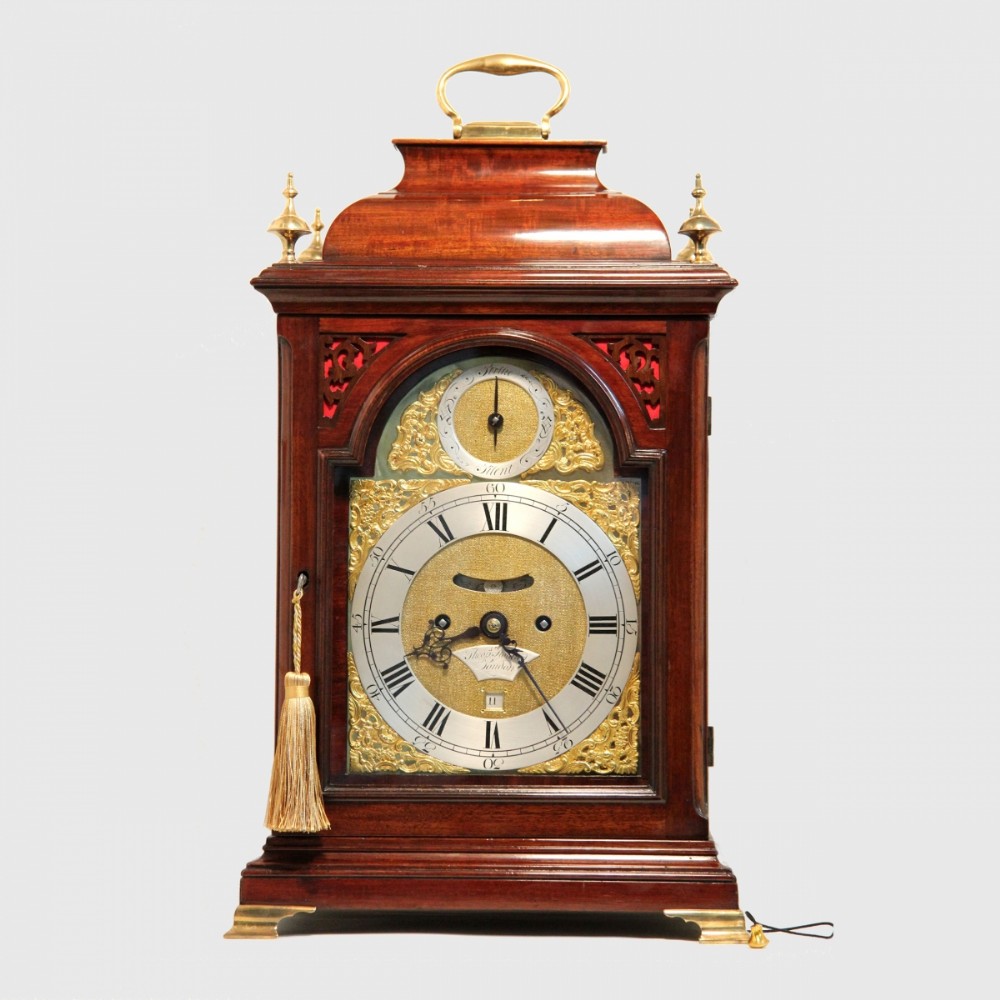
A Georgian, London Made, Inverted Bell-top Bracket Clock in an Attractive Mahogany Case. Circa 1760