It was listed by M. C. Taylor. Sold pieces stay on Sellingantiques as a record of what has passed through, and the next one is rarely far away.
M. C. Taylor has dated this piece to the 18th Century.
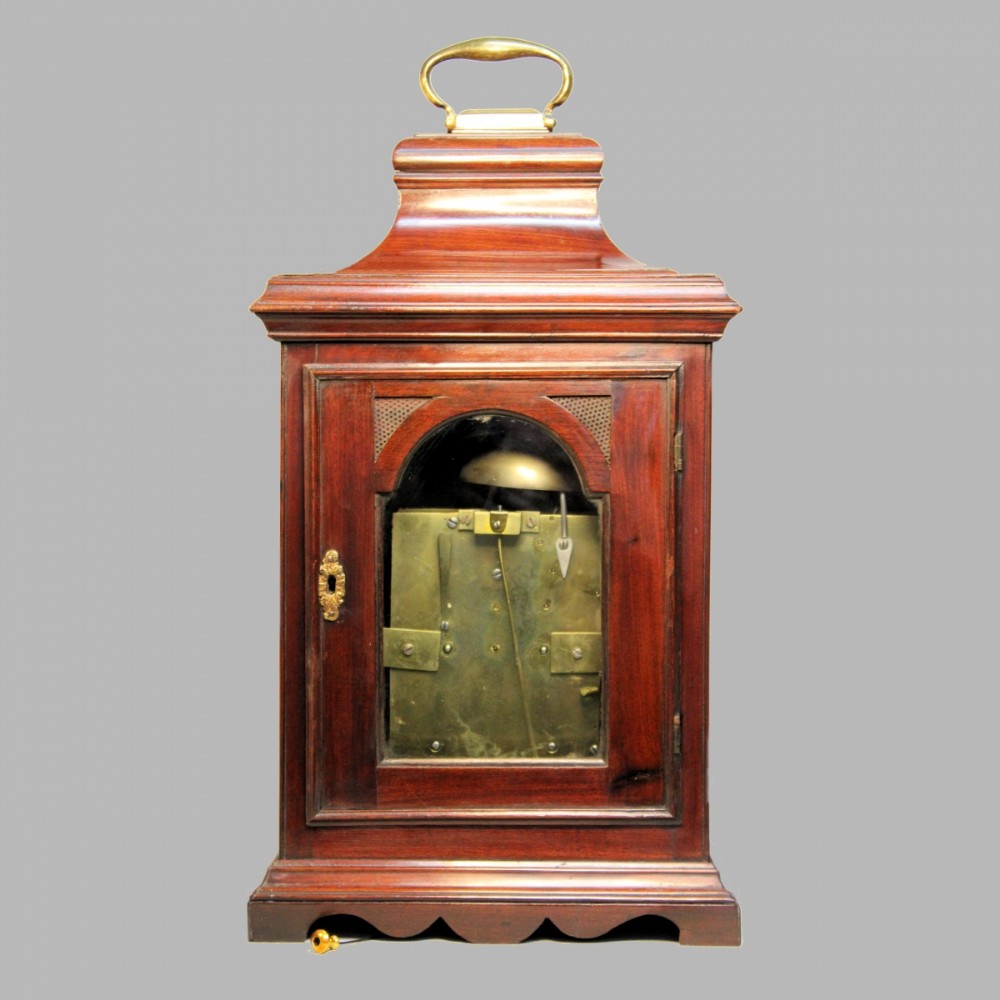
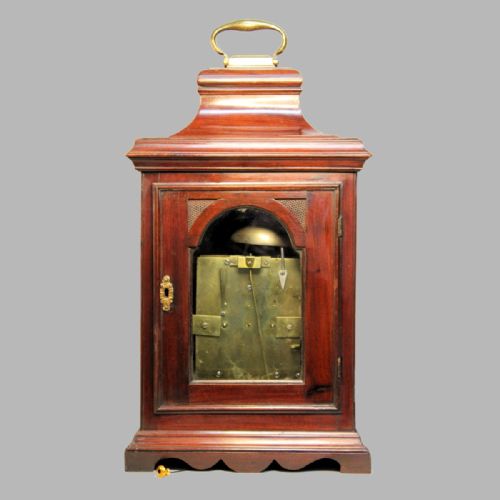
Also, rack and star-wheel striking the hours on a top-mounted bell with pull repeat and a strike or silent option operated from the dial. The plain theme of the clock is also displayed with the movement backplate not being engraved - this may be due to reducing the original cost or the purchaser having Quaker connections.
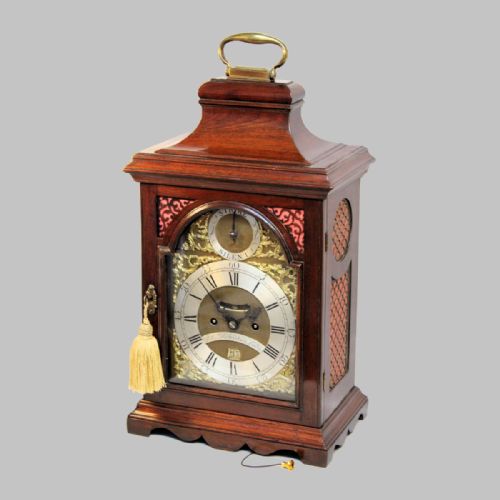
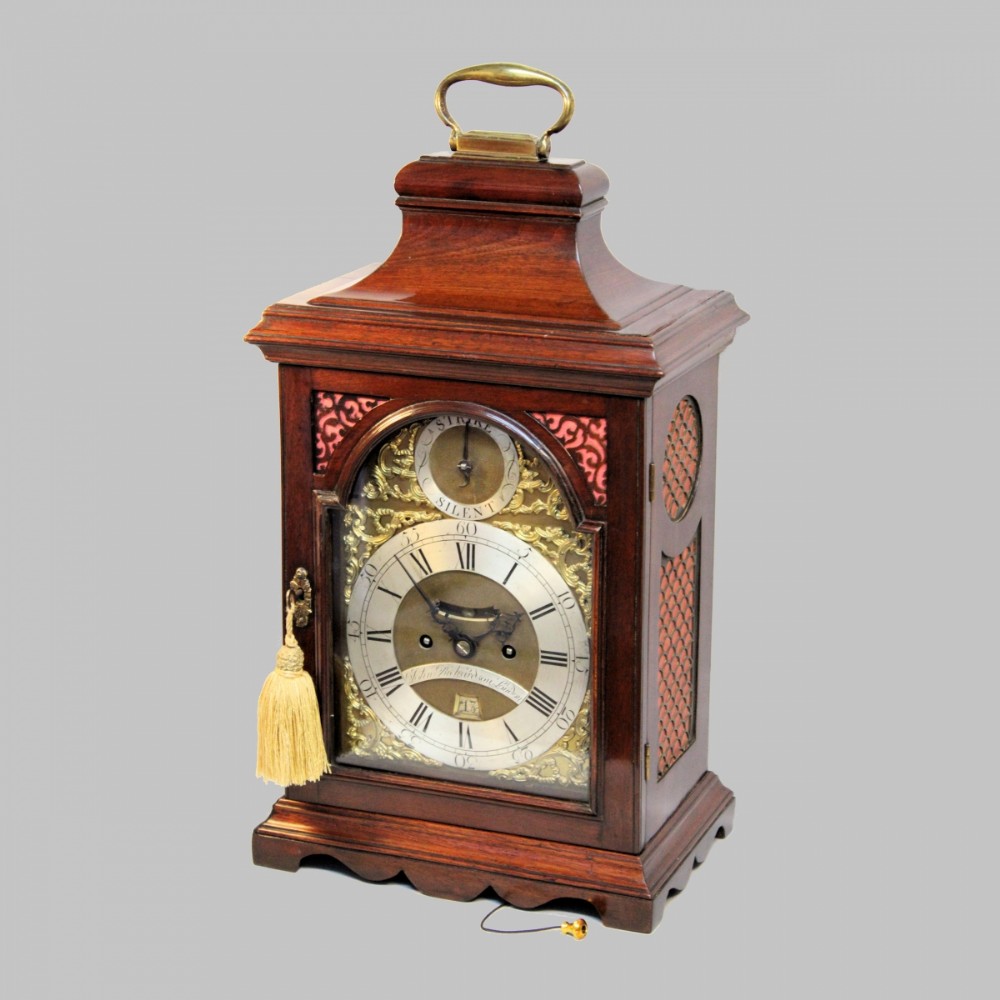
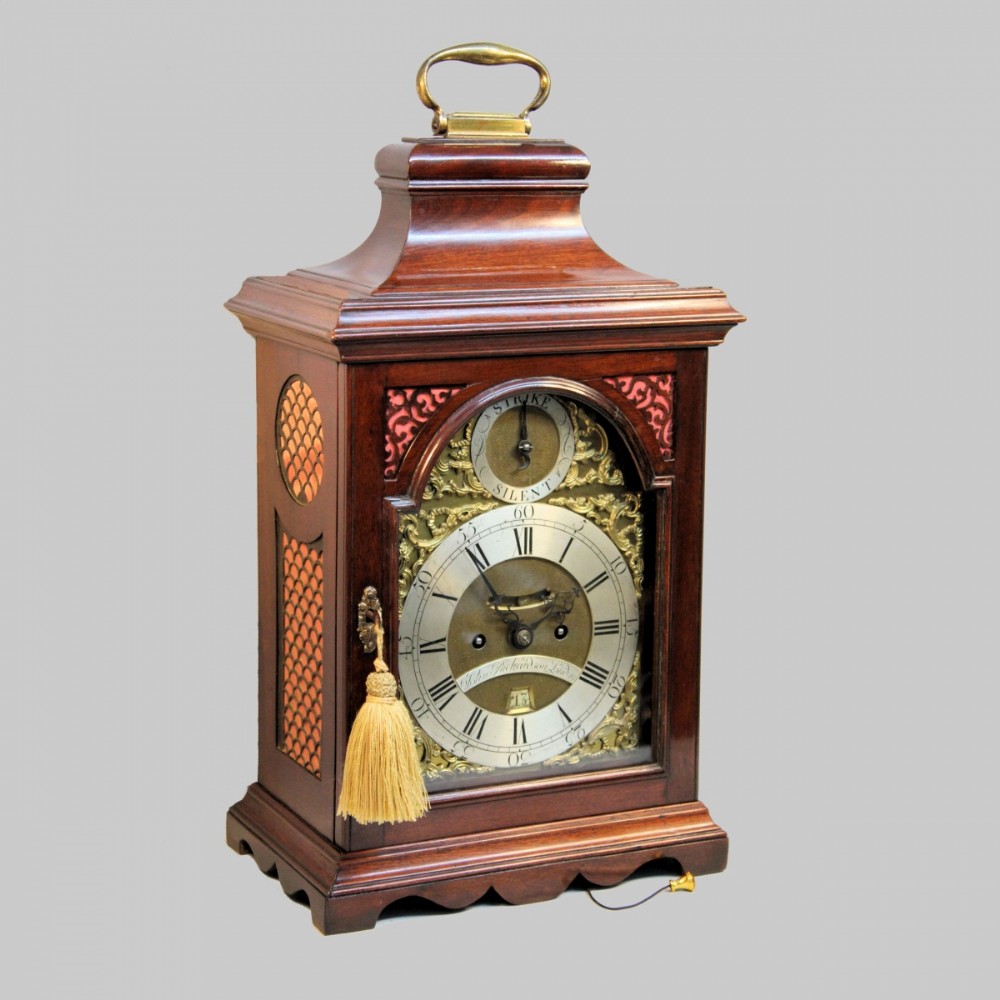
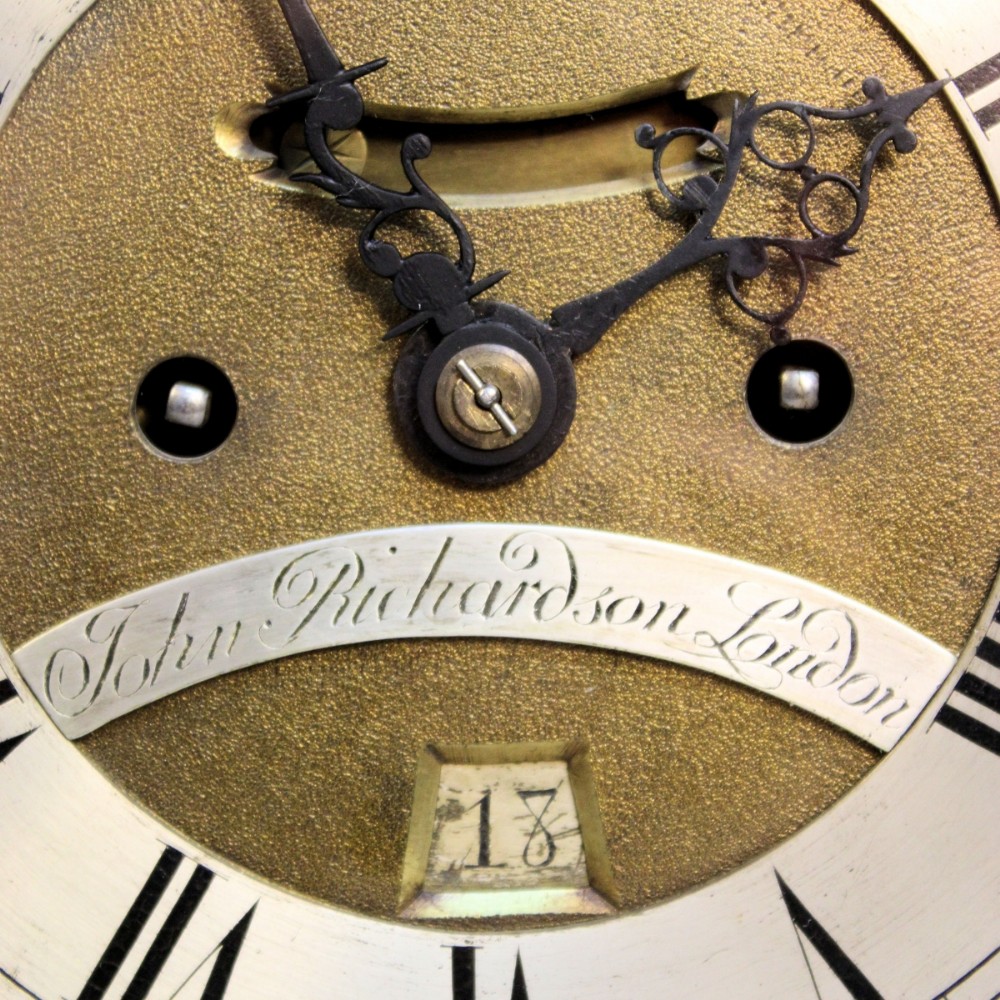
The seven inch wide, brass break-arch dial has gilt cast brass, Rococo spandrels to the corners and the arch fitted to the plain dial plate, the silvered chapter ring has Roman hour numerals, minute ring and outer, Arabic fives. The subsidiary silvered Strike/Silent chapter ring to the arch bears "STRIKE" and "SILENT" and patterned decoration. The centre is matted as is the centre of the main chapter which also has an upper 'false pendulum' arched mouth aperture with a bob and backing plate. The lower portion has a chamfered and narrowing square calendar date aperture below the arched and silvered maker's name plate bearing "John Richardson (of) London" in script. The blackened cut steel hands are typical of the style and period of the clock.
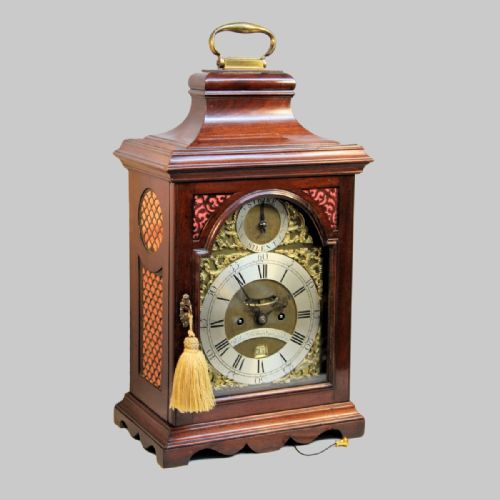
The case is mahogany and of 'bell top' style with a cast brass, swinging, bow style carrying handle. The cushion shaped top above a large Cavetto mould which terminates with a returned moulding above the main body. The full-size locking front door is glazed with a mould around the aperture and has cloth backed mahogany scroll sound frets to the upper quadrants. The locking rear door is also break-arch glazed and the case sides have round-over-rectangular apertures that have cloth backed brass 'fish scale' frets. The plinth has a large Cavetto top moulding and unusually, a scroll-cut bottom edge.
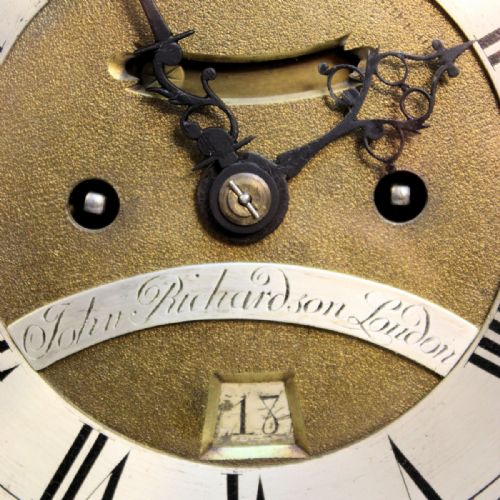
John Richardson worked out of Bell Yard, London. He began his apprenticeship in 1731, entered the Clockmaker's Company in 1738 and died in 1774.
Originally, these clocks could be carefully carried from room to room still ticking as to not lose any time because of their very robust 'Verge' escapement with attached pendulum or more importantly, to the bed chamber at night whereas the silent option would be selected so the sleeper would not be awoken at each and every hour. Should the time be required during the hours of darkness then a simple tug on the trip repeat cord would sound the last hour passed.
The price is for the clock in its present working condition. Any further restoration work that you require will be subject to a further cost and waiting time, which can be discussed upon enquiry.
The purchased item can be collected at a time mutually agreed, or if required, delivery can be arranged,for which a quotation can be supplied.
For further information, please contact us at:
info@bournemouthclocks.co.uk
M. C. Taylor has dated this piece to the 18th Century.
Clockmakers and restorers established 1987
You can view the stock and full dealer information on the M. C. Taylor Profile Page
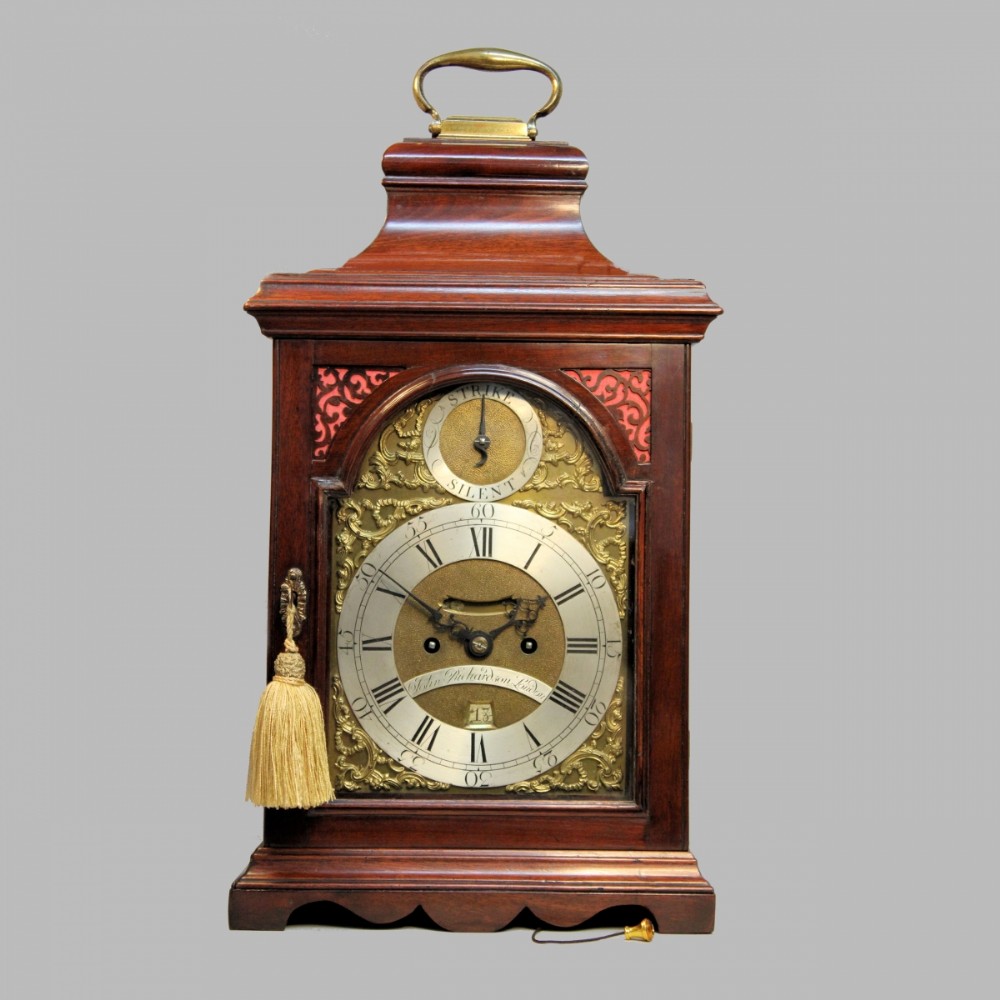
Georgian Verge Escapement Bell Top Mahogany Bracket Clock by John Richardson, London. Circa 1770