15,181  PAGES BROWSED TODAY PAGES TODAY 47 ANTIQUES UPLOADED TODAYNEW ARRIVALS
47 ITEMS ADDED TODAY
Sort Order
Items Per Page
Browse Categories
Sort order
Relevant Links
Items per page
ID #SA1206074
FOR SALE
£850
Email
Save
A Rare George II Miniature Lead Glass Patch Stand Circa 1730 – Early Georgian Period
Sandbanks Antiques
for sale €995     $1,080
£850
Sandbanks Antiques

Sandbanks Antiques

Sellingantiques Verified Since Jan 2025
View Dealers Stock Page
  • About Us
    Specialising in antique silver, gold boxes, gold coins and objects de vertu. Rare fine-quality imperial chinese porcelain, jades, cloisonné
Id #SA1206074
PDF SHARE
SAVE

A Rare George II Miniature Lead Glass Patch Stand Circa 1730 – Early Georgian Period

18th century
Description

A Rare George II Miniature Lead Glass Patch Stand

Circa 1730 – Early Georgian Period

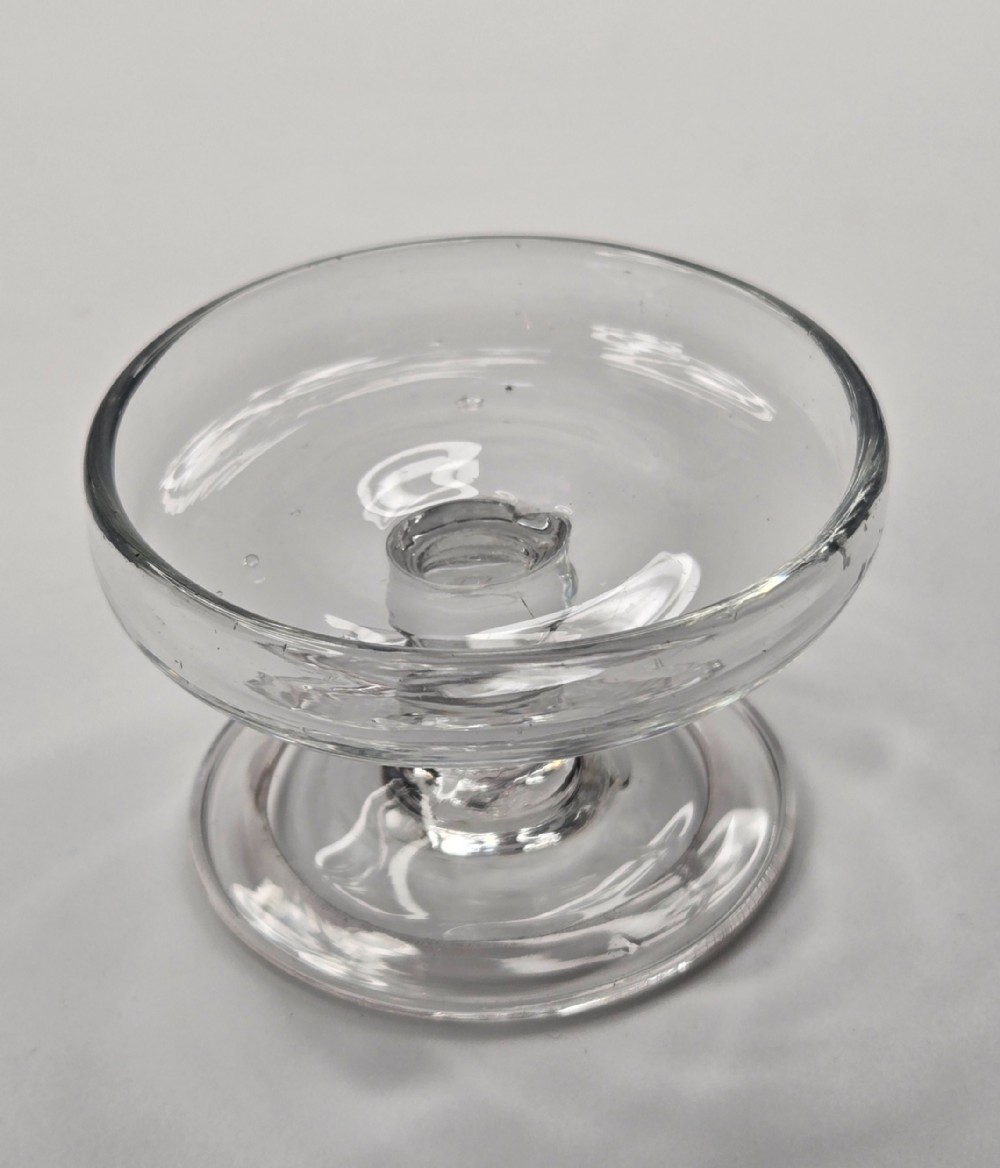
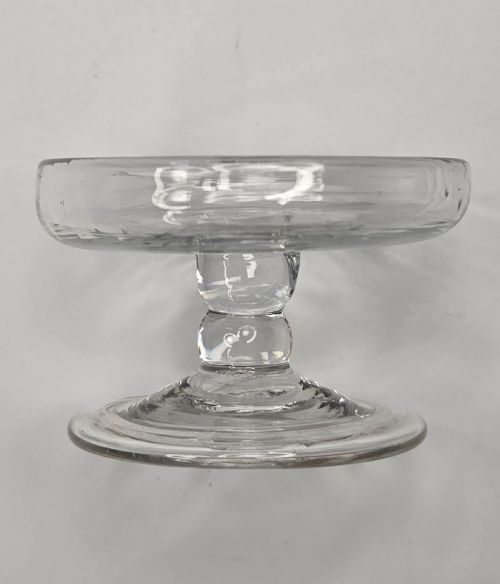
The height of 18th-century vanity in the palm of your hand. This exquisite miniature stand dates to the reign of George II, a period when "beauty patches" were an essential fashion statement for the Georgian elite. While most examples are larger, this exceptionally rare "tiny tazza" scale demonstrates the incredible skill of the Georgian glassblower. It is a masterclass in early English lead glass, surviving in impeccable condition for nearly 300 years.
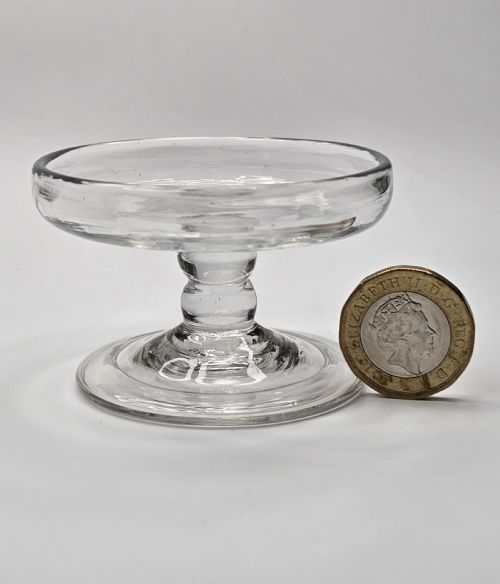
Material: Heavy English Lead Glass (Flint Glass) with a characteristic grey-blue tint and "seed" inclusions.

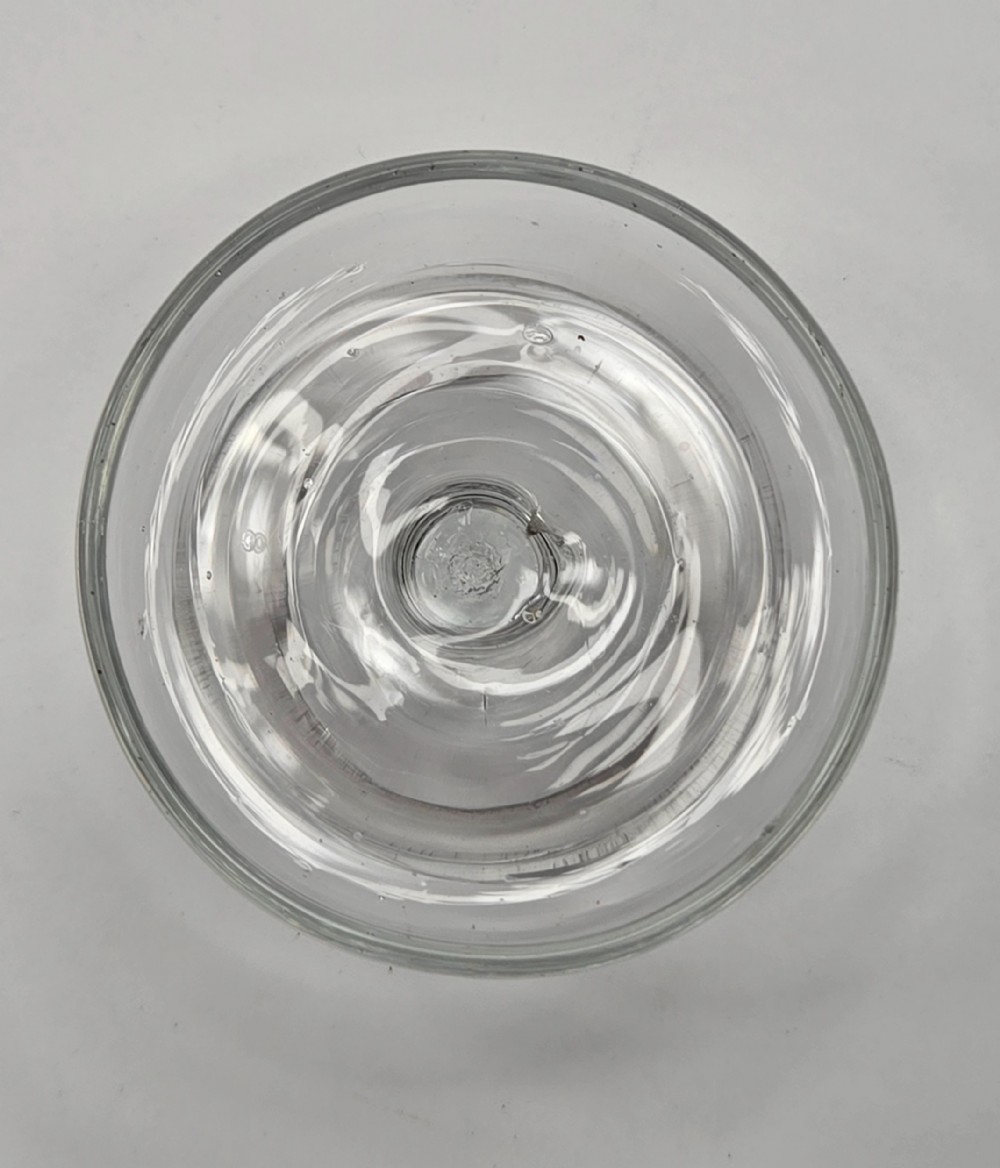
Form: A shallow, upturned circular tray (tazza) with a thickened, fire-polished rim.

Stem: A classic early Georgian annular (ringed) knop, connecting the bowl to the base with architectural precision.
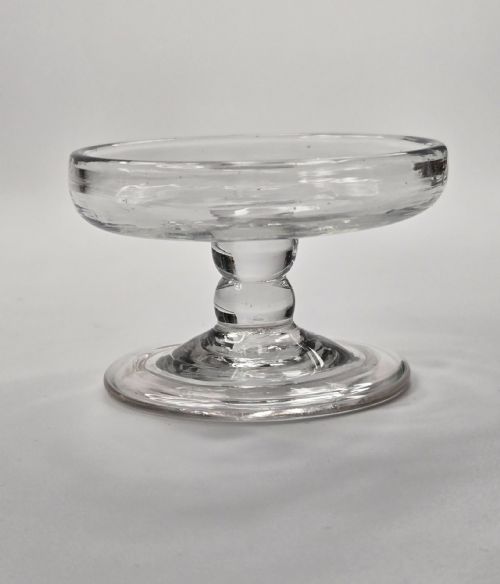
Foot: A wide, conical folded foot, a hallmark of 1730s production, designed to provide stability and resist chipping.

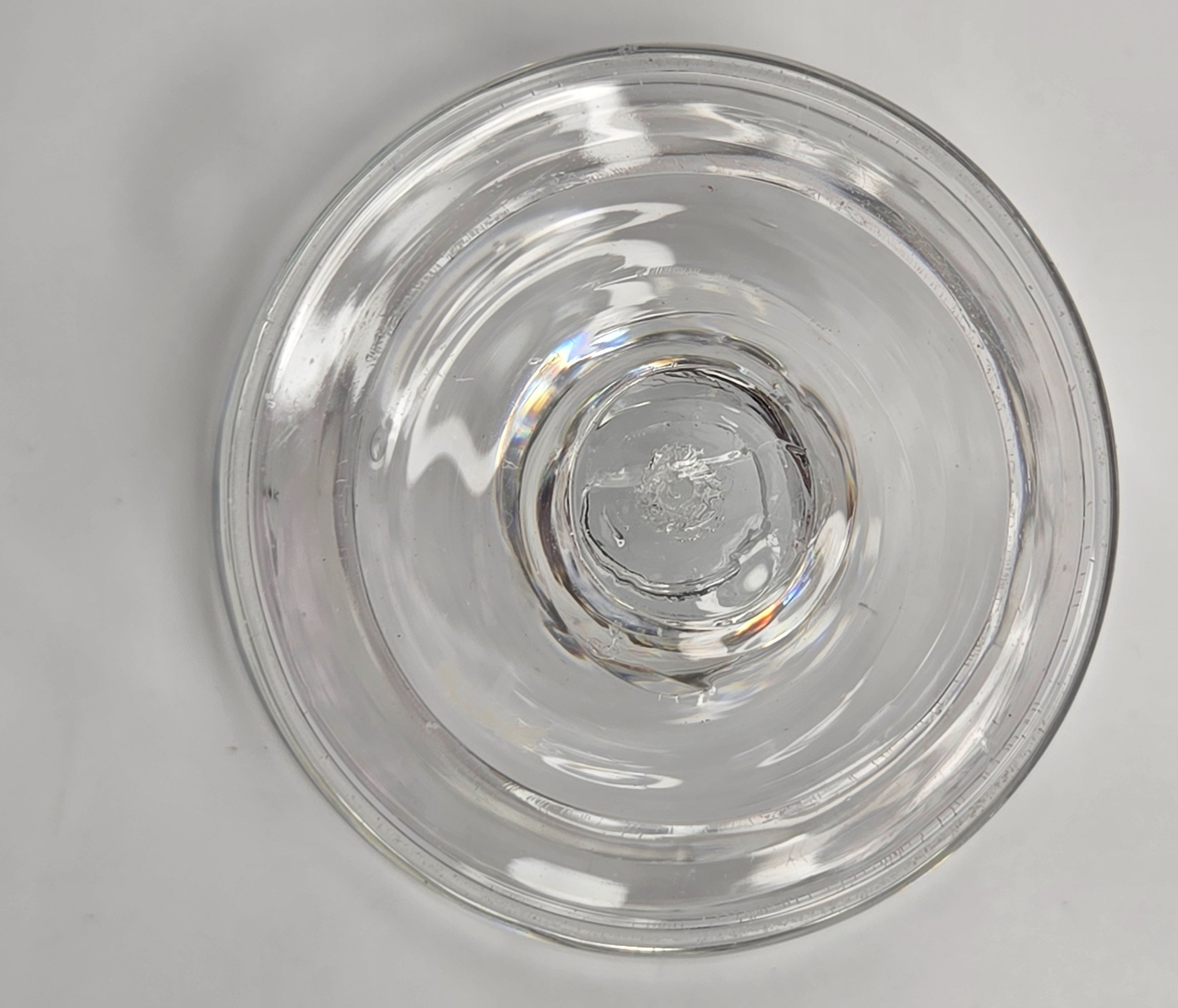
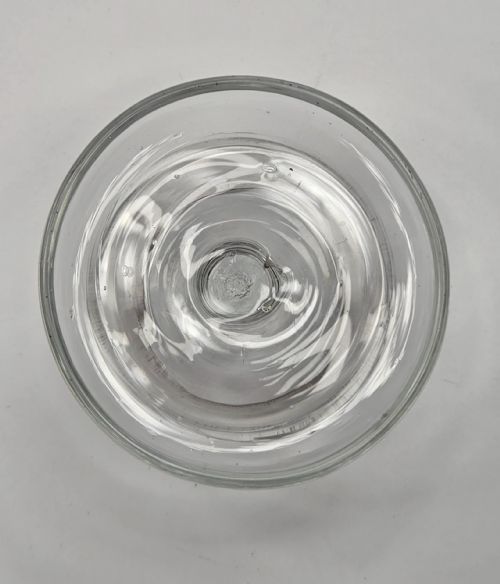
Pontil: A "rough" snapped pontil mark to the underside, indicating the piece was hand-blown and finished on a pontil rod.
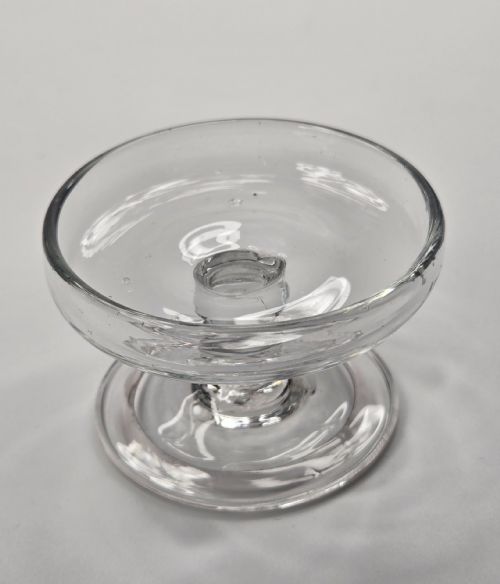
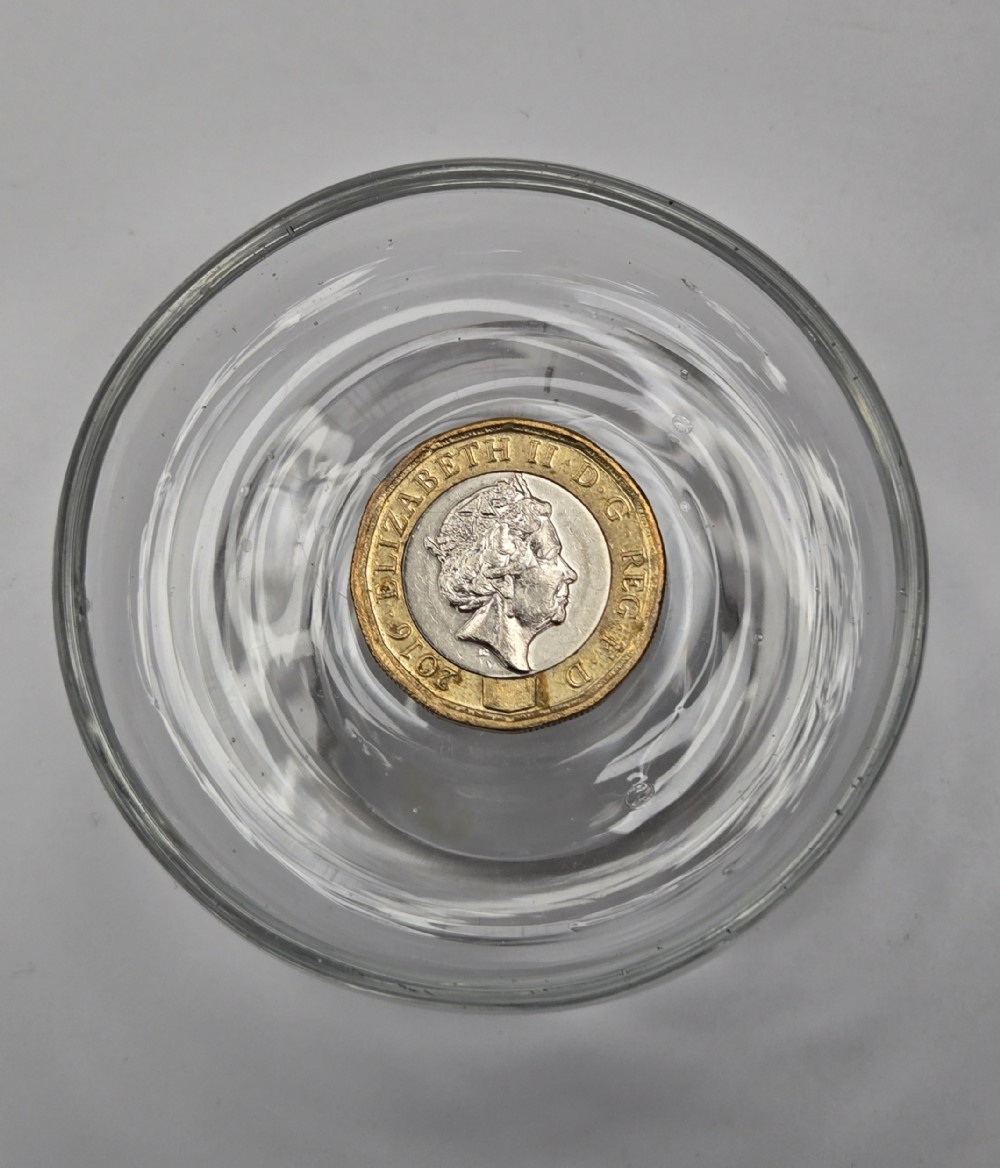
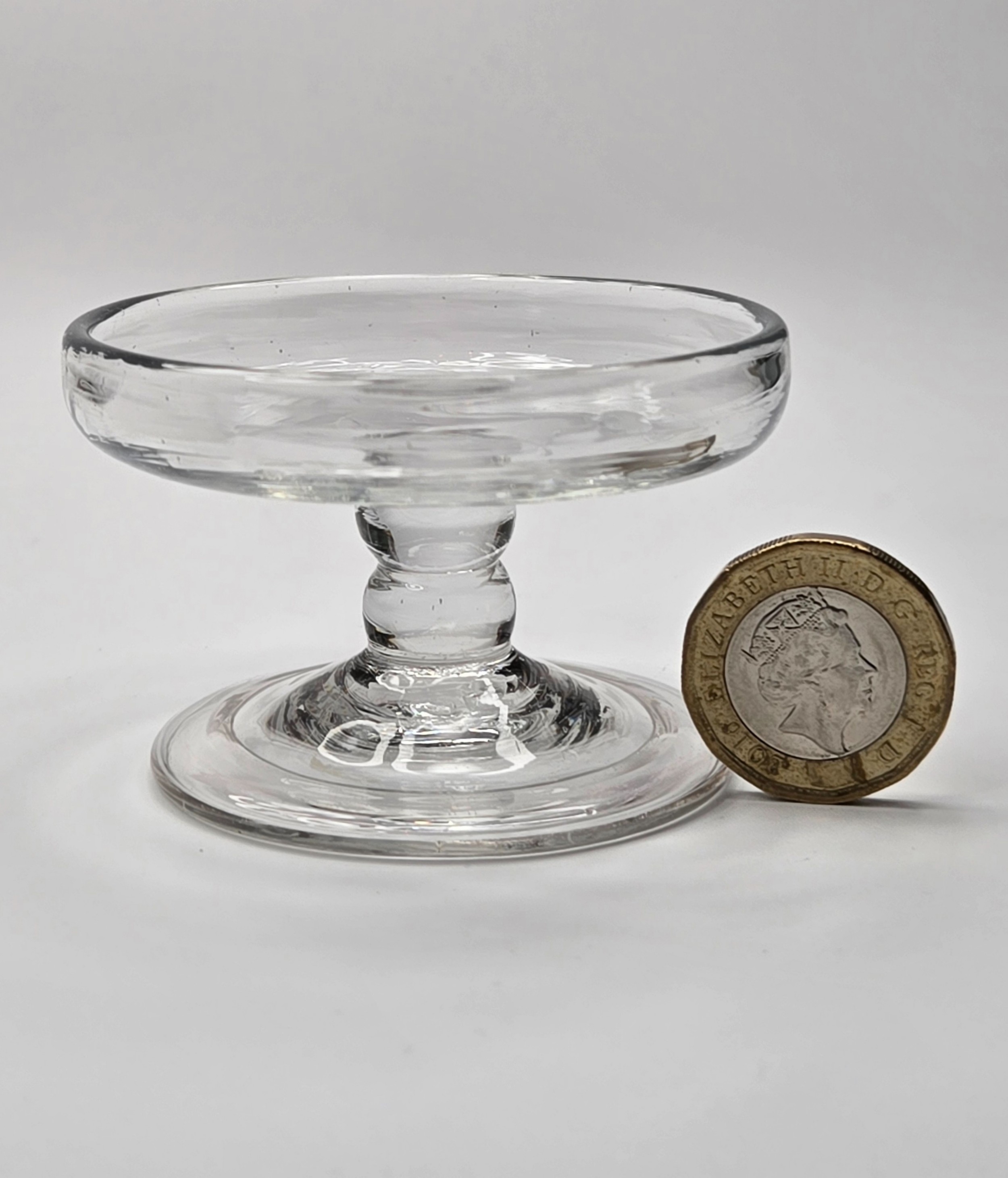
Dimensions: Height: 4.2 cm | Diameter: 6.2 cm

Condition: Excellent; no chips, bruises, or clouding, with light, age-appropriate shelf wear to the base of the folded foot.

Provenance The G S. May Esquire Private Collection, London
Important Note for Collectors:

Provenance: This rare patch stand is part of a substantial, crated 14-piece collection of 18th-century miniature glass, all from The G S. May Esquire Private Collection, London
Collection Sale Inquiry: While this item is listed individually, I am open to offers for the collection en bloc. If you are interested in acquiring the complete 14-piece set, please inquire directly for further details and a full inventory.

Physical Dimensions
Height
4.2cm (1.65")
Width
6.6cm (2.60")
Declaration

Sandbanks Antiques has dated this George II Glass Patch Stand to the 18th Century.

Reference Numbers
Sellingantiques Reference
SA1206074
Description
A Rare George II Miniature Lead Glass Patch Stand

Circa 1730 – Early Georgian Period

The height of 18th-century vanity in the palm of your hand.

This exquisite miniature stand dates to the reign of George II, a period when "beauty patches" were an essential fashion statement for the Georgian elite.
Sandbanks Antiques

While most examples are larger, this exceptionally rare "tiny tazza" scale demonstrates the incredible skill of the Georgian glassblower. It is a masterclass in early English lead glass, surviving in impeccable condition for nearly 300 years.

fig 1. A clear lead glass patch stand featuring a shallow circular dish elevated on a knopped stem and a wide flat base.
fig 1. A Rare George II Miniature Lead Glass Patch Stand Circa 1730 – Early Georgian Period

Material: Heavy English Lead Glass (Flint Glass) with a characteristic grey-blue tint and "seed" inclusions.

Form: A shallow, upturned circular tray (tazza) with a thickened, fire-polished rim.

Stem: A classic early Georgian annular (ringed) knop, connecting the bowl to the base with architectural precision.

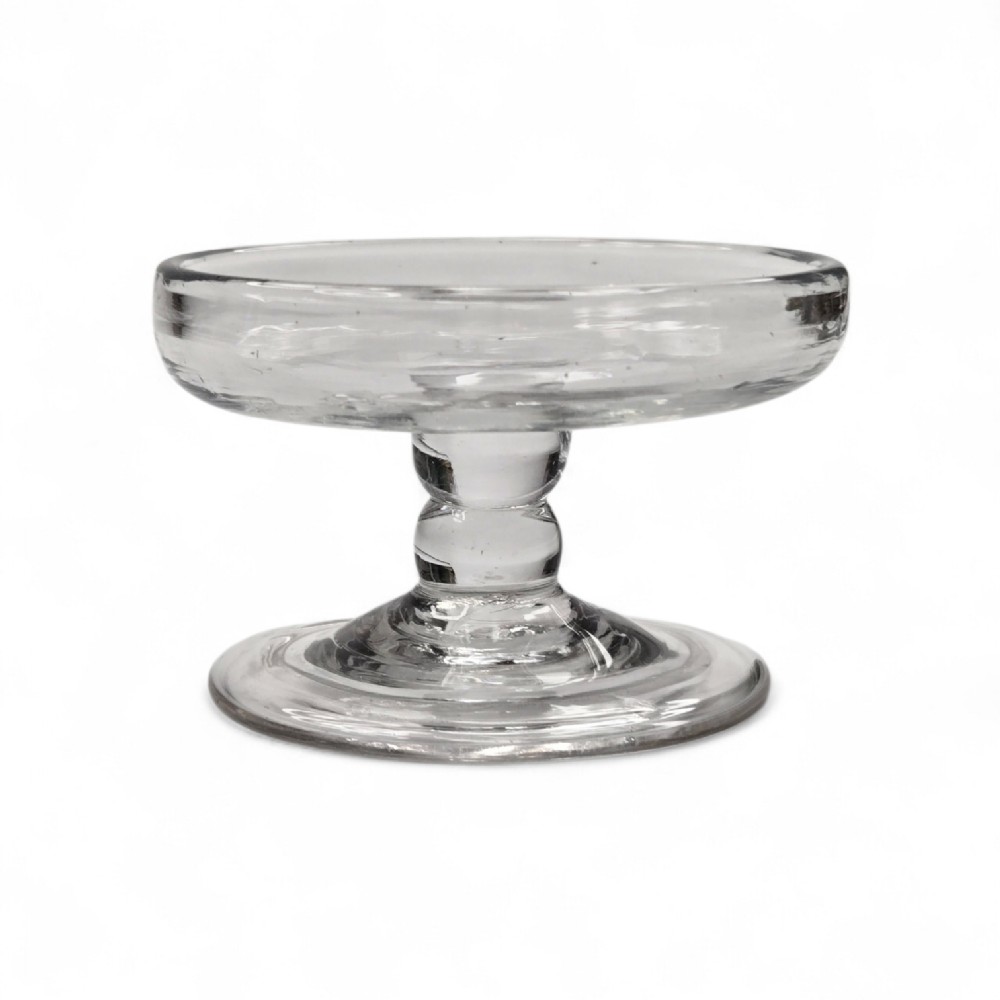
fig 2. A clear lead glass patch stand featuring a shallow circular dish elevated on a knopped stem and a wide flat base.
fig 2. A Rare George II Miniature Lead Glass Patch Stand Circa 1730 – Early Georgian Period

Foot: A wide, conical folded foot, a hallmark of 1730s production, designed to provide stability and resist chipping.

Pontil: A "rough" snapped pontil mark to the underside, indicating the piece was hand-blown and finished on a pontil rod.

fig 3. A clear lead glass patch stand featuring a shallow circular dish elevated on a knopped stem and a wide flat base.
fig 3. A Rare George II Miniature Lead Glass Patch Stand Circa 1730 – Early Georgian Period

Dimensions: Height: 4.2 cm | Diameter: 6.2 cm

Condition: Excellent; no chips, bruises, or clouding, with light, age-appropriate shelf wear to the base of the folded foot.

Provenance The G S. May Esquire Private Collection, London

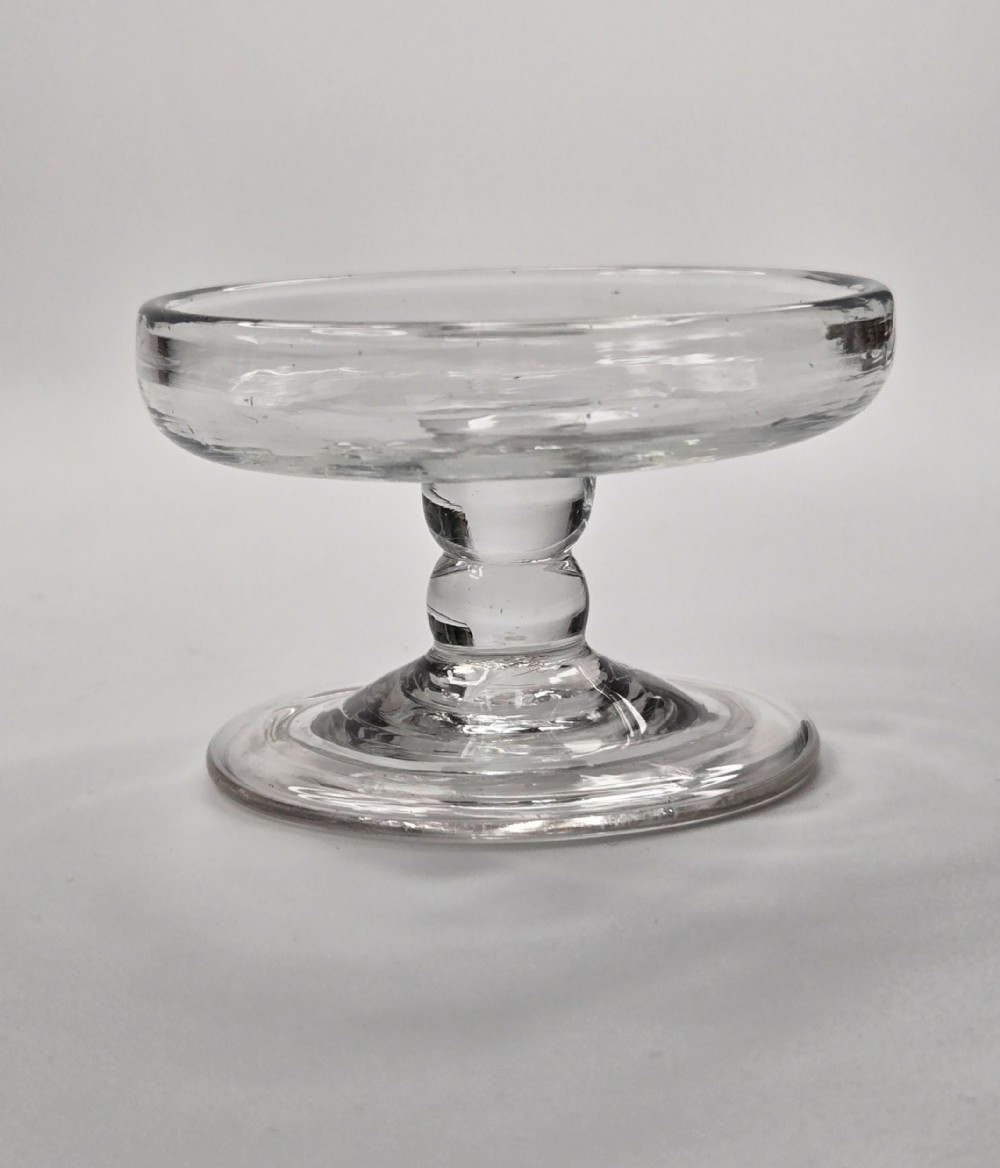
fig 4. A clear lead glass patch stand featuring a shallow circular dish elevated on a knopped stem and a wide flat base.
fig 4. A Rare George II Miniature Lead Glass Patch Stand Circa 1730 – Early Georgian Period

Important Note for Collectors:

Provenance: This rare patch stand is part of a substantial, crated 14-piece collection of 18th-century miniature glass, all from The G S. May Esquire Private Collection, London

fig 5. A clear lead glass patch stand featuring a shallow circular dish elevated on a knopped stem and a wide flat base.
fig 5. A Rare George II Miniature Lead Glass Patch Stand Circa 1730 – Early Georgian Period

Collection Sale Inquiry: While this item is listed individually, I am open to offers for the collection en bloc. If you are interested in acquiring the complete 14-piece set, please inquire directly for further details and a full inventory.

Height
4.2cm (1.65")
Width
6.6cm (2.60")
Date of Manufacture

Sandbanks Antiques has dated this George II Glass Patch Stand to the 18th Century.

Reference Numbers
Sellingantiques Ref
SA1206074
Sandbanks Antiques
Sandbanks Antiques
Sellingantiques verified Since Jan 2025

Specialising in antique silver, gold boxes, gold coins and objects de vertu. Rare fine-quality imperial chinese porcelain, jades, cloisonné

Dealer Profile

You can view the stock and full dealer information on the Sandbanks Antiques Profile Page
PDF SHARE
SAVE
A clear lead glass patch stand featuring a shallow circular dish elevated on a knopped stem and a wide flat base.
1 / 8
Archive I A clear lead glass patch stand featuring a shallow circular dish elevated on a knopped stem and a wide flat base.

A Rare George II Miniature Lead Glass Patch Stand Circa 1730 – Early Georgian Period
Archive II A clear lead glass patch stand featuring a shallow circular dish elevated on a knopped stem and a wide flat base. View II
Archive III A clear lead glass patch stand featuring a shallow circular dish elevated on a knopped stem and a wide flat base. View III
Archive IV A clear lead glass patch stand featuring a shallow circular dish elevated on a knopped stem and a wide flat base. View IV
Archive V A clear lead glass patch stand featuring a shallow circular dish elevated on a knopped stem and a wide flat base. View V
Archive VI A clear lead glass patch stand featuring a shallow circular dish elevated on a knopped stem and a wide flat base. View VI
Archive VII A clear lead glass patch stand featuring a shallow circular dish elevated on a knopped stem and a wide flat base. View VII
Archive VIII A clear lead glass patch stand featuring a shallow circular dish elevated on a knopped stem and a wide flat base. View VIII
Enlarged Archival View
Telephone 07889 139677
Location
Sandbanks
Poole
Dorset
United Kingdom

By appointment only in Poole or London.
Verified Since Jan 2025
Items For Sale 192
Items Sold 82
Sandbanks Antiques
Sandbanks Antiques
Verified Since Jan 2025
View Dealer Info
Location: Sandbanks, Poole, Dorset, United Kingdom, , By appointment only in Poole or London.
Verified
Jan 2025
For Sale
192
Sold
82
A clear lead glass patch stand featuring a shallow circular dish elevated on a knopped stem and a wide flat base.
A Rare George II Miniature Lead Glass Patch Stand Circa 1730 – Early Georgian Period
Ref: SA1206074
A clear lead glass patch stand featuring a shallow circular dish elevated on a knopped stem and a wide flat base.
Detail View 7
Detail View 8
Detail View 9
Detail View 10
Detail View 11
Detail View 12
Detail View 13
Archival Detail
Every single antique dealer on our platform is individually approved by our internal team. We verify their professional trade history, ethical standards, and photographic quality to ensure a secure, high-standard buying environment. Upon joining, every dealer agrees to a strict 9-point code of conduct. While issues can occasionally arise, our dealers typically resolve them swiftly and directly with the buyer. In fact, since our founding in 2002, Sellingantiques has only had to step in to help resolve an issue on roughly five occasions—a true testament to the quality of our dealers and their dedication to your happiness.
Our dealers are highly experienced in packing and shipping fragile, high-value antiques. Because you are in direct contact with the dealer, you will be able to easily go through all available shipping and insurance options together to ensure your item arrives safely.
Antiques are the ultimate green purchase. By choosing historical pieces over newly manufactured goods, you completely eliminate the carbon footprint of modern mass production while preserving exceptional, timeless craftsmanship.

A patch stand is a small tabletop pedestal dish used during the 18th century to hold facial beauty patches made of silk or velvet, which were fashionable cosmetic accessories of the era.

Early Georgian patch stands were typically hand-blown from lead glass, also known as flint glass, which provided distinct clarity, substantial weight, and a brilliant resonance.

Authentic George II lead glass often displays characteristic hand-blown features, such as slight structural irregularities, a pontil mark on the base, subtle air bubbles, and a subtle grey or purplish cast inherent to early glassmaking.

In modern interiors, a miniature glass patch stand functions effectively as a trinket dish or ring holder on a dressing table, bedside stand, or bathroom vanity.

Antique lead glass should be cleaned by hand using lukewarm water and a mild detergent, avoiding extreme temperature shifts and harsh abrasives to preserve the clarity and surface condition.
items
Add keywords to the filter
Price
£100
£250000
Era
Movements
Material
Origin
Stock Location
Freshness
Online Payments
Categories