

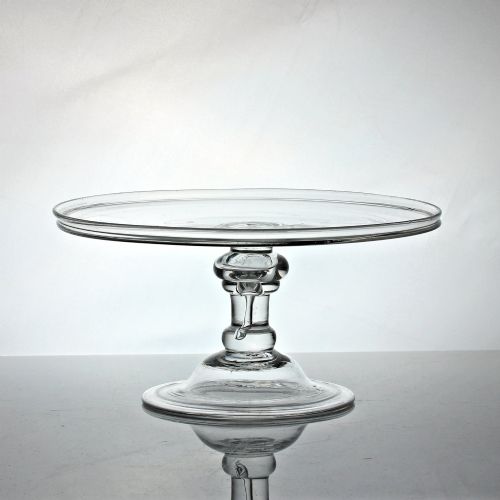
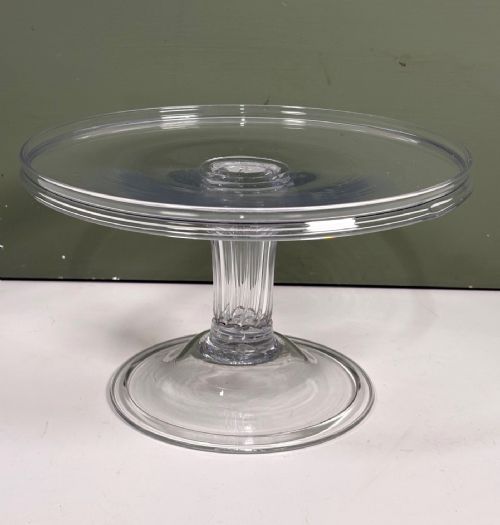
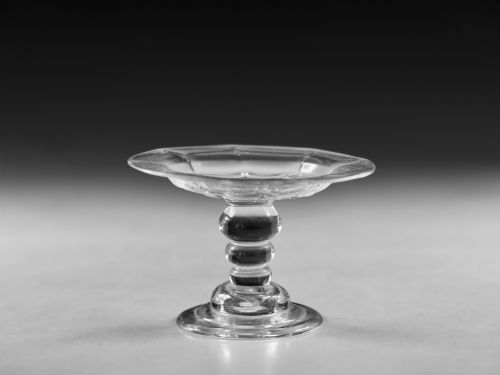
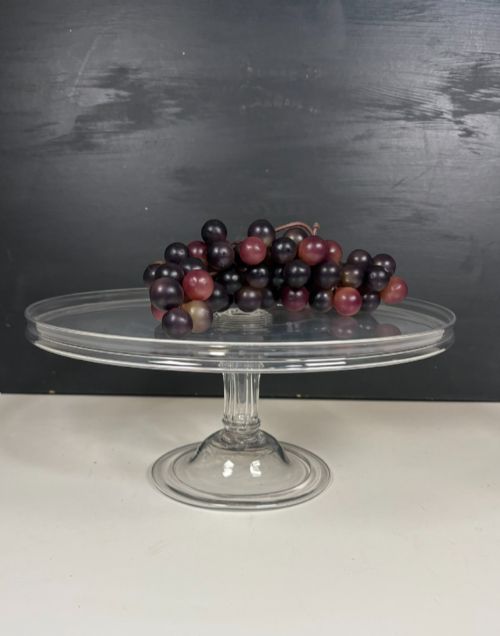
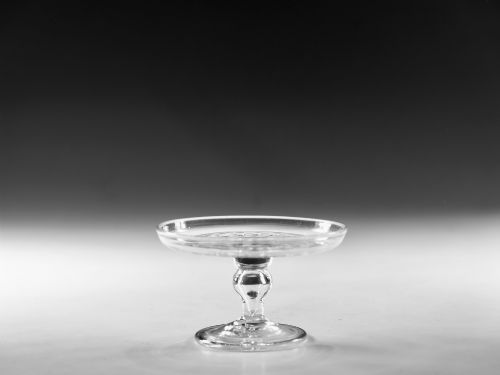


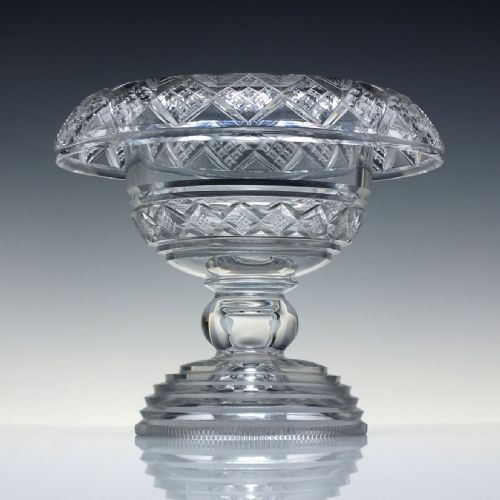


Clear Lead Glass Stand
These clear lead glass stand pieces bring a bright presence to a room, offering genuine period utility and crisp optical clarity for your table.
Clear Lead Glass Stand
These items originate primarily from Georgian and Victorian periods, showcasing traditional glassmaking forms like rib-moulded bowls and honeycomb moulding. Buyers encounter both diminutive miniature patch stands and substantial George III tazzas designed for period tables. Each piece serves to elevate small items or confections, combining reflective material with structured height.
How they were made
The objects in this category rely primarily on lead glass, flint glass, and heavy lead crystal materials that provide weight and high refractive brilliance. Artisans shaped these components through blowing, moulding, and subsequent hand-cutting or rib-moulding techniques. Early examples often utilise triple-knop stems and terraced feet.
Later Victorian and Art Deco pieces incorporate detailed wheel-cutting and etching directly onto the crystal surface. The manipulation of molten lead glass allowed makers to achieve spreading folded feet and faceted borders that catch the ambient light.
Clear Lead Glass Stand Retail Price Guide 2026
Typical asking prices for clear lead glass stand among the pieces listed under this phrase on Sellingantiques today, from the lower quarter to the upper quarter. They describe what is for sale here now, not the wider market.
The listings span from the early Georgian period through the 19th century into Art Deco cruet sets.
What varies in quality
The distinction between tiers rests upon the crispness of the moulding and the depth of the hand-cut facets. Sharpness in decorative motifs, such as honeycomb patterns or stem knops, indicates superior craftsmanship during shaping.
Clarity of the metal and the stability of the spreading foot also determine the refinement of the item. Weight distribution and proportion across the stem and tazza top distinguish standard utility vessels from more ambitious decorative examples.
The Clear Lead Glass Stand Glossary
- Tazza
- A circular table vessel raised on a stem and foot, used for serving confectioneries or display. These pieces form a large portion of early glass serveware.
- Patch stand
- A small pedestal dish historically used to hold cosmetic patches for the face. They typically feature diminutive proportions and folded or terraced feet.
- Baluster stem
- A thick, turned glass stem shaped like an architectural baluster, common in 18th-century drinking glasses and stands. It adds substantial weight to the lower section.
- Rib-moulded
- A technique where molten glass is blown into a ribbed pattern mould to create vertical surface ridges. This texture diffuses light across the body of the glass.
- Flint glass
- An early British term for high-quality lead glass developed to increase brilliance and weight. It provides the characteristic ring and clarity found in Georgian pieces.
Clear Lead Glass Stand: Frequently Asked Questions
What is a patch stand?
A patch stand is a miniature pedestal dish created in the 18th century to hold small fabric beauty patches used in polite society.
These tiny vessels often feature folded feet and baluster stems, making them distinct decorative collector items today.
How do I date a glass tazza?
Dating relies on observing structural traits such as folded feet, pontil marks, stem knops, and the weight of the lead crystal.
Georgian examples often show heavier metal and simpler moulded ribs, whereas Victorian pieces introduce detailed etching and sharper cut facets.
Are these stands safe to use?
These historical glass items function well for gentle modern display or serving dry items like sweets and small fruits.
Due to their age and lead content, hand washing in warm water without harsh abrasives preserves the historic glass surface.
What is lead crystal glass?
Lead crystal is a heavy glass variety containing lead oxide, which increases the refractive index and weight of the material.
This composition allows artisans to achieve deep cuts and high optical brilliance not possible with standard soda-lime glass.