




Early Georgian Glass
Early georgian glass captures the heavy, tactile brilliance of eighteenth-century lead metal, offering collectors substantial vessels shaped by early furnace traditions.
Early Georgian Glass
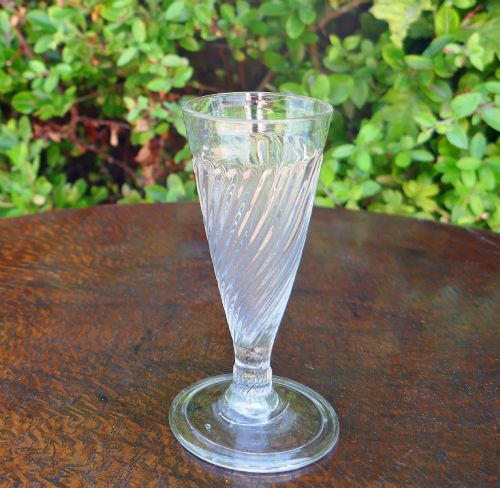
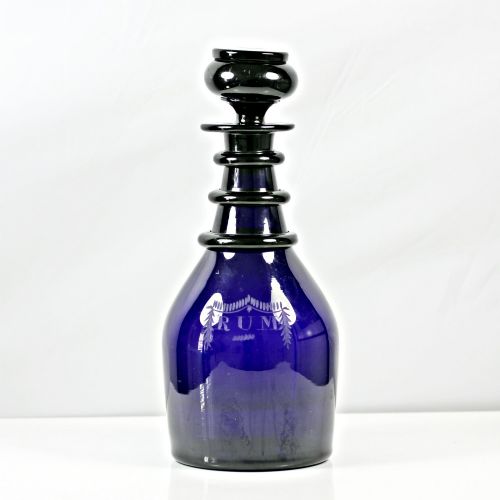
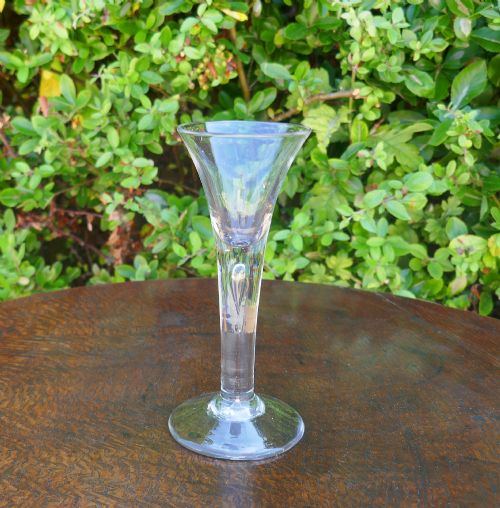
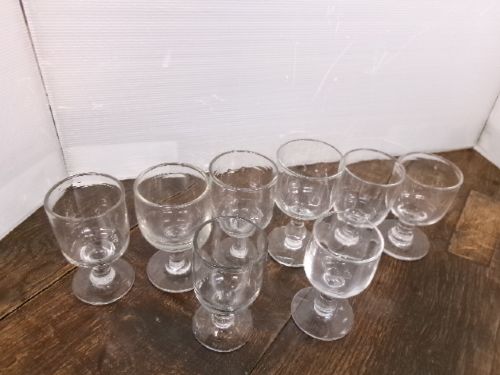
When you search for early georgian glass, you encounter functional drinking vessels and tablewares originating primarily from the eighteenth century. These objects include wine glasses, dram glasses, ale glasses, gin glasses, rummers, and decanters shaped during the reigns of Queen Anne and George II.
The most common forms on this page are lead glass wine glasses and dram glasses featuring baluster, balustroid, or plain stems. Alongside drinking vessels, the selection occasionally yields specialist items like patch stands and onion wine bottles from the early seventeen hundreds.
Makers and glasshouses of this era utilised heavy lead flux formulas, producing metal that feels dense in the hand. Collectors prize these surviving examples for their tactile weight, visible manufacturing quirks, and historical bridge between heavy seventeenth-century forms and lighter later styles.
How they were made
Glasshouses of the period relied on lead metal formulations developed in the late seventeenth century, yielding a material with high refractive index and significant physical weight. Smiths and blowers shaped molten glass by hand, leaving subtle surface variations and distinctive tool marks across the body.
Stems were formed using baluster knops, air bubbles trapped intentionally or accidentally within the metal, and folded feet created by doubling the rim under for stability. Mold-blowing techniques also created ribbed bowls, wrythen spirals, and patterned surfaces before final fire-polishing.
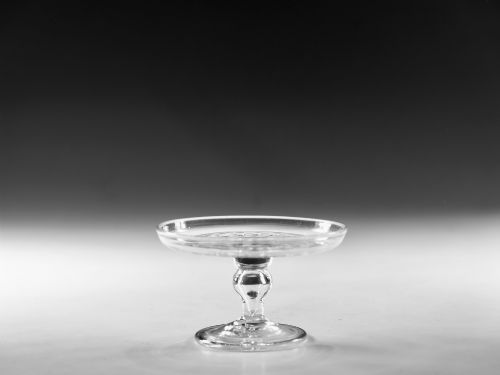
An eighteenth-century patch stand once held the tiny silk beauty spots that fashionable georgian diners wore to conceal smallpox scars.
What varies in quality
The distinction between ordinary and exceptional pieces rests upon the proportions of the vessel and the purity of the metal. Superior examples display balanced distribution of weight between bowl, stem, and foot, alongside minimal clouding or crizzling within the glass body.
Desirability increases when specific stem formations, such as domed feet or basal bubbles, remain crisp and undamaged. The skill of the original blower dictates whether a glass possesses elegant symmetry or heavy-handed asymmetry.
The Early Georgian Glass Glossary
- Lead glass
- Heavy flint glass containing lead oxide, developed in England to increase brilliance and weight. This material forms the primary substance of eighteenth-century drinking vessels.
- Baluster stem
- A heavy, swelling stem shape reminiscent of architectural balusters, featuring pronounced knops. It dominates early eighteenth-century English wine glass design.
- Folded foot
- A rim turned under the base of a glass to provide strength and stability during daily use. This technique leaves a distinct circular ridge visible underneath.
- Wrythen moulding
- A spiral optic ribbing pattern created by twisting the glass while inside a mould during blowing. It adds tactile texture to the bowl of an ale or wine glass.
Early Georgian Glass: Frequently Asked Questions
How do I identify early georgian glass?
Examine the weight, colour, and construction methods of the piece, looking for the dense feel of lead metal and genuine hand-formed characteristics.
Early pieces often feature thick folded feet, baluster stems, and natural air bubbles trapped within the glass matrix rather than modern machine symmetry.
Were these glasses used daily?
Most surviving lead glass vessels served practical dining and tavern functions for pouring wine, beer, and spirits.
Their robust lead composition helped them withstand regular handling at table, though domestic use over centuries naturally led to surface wear.
Why do stems have air bubbles?
Gas pockets frequently remained trapped in the molten lead metal during eighteenth-century furnace operations.
Blowers sometimes incorporated these bubbles intentionally into the stem knops as an attractive optical feature rather than treating them as flaws.