
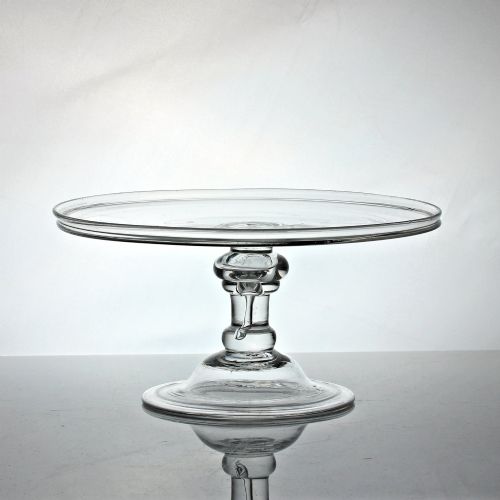
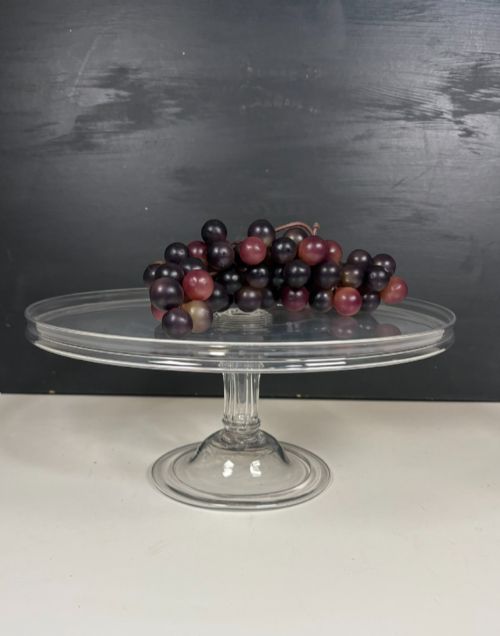


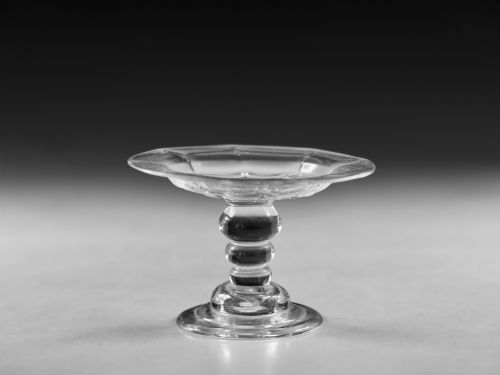
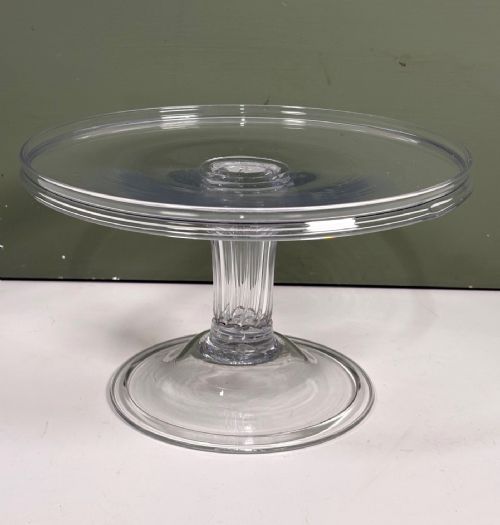


Antique Lead Glass Dish
An antique lead glass dish brings heavy metal brilliance and crisp wheel-cut facets to the table, offering a tangible link to Georgian and Victorian dining.
Antique Lead Glass Dish
When searching for an antique lead glass dish, a buyer encounters a diverse group of domestic serveware spanning from the early eighteenth century through the Edwardian period. These pieces encompass utilitarian vessels and display items such as tazzas, patch stands, butter dishes, ice plates, and fruit bowls.
The pieces most frequently met on this page include Georgian baluster tazzas, Victorian cut glass bowls, and Edwardian fruit dishes. Formats range from diminutive patch stands and jelly glasses to large centrepiece bowls intended for formal table service.
Origins represented in the evidence span traditional English production alongside Irish crystal, reflecting changes in domestic entertaining and manufacturing centres across the periods.
What varies in quality
Quality in these items is determined by the clarity of the metal and the precision of the cutting. Superior pieces exhibit a bright, ringing crystal with deep, sharply rendered facets that catch the light cleanly, whereas lower-tier examples show softer lines and duller metal.
The balance of the form and the crispness of moulded or cut details dictate distinction. Early examples display deliberate proportions in stems and feet, while handling marks and minor tool impressions in blown bodies reveal the direct touch of the historic artisan.
The Antique Lead Glass Dish Glossary
- Tazza
- A raised saucer or dish supported by a central stem and foot, used historically for serving sweetmeats, fruit, or small cakes.
- Patch stand
- A small, elevated dish or plate intended to hold cosmetic patches used in the eighteenth century.
- Sweetmeat glass
- A small, stemmed vessel designed to hold sugary preserves, nuts, or confectionery during formal courses.
- Baluster stem
- A thick, swelling stem form reminiscent of architectural balusters, common in English drinking vessels and serveware of the eighteenth century.
- Ice plate
- A small plate or dish historically placed beneath a dessert glass or used independently for serving ice creams and chilled delicacies.
Antique Lead Glass Dish: Frequently Asked Questions
What was an antique lead glass dish used for?
These dishes served a variety of functions in historical dining, ranging from holding sticky sweetmeats and jellies to displaying fruit or supporting cosmetic patches on a dressing table.
Larger tazzas and centrepiece bowls occupied pride of place on the dining table during dessert courses, while smaller plates held individual portions of ice or preserves.
How can I tell a Georgian dish from a Victorian one?
Georgian pieces often display characteristic touches such as baluster stems, rib-moulding, or hand-blown irregularities, reflecting eighteenth-century workshop practices.
Victorian and Edwardian examples typically feature heavier, more uniform pressed or deeply wheel-cut crystal with sharper geometric facets and distinct etched ornamentation.
Can I use these dishes for serving food today?
Most antique lead glass dishes can safely accommodate dry foods, fruit, or sweets for modern entertaining, provided they are handled with appropriate care.
Avoid serving very hot foods or liquids in older lead glass due to thermal shock, which can cause the historic metal to crack.