It was listed by Chalfont Clocks. Sold pieces stay on Sellingantiques as a record of what has passed through, and the next one is rarely far away.
Chalfont Clocks has dated this Antique Clock Barometer to the 19th Century.
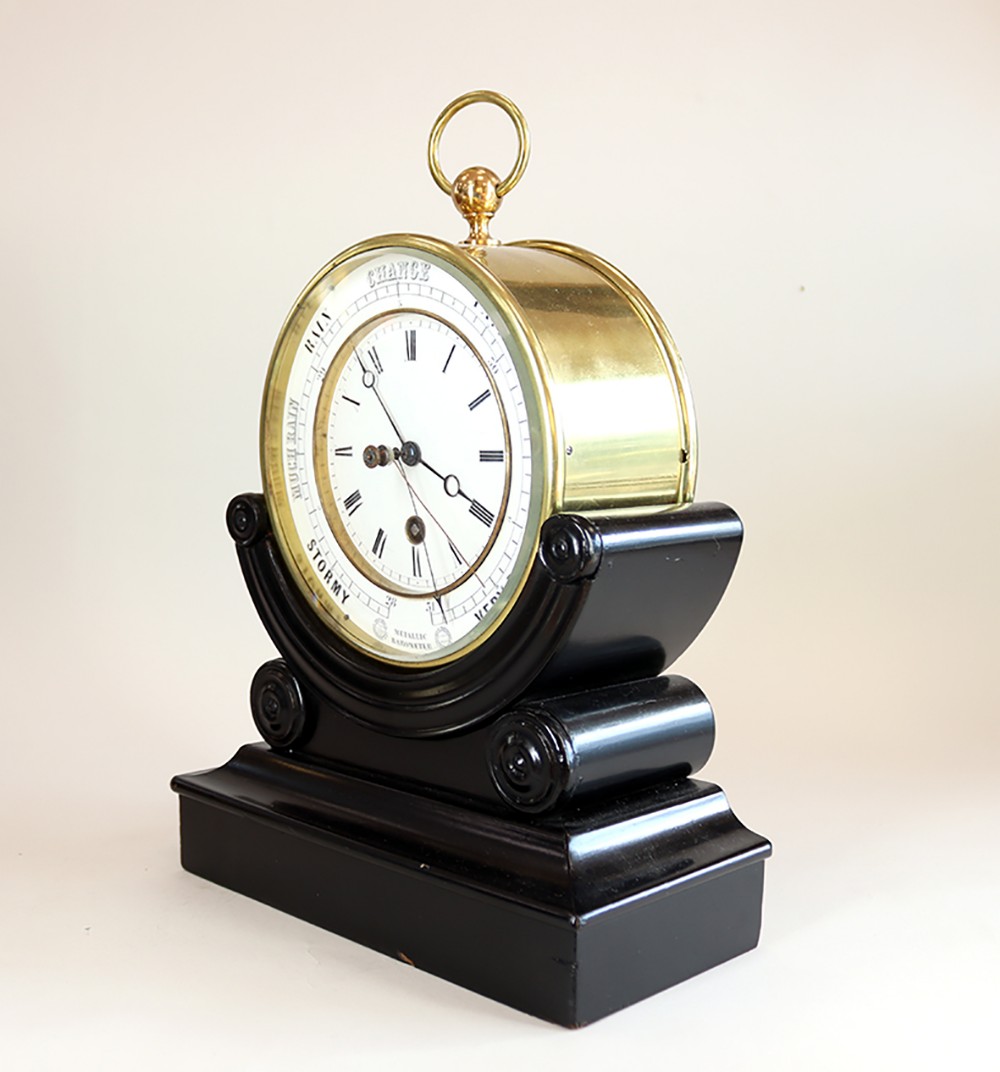
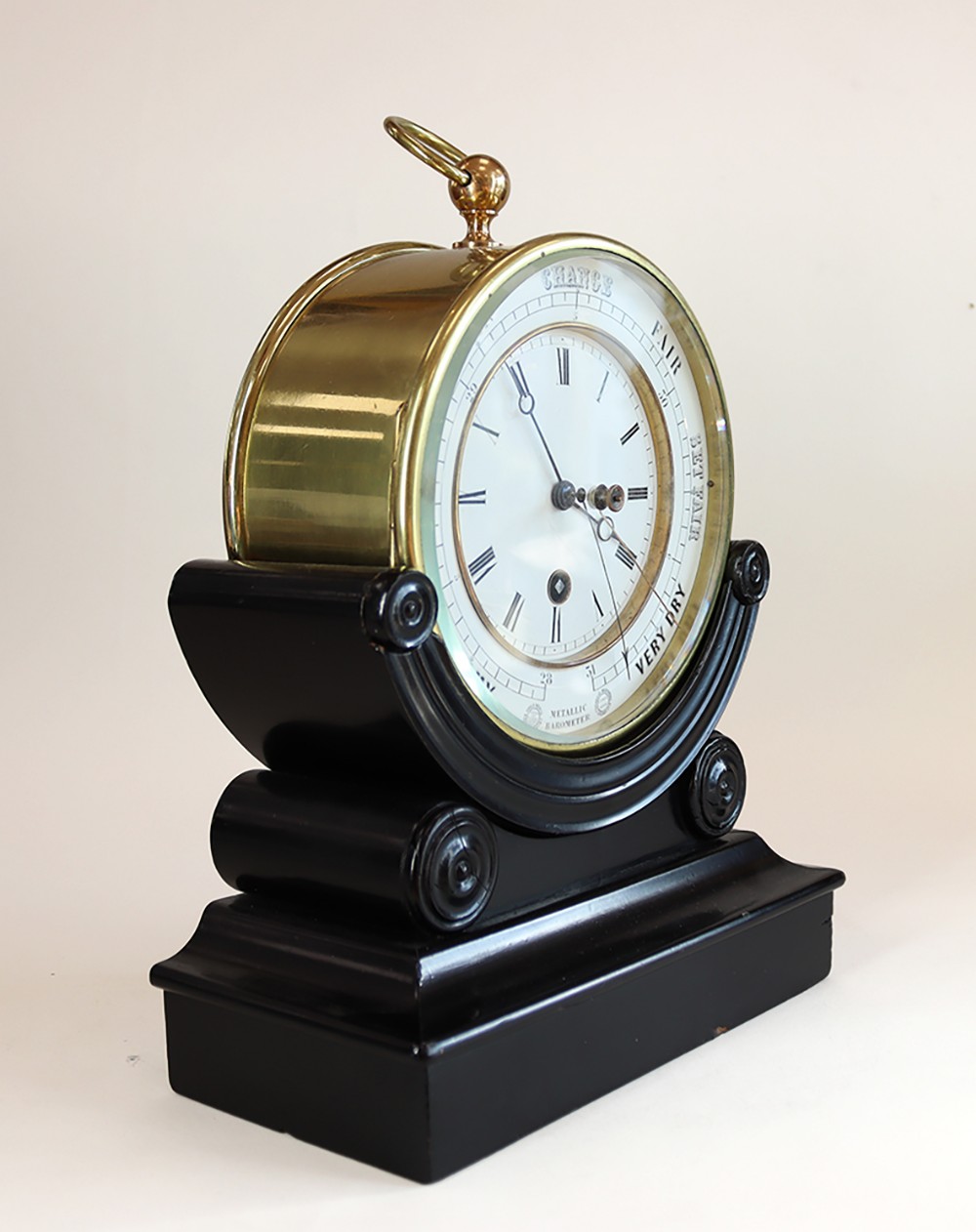
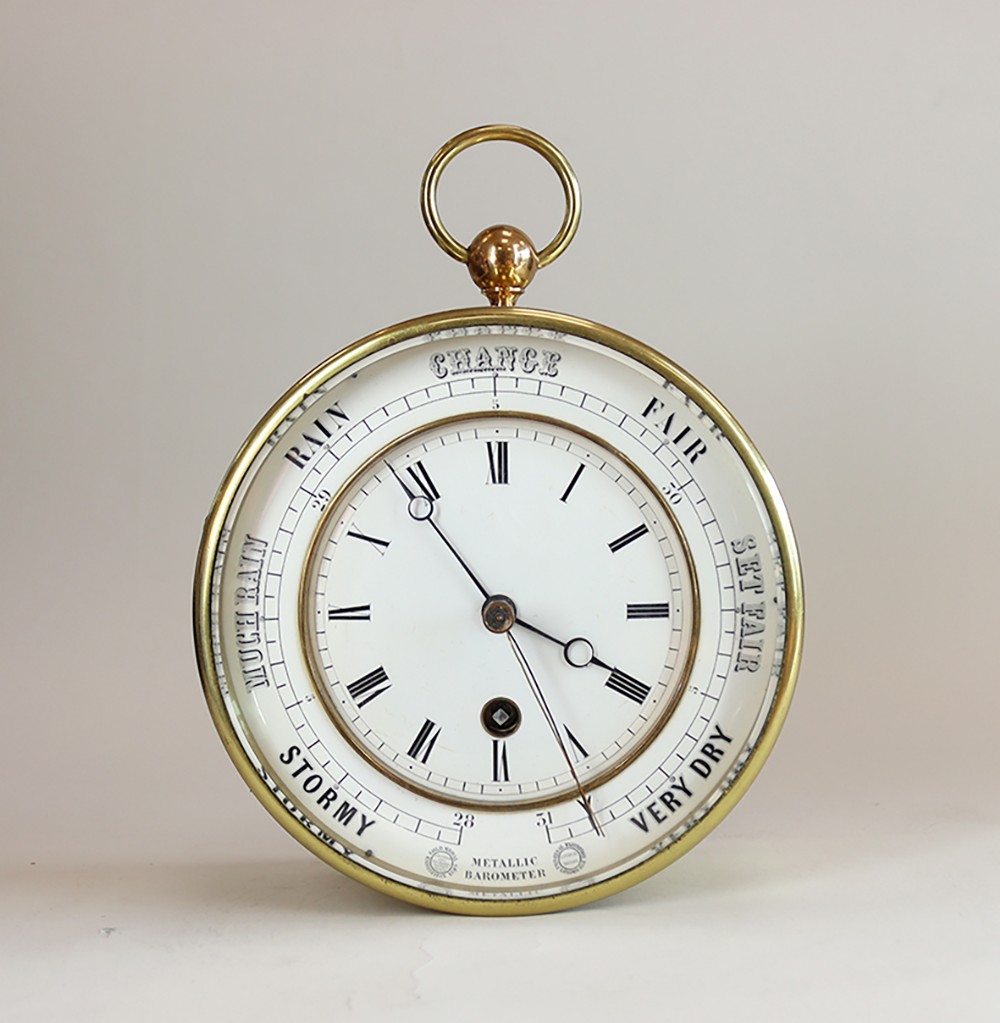
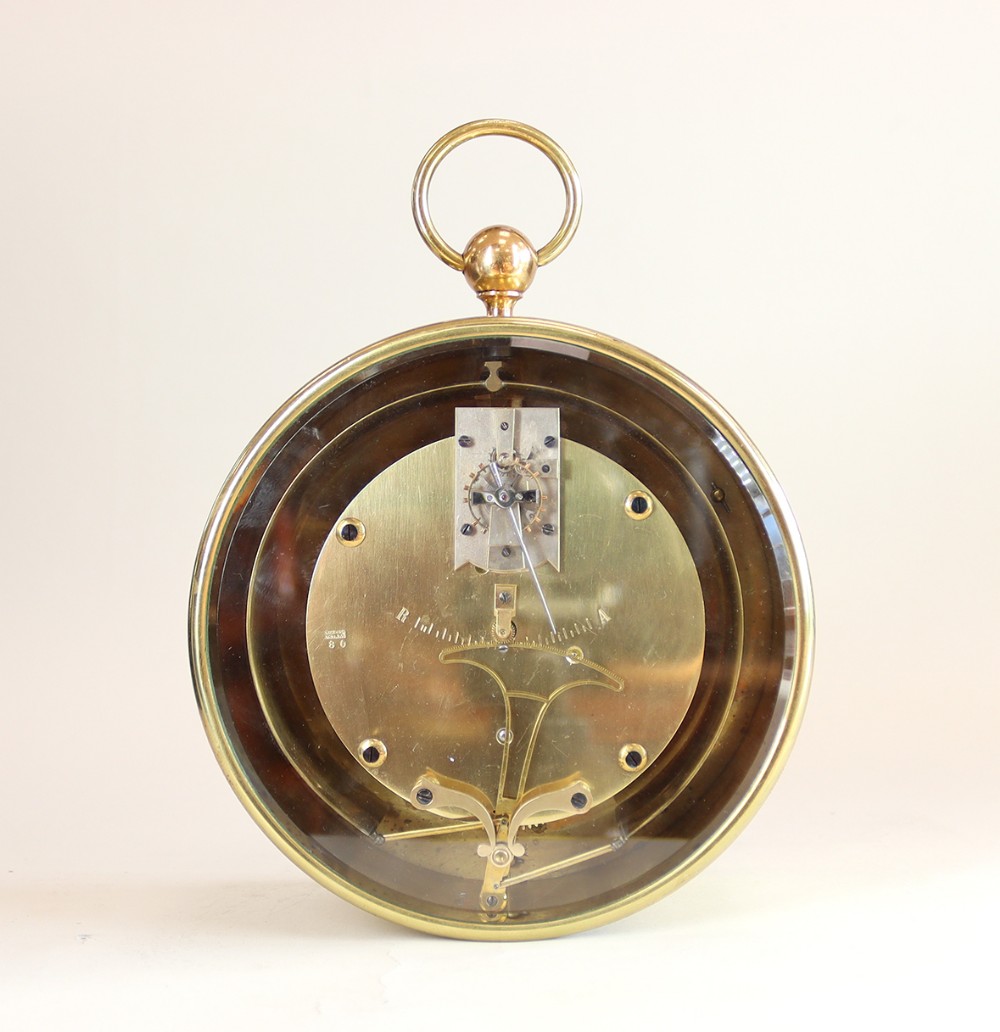
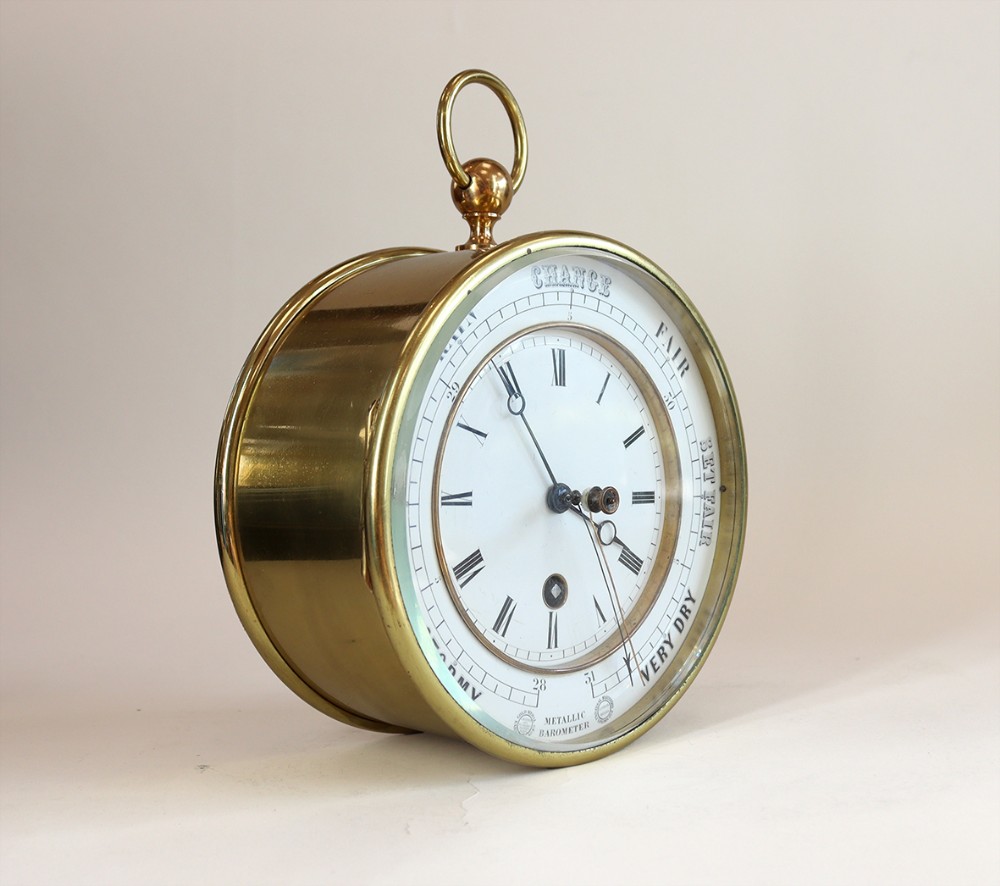
The barometer component operates using a Bourdon tube, which surrounds the clock movement and is clearly visible through the glazed back panel. . The barometer's dial is calibrated in inches of mercury, with the usual weather indicators around the dial.
The mechanism of this clock and barometer rely on an extraordinary level of precision to allow them both to work, with extremely finely cut teeth on the crescent lever that transmits the change in pressure from the Bourdon tube to the indicator needle through the centre of the clock.
The French engineer Eugene Bourdon (1808-1884) was an early rival of Lucien Vidie, the inventor of the bellows movement, securing a patent for his crescent-shaped mechanism design in 1849. Bourdon was a prolific inventor and respected craftsman. Today, his barometer movements are valued for their craftsmanship, and rarity.
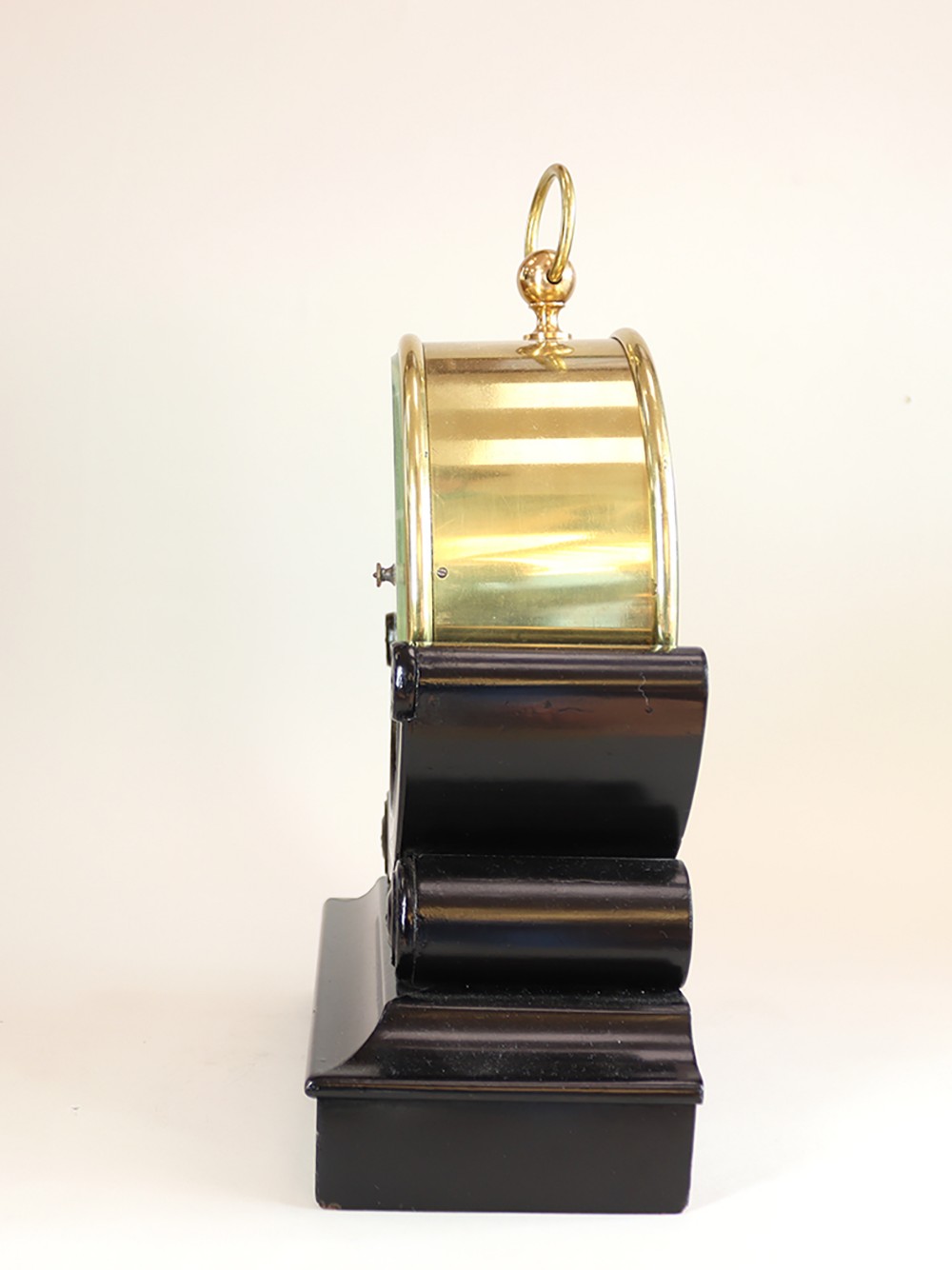
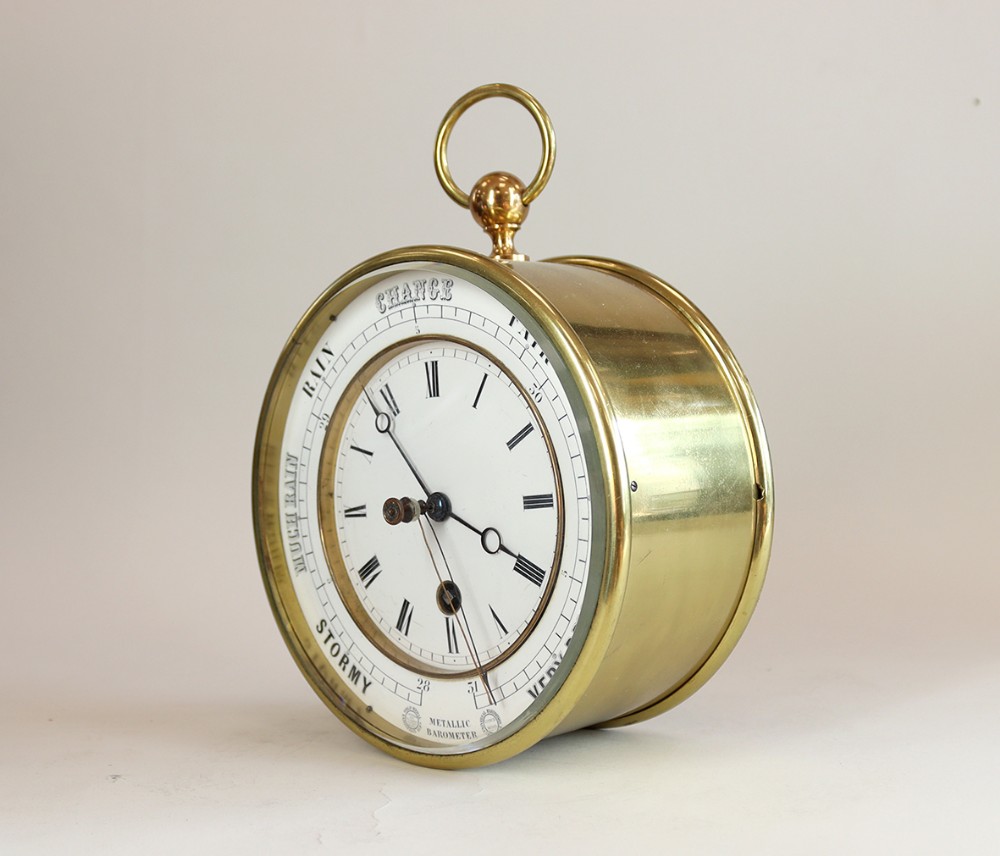
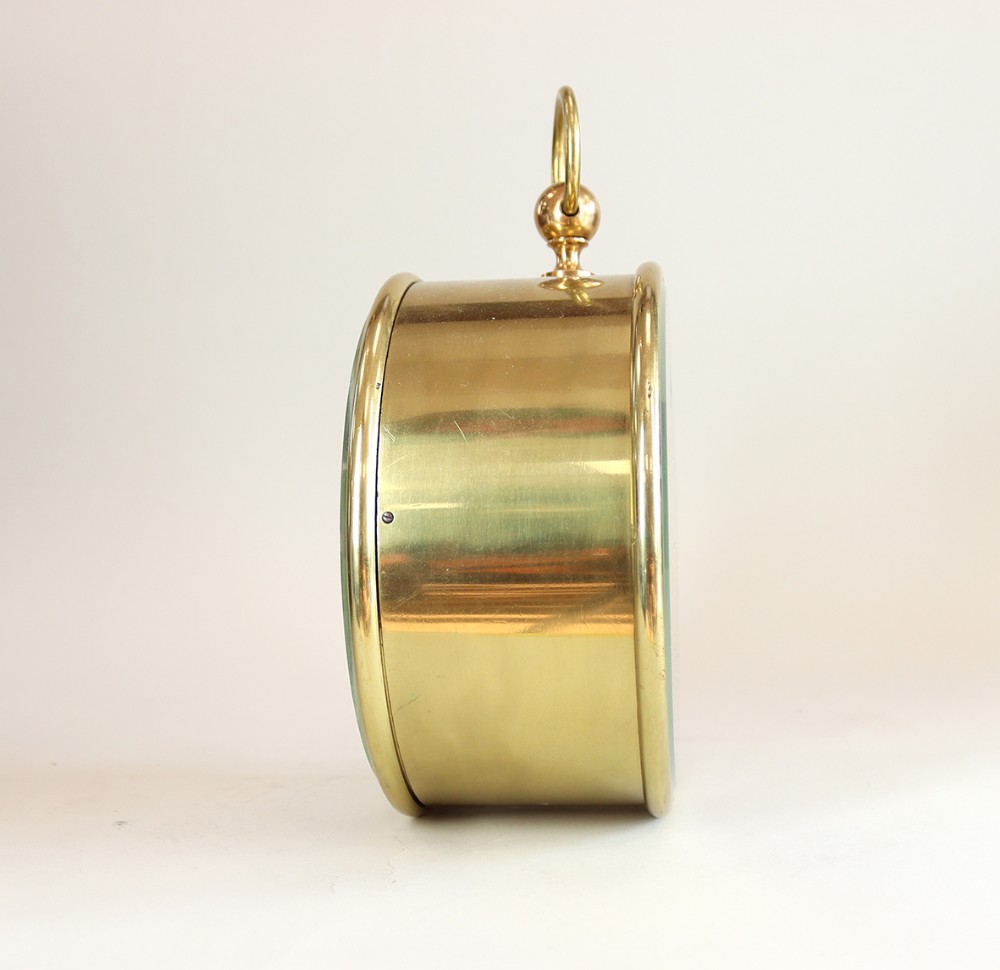
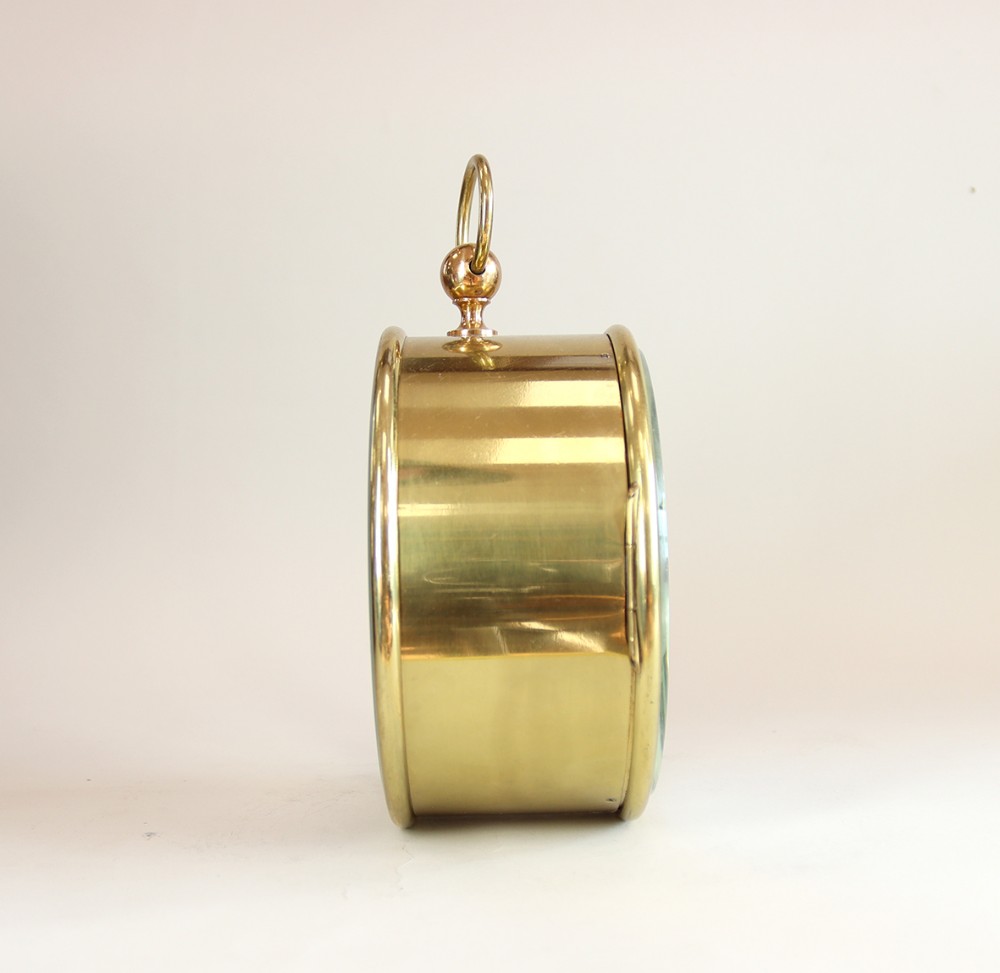
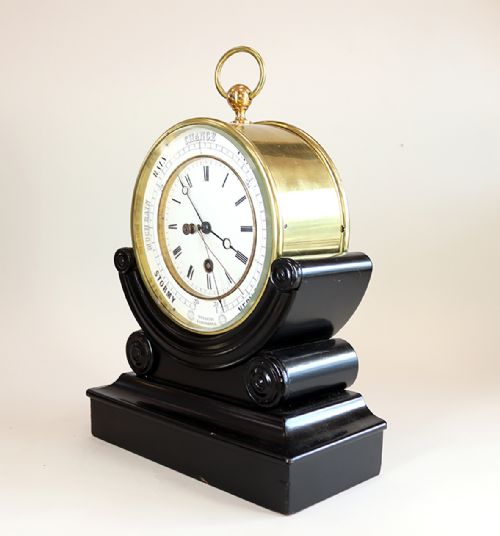
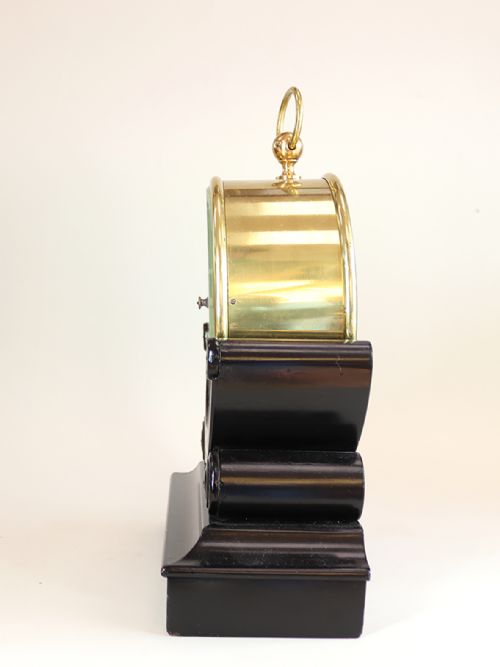
Housed in a polish brass drum the clock sits on its original ebonised base. the movement and back plate stamped throughout the hte makers marks.
27cm H x 20 cm W x 10cm D (with stand)
Chalfont Clocks has dated this Antique Clock Barometer to the 19th Century.
Specialists in antique clocks and their restoration.
You can view the stock and full dealer information on the Chalfont Clocks Profile Page

A Rare Bourdon and Richards Clock Barometer