55,012  PAGES BROWSED TODAY PAGES TODAY • 108 ANTIQUES UPLOADED TODAYNEW ARRIVALS
GIFTS
108 ITEMS ADDED TODAY
Sort Order
Items Per Page
Browse Categories
Sort order
Relevant Links
Items per page
ID #SA1094597
SOLD
Email Phone
Save
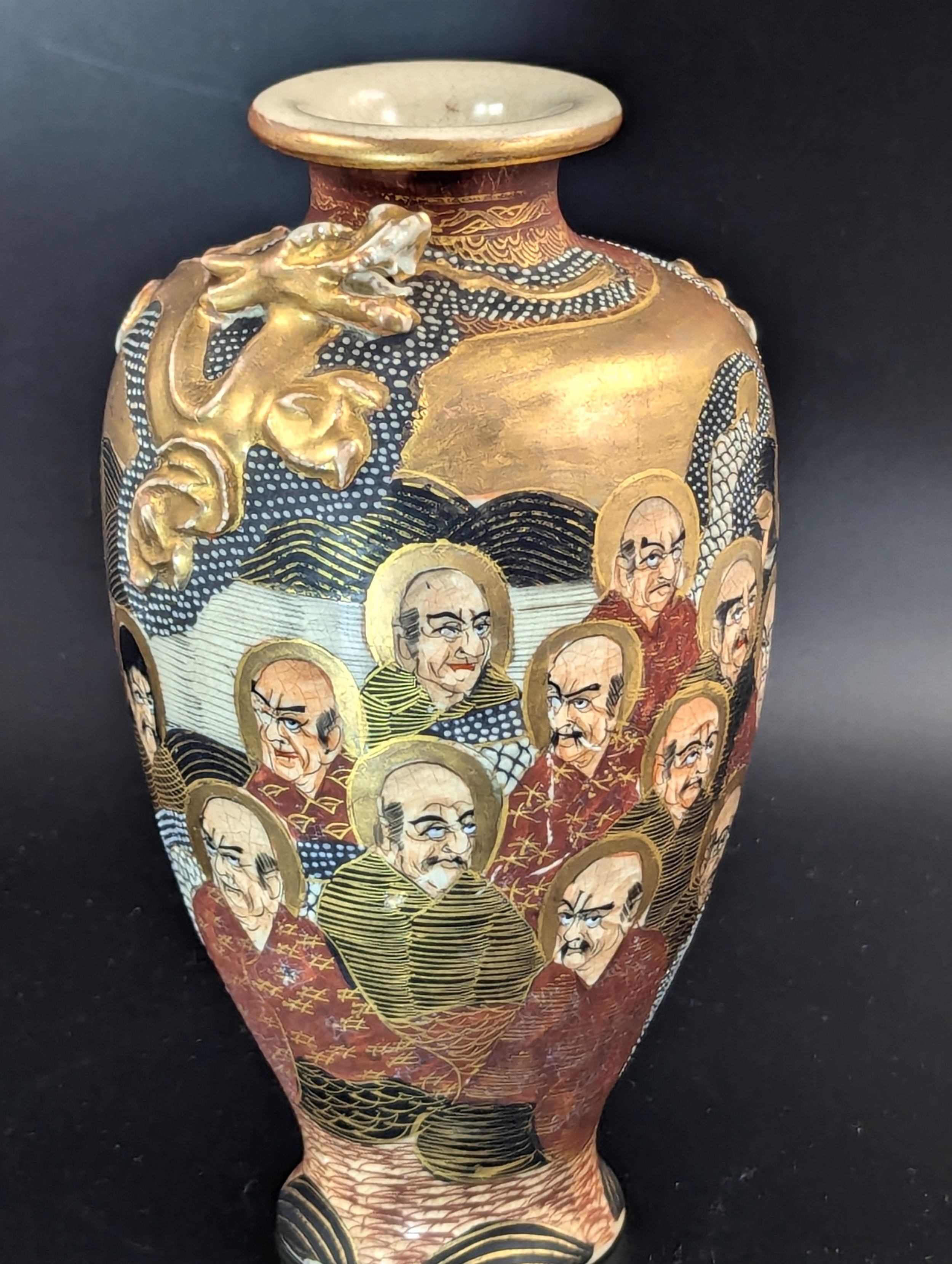
Antique Satsuma Vase “1000 Faces”, Japan, Meiji Period
Sold by Gillers Antiques Ltd
sold SA1094597
Sorry, but this item has been sold.
Gillers Antiques Ltd

Gillers Antiques Ltd

Sellingantiques Verified Since Mar 2023
Browse dealers 400 items
Id #SA1094597
PDF SHARE
SAVE

Antique Satsuma Vase “1000 Faces”, Japan, Meiji Period

19th century
Sold 22 March 2025 · Gillers Antiques Ltd
This “Antique Satsuma Vase “1000 Faces”, Japan, Meiji Period” found a buyer.

It was listed by Gillers Antiques Ltd. Sold pieces stay on Sellingantiques as a record of what has passed through, and the next one is rarely far away.

Description

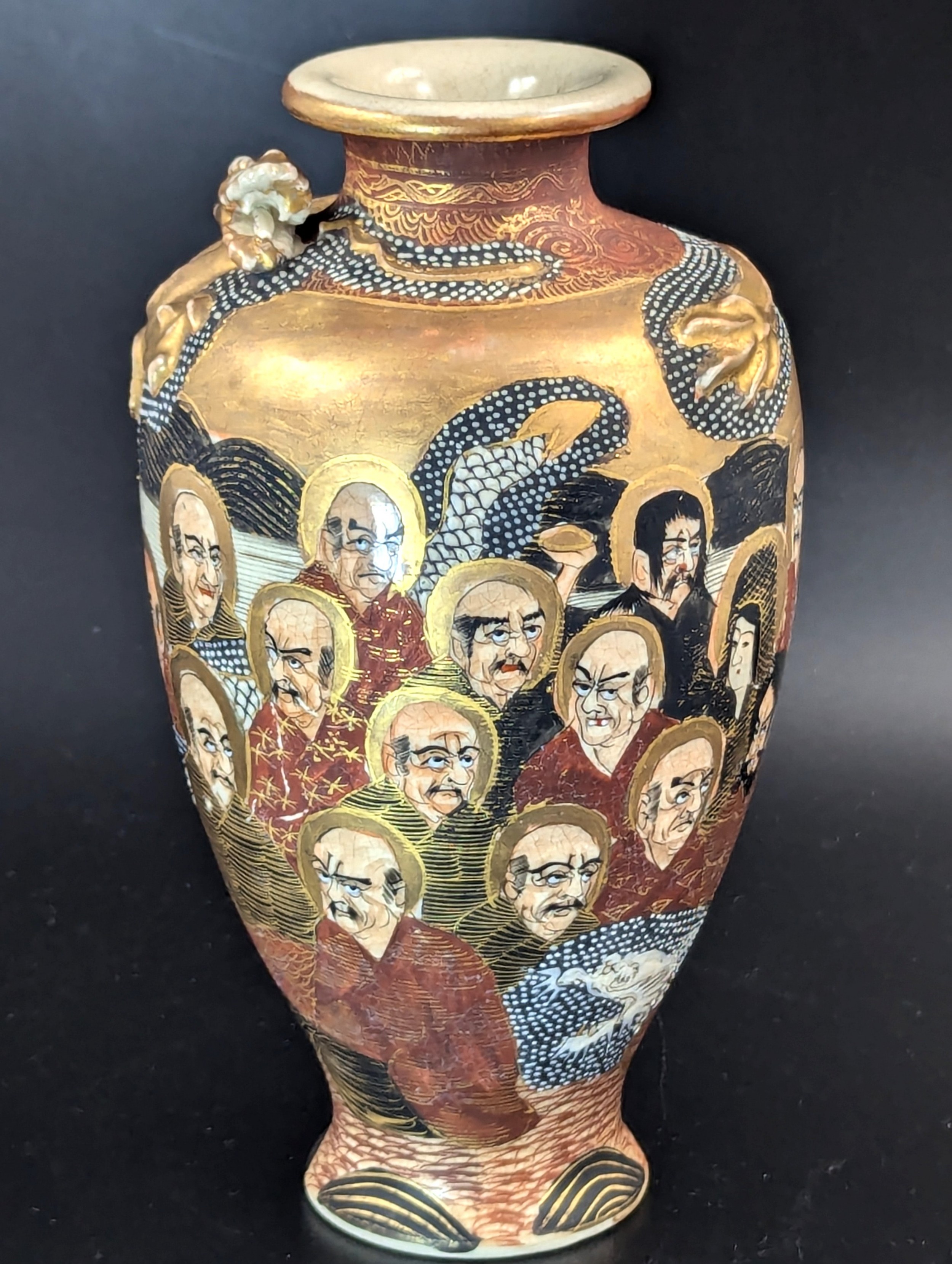
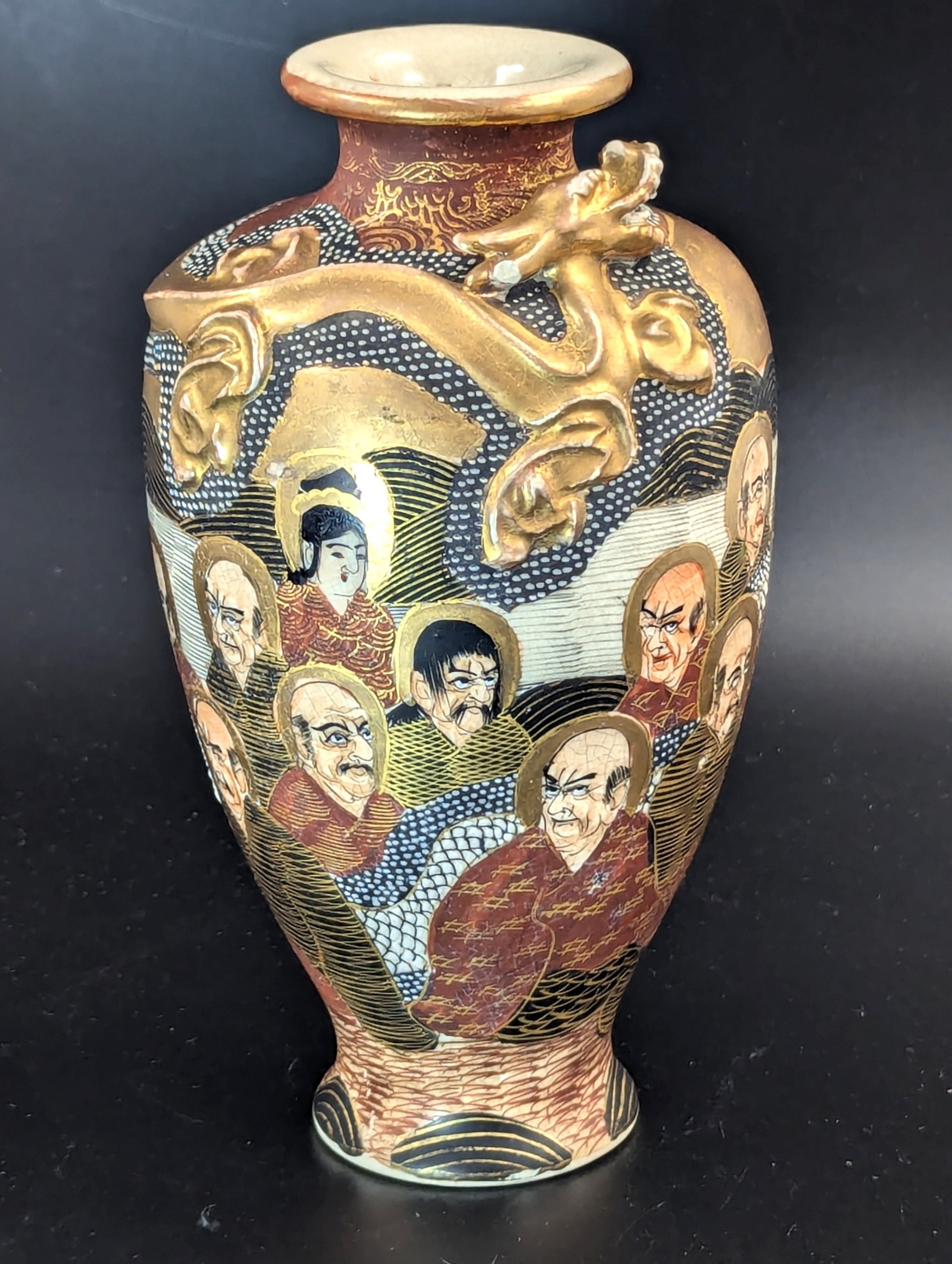
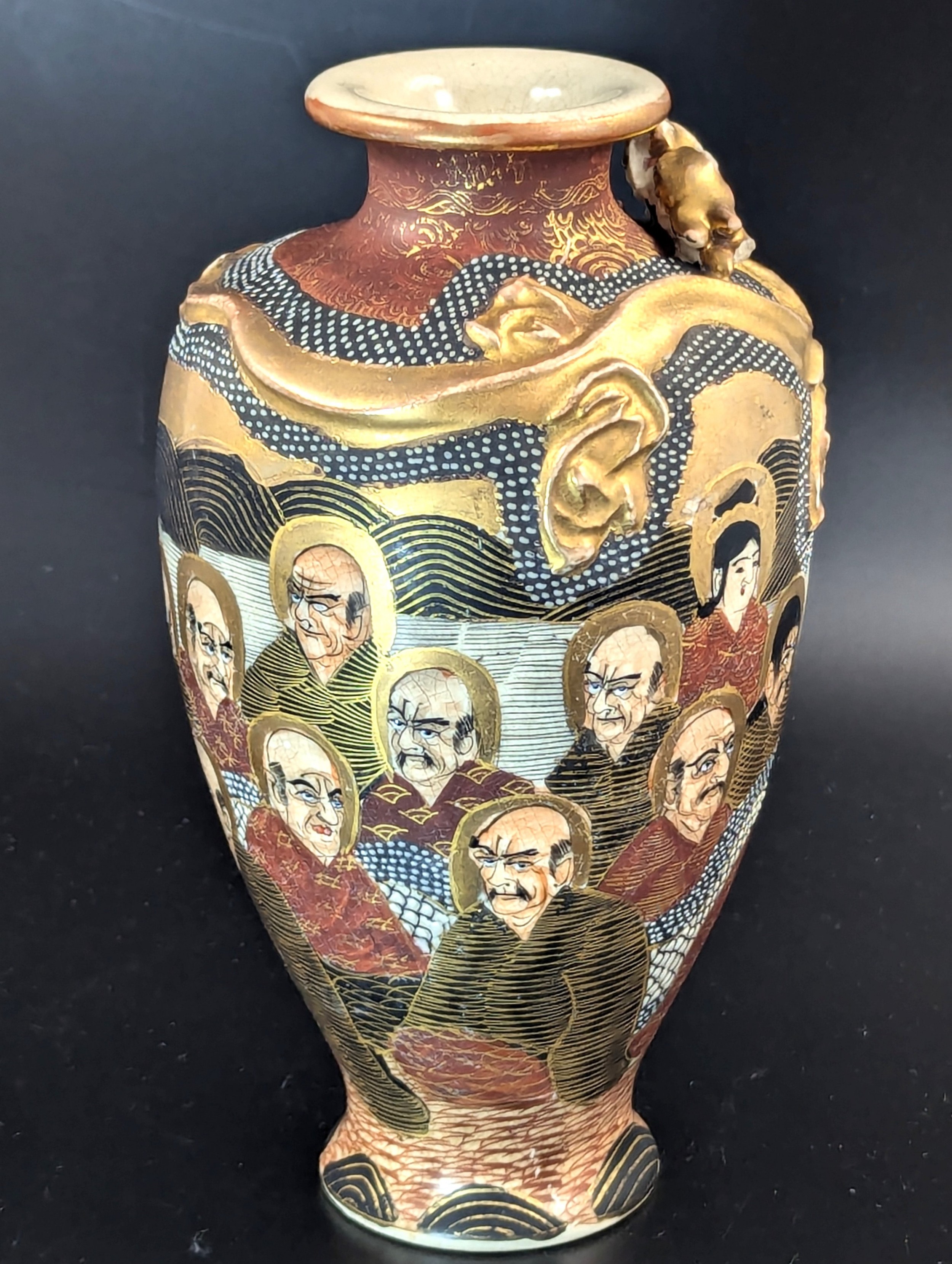
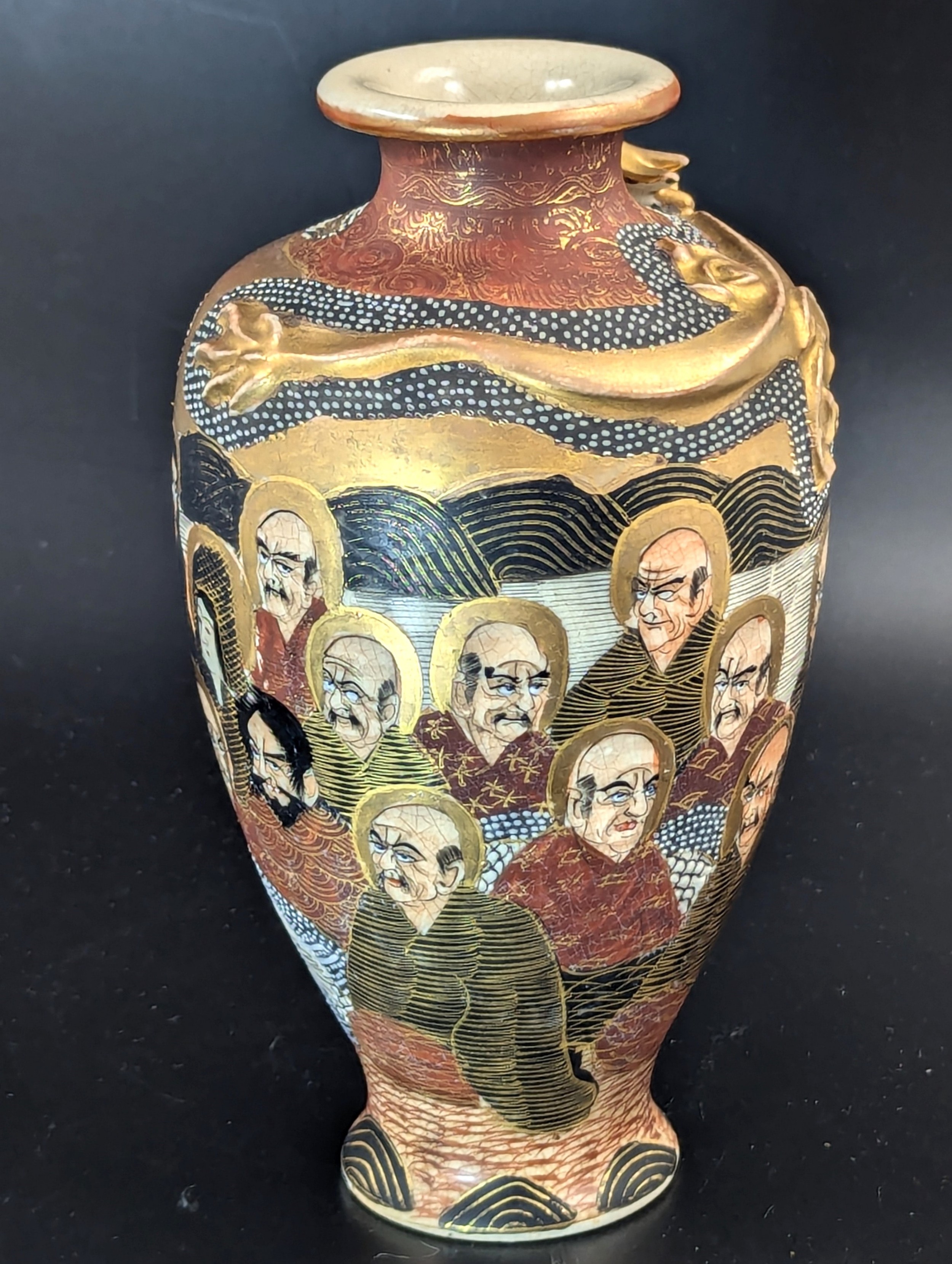
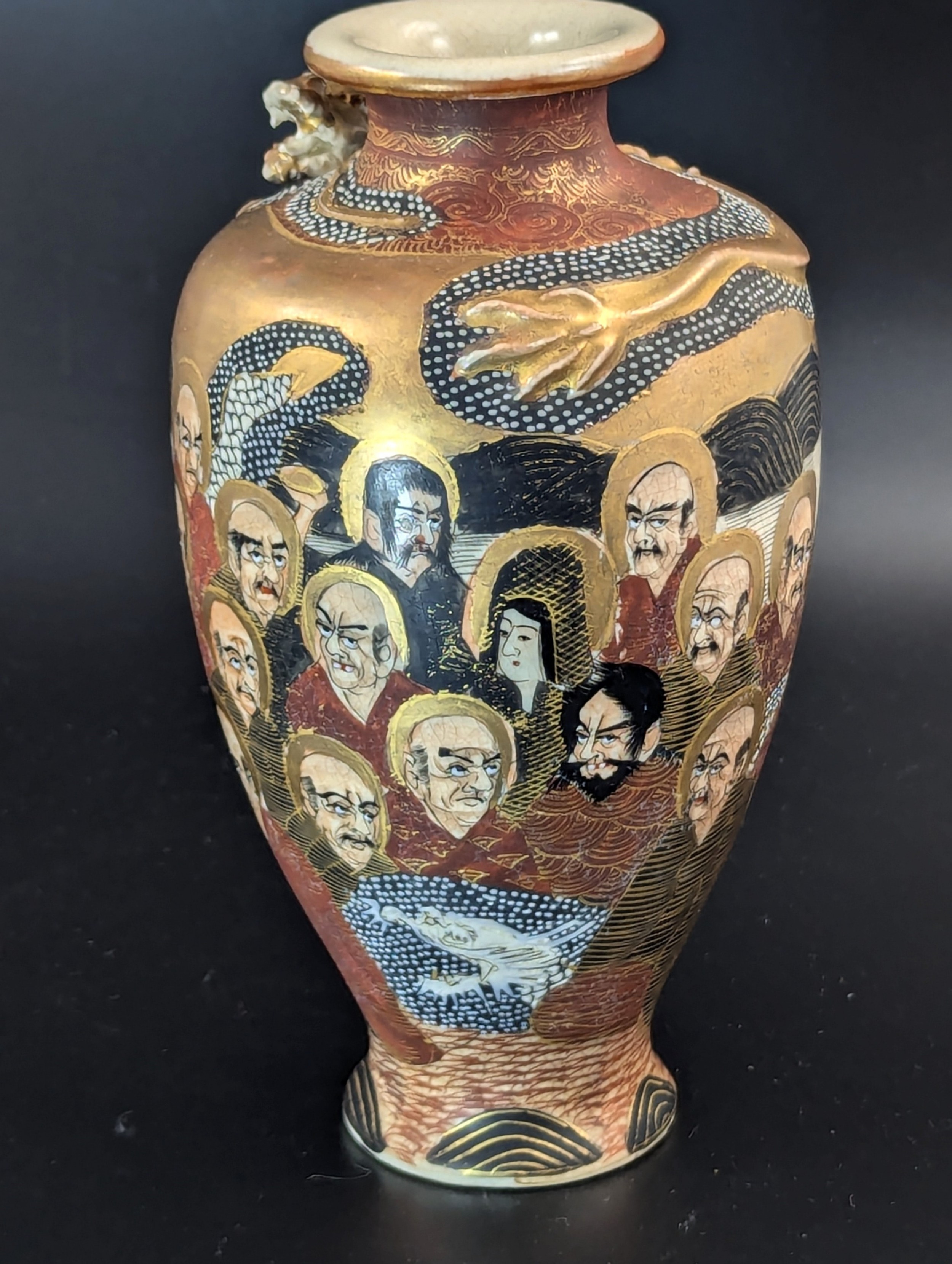
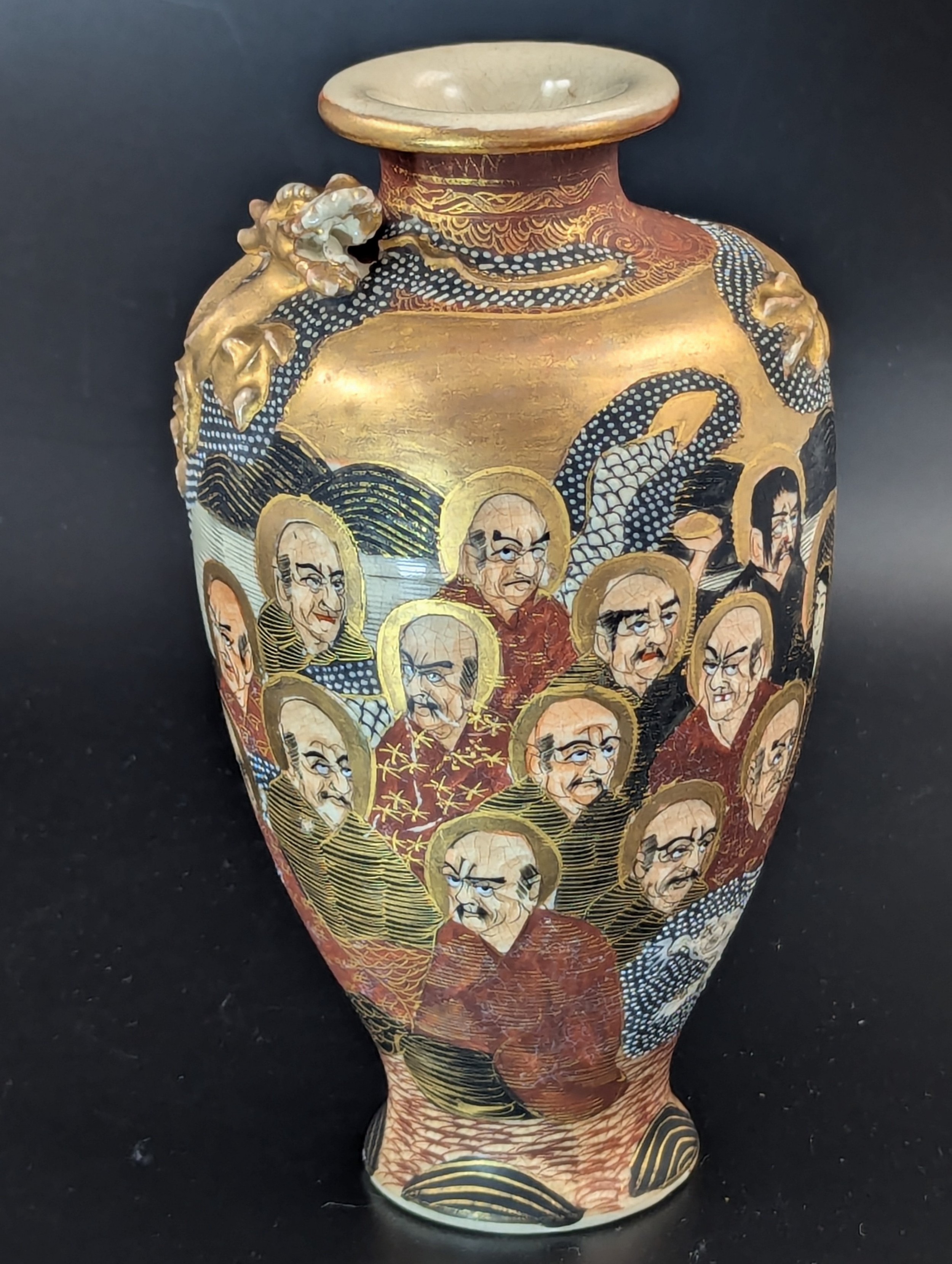
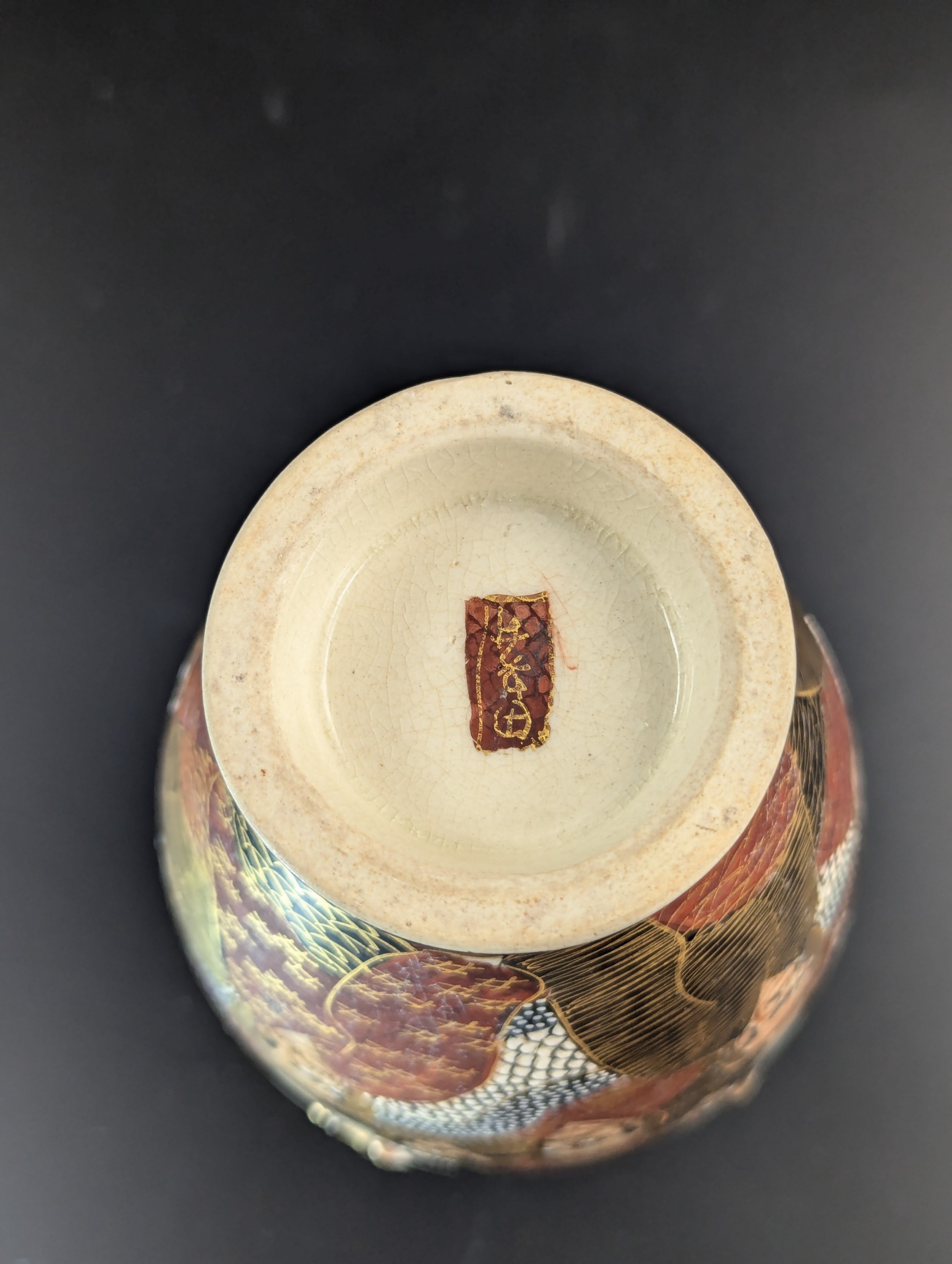
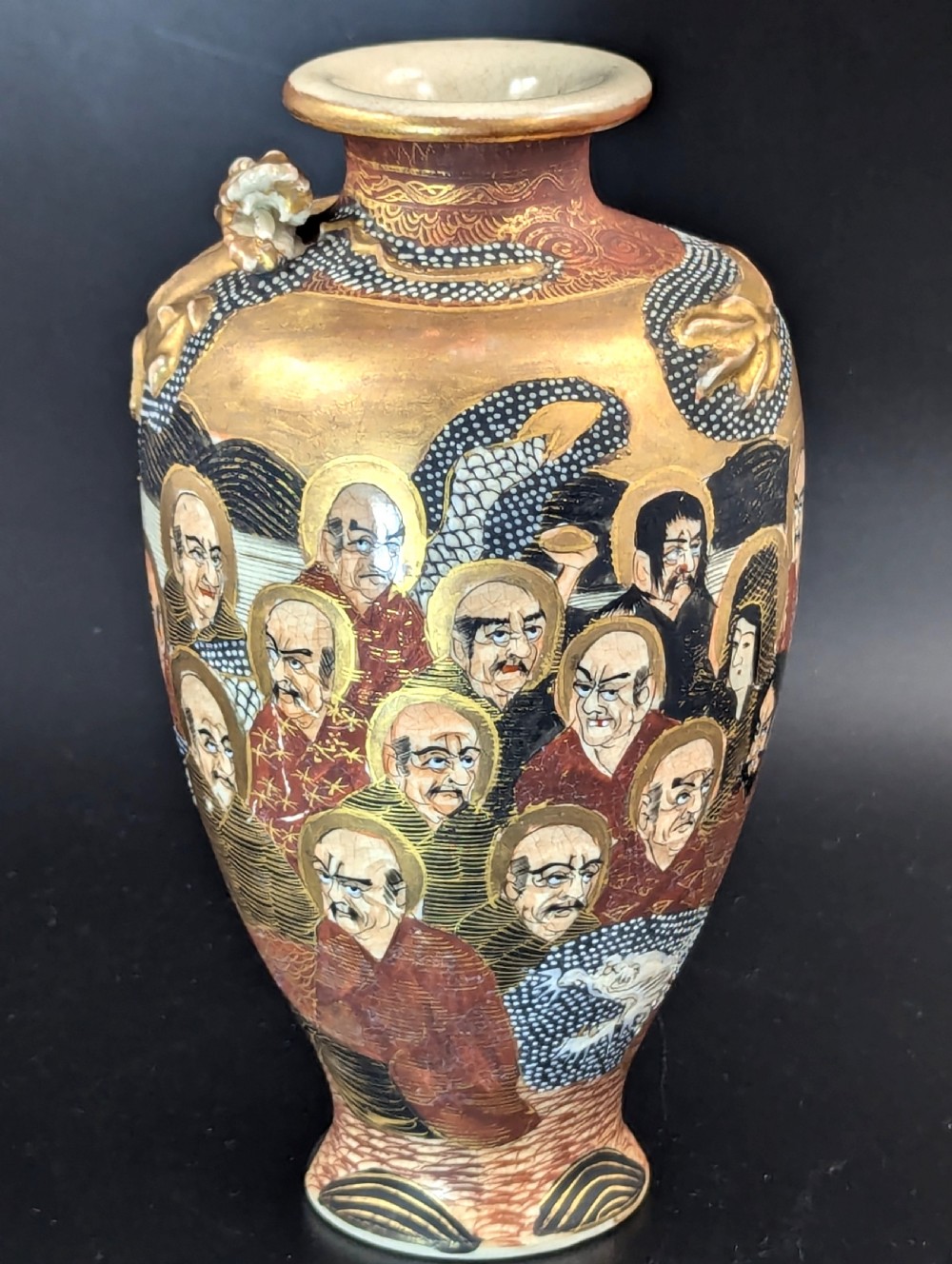
This antique and rare hand-painted earthenware vase, decorated in the "1000 Faces" pattern with dragons, is a beautiful example of late 19th-century Satsuma craftsmanship. The vase features intricate depictions of Buddhist monks, accompanied by a striking black and grey speckled dragon that winds its way from the top to the base. Another gilded dragon, more ornate, wraps around the neck of the vase, adding to the richness of the design. The vase is further adorned with detailed gilded patterns, showcasing the elaborate artistry typical of Satsuma ware. Marks on the base, along with the Shimazu clan crest, indicate the vase’s authenticity, as the Shimazu family historically patronized and controlled the production of Satsuma pottery. The Satsuma style of pottery originated on the island of Kyushu in the early 18th century and quickly gained popularity. By the second half of the century, production had expanded to Awata, near Kyoto. In the 19th century, Satsuma ware became known internationally, and pieces like this vase, often decorated with scenes of geishas, samurai, or Buddhist monks, were created for export to the West. The distinctive features of Satsuma pottery include its light, porous terracotta body and the use of a feldspathic glaze mixed with wood ash, creating a unique texture and appearance. The hallmark of Satsuma ware is its rich, often exaggerated, decoration in polychrome and gold glazes. Gold is a dominant motif, along with vibrant colors such as green, red, turquoise, pink, and the highly prized gosu blue—a dark, thick glaze that was especially favored in high-quality 19th-century Satsuma pieces. The meticulous craftsmanship and lavish ornamentation make this vase a rare and valuable collector's item, embodying the artistic and cultural heritage of Satsuma pottery during the Meiji era. Today, Satsuma ware is still produced in Kagoshima and other parts of Japan. While traditional designs remain popular, modern Satsuma ceramics often incorporate contemporary themes and techniques, continuing the legacy of intricate designs and exquisite craftsmanship.
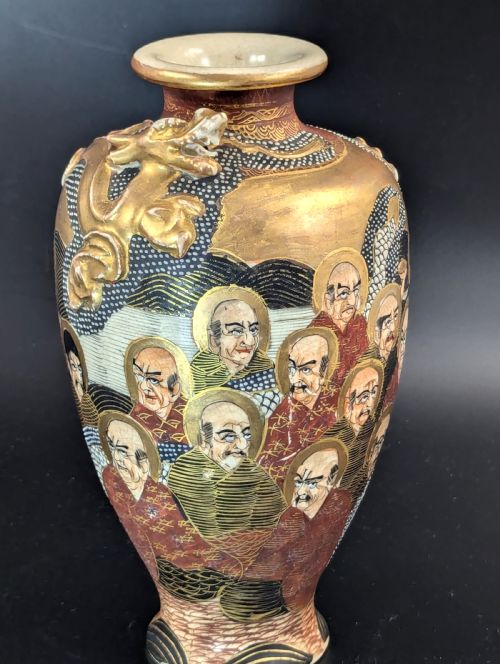
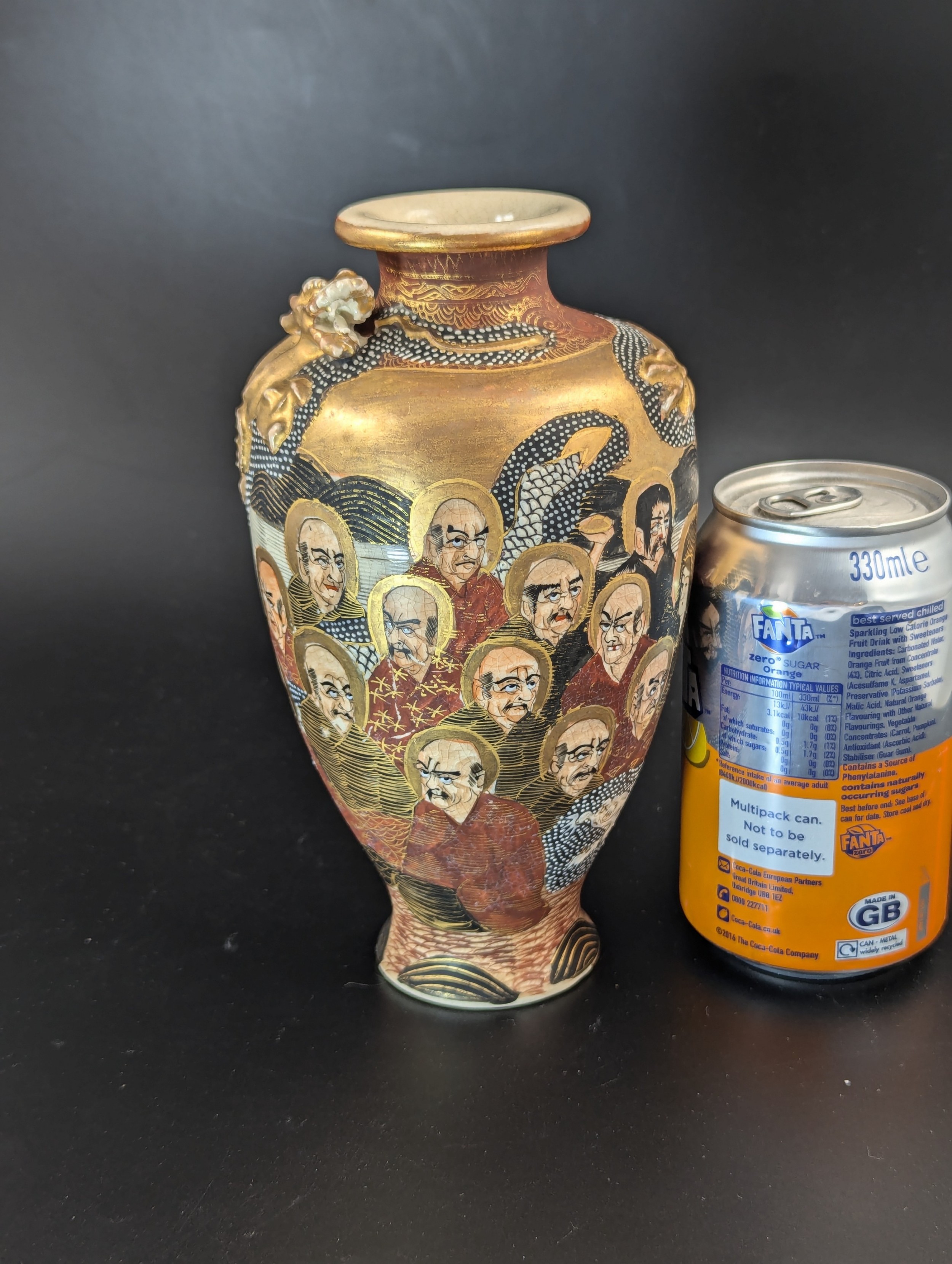
Dimensions: height 18, 5 cm, diameter in the wide part of 10 cm, weight 462 grams.

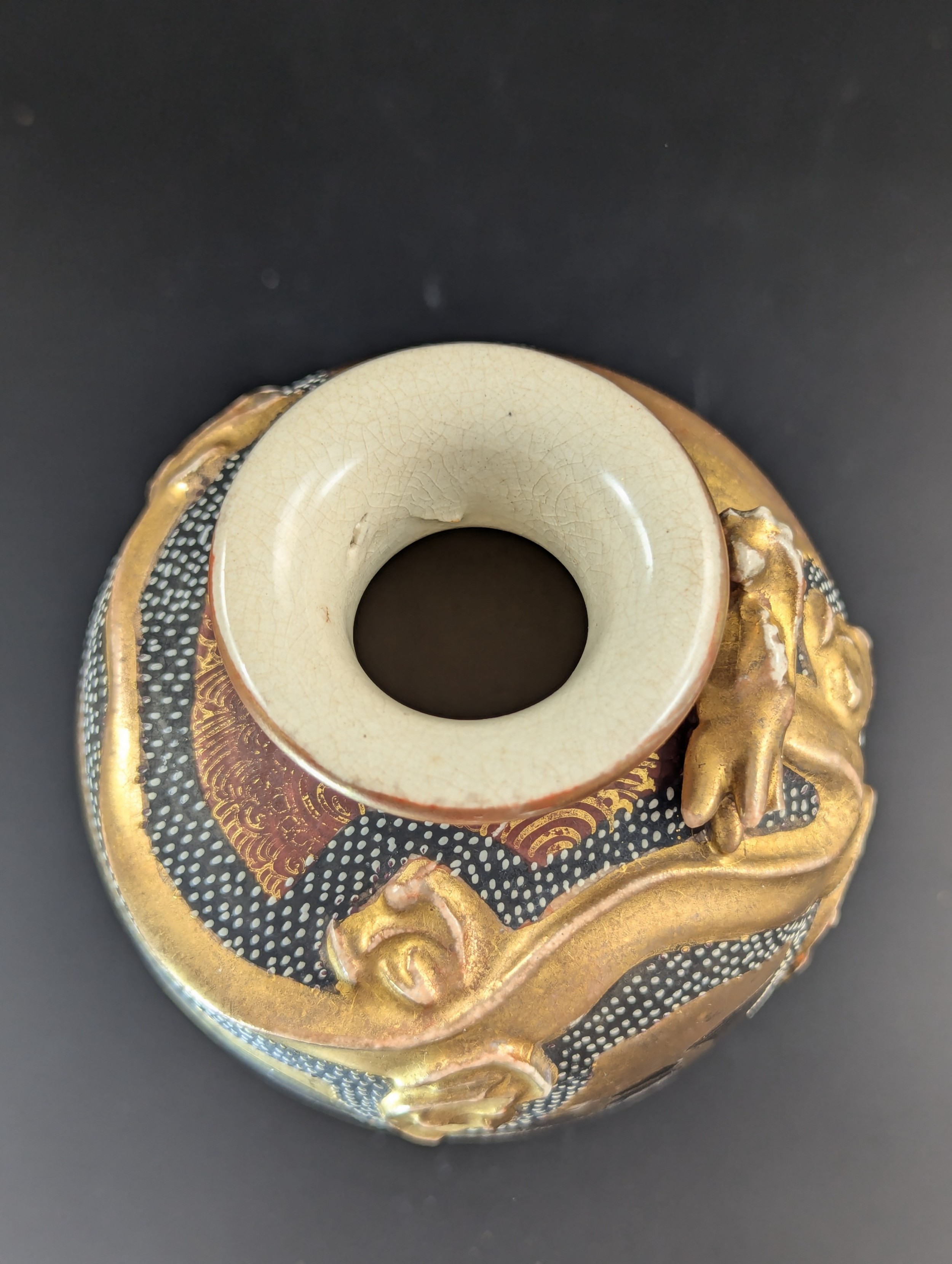
Condition: the dragon chipped off a piece of one horn, the gilding on the head of the dragon was coming off, in the neck of the vase inside a small firing defect - visible on the photo, otherwise everything is excellent.
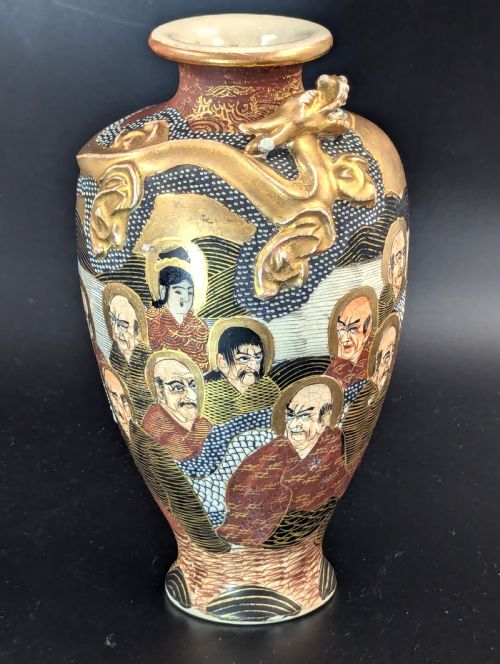
Please, study the accompanying photographs carefully as they form an integral part of this description. The item will be shipped with full tracking and insurance. It is important to note that shipping costs include labour, packaging and postage.

Date of Manufacture

Gillers Antiques Ltd has dated this Meiji Period Satsuma Vase to the 19th Century.

Reference Numbers
Sellingantiques Reference
SA1094597
Description
This antique and rare hand-painted earthenware vase, decorated in the "1000 Faces" pattern with dragons, is a beautiful example of late 19th-century Satsuma craftsmanship.
“
The vase features intricate depictions of Buddhist monks, accompanied by a striking black and grey speckled dragon that winds its way from the top to the base.
Gillers Antiques Ltd

Another gilded dragon, more ornate, wraps around the neck of the vase, adding to the richness of the design. The vase is further adorned with detailed gilded patterns, showcasing the elaborate artistry typical of Satsuma ware. Marks on the base, along with the Shimazu clan crest, indicate the vase’s authenticity, as the Shimazu family historically patronized and controlled the production of Satsuma pottery. The Satsuma style of pottery originated on the island of Kyushu in the early 18th century and quickly gained popularity. By the second half of the century, production had expanded to Awata, near Kyoto. In the 19th century, Satsuma ware became known internationally, and pieces like this vase, often decorated with scenes of geishas, samurai, or Buddhist monks, were created for export to the West. The distinctive features of Satsuma pottery include its light, porous terracotta body and the use of a feldspathic glaze mixed with wood ash, creating a unique texture and appearance. The hallmark of Satsuma ware is its rich, often exaggerated, decoration in polychrome and gold glazes. Gold is a dominant motif, along with vibrant colors such as green, red, turquoise, pink, and the highly prized gosu blue—a dark, thick glaze that was especially favored in high-quality 19th-century Satsuma pieces. The meticulous craftsmanship and lavish ornamentation make this vase a rare and valuable collector's item, embodying the artistic and cultural heritage of Satsuma pottery during the Meiji era. Today, Satsuma ware is still produced in Kagoshima and other parts of Japan. While traditional designs remain popular, modern Satsuma ceramics often incorporate contemporary themes and techniques, continuing the legacy of intricate designs and exquisite craftsmanship.

fig 1. An antique Japanese Satsuma vase features intricate hand-painted figures and raised gold details on a crackle glaze ground.
fig 1. Antique Satsuma Vase “1000 Faces”, Japan, Meiji Period

Dimensions: height 18, 5 cm, diameter in the wide part of 10 cm, weight 462 grams.

Condition: the dragon chipped off a piece of one horn, the gilding on the head of the dragon was coming off, in the neck of the vase inside a small firing defect - visible on the photo, otherwise everything is excellent.

fig 2. An antique Japanese Satsuma vase features intricate hand-painted figures and raised gold details on a crackle glaze ground.
fig 2. Antique Satsuma Vase “1000 Faces”, Japan, Meiji Period

Please, study the accompanying photographs carefully as they form an integral part of this description. The item will be shipped with full tracking and insurance. It is important to note that shipping costs include labour, packaging and postage.

Date of Manufacture

Gillers Antiques Ltd has dated this Meiji Period Satsuma Vase to the 19th Century.

Reference Numbers
Sellingantiques Ref
SA1094597
Gillers Antiques Ltd
Sellingantiques verified Since Mar 2023
Dealer Profile

You can view the stock and full dealer information on the Gillers Antiques Ltd Profile Page
PDF SHARE
SAVE
An antique Japanese Satsuma vase features intricate hand-painted figures and raised gold details on a crackle glaze ground. SOLD6+ MONTHS AGO
1 / 10
Archive I An antique Japanese Satsuma vase features intricate hand-painted figures and raised gold details on a crackle glaze ground. SOLD6+ MONTHS AGO

Antique Satsuma Vase “1000 Faces”, Japan, Meiji Period
Archive II An antique Japanese Satsuma vase features intricate hand-painted figures and raised gold details on a crackle glaze ground. View II
Archive III An antique Japanese Satsuma vase features intricate hand-painted figures and raised gold details on a crackle glaze ground. View III
Archive IV An antique Japanese Satsuma vase features intricate hand-painted figures and raised gold details on a crackle glaze ground. View IV
Archive V An antique Japanese Satsuma vase features intricate hand-painted figures and raised gold details on a crackle glaze ground. View V
Archive VI An antique Japanese Satsuma vase features intricate hand-painted figures and raised gold details on a crackle glaze ground. View VI
Archive VII An antique Japanese Satsuma vase features intricate hand-painted figures and raised gold details on a crackle glaze ground. View VII
Archive VIII An antique Japanese Satsuma vase features intricate hand-painted figures and raised gold details on a crackle glaze ground. View VIII
Archive IX An antique Japanese Satsuma vase features intricate hand-painted figures and raised gold details on a crackle glaze ground. View IX
Archive X An antique Japanese Satsuma vase features intricate hand-painted figures and raised gold details on a crackle glaze ground. View X
Enlarged Archival View
Telephone 07738 009924
Location
Buckland House
Buntingford
Hertfordshire
SG9 0PY
United Kingdom
Verified Since Mar 2023
Items For Sale 400
Items Sold 581
Gillers Antiques Ltd
Verified Since Mar 2023
View Dealer Info
Location: Buckland House, Buntingford, Hertfordshire, SG9 0PY, United Kingdom
Verified
Mar 2023
For Sale
400
Sold
581
An antique Japanese Satsuma vase features intricate hand-painted figures and raised gold details on a crackle glaze ground.
Antique Satsuma Vase “1000 Faces”, Japan, Meiji period
Ref: SA1094597
An antique Japanese Satsuma vase features intricate hand-painted figures and raised gold details on a crackle glaze ground.
Detail View 1
Detail View 2
Detail View 3
Detail View 4
Detail View 5
Detail View 6
Detail View 7
Detail View 8
Detail View 9
Archival Detail
Every single antique dealer on our platform is individually approved by our internal team. We verify their professional trade history, ethical standards, and photographic quality to ensure a secure, high-standard buying environment. Upon joining, every dealer agrees to a strict 9-point code of conduct. While issues can occasionally arise, our dealers typically resolve them swiftly and directly with the buyer. In fact, since our founding in 2002, Sellingantiques has only had to step in to help resolve an issue on roughly five occasions—a true testament to the quality of our dealers and their dedication to your happiness.
Our dealers are highly experienced in packing and shipping fragile, high-value antiques. Because you are in direct contact with the dealer, you will be able to easily go through all available shipping and insurance options together to ensure your item arrives safely.
Antiques are the ultimate green purchase. By choosing historical pieces over newly manufactured goods, you completely eliminate the carbon footprint of modern mass production while preserving exceptional, timeless craftsmanship.
Written by Sellingantiques from the dealer’s photographs and listing
  • ObjectVases
  • Period19th century
  • StyleMeiji period Japanese
  • MaterialCeramic, Earthenware, Gold leaf
  • ColourMulticolour
  • MotifsThousand faces Arhats, Raised gold gilding, Crackle glaze, Dragon relief

Satsuma ware is a type of Japanese earthenware traditionally characterised by an ivory-coloured, crackle-glazed surface decorated with intricate polychrome enamel and raised gold gilding.

These pieces are crafted from local clay, finished with a transparent glaze that creates fine crazing, and painstakingly hand-painted using mineral pigments and gold leaf.

Authenticity is typically determined by examining the fineness of the crackle glaze, the quality of the hand-painted details, and makers marks inscribed or painted on the base.

These decorative objects serve as striking focal points when placed on a mantelpiece, console, or within a glass-fronted cabinet, contrasting well with minimalist contemporary styling.

Keep these items out of direct sunlight to prevent pigment fading, dust gently with a soft dry brush, and avoid exposure to moisture or chemical cleaners.
items
Add keywords to the filter
Price
£100
£250000
Era
Period
Style
Material
Origin
Stock Location
Recently Added
Online Payments
Categories