







Gold Gilt Japanese Vase
A gold gilt japanese vase brings together intricate ceramic artistry and gleaming metallic decoration, offering a striking focal point for any room.
Gold Gilt Japanese Vase
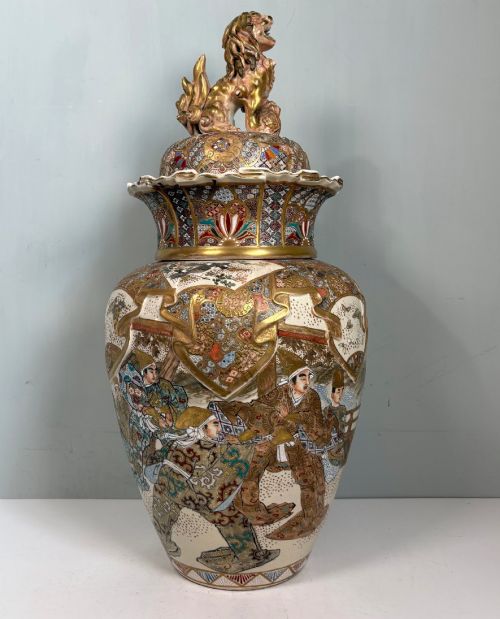
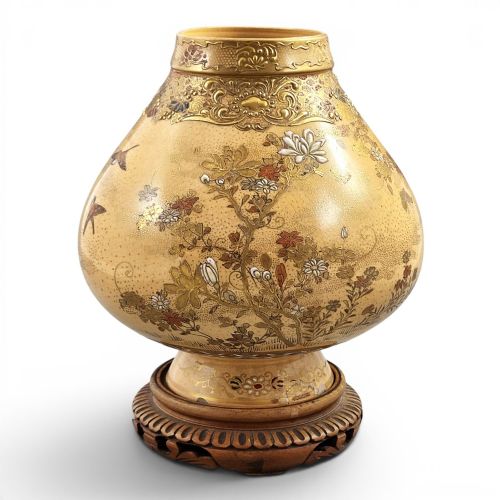
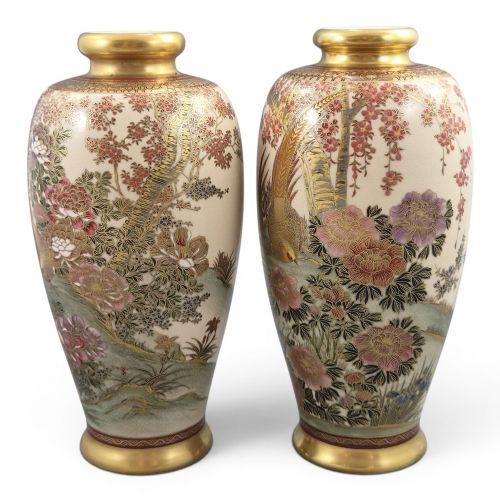
When you search for a gold gilt japanese vase, you encounter a variety of ceramic forms originating from distinct historical eras such as the Meiji, Taisho, and Showa periods. These objects span from diminutive miniature vessels to monumental palace urns, often featuring hand-painted figures, deities, and natural scenes.
The most common examples on this page are Satsuma earthenware vases decorated with dense enamel and heavy gold leaf. Alongside these, buyers find Imari porcelain pieces and Kutani cylindrical vessels, reflecting the rich diversity of traditional Japanese ceramic production.
Materials and manufacturing techniques
The foundation of these vessels relies on earthenware or hard-paste porcelain, shaped into baluster, bottle, or polygon forms. Artisans then applied detailed enamel pigments alongside raised relief work known as moriage.
Gold leaf and liquid gold gilding were meticulously painted onto the surface to highlight borders, garments, and divine figures. Selected pieces also incorporate specialist elements like lacquer over black paint or bronze ormolu mounts.
Gold Gilt Japanese Vase Retail Price Guide 2026
Typical asking prices for gold gilt japanese vase among the pieces listed under this phrase on Sellingantiques today, from the lower quarter to the upper quarter. They describe what is for sale here now, not the wider market.
The listings feature nineteenth-century Satsuma earthenware alongside earlier Arita Imari porcelain from the late seventeenth century.
Distinctions in quality and execution
The distinction between standard commercial output and superior craftsmanship rests in the precision of the brushwork and the depth of the gilding. Master workshops in Kyoto, such as those run by Kinkōzan, achieved a remarkable level of detail in their figural processions and landscape panels.
Exhibition-quality pieces display heavier gold applications and complex motifs like dragon handles or Shimazu mon crests. Simpler vessels show broader strokes and less intricate enamel work, though they retain the characteristic metallic lustre.
Kinkōzan·Manpei·Chosei·Nanzan·Seiko-en Chokei·Hakusan
The Gold Gilt Japanese Vase Glossary
- Satsuma
- A type of Japanese earthenware originating in the Satsuma Province, traditionally characterised by a fine crackle ivory glaze and rich enamel and gilt decoration.
- Moriage
- A ceramic technique where slip is piped onto the surface of a vessel in raised dots or lines, creating a textured effect that is frequently highlighted with gold.
- Imari
- A style of Japanese porcelain decorated in underglaze blue and overglaze red, green, and gold, produced in the town of Arita.
- Baluster
- A vase shape with a rounded body that tapers towards a narrow neck and flares at the rim, resembling the profile of an architectural baluster.
- Mon
- A Japanese heraldic badge or emblem used to identify families or clans, often seen on high-status ceramics associated with ruling houses.
Gold Gilt Japanese Vase: Frequently Asked Questions
How do I identify Satsuma ware?
Satsuma earthenware is typically recognised by its creamy, crackled glaze beneath colourful enamel and heavy gold decoration. Many pieces feature traditional Japanese figures, landscapes, or floral patterns.
Makers' marks are frequently painted on the base in gold or black script, identifying the studio or artist responsible for the decoration.
What is the difference between Satsuma and Imari?
Satsuma vessels are made from earthenware with an opaque, crackled ivory glaze intended primarily for decorative display. Imari pieces utilise a vitrified porcelain body painted in deep cobalt blue and reddish-orange tones with gilt accents.
Imari ceramics tend to have a smoother, vitreous finish and were frequently produced for both domestic use and export trade.
How should I display a large vase?
Large vases and urns look best positioned on stable low furniture where their vertical form can be fully appreciated. Placing them away from direct sunlight protects the delicate enamel colours and gold leaf from fading over time.
Ensure they rest in areas with minimal foot traffic to prevent accidental knocks against the ceramic body.