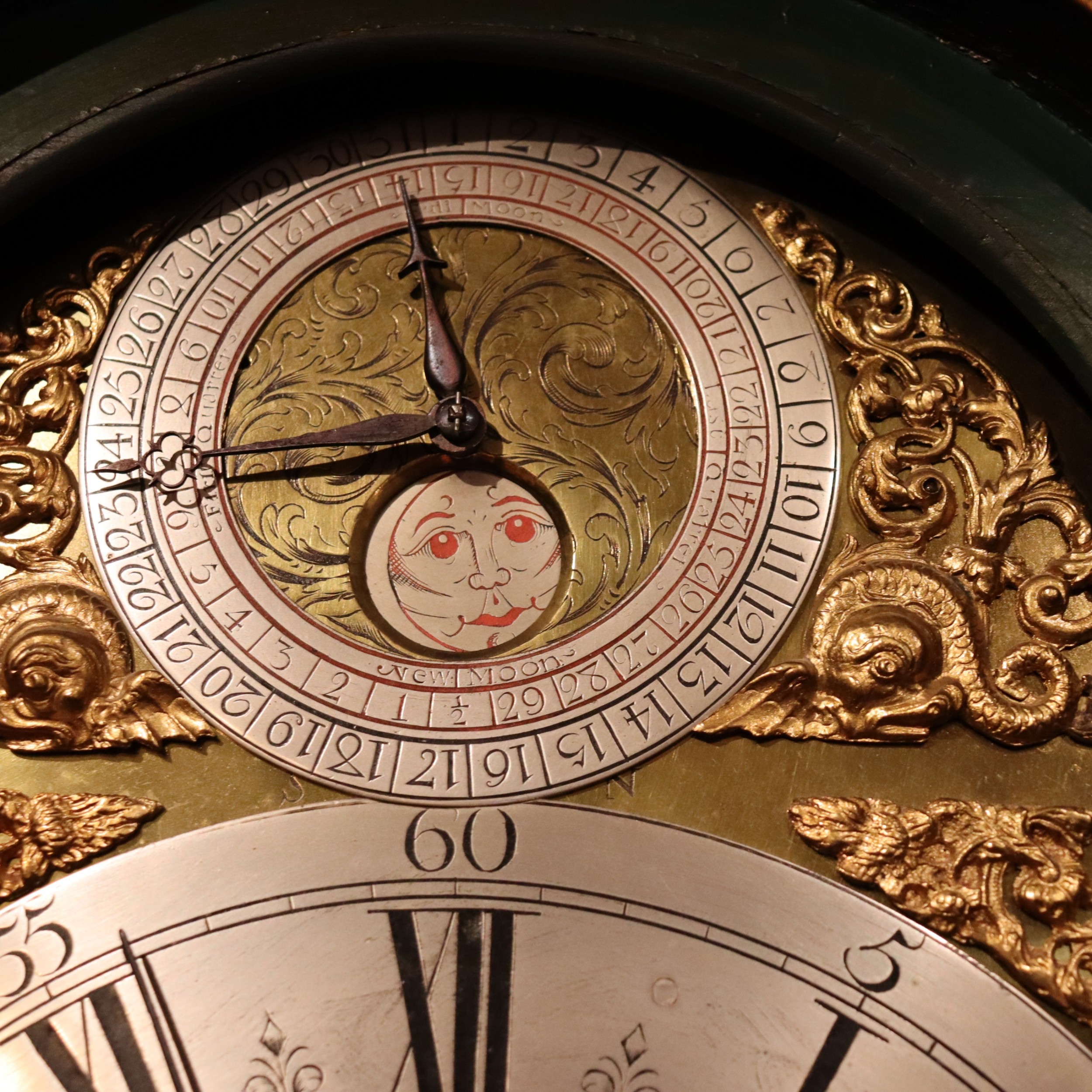
Kendall House Antiques Ltd. has dated this piece to the 1700s.
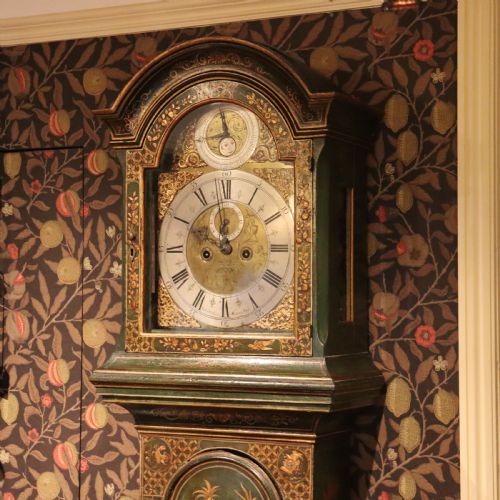
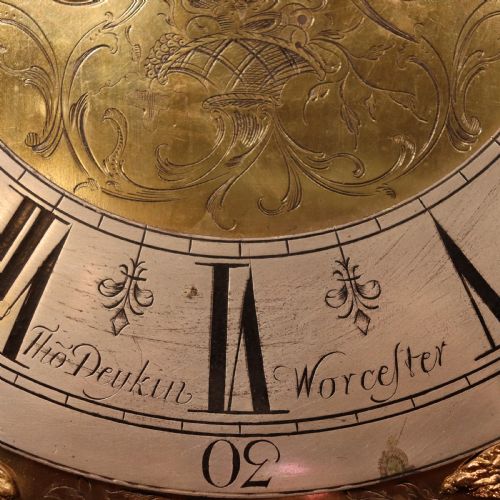
In 1720 Thomas Deykin started to number his clocks, continuing to do so until 1750. The clock we are selling here is not numbered and suggests it is one of his earlier clocks. Circa 1710.
The name Deykin is well respected amongst collectors today who appreciate his craftsmanship, a true clockmaker not just a regional clock maker assembling parts.
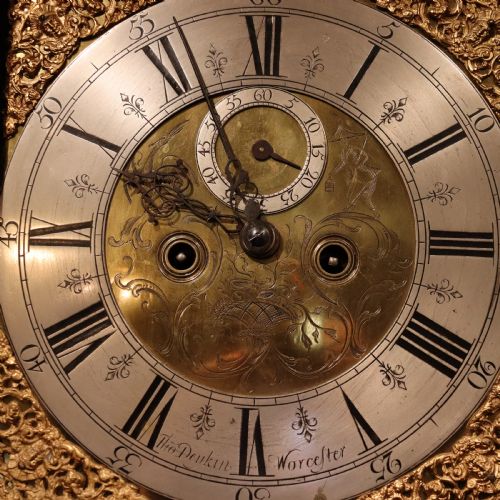
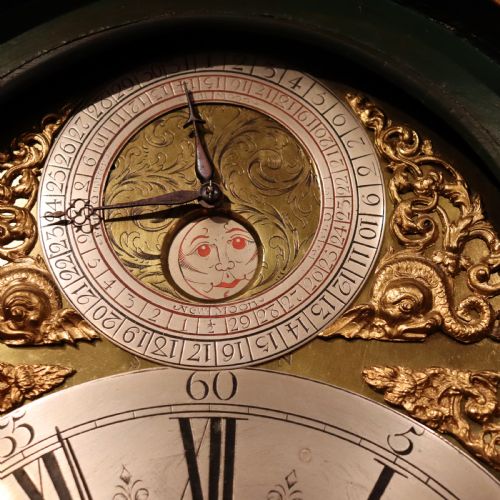
All running beautifully ready to enjoy.
Height 234cm.
Reference: Joseph McKenna Clock & Watchmakers of Central England. Where a number of his clocks are discussed.
The following notes taken from an article by Brian Looms.
"The Deykins of Worcester, clockmakers
The name Deykin is well known to those who study the history of clocks in and around the city of Worcester. This is not altogether surprising when we note that Thomas and Henry Deykin, father and son, were in business there for about eighty years and between them they made over one thousand four hundred clocks that we can count, as well as a further number unknown. Clocks by the Deykins were generally of good quality, which means that their names are becoming more widely known now amongst collectors and clock enthusiasts in general. We see occasional examples of their work, all but the very earliest bearing a serial number.
Thomas Deykin probably began clockmaking about the year 1700, at which time he was
twenty-one years old. We can probably assume that when he married in 1703 he was
already earning a reliable living. If he was apprenticed, then his normal term of seven years would have ended when he was twenty-one. This meant that many were desperate to marry as soon as that period was over. It may be significant that his brides father was a merchant dealing in brass and metal objects. It is by no means impossible that Thomas learned his trade under Mr. Meek. If Thomas was taught by his father-in-law to be, then he certainly had sophisticated London work as his model, as his clocks show none of the rustic heavy-handed work we often associate with a rural clocksmith.
Thomas Deykin numbered his clocks, though, like other clockmakers who did that, it seems he did not hit upon this idea from the very start of his career - since some clocks by him are reported without a number. Most of the (later) Deykin numbers were placed boldly with the name in the dial center.
It is thought that Thomas died in 1750. His highest numbered clock is said to be about 800.
We do not know when Henry Deykin took over the business, though we do know it must
have been by the year 1750. Henry was born in 1715 and was allegedly apprenticed to his father."
Kendall House Antiques Ltd. has dated this piece to the 1700s.
Kendall house antiques a traditional shop in the north cotswold’s market town of chipping campden.
You can view the stock and full dealer information on the Kendall House Antiques Ltd. Profile Page
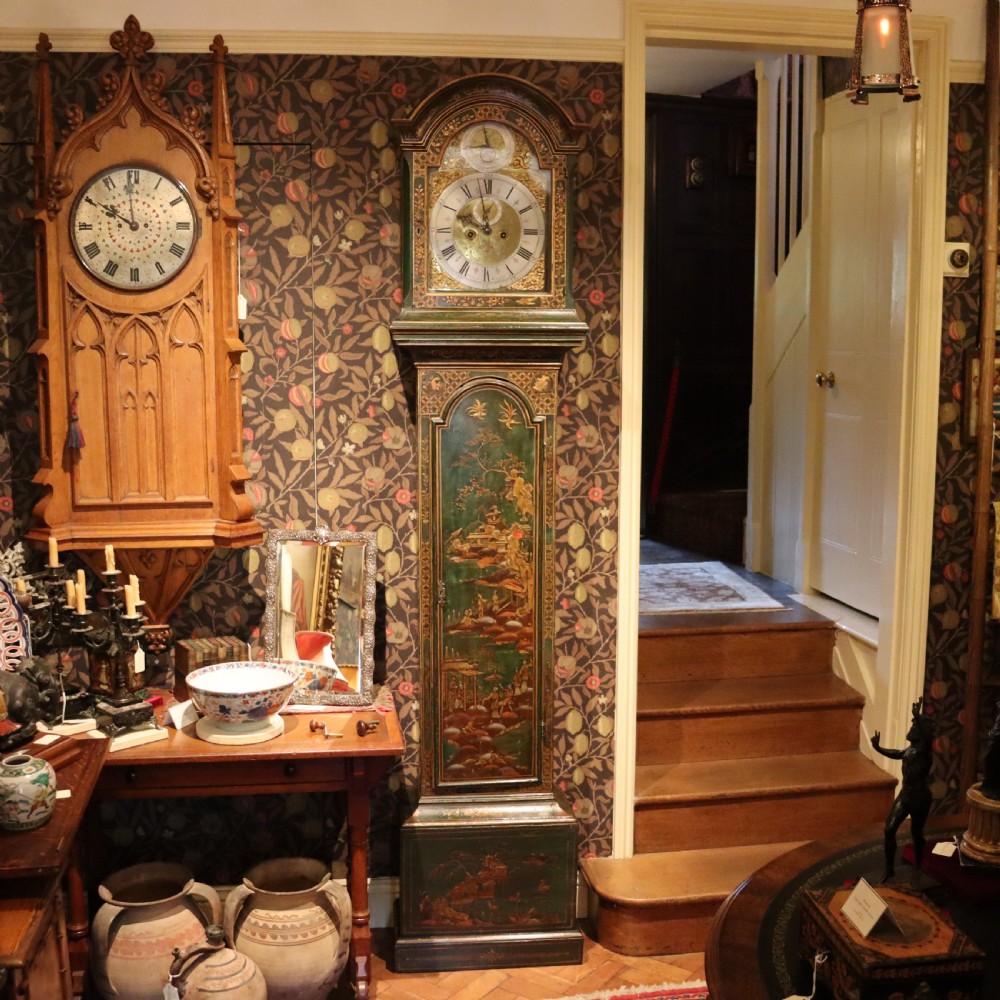

Lacquered Longcase Clock by Thomas Deykin of Worcester. Circa 1710