

Mahogany Glass Vitrine
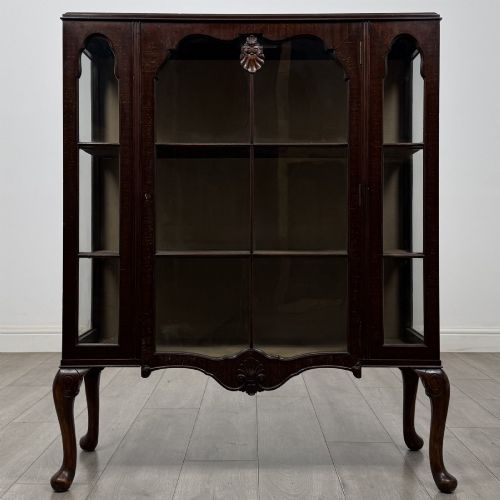
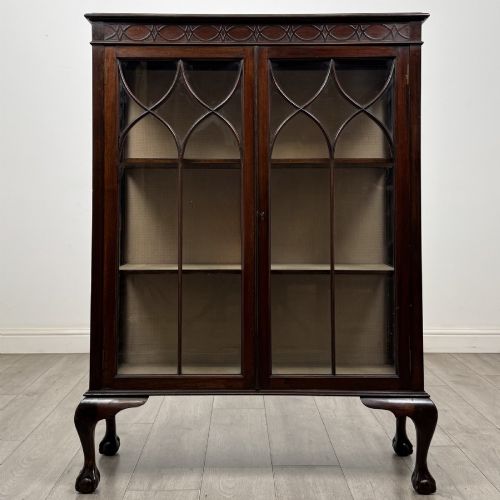
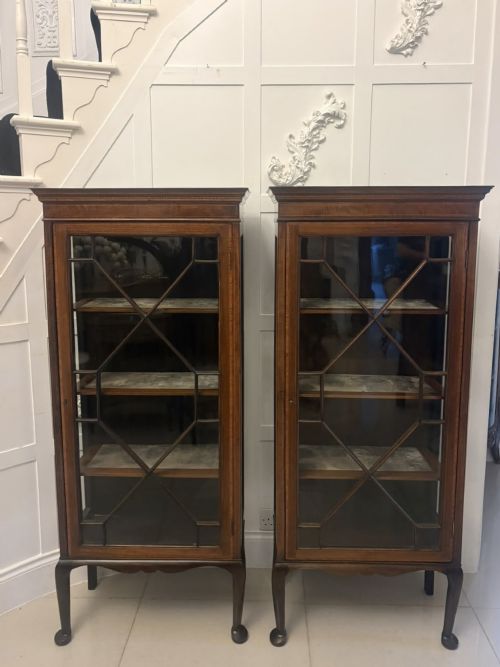
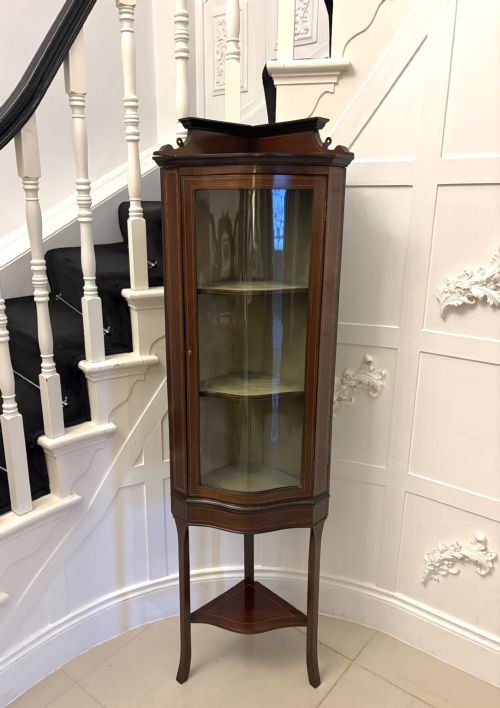
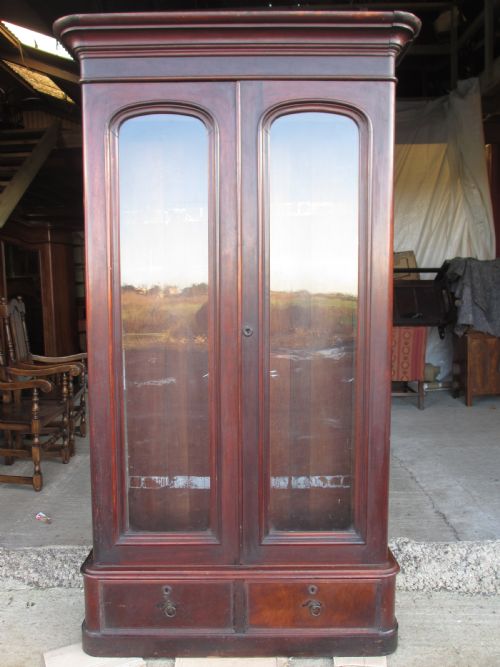
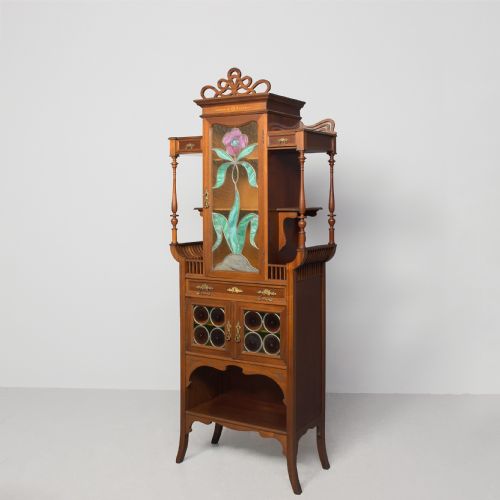
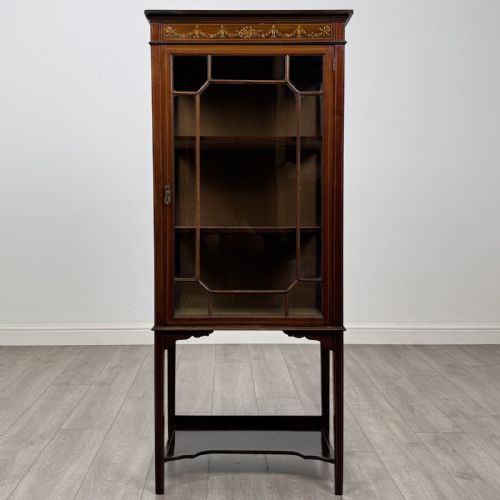
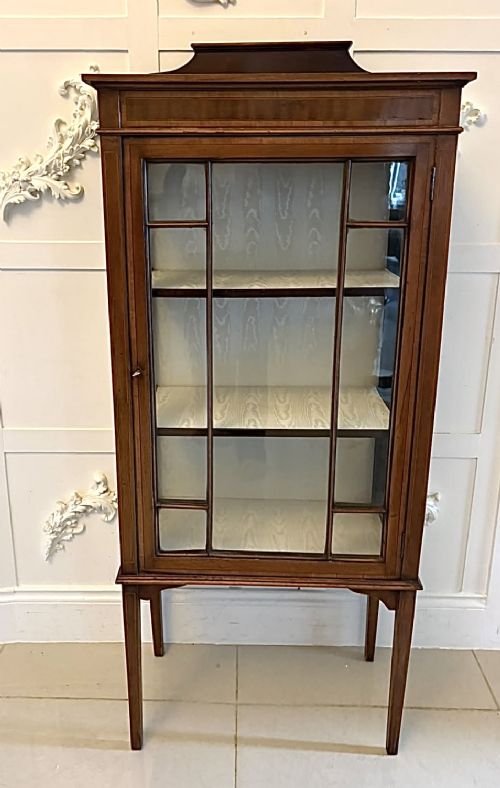
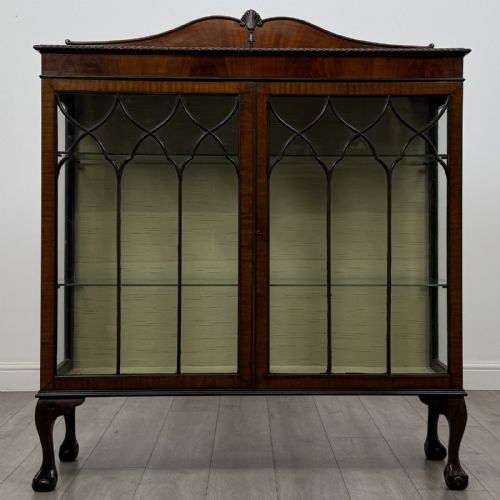
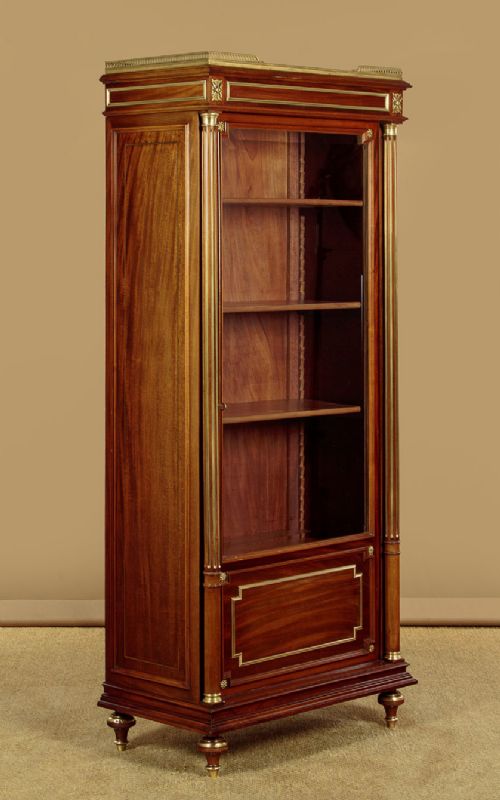
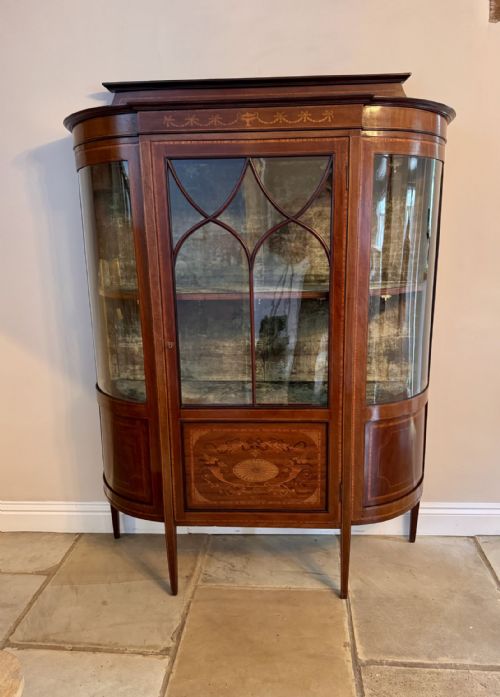
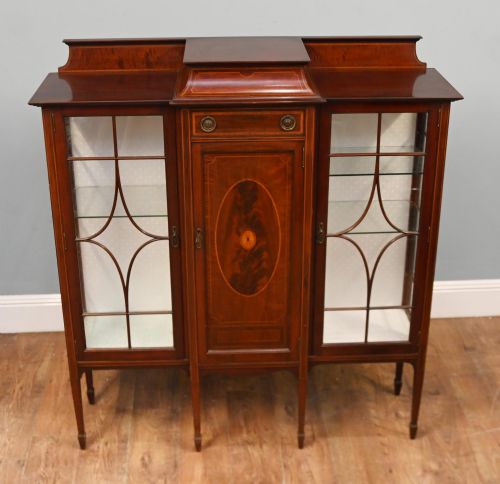
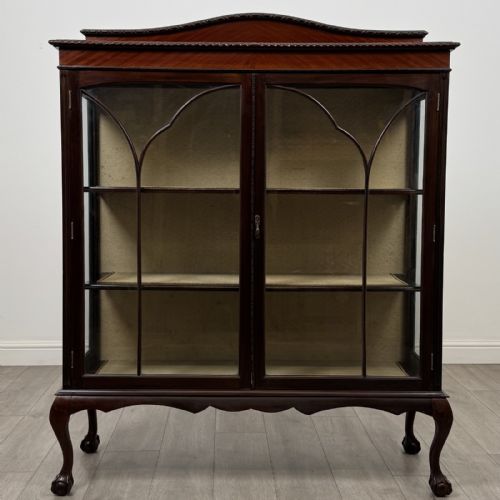
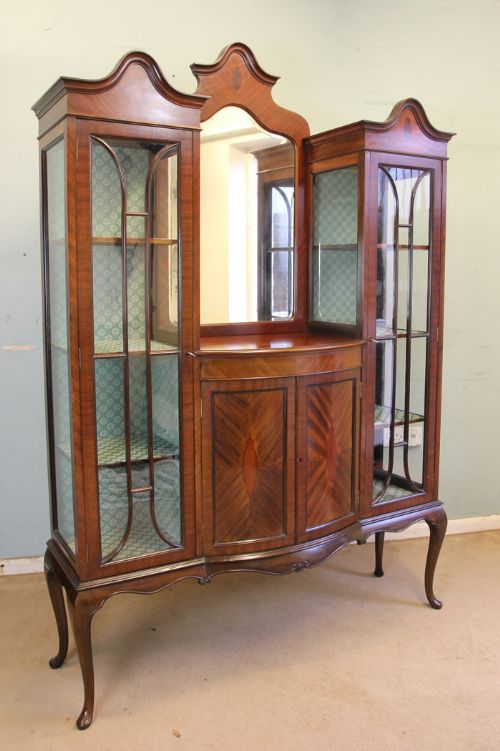
A mahogany glass vitrine offers a polished timber frame and transparent panels designed to showcase curated collections, spanning Edwardian and Victorian forms.

Mahogany Glass Vitrine
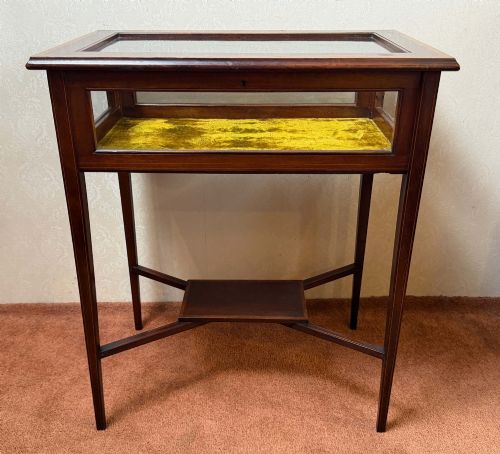
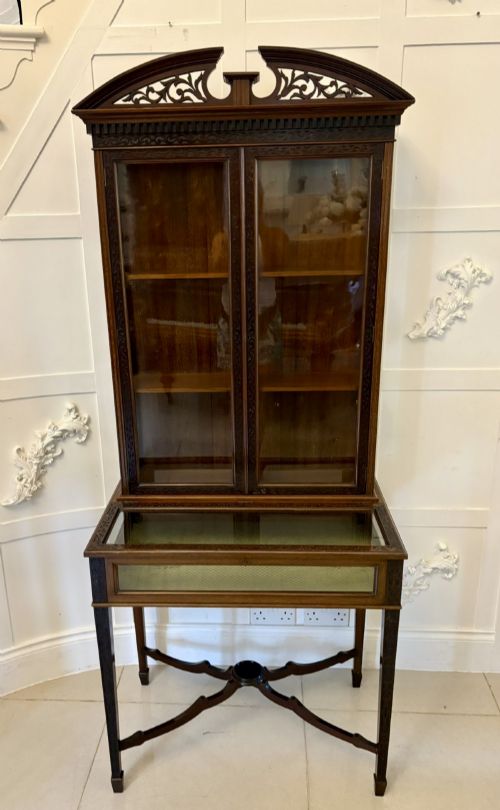
A mahogany glass vitrine brings together timber framing and extensive glazing to display domestic objects, ranging from freestanding upright cabinets to table-style bijouterie pieces.
The selections encountered most frequently on this page date from the Victorian and Edwardian eras, alongside Sheraton Revival and Georgian Revival interpretations.
Makers shaped these vessels into serpentine fronts, bow ends, corner shapes, and two-part bookcase compositions designed for formal reception rooms.
Materials and Construction
Makers constructed the primary carcase in mahogany, often incorporating satinwood inlay, marquetry, and painted decoration to enrich the timber surfaces.
Transparent glass panels, sometimes astragal glazed or framed by brass and gilt bronze mounts, enclose the display chamber alongside mirrored backs and velvet or fabric linings.
Joinery techniques accommodated curved serpentine profiles, delicate bow fronts, and multi-part modular structures built to house fragile items.
Mahogany Glass Vitrine Retail Price Guide 2026
Typical asking prices for mahogany glass vitrine among the pieces listed under this phrase on Sellingantiques today, from the lower quarter to the upper quarter. They describe what is for sale here now, not the wider market.
Some Edwardian vitrines feature hidden compartments behind the velvet lining for secrets best kept away from the tea service.
Defining Quality
Quality rests upon the crispness of the cabinetwork, from the precision of the satinwood inlay to the fluency of carved mahogany details.
Cabinetmakers elevated standard forms through superior timber selection, refined glazing bar arrangements, and the inclusion of original painted decoration or gilt bronze mounts.
F. Sage and Co·Jas Shoolbred·Edwards and Roberts·Maple and Co·Shapland and Petter
The Mahogany Glass Vitrine Glossary
- Astragal glazed
- Glass secured within a framework of wooden bars dividing the window into smaller panes. This technique creates a structured geometric grid across the door.
- Bijouterie table
- A glass-topped display table designed for holding small personal ornaments and trinkets. These tables often feature hinged lids and velvet-lined interiors.
- Vernis Martin
- A simulated Japanese lacquer technique developed in France, using translucent varnishes over metallic leaf. It appears on decorative panels within French revival furniture.
- Serpentine
- A curved shape featuring a convex centre flanked by concave ends, or the reverse. This undulating line adds movement to the front profile of a cabinet.
Mahogany Glass Vitrine: Frequently Asked Questions
What is a mahogany glass vitrine?
A mahogany glass vitrine is a glazed display cabinet built from mahogany timber to exhibit porcelain, silver, and curiosities behind transparent panels.
These pieces range from tall freestanding upright display cabinets and corner units down to low glass-topped bijouterie tables intended for drawing rooms.
How do I identify an Edwardian vitrine?
Edwardian examples often display lighter satinwood inlay, Sheraton Revival motifs, or marquetry decorations set within paler or polished mahogany frames dating around nineteen hundred.
Victorian predecessors tend to feature heavier carved mahogany ornamentation, darker timber tones, and more robust structural proportions.
Were these cabinets used for books?
Certain larger forms double as breakfront bookcases or display bookcase combinations, featuring deep shelving behind astragal glazed doors.
Most vitrines, however, prioritized the display of decorative objects and collections rather than extensive libraries.
Where should I place a vitrine?
Vitrines suit principal reception rooms and living spaces where natural light can pass through the glass panels to illuminate the interior contents.
Corner cabinets fit into unused angles, while freestanding bow-ended and serpentine models occupy prominent wall spaces.