
Marquetry Display Case
A marquetry display case brings together patterned wood veneers and glazed housing for precious objects, offering both surface artistry and protected display.
Marquetry Display Case
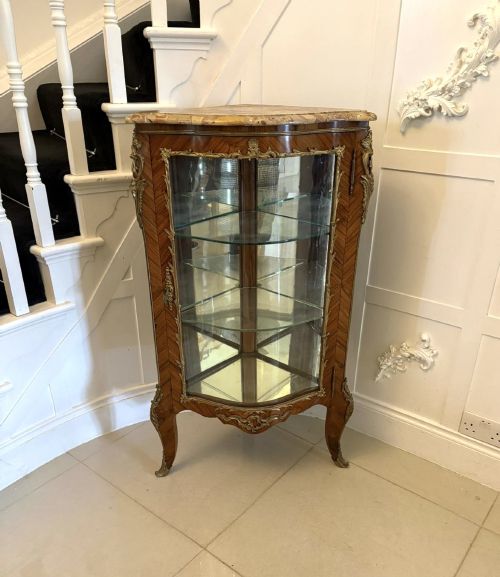
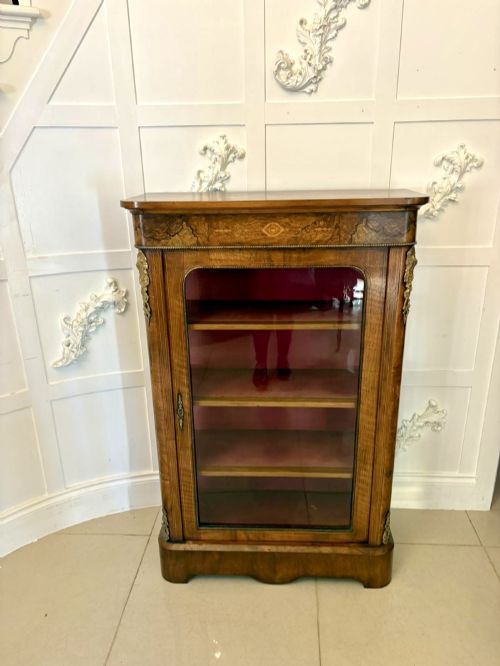
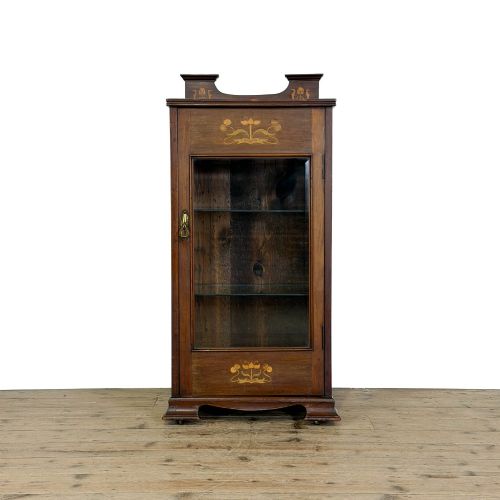
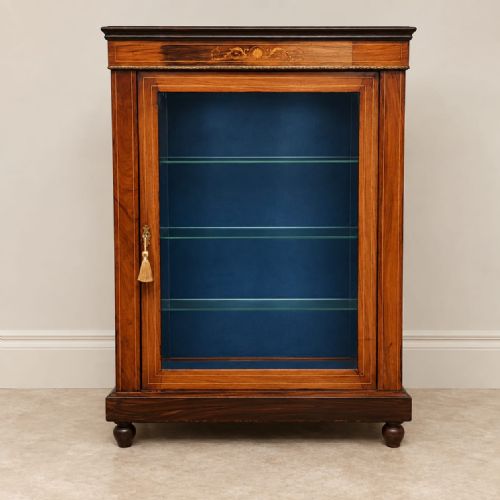
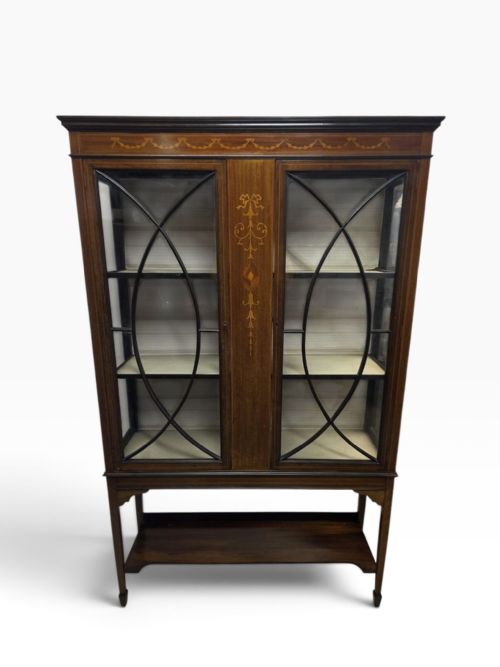
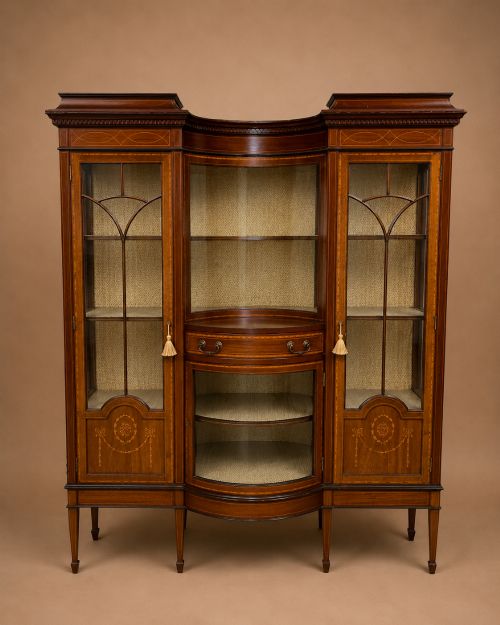
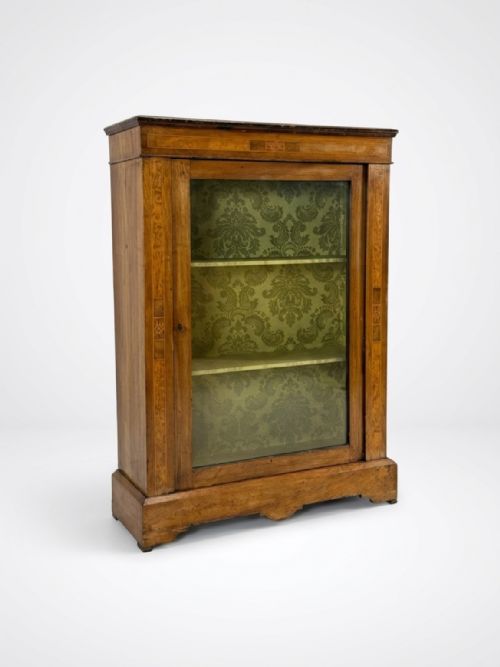
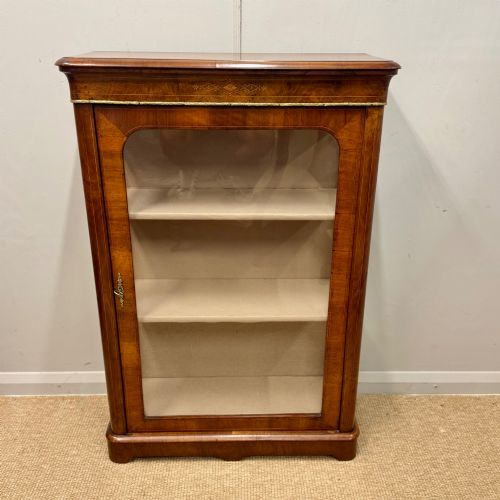
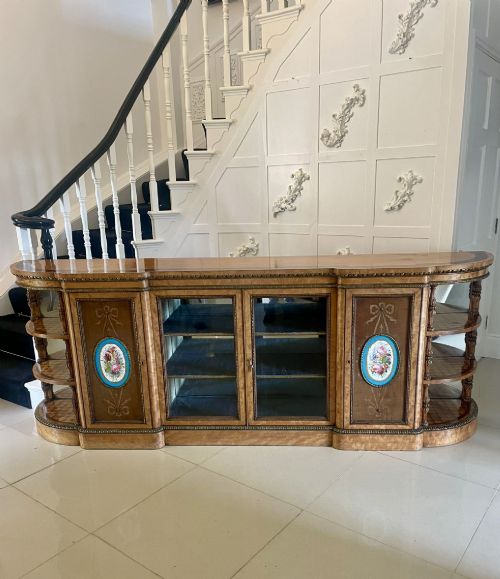
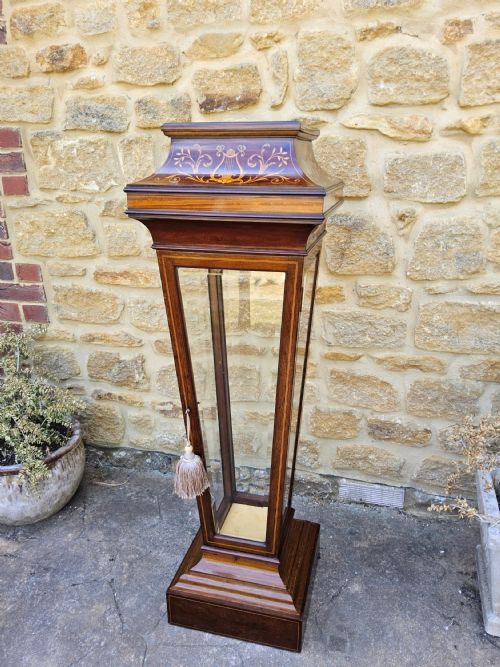
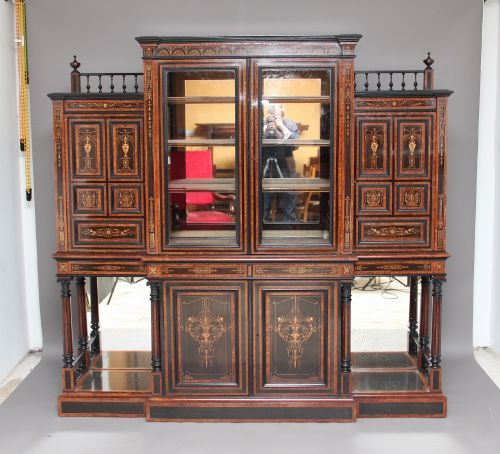
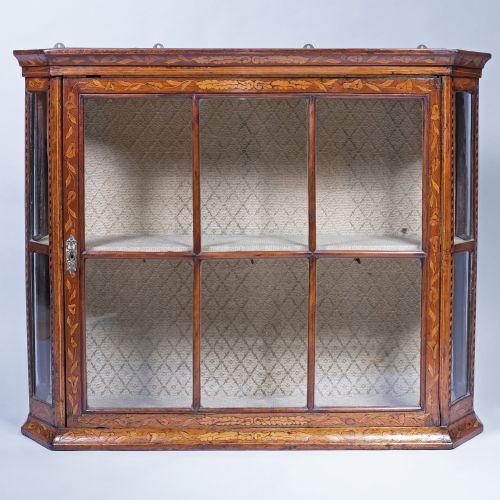
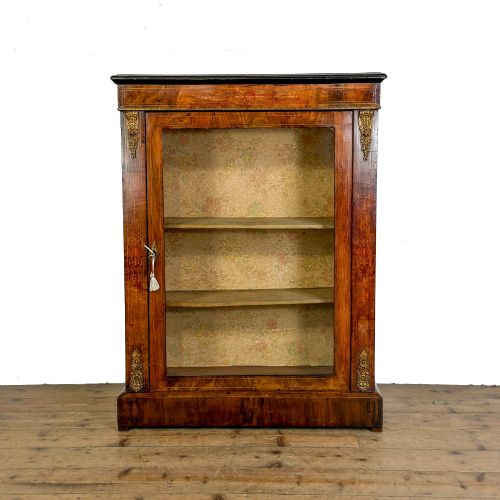
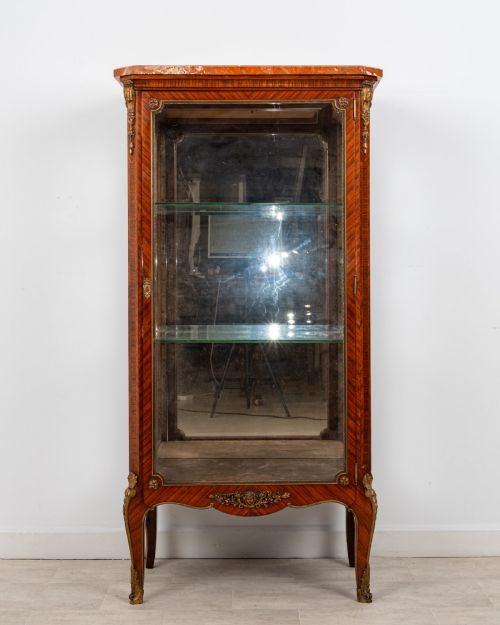
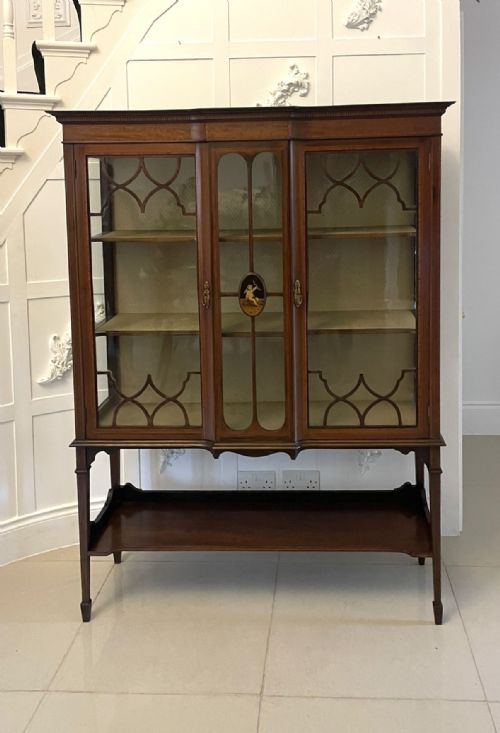
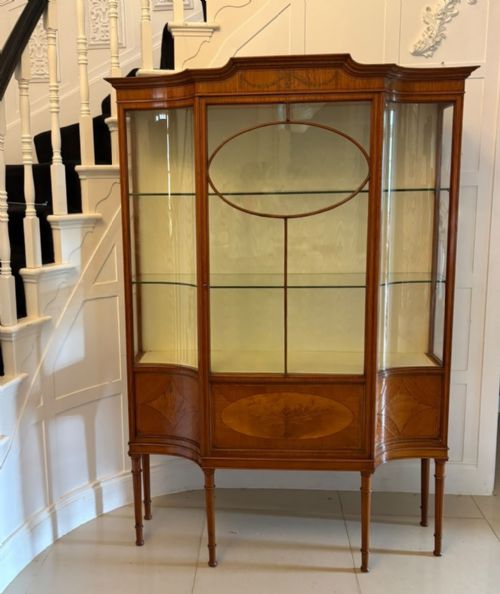
A marquetry display case is a cabinet designed to exhibit treasured objects behind glass while showcasing intricate wood inlay on its exterior surfaces. When searching this phrase, buyers encounter various forms including pier cabinets, freestanding credenzas, corner cabinets, and tall vitrines.
The pieces found here predominantly span the nineteenth century and the Edwardian era, with strong representation from Victorian workshops and French makers. Common timbers such as mahogany, walnut, and satinwood provide the ground for elaborate floral or geometric veneers.
Makers ranged from provincial cabinet makers to major London and Parisian ateliers producing exhibition-quality furniture. The resulting cabinets served as formal drawing room furnishings intended to display porcelain, silver, and curiosities.
How They Were Made
Cabinets were constructed using solid timber carcases faced with fine veneers, allowing craftsmen to apply contrasting woods like satinwood, kingwood, and burr walnut in complex geometric or pictorial patterns. Marquetry involved cutting thin sheets of veneer together in stacked designs before assembling them into the main surface.
Gilt bronze or brass mounts, known as ormolu, were cast and chased to accentuate corners, friezes, and feet, adding structural definition and metallic contrast to the timber surfaces. Glazed doors utilised individual glass panes held in wooden framing or brass glazing bars, while interiors frequently incorporated velvet linings and adjustable shelving.
Listings feature walnut, mahogany, and satinwood cabinets spanning the eighteenth century through the Edwardian period.
What Varies in Quality
The integration of heavy, well-chased ormolu mounts and substantial marble tops distinguishes standard production from exhibition pieces. Construction details such as tight veneer joints, original glass, and refined interior fittings mark the distinction between ordinary furniture and masterwork cabinetmaking.
Lamb of Manchester·François Linke·James Hicks·Edwards and Roberts
The Marquetry Display Case Glossary
- Marquetry
- The art of applying decorative veneer pieces to a wood structure to form pictorial or geometric patterns. This technique utilises contrasting timbers to create detailed surface decoration.
- Ormolu
- Gilt bronze mounts used as decorative trim on furniture. These cast metal details highlight the architectural lines of the cabinet.
- Vitrine
- A glass-fronted cabinet designed for displaying fine objects or porcelain. These display cases often feature glazed side panels to maximise light exposure.
- Pier Cabinet
- A narrow cabinet built to fit the wall space between windows. These upright forms were popular in Victorian drawing rooms for displaying small collections.
- Credenza
- A low-profile side cabinet often fitted with central cupboards and glazed end sections. This form frequently combines extensive marquetry with ormolu mounts.
Marquetry Display Case: Frequently Asked Questions
What is a marquetry display case used for?
These cabinets were designed to hold and protect valuable porcelain, small sculptures, and curated collections of curiosities.
The glazed doors and velvet-lined interiors allowed owners to showcase their possessions while keeping them safe from dust and handling.
How do I date a marquetry display case?
Dating relies on identifying the prevailing style, construction methods, and timber choices typical of specific periods.
Victorian and Edwardian examples often feature distinct revival styles, such as Louis XV or Sheraton influences, alongside characteristic wood veneers.
Where were these cabinets placed in a home?
They typically stood in formal drawing rooms, libraries, or reception spaces where guests would admire both the cabinet and its contents.
Specific forms like pier cabinets were specifically proportioned for narrow wall spaces between windows.
What is the difference between marquetry and inlay?
Marquetry involves assembling an entire picture or pattern from various veneers before applying it to the carcase surface.
Inlay generally describes cutting recesses into solid wood and inserting pieces of contrasting material directly into those channels.