


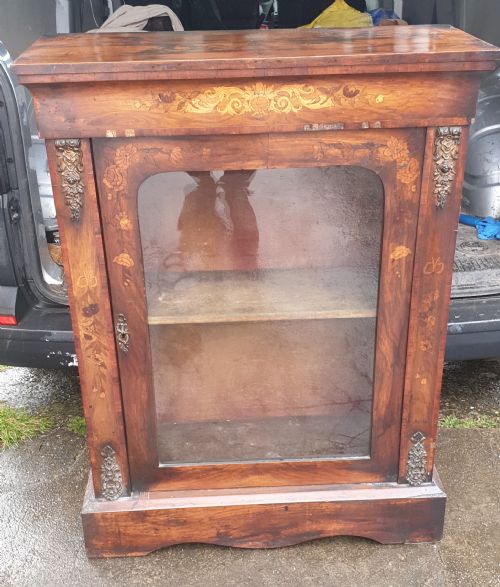
Brown Wood Pier Cabinet
A brown wood pier cabinet brings nineteenth-century display and surface space to a reception room without blocking the light.
Brown Wood Pier Cabinet
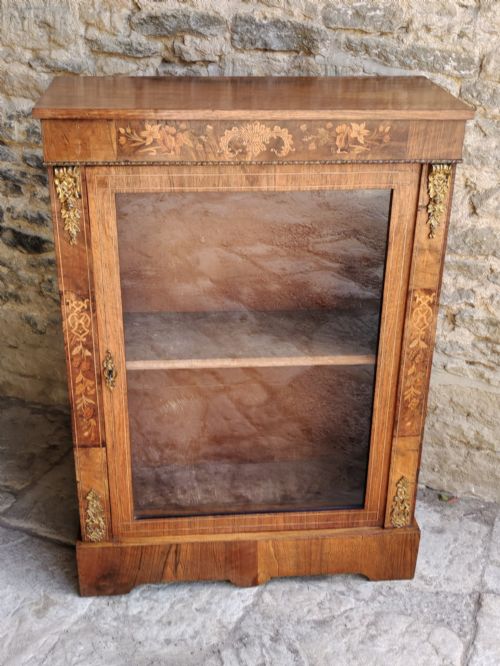
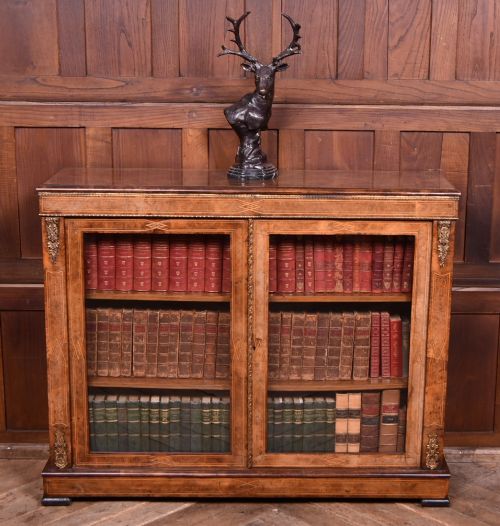
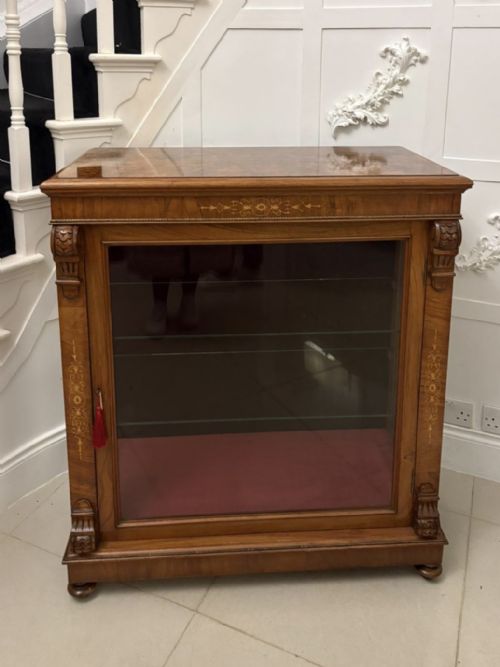
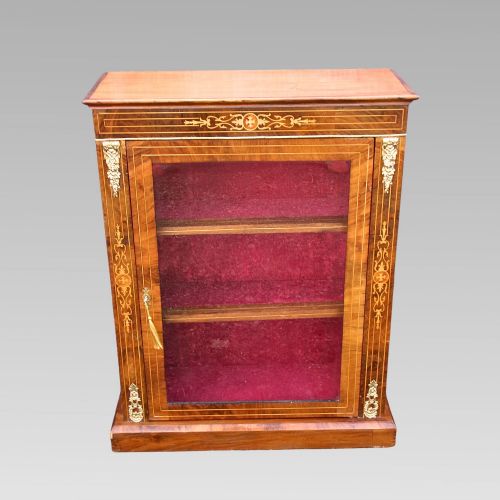
A brown wood pier cabinet is typically a low display or side piece designed to stand against the narrow wall space between windows, known as the pier. The selection here leans heavily towards Victorian walnut and mahogany examples built during the second half of the nineteenth century.
Makers of the period worked in various regional styles, producing everything from simple mahogany side cabinets to serpentine-shaped burr walnut credenzas with glass doors. Alongside standard display pieces, the inventory includes specialised forms such as music cabinets and diminutive console side cabinets reflecting Georgian Revival and Adam influences.
Most pieces combine glazed or panelled doors with shelved interiors, offering a compact footprint for displaying ceramics or small collections. The frequent presence of inlaid boxwood, marquetry, and crossbanding shows how cabinet-makers elevated these domestic items for formal reception rooms.
How they were made
Carpenters utilised solid timbers like mahogany and walnut for structural frames while applying fine veneers such as burr walnut to visible surfaces. Crossbanding and boxwood inlay provided geometric contrast, framing panels and tabletops with careful hand-cut stringing.
Glazing techniques secured glass panes within timber doors to protect delicate contents from dust. Metal components, including brass handles, hinges, and occasional ormolu mounts, added functional detail and structural accent to the timber bodies.
Some nineteenth-century walnut cabinets were specifically built to house sheet music, keeping family songbooks tidy beside the piano.
What varies in quality
Quality rests primarily in the selection of timber veneers and the precision of the marquetry and inlay work. Better workshops chose burr walnut with rich, consistent figuring and matched the grain symmetrical across door panels and drawer fronts.
Construction details differentiate standard production from finer pieces, visible in the tightness of the dovetail joints and the weight of the brass hardware. Secondary timbers hidden inside drawers and carcases often reveal the standard of craftsmanship behind the polished exterior.
The Brown Wood Pier Cabinet Glossary
- Pier cabinet
- A low cabinet designed specifically to fit the wall space between two windows. These pieces often feature glass doors for displaying porcelain and ornaments.
- Burr walnut
- A prized timber veneer taken from the growth growths of walnut trees. It yields complex, swirling grain patterns favored by nineteenth-century cabinet-makers.
- Crossbanding
- A border technique where strips of veneer are laid perpendicular to the main grain. This frames tabletops and door panels with a neat contrasting edge.
- Marquetry
- The art of creating decorative patterns on furniture using thin veneers of different woods. Craftsmen cut and fitted pieces together like a puzzle to form floral or geometric designs.
- Ormolu
- Gilded bronze mounts applied to furniture for decorative effect. The technique was particularly popular during revival periods referencing French designs.
Brown Wood Pier Cabinet: Frequently Asked Questions
What is a pier cabinet used for?
These cabinets served as both decorative furniture and storage for small valuables, books, or collections. Their narrow proportions allowed them to occupy wall spaces between windows where standard sideboards would not fit.
The glass doors kept dust away from delicate ornaments while reflecting light back into Victorian reception rooms. Today they function well in hallways or living spaces for display and surface storage.
How do I date a Victorian cabinet?
Dating relies on examining the timber, construction methods, and stylistic revival influences present in the piece. Victorian examples often utilise walnut or mahogany with machine-sawn secondary elements appearing towards the later decades of the nineteenth century.
Inlay styles and hardware also offer clues, with geometric boxwood stringing and brass mounts changing through the decades from the 1850s to 1900. Comparing the overall form against documented revival styles helps narrow down the decade of production.
Are these cabinets difficult to maintain?
Routine care involves dusting the timber surfaces with a dry cloth and occasionally feeding the wood with appropriate wax. Direct sunlight and sudden changes in humidity should be avoided to protect fragile veneers and prevent timber warping.
Glass panels require standard window cleaner applied to a cloth rather than sprayed directly, ensuring liquid does not seep into the wooden rebate. Gentle handling of original brass hinges and locks preserves their working condition.
What wood types should I expect?
Walnut and mahogany form the foundation of most pieces in this category, often paired with decorative burr walnut veneers. Specialised woods such as olive wood, king-wood, and goncalo Alves appear on select decorative items.
Inlays commonly feature lighter contrasting timbers like boxwood to create geometric stringing and floral motifs. Secondary structural timbers inside the carcase typically include pine or oak.