
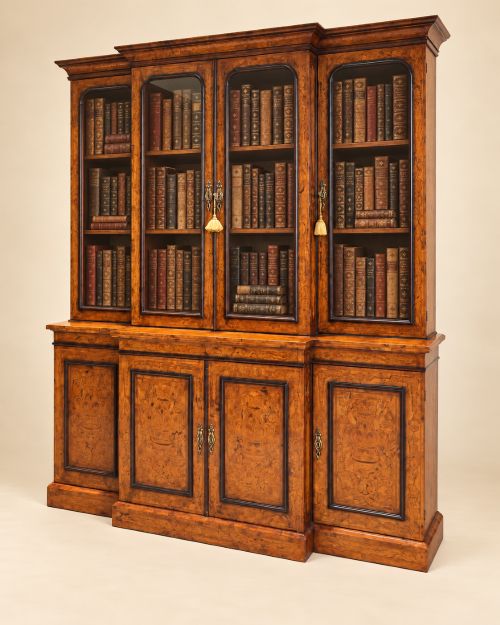
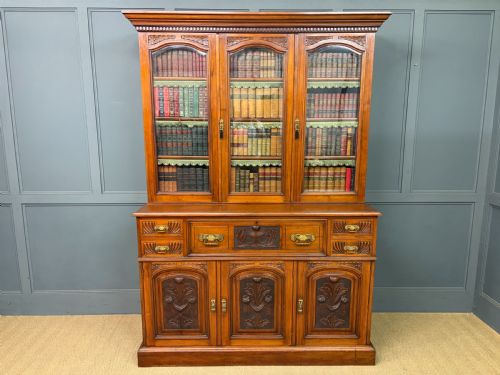


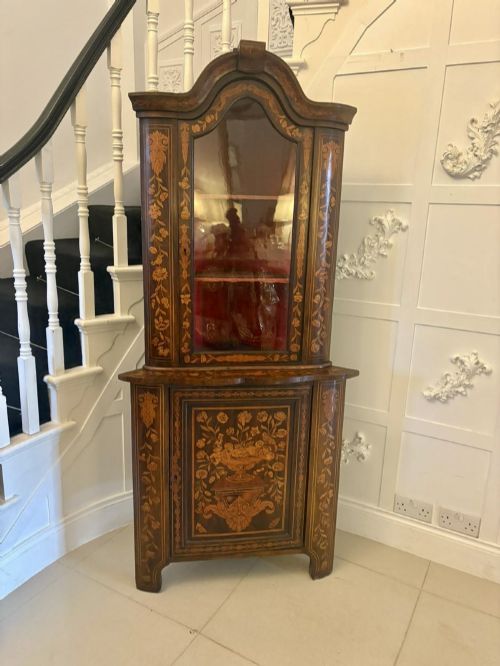
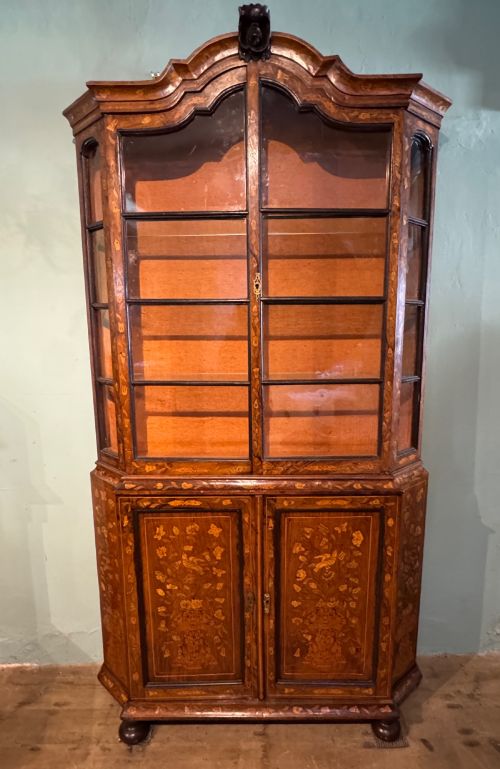
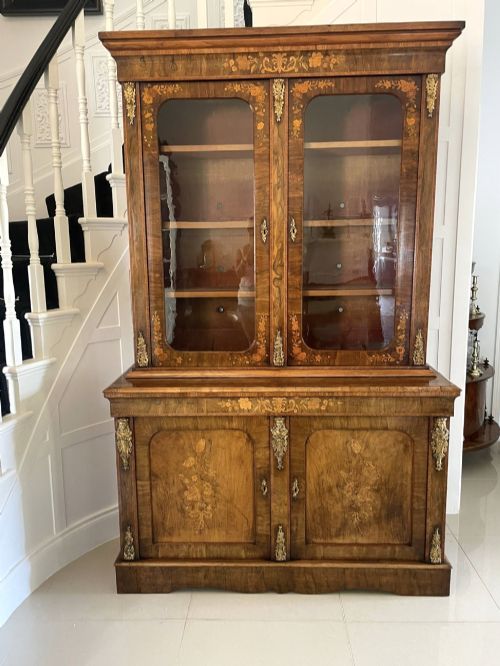
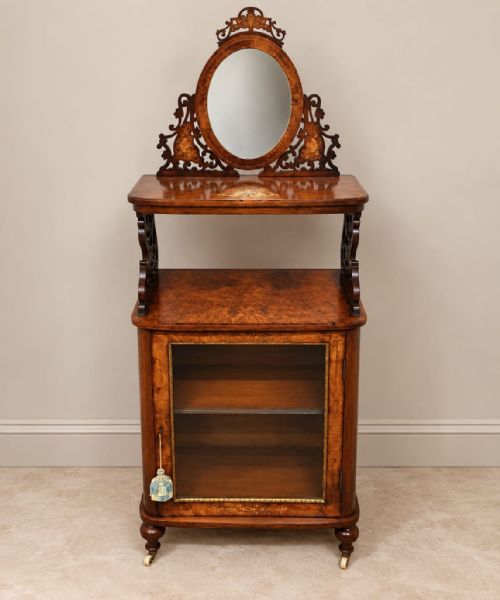
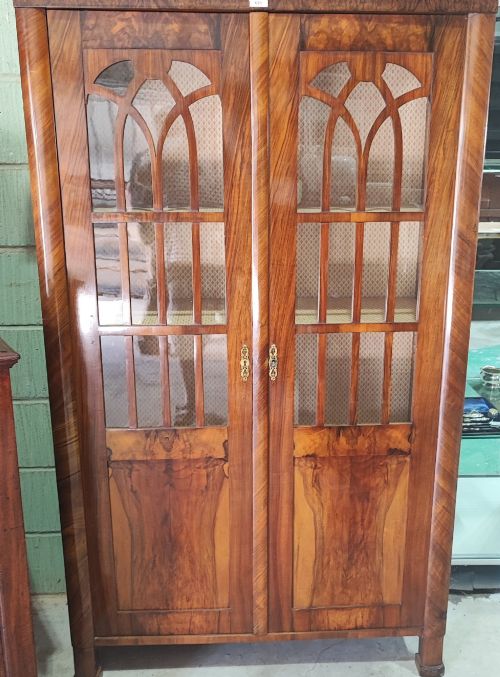
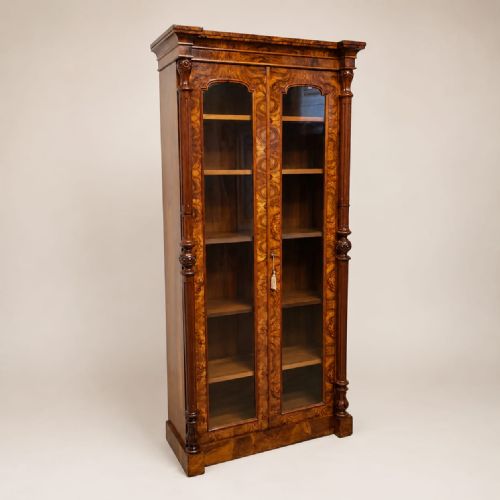
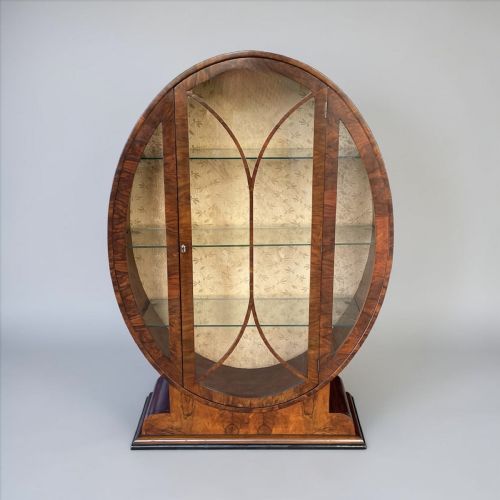
Walnut Glazed Display Cabinet
A walnut glazed display cabinet brings warmth and polished glass together to hold cherished collections.

Forms and periods
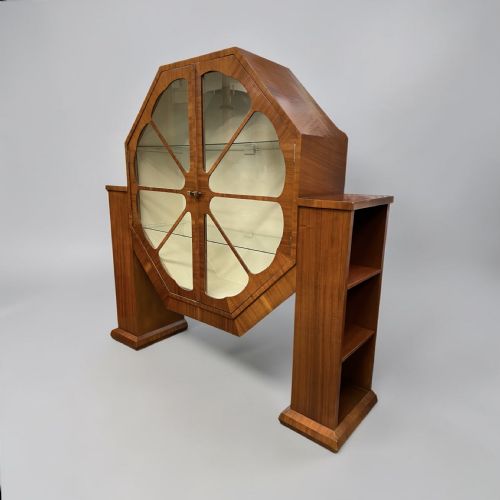
A walnut glazed display cabinet is a fitted piece designed to show and protect delicate objects behind glass doors. These cabinets span the nineteenth century, the Victorian era, and into the twentieth century, taking the form of tall bookcases, side cabinets, credenzas, and pier cabinets.
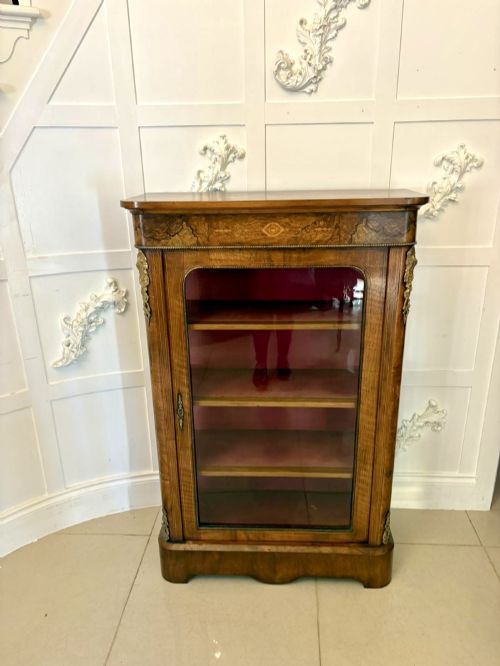
The Victorian period supplies many of the examples seen here, often featuring burr walnut veneers and glazed doors intended for formal display. Pieces range from compact pier cabinets designed for small spaces to large breakfront bookcases and credenzas.
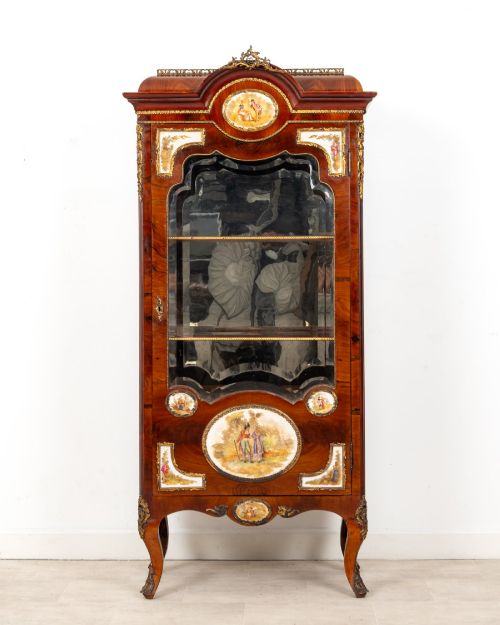
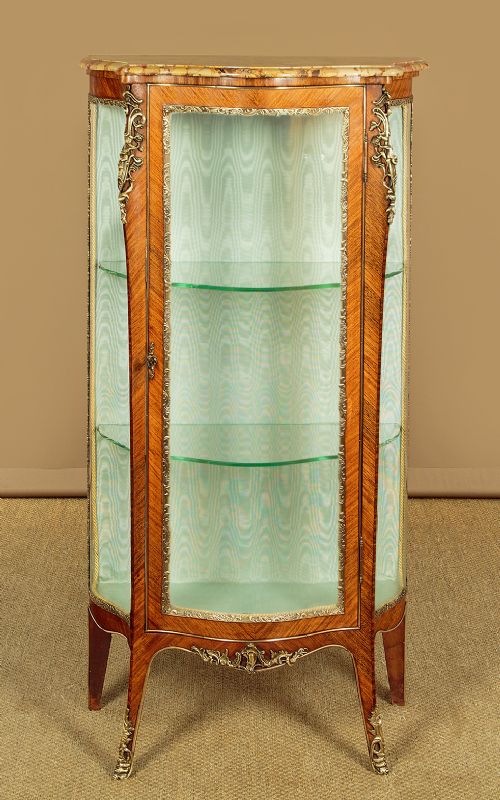
Makers and regional styles introduce variety, including French Empire and Rococo Revival influences alongside Viennese Secessionist and Arts and Crafts designs. English workshops also produced numerous glazed cabinets and sideboards in walnut.

Materials and construction
Makers utilised solid walnut and figured burr walnut veneers over secondary timbers such as oak, applying fine boxwood stringing and brass or ormolu mounts for decoration. Interiors often lined themselves in velvet to cushion displayed objects.
Glass panes are set within timber frames to form the display doors, occasionally curved at the corners or shaped into bow fronts. Cabinets frequently incorporate adjustable shelving and lockable glazed doors to secure the contents.
Retail Price Guide 2026
Typical UK retail prices for walnut glazed display cabinet, calculated from the Sellingantiques database of over a million retail prices indexed since 2003. This retail price guide relies exclusively on Sellingantiques data; no external sources or auction records are used, so the figures do not describe the wider market.
Some Victorian pier cabinets spent decades quietly holding dusty geological specimens before finding a new life displaying modern porcelain.
Craftsmanship and design
Quality rests in the selection of the timber veneers, where highly figured burr walnut displays rich grain patterns across the front facade. Finer examples integrate precise boxwood inlay and cast ormolu mounts rather than relying on plain surfaces.
Structural refinement separates standard production from exceptional pieces, visible in the joinery of the glazed doors, the integration of carved details, and the finish applied to the wood. Named makers like Gillow and Co or August Ungethüm introduce documented craftsmanship.
August Ungethüm·Gillow and Co
The Walnut Glazed Display Cabinet Glossary
- Burr walnut
- A figured timber veneer taken from the growth excrescences of walnut trees, prized for its swirling, knotty patterns. It forms the primary decorative surface on many high-status cabinets.
- Pier cabinet
- A narrow display cabinet traditionally placed on the wall space, or pier, between two windows. These tall, slender pieces are frequently glazed to show porcelain or books.
- Ormolu
- Gilt-bronze mounts applied to furniture for ornamental effect, common in French revival pieces. It provides a metallic contrast to the dark grain of walnut.
- Credenza
- A low sideboard or cabinet, often fitted with glazed side doors and a central cupboard. Victorian iterations in walnut served both storage and display functions in the reception room.
- Vitrine
- A glass-fronted display cabinet or case designed specifically for showing curiosities or porcelain. The term often describes pieces with French stylistic influences.
Frequently Asked Questions
What is a pier cabinet?
A pier cabinet is a narrow, upright piece designed to fit the narrow wall section between windows. They typically feature a single glazed door.
These cabinets served to display porcelain and small decorative items without blocking natural light.
How do I care for walnut veneer?
Walnut veneer requires protection from direct sunlight to prevent the burr patterns from fading. Regular dusting with a dry cloth keeps the polished surface clean.
Avoid placing these cabinets in rooms with fluctuating humidity to prevent the veneer from lifting.
Are the shelves adjustable?
Many Victorian and Edwardian glazed cabinets include adjustable shelving supported by rack systems. This allowed owners to alter shelf heights for different books or display pieces.
Fixed shelves do appear in smaller pier cabinets and specific architectural bookcases.
What distinguishes burr walnut?
Burr walnut comes from a tree growth that produces intricate, swirling grain patterns rather than straight lines. Cabinet makers used it as a veneer on prominent surfaces to catch the light.
Plain walnut provides a quieter, uniform dark brown tone without the distinctive knot clusters.