




1920s Glass Display Case
A 1920s glass display case holds treasures behind clear panes, bringing period retail and domestic curation into modern rooms.
1920s Glass Display Case
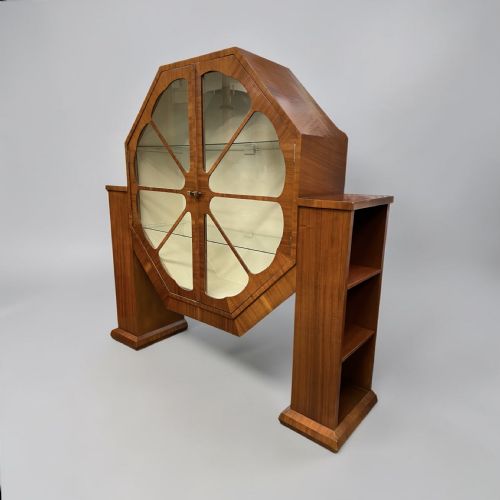
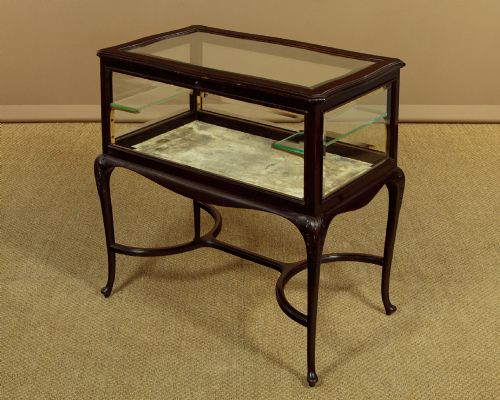
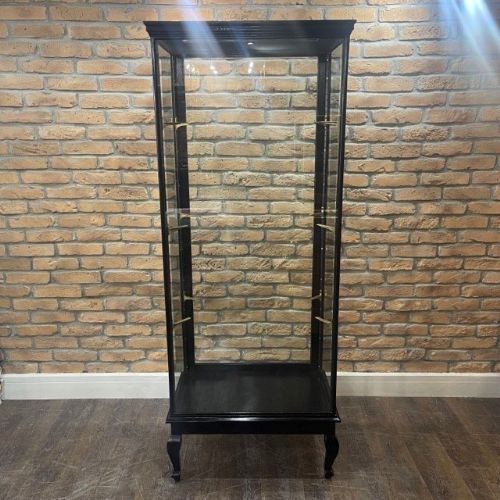
A 1920s glass display case encompasses shop counters, countertop cabinets, bijouterie tables, and tall towers designed to showcase goods or personal collections. Most examples on this page date from the 1920s and 1930s, alongside Edwardian-influenced pieces.
Forms vary from pentagonal counters and apothecary cabinets to glazed table tops and large floor-standing units. These pieces originate from commercial shop fittings as well as domestic display settings.
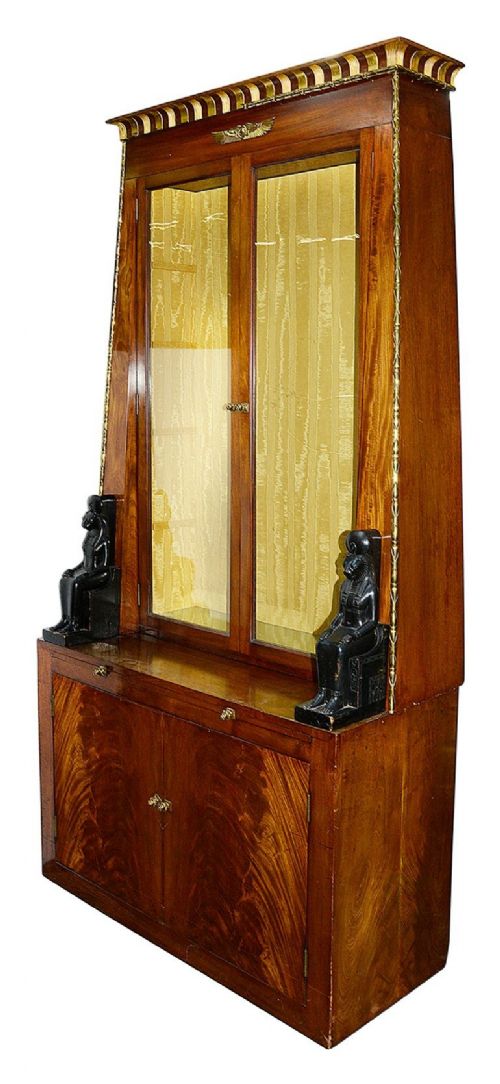
Art Deco and Egyptian Revival styles appear frequently alongside commercial utilitarian designs. Buyers select these cabinets to create focal points while securely exhibiting small objects.
Materials and construction methods
Makers utilised timber frames of mahogany, walnut, oak, and ebonised wood to build robust structures for commercial and domestic environments. Brass and gilt metal mounts provide structural reinforcement and decorative framing.
Large glass panes allow maximum visibility from multiple angles, often secured with timber glazing bars or metal channels. Interior surfaces frequently feature velvet or fabric linings to cushion displayed items.
Apothecary cabinets once held remedies before finding new life exhibiting modern curiosities.
Evaluating craftsmanship and proportion
Quality rests in the precision of the timber joinery and the integration of metal mounts. Superior cabinets feature well-balanced proportions and refined hardware that complement the glass panes.
The choice of primary timber, such as figured walnut or rich mahogany, distinguishes standard commercial units from exceptional decorative pieces. Finer examples display careful attention to framing details and harmonious material combinations.
F. Sage & Co.·Siegel
The 1920s Glass Display Case Glossary
- Bijouterie table
- A glass-topped display table specifically designed for small valuables, jewellery, and curiosities. These tables usually feature hinged lids for easy access.
- Ebonised wood
- Timber treated with a dark stain or finish to imitate ebony. This dark surface creates a sharp visual contrast against brass mounts and glass panels.
- Countertop cabinet
- A smaller display case built to sit atop shop counters or tables. They placed merchandise directly at eye level for customers.
- Glazing
- The installation of glass panes into a frame. In these cabinets, large expanses of glass maximise light entry and visibility.
1920s Glass Display Case: Frequently Asked Questions
Where were these cabinets used?
These cases served primarily in shops, pharmacies, and commercial showrooms to display goods securely to customers.
Over time, many of these utilitarian display pieces transitioned into domestic settings for private collections.
How do I clean the glass?
Use a gentle glass cleaner applied to a cloth rather than sprayed directly onto the surface, protecting the surrounding timber and metal mounts.
Avoid abrasive materials that might scratch historical glass or damage delicate ebonised finishes.
What fits inside a countertop case?
Countertop cabinets accommodate small collectibles, pocket watches, jewellery, ceramics, and curiosities.
Their shallow depth keeps individual objects visible without crowding the interior space.
How do I identify Art Deco pieces?
Art Deco examples feature geometric lines, symmetrical forms, and stylized decorative motifs characteristic of the interwar period.
Walnut and ebonised woods frequently appear alongside brass details in these specific designs.