


Ebonised Wood Bookcase
An ebonised wood bookcase brings a dark, dramatic silhouette to a room, offering deep tones and striking contrast against colourful bindings.
Ebonised Wood Bookcase
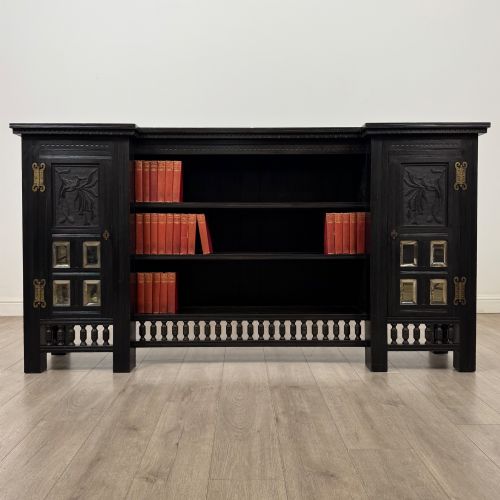
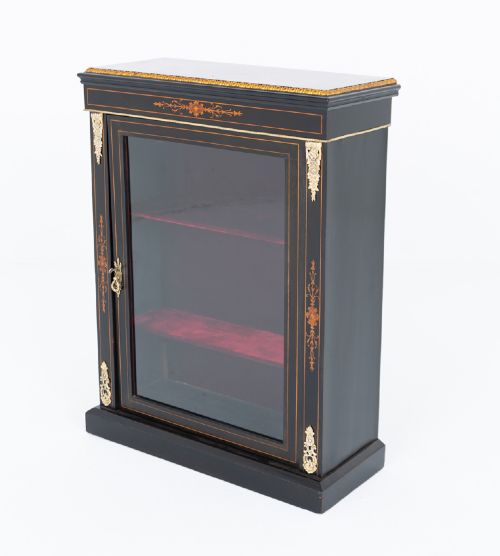
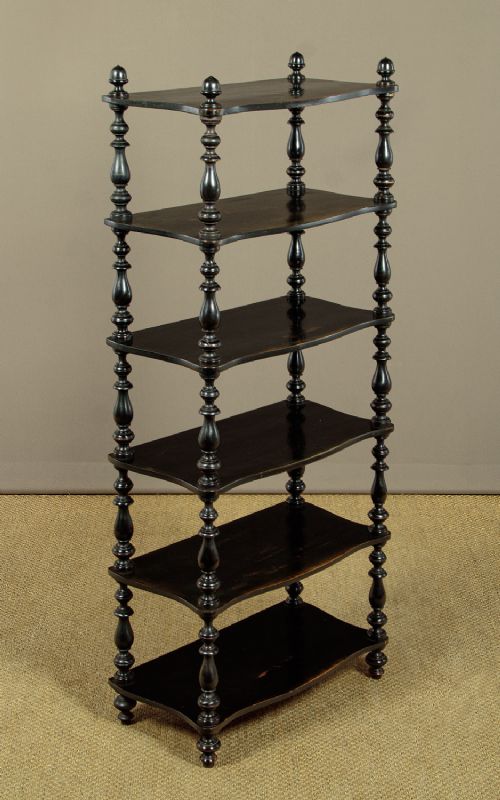
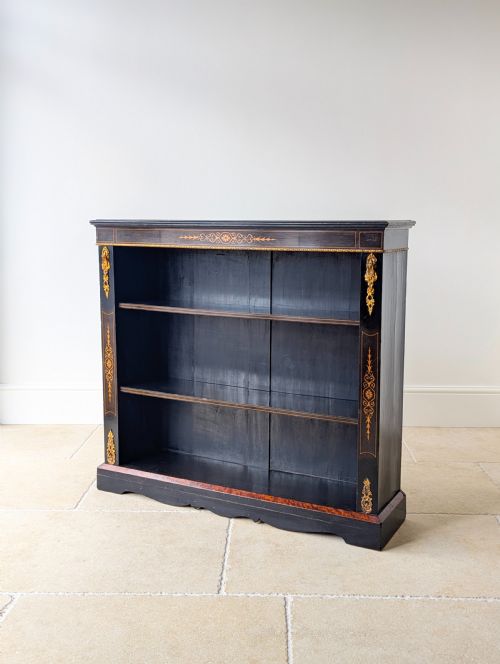
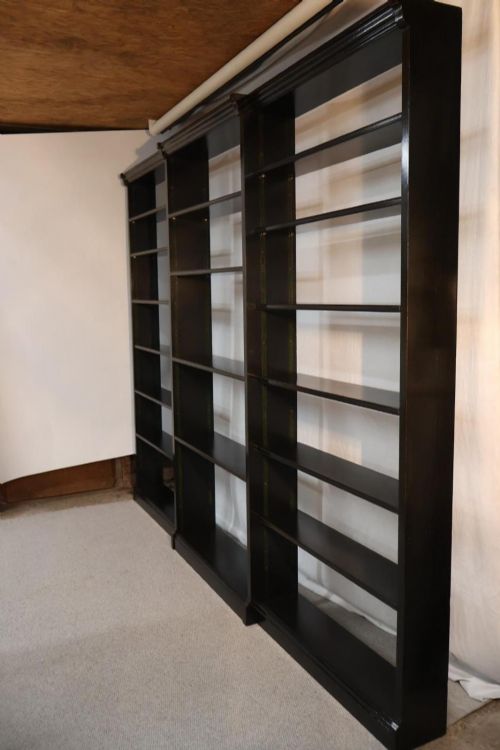
When you search for an ebonised wood bookcase, you encounter nineteenth-century storage pieces finished with a dark, polished surface that mimics genuine ebony. The examples on this page range from low open dwarf shelves and breakfront open bookshelves to glazed pier cabinets and tall cupboards.
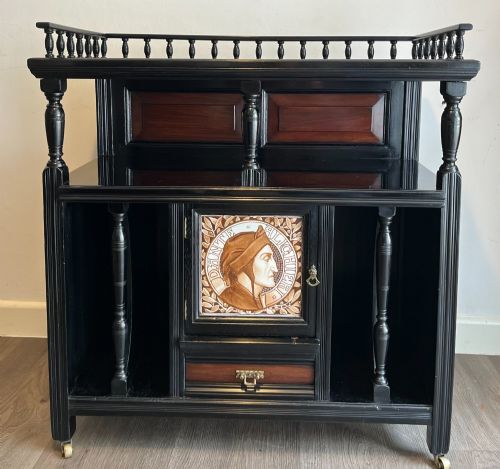
Victorian and aesthetic movement workshops produced many of these pieces, alongside Dutch colonial and Napoleon III iterations. You will frequently find open shelving paired with adjustable boards, brass mounts, ceramic elements, or glass doors suited for display.
Forms vary from corner units and tiered stands to large breakfront configurations and pairs of cabinets. The overarching characteristic is the blackened timber finish, often combined with contrasting inlay, gilt metal, or secondary woods like mahogany and oak.
How they were made
Cabinet makers utilised secondary woods such as oak and mahogany, applying a dark stain or chemical treatment to achieve the distinctive ebonised surface. This finish was then polished to a deep sheen, requiring steady handwork across flat panels and mouldings.
Many nineteenth-century pieces incorporate brass mounts, ormolu, and ceramic details fixed directly into the timber. Boullework brass and tortoiseshell inlays or contrasting satinwood and thuya wood veneers frequently accent the dark background.
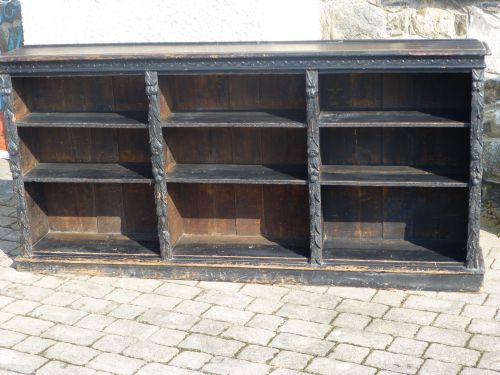
Carved elements, such as the green man motifs found on certain nineteenth-century examples, demonstrate skilled hand-carving before the final ebonising process. Structural integrity relied on traditional joinery tailored to heavy shelving and glass-fronted doors.
One nineteenth-century dwarf bookcase hides a carved green man within its dark timber, keeping a watchful eye over the adjustable shelves.
What varies in quality
The standard of the ebonised finish and the quality of the underlying timber define the upper tier of these pieces. Superior examples display a smooth, durable blackened surface that has aged evenly without extensive flaking.
Refinement in secondary materials separates standard items from finer works. The inclusion of genuine ormolu mounts, intricate brass inlay, or high-grade ceramic plaques elevates a piece above simpler stained softwood or plain hardwood constructions.
Construction details such as adjustable shelving mechanisms, well-fitted doors, and crisp hand-carved ornaments indicate workshop competence. The presence of identifiable decorative styles like the aesthetic movement or Napoleon III adds distinct craftsmanship value.
Wedgwood
The Ebonised Wood Bookcase Glossary
- Ebonisation
- The process of staining or treating timber to imitate expensive ebony wood. This finish appeared widely on nineteenth-century Victorian furniture.
- Breakfront
- A cabinet or bookcase design where the central section projects forward from the flanking wings. This architectural arrangement creates depth and visual interest.
- Ormolu
- Gilded bronze mounts applied as decorative ornaments to furniture surfaces. It provides a bright metallic contrast against dark ebonised wood.
- Aesthetic Movement
- A late nineteenth-century design style emphasising visual beauty over narrative subject matter. Pieces from this movement often utilise ebonised finishes with gilt highlights.
- Boulle
- A technique of inlaying brass and tortoiseshell into wood surfaces. Named after French cabinet maker André-Charles Boulle, it appears on nineteenth-century revival pieces.
Ebonised Wood Bookcase: Frequently Asked Questions
How do I style an ebonised bookcase?
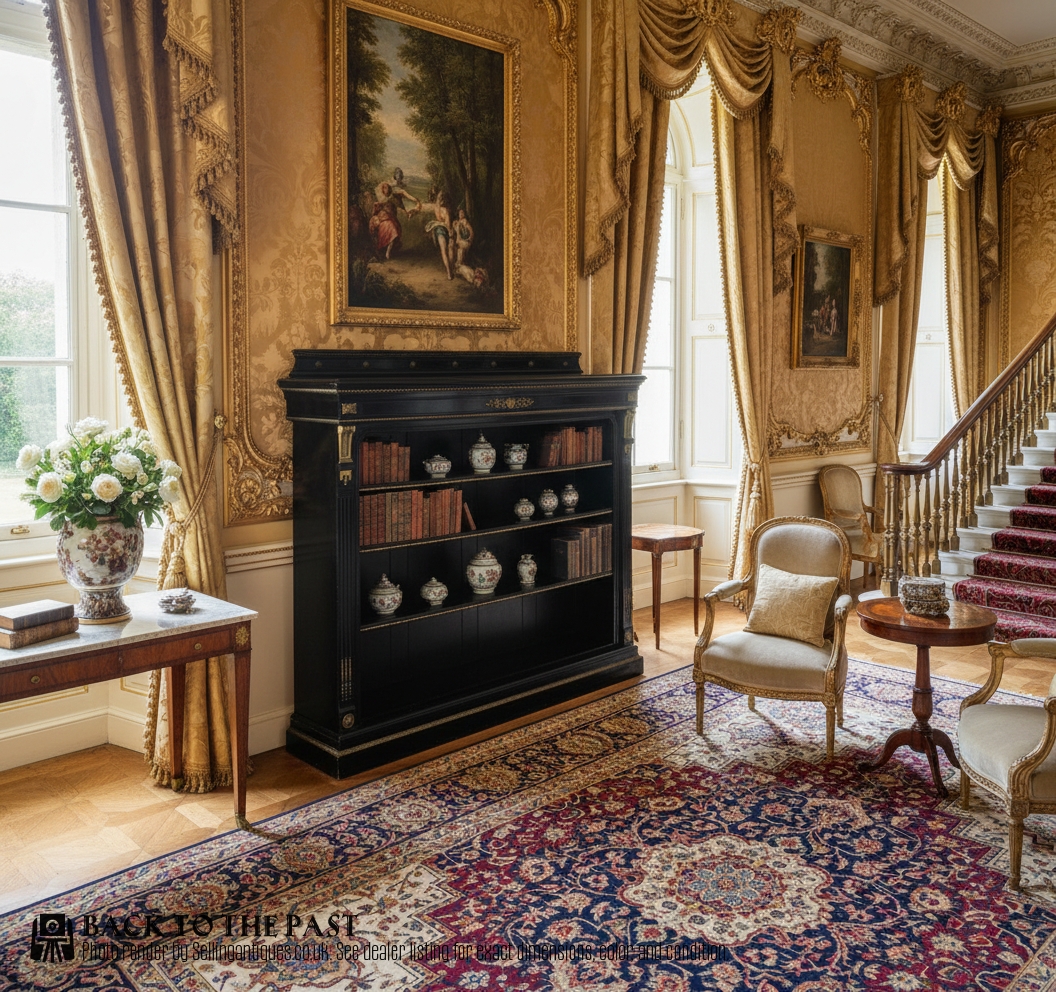
The dark, dramatic finish of an ebonised bookcase provides a strong backdrop for brightly coloured book bindings and light-toned decorative objects. Placing the piece against a neutral wall allows the silhouette and any brass or gilt details to stand out.
Because these pieces range from compact corner units to large breakfront structures, ensure the scale matches the proportions of the room.
How can I tell Victorian pieces apart?
Victorian ebonised bookcases often feature specific stylistic markers such as aesthetic movement incised gilding, gothic influences, or elaborate brass hardware. Examining the secondary woods, such as oak or mahogany beneath the finish, helps identify the building period.
Construction methods, including hand-cut joints and adjustable shelf mechanisms, also point to nineteenth-century workshop practices.
Were these bookcases used for display?
Many ebonised bookcases served dual purposes for both book storage and the exhibition of ceramics and ornaments. Pier cabinets and glazed variants were specifically built to protect and display delicate collections.
Open shelf versions allowed quick access to volumes while contributing to the curated interiors of nineteenth-century homes.