








Japanese Ceramic Dishes
Japanese ceramic dishes span centuries of porcelain and earthenware production, offering collectors intricate hand-painted motifs and rich cultural heritage.
Japanese Ceramic Dishes
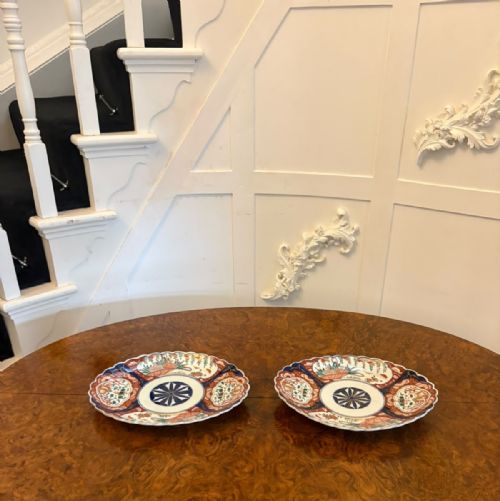
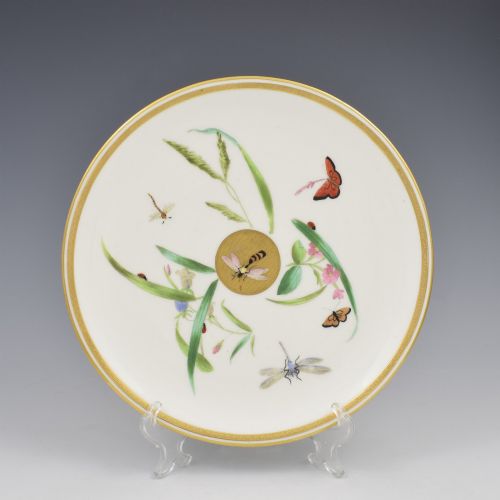
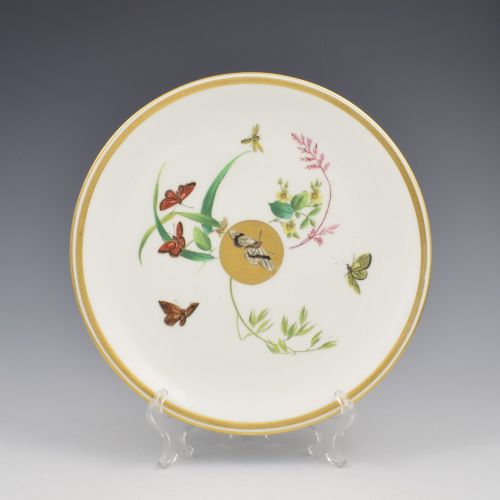
Japanese ceramic dishes encompass a wide variety of decorative plates, bowls, chargers, and cabinet pieces originating from distinct historical eras. When searching for Japanese ceramic dishes, buyers frequently encounter pieces from the Meiji period, alongside Victorian interpretations of Japanese styles.
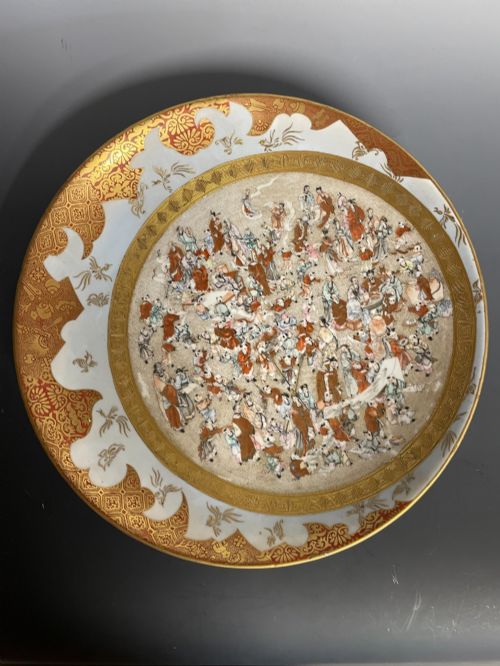
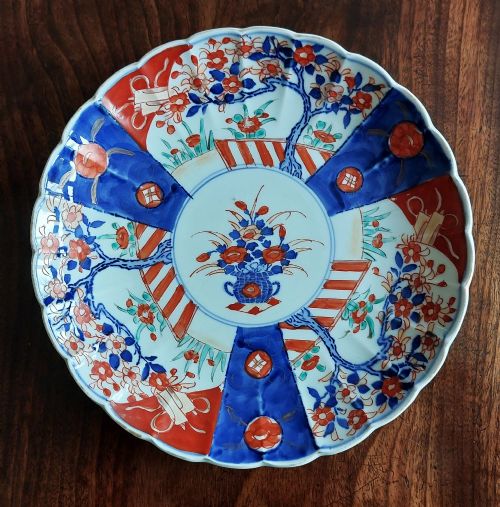
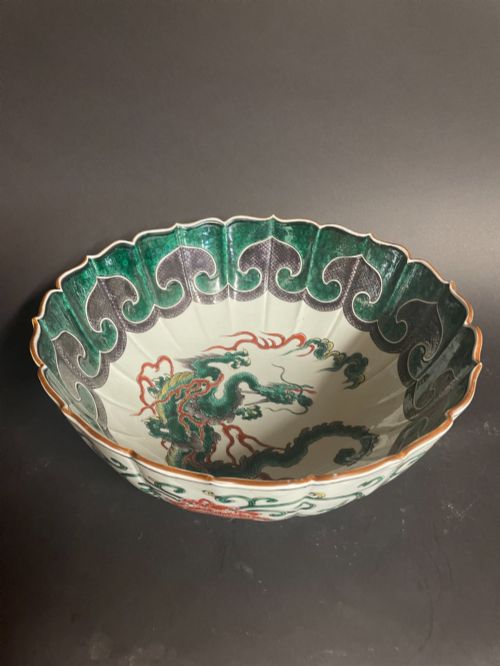
The selection includes large Imari chargers, Satsuma bowls, and Arita porcelain, reflecting traditional forms such as scallop edges, fish shapes, and square plates. These objects serve primarily as decorative display items rather than utilitarian tableware.
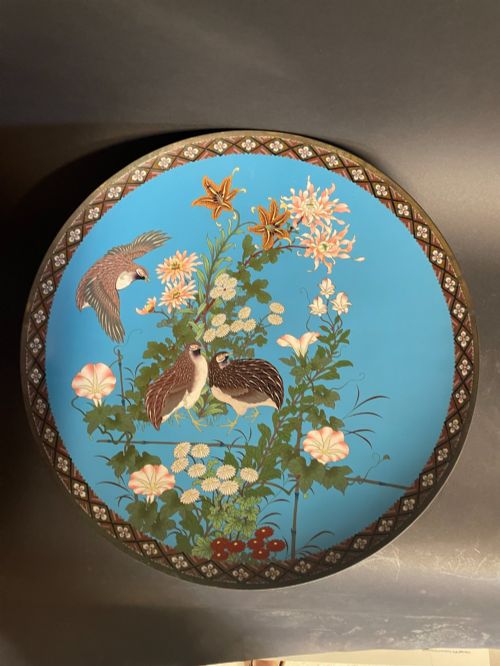
Origins stretch from the 17th century through to the early 20th century, capturing shifts in aesthetic movements and international trade. Examples range from deep saucer-dishes to expansive wall plates adorned with exotic birds, florals, and figures.
How they were made
Makers utilised porcelain and earthenware as the primary ceramic bodies, shaping them into bowls, plates, and specialised forms like shells and fish. Techniques combined precise throwing or moulding with controlled kiln firing to achieve durable ceramic bases.
Decoration relied heavily on underglaze blue and overglaze enamel colours, frequently enhanced with gold leaf, gilding, and intricate moriage relief work. Artisans applied these pigments by hand, creating complex patterns of birds, peonies, and sun motifs.
Japanese Ceramic Dishes Retail Price Guide 2026
Typical asking prices for japanese ceramic dishes among the pieces listed under this phrase on Sellingantiques today, from the lower quarter to the upper quarter. They describe what is for sale here now, not the wider market.
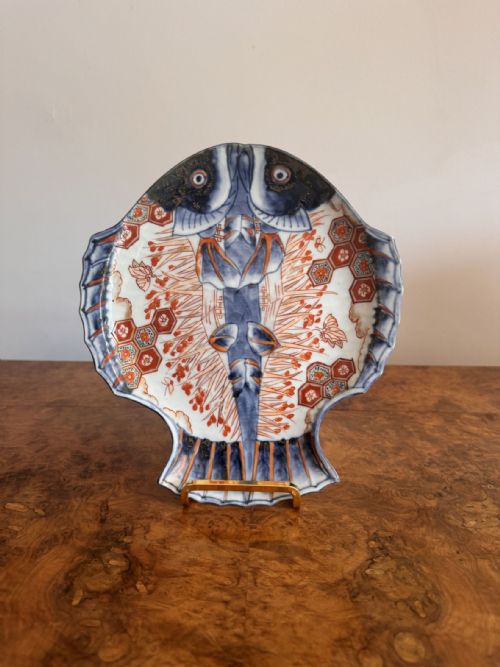
Among the plates and bowls, an unusual ceramic fish swims onto the page.
What varies in quality
The refinement of the painted detail and the precision of the glaze application distinguish superior examples from standard production. Superior pieces exhibit crisp lines, balanced compositions, and skilful integration of gold leaf or enamel work.
Form and novelty also influence distinction, with unusual shapes like fish, shell, or hexagonal profiles requiring greater technical mastery from the potter. The clarity of blue and white pigments and the richness of the palette separate fine studio output from mass decorative wares.
Koshida·Gyokkō
The Japanese Ceramic Dishes Glossary
- Imari
- A style of Japanese porcelain featuring distinctive underglaze blue, iron red, and gilt highlights. These wares were exported extensively through the port of Imari during the Edo and Meiji periods.
- Satsuma
- A type of Japanese earthenware characterised by a ivory-coloured, crackled glaze and elaborate polychrome and gilt decoration. Satsuma pieces often depict figurative scenes, flowers, and birds.
- Charger
- A large decorative plate intended for display rather than for serving food. Chargers command attention through their expansive painted surfaces and substantial scale.
- Moriage
- A decorative technique in Japanese ceramics where slip is piped onto the surface to create raised, textured patterns. This method adds tactile dimension beneath enamel and gilt highlights.
- Mukozuke
- A traditional Japanese dish used in formal dining settings such as the tea ceremony. These vessels frequently feature deep wells and distinct form.
Japanese Ceramic Dishes: Frequently Asked Questions
How do I identify Meiji period pieces?
Meiji period pieces date from 1868 to 1912, a time when Japanese ceramic production surged for international export. Look for intricate Imari palettes, Satsuma crackle glazes, and detailed motifs of birds and peonies.
Many pieces from this era exhibit high technical proficiency in enamel and gilding, reflecting the opening of trade with Western nations.
How were these dishes used historically?
Historically, many of these large plates and chargers served as decorative wall hangings or cabinet centrepieces in elite European and British homes. Smaller bowls and dishes functioned within domestic settings or formal presentation.
Specialised forms like mukozuke were tied to traditional Japanese dining and tea ceremonies, reflecting specific cultural rituals.
How do I display antique chargers safely?
Antique chargers require sturdy plate stands or secure wall-mounting hardware designed specifically for heavy porcelain and earthenware. Ensure the weight distribution is fully supported to prevent accidental slips.
Keep display areas away from direct sunlight and high-traffic zones to protect fragile enamel and gold leaf detailing from accidental damage.