






Meiji Period Imari
Meiji period imari gathers nineteenth-century porcelain wares painted in traditional palettes for display and daily use.

Forms and Origins
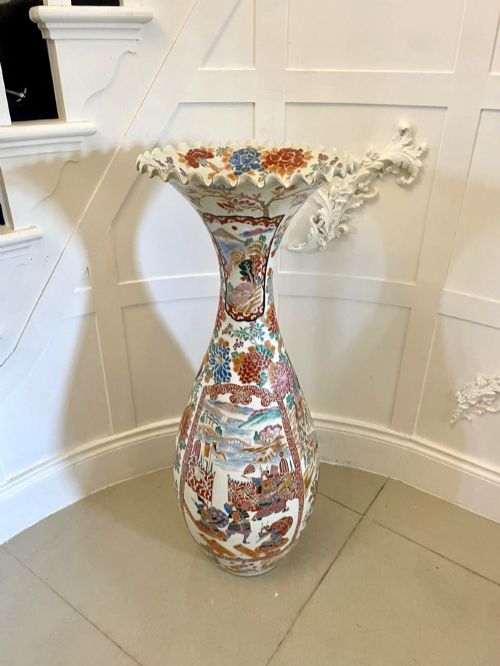
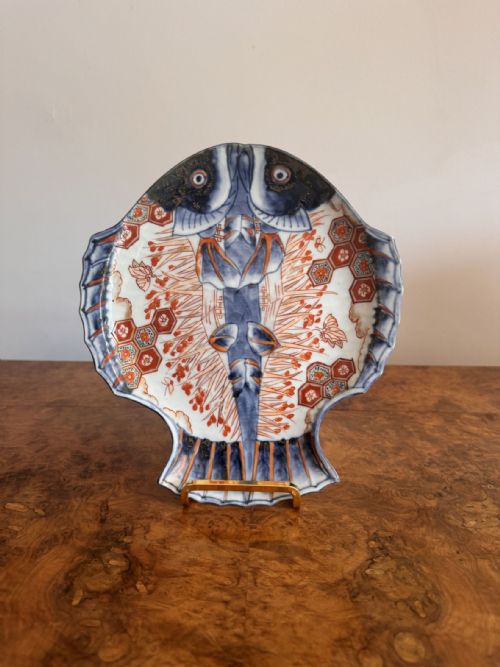
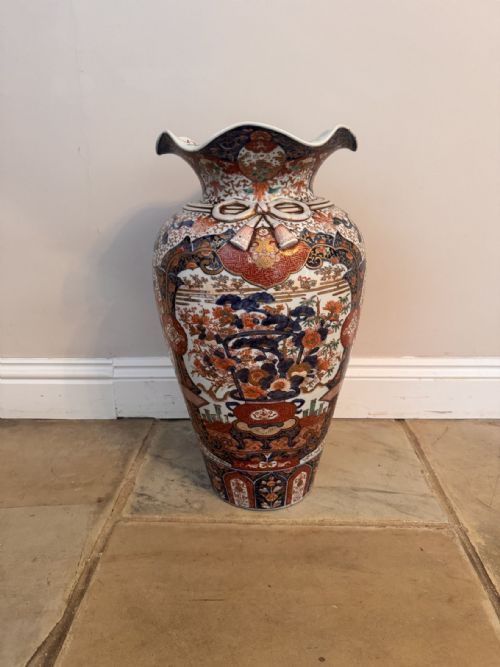
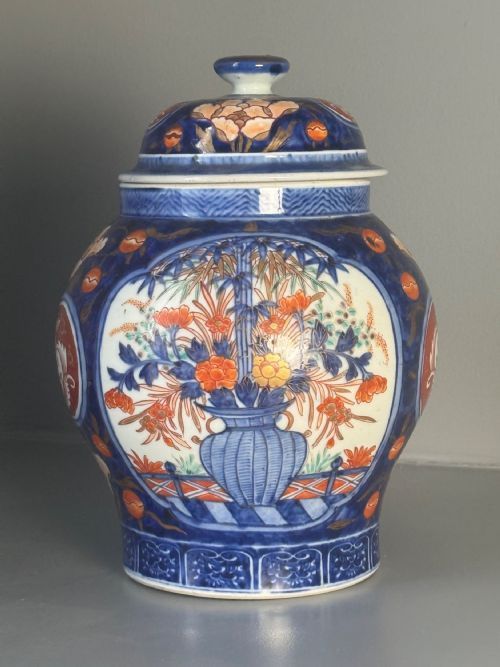
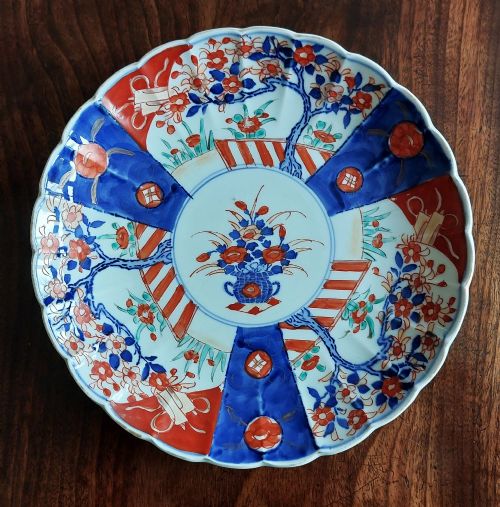
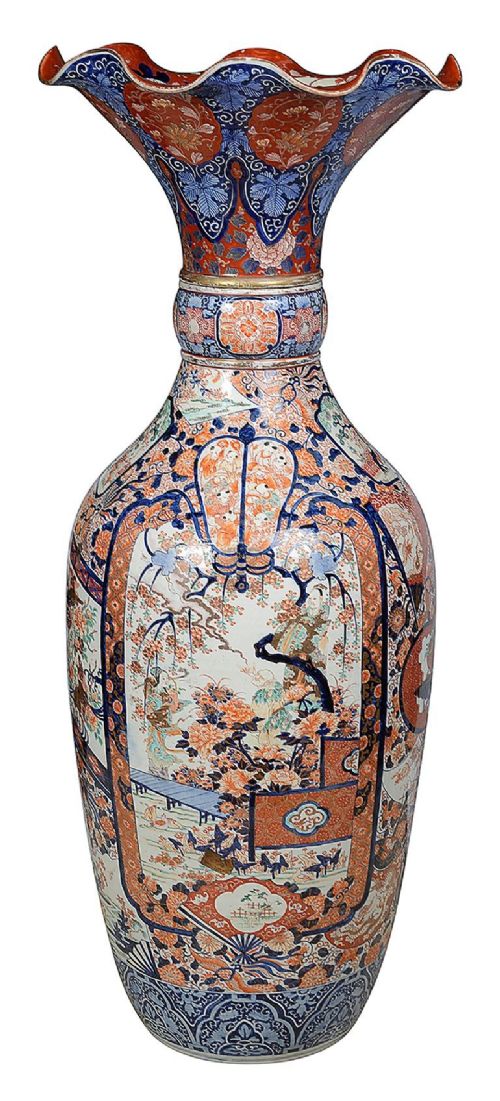
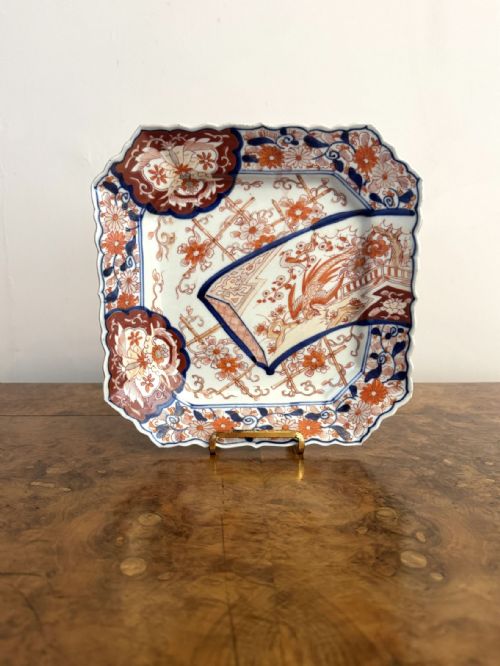
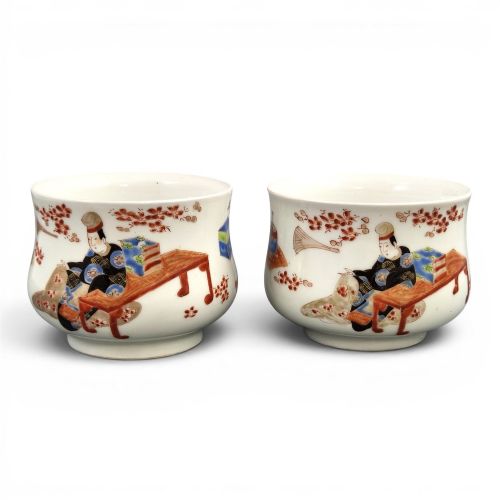
Meiji period imari comprises plates, chargers, bowls, vases, and lidded jars produced in Japan during the late nineteenth century. These objects include specialised decorative items such as biscuit barrels, incense burners, and figural models of animals like pugs and kittens.
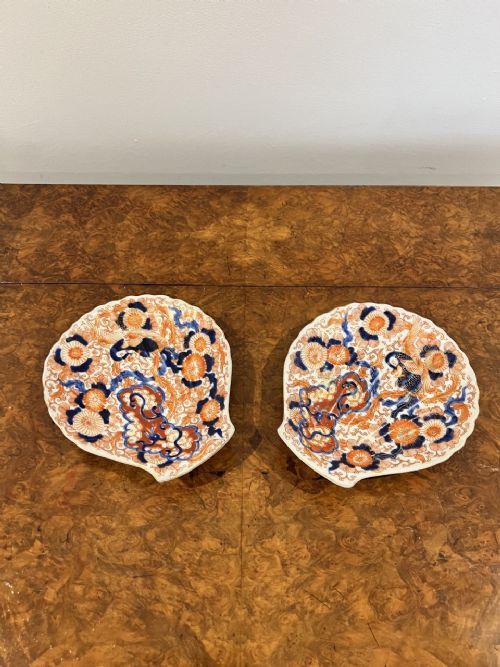
Vessels range from small shallow dishes to large scale vases standing alongside stands and garden seats. Forms follow traditional Japanese pottery shapes including gourd profiles, scalloped edges, and treasure boats alongside standard cylindrical jars.
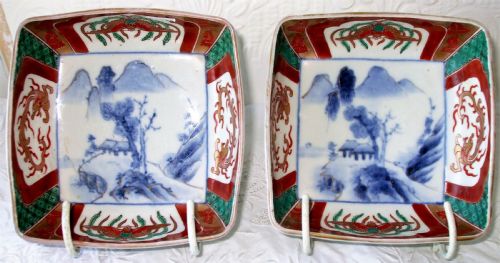
The material record shows production linked to Arita alongside pieces decorated with distinct Black Ship motifs depicting Western vessels. Objects appear as single decorative pieces or in matched pairs.

Materials and Technique
Items utilise porcelain shaped into bowls, vases, dishes, and animal figures. Surfaces combine underglaze cobalt blue with enamel painting and gilding or gold leaf.
Certain pieces incorporate metal elements such as silver plate alongside wooden components including stands. Decoration employs the Imari palette across chargers, jars, and decorative plates.
Retail Price Guide 2026
Typical UK retail prices for meiji period imari, calculated from the Sellingantiques database of over a million retail prices indexed since 2003. This retail price guide relies exclusively on Sellingantiques data; no external sources or auction records are used, so the figures do not describe the wider market.
Nineteenth-century Japanese kilns turned out ceramic pugs alongside traditional temple incense burners and fish dishes.
Gradations in Execution
Quality rests upon the precision of the enamel painting and the depth of the cobalt blue beneath the glaze. Finer examples display meticulous brushwork across complex motifs such as carp, figures, and floral arrangements.
The integration of gilding and gold leaf distinguishes standard production from more ambitious decorative output. Scale and proportion also separate smaller domestic vessels from large scale jars, chargers, and temple incense burners.
Koransha
The Meiji Period Imari Glossary
- Imari palette
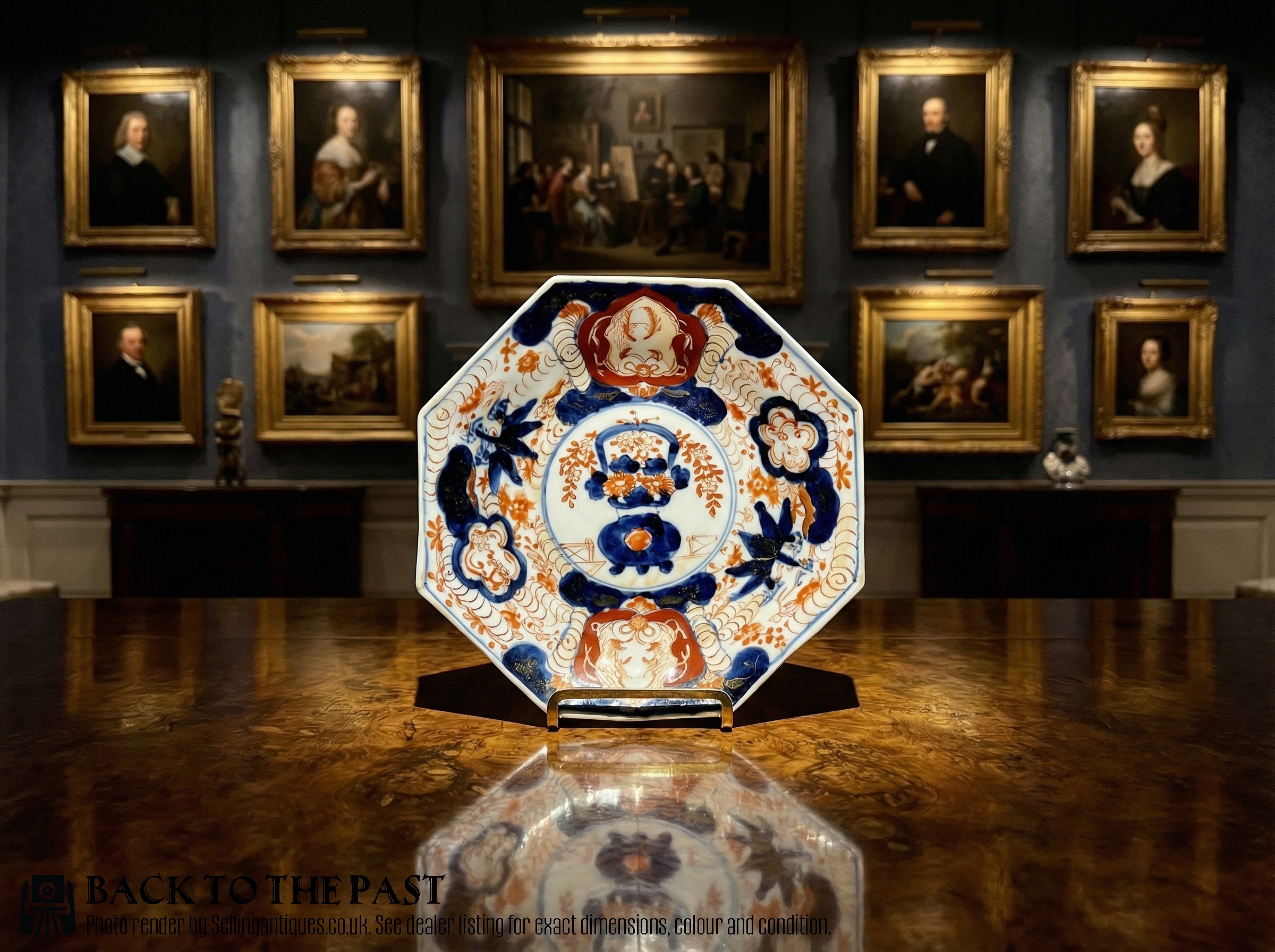
- A decorative colour scheme traditionally employing cobalt blue, iron red, and gold on a white porcelain ground. This combination defines the visual character of nineteenth century Japanese export ware.
- Meiji Period
- The era of Japanese history spanning from 1868 to 1912. Objects from this time reflect a period of intense artistic production and international trade.
- Black Ship
- A term applied to Japanese porcelain depicting Western vessels that arrived in Japan during the nineteenth century. These historical scenes appear on specialised bowls and plates.
- Charger
- A large ornamental plate intended for display rather than table service. These substantial dishes measure over twenty inches across in surviving records.
- Gourd shaped
- A bulbous double vessel profile replicated in ceramic vases and dishes. This organic contour draws from traditional East Asian vessel forms.
Frequently Asked Questions
How were imari vases used?
Meiji period imari vases served primarily as decorative ornaments within domestic interiors rather than functional containers for cut flowers. Large lidded jars and covered vessels were positioned on mantelpieces, tables, or specialised stands.
Paired arrangements frequently anchored symmetrical displays in nineteenth-century reception rooms. Their substantial size and bright palettes suited formal interior decoration.
What is a black ship design?
Black ship designs depict historical Western sailing vessels that arrived in Japanese waters during the nineteenth century. These pictorial scenes appear on specialised bowls, plates, and incense burners.
Such motifs record the maritime contact between Japan and Western nations during the Meiji era. They offer collectors a distinct narrative subject alongside traditional floral patterns.
How do you display large chargers?
Large chargers require secure support due to their substantial diameter and weight. Many historical examples were designed specifically to be shown upright on walls or displayed horizontally on large stands.
Placing them away from heavy household traffic protects the painted enamel and gilt surfaces. Proper mounting ensures the rim and scalloped edges remain entirely safe.
Are animal figures common in imari?
Figural porcelain models of animals such as pugs, kittens, and fish appear periodically within nineteenth-century production. These sculptural objects combine realistic animal forms with traditional imari enamels and gilding.
They represent a playful departure from standard vessel forms while retaining the distinctive palette. Collectors prize these figures for their uncommon sculptural presence.