




Hand Painted Imari Plates
Hand painted imari plates bring a rich palette of cobalt blue and rust red to the table, offering centuries of decorative tradition.

What hand painted imari plates are
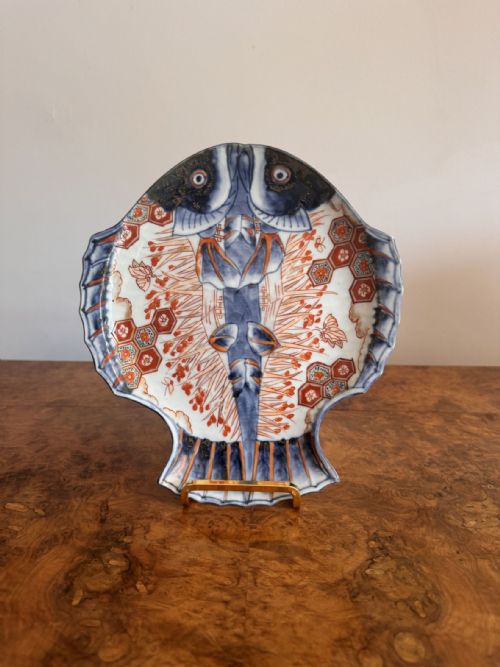
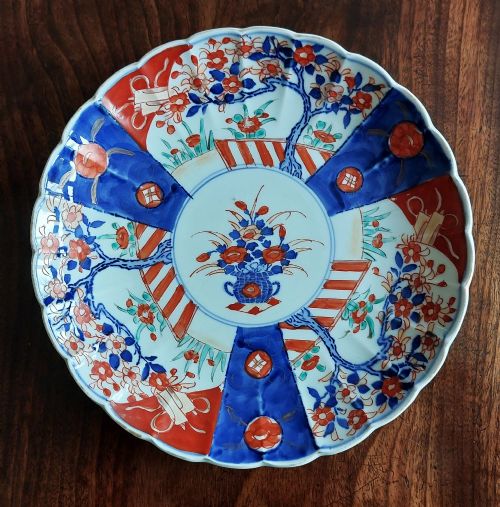
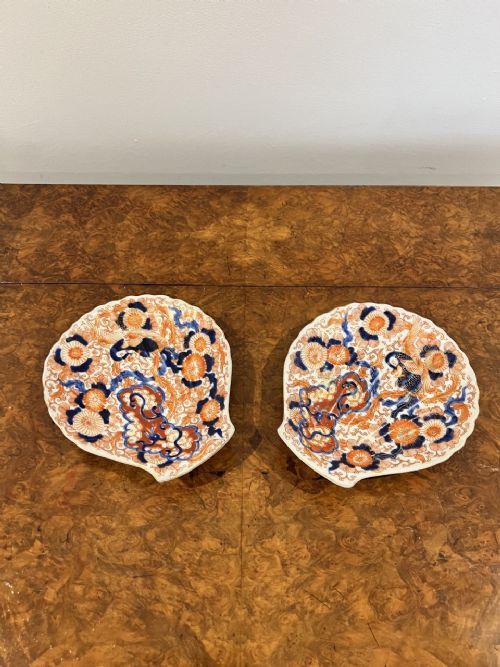
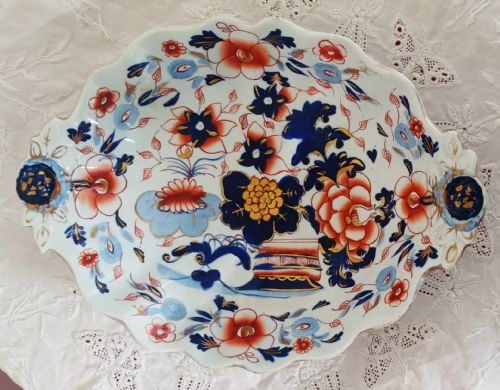
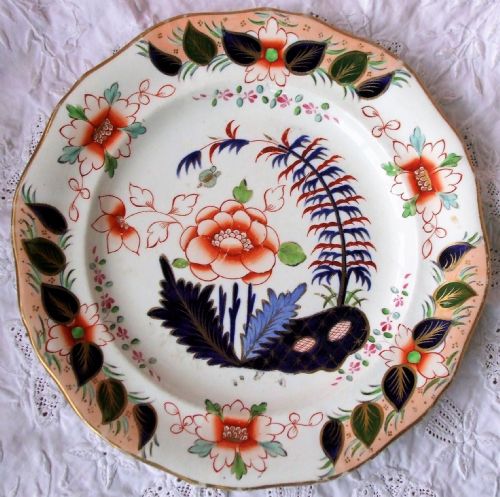
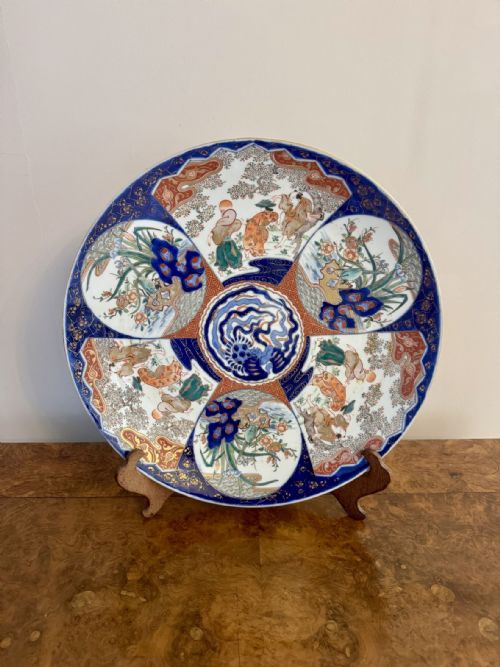
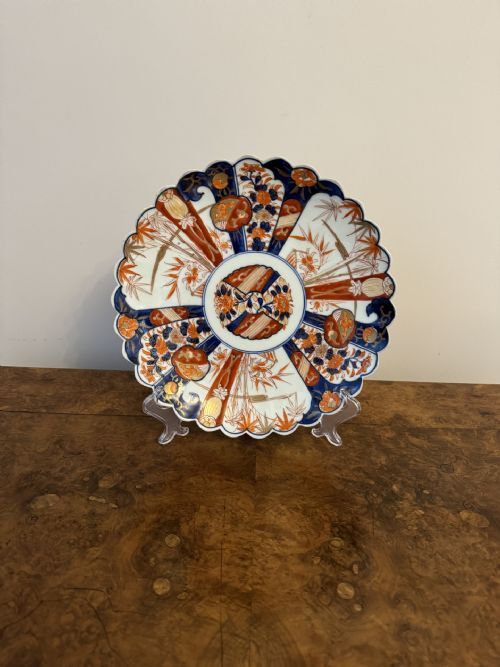
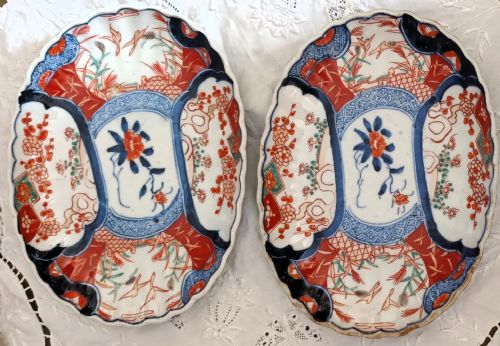
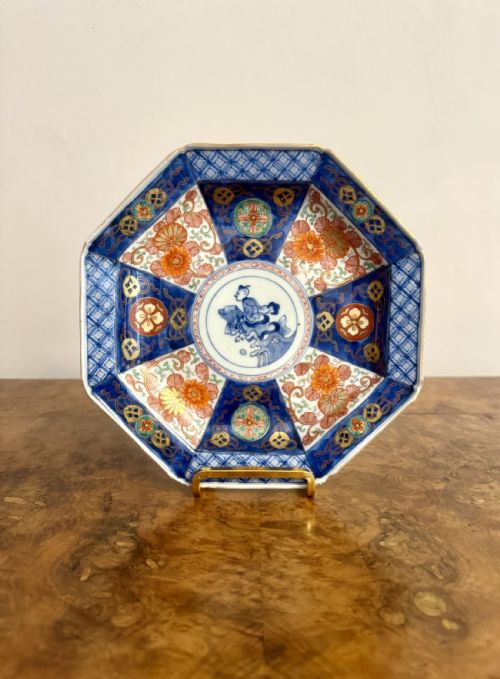
When you search for hand painted imari plates, you encounter striking ceramic wares drawing on Japanese traditions alongside English interpretations. The selection on this page centres primarily on Japanese Meiji period examples from around nineteen hundred, alongside Georgian ironstone dessert service pieces.
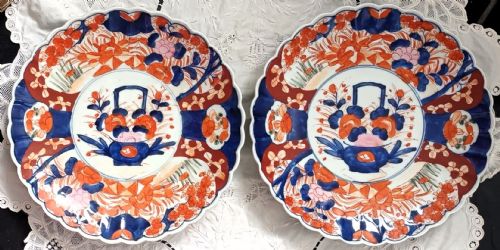
These items take various forms, including oval porcelain dishes, shell shaped plates and standard round dessert services. The Japanese pieces typically display the classic cobalt blue, iron red and gilt palette associated with Meiji production.
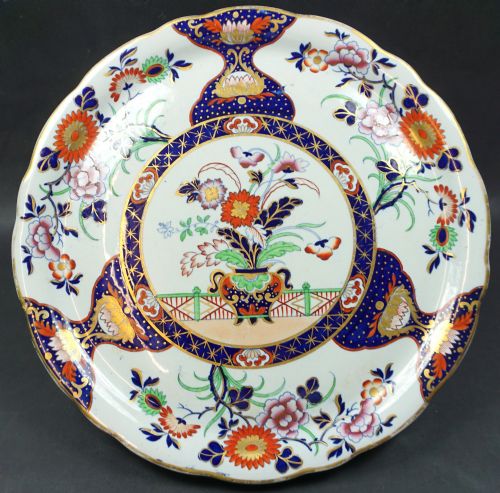
English iterations appear in the form of Mason's patent ironstone china from the Georgian era. Buyers seeking these wares will find both pairs and larger sets suitable for display or formal dining use.
How they were made
The pieces listed on this page rely on porcelain and ironstone as their primary ceramic bases. Makers applied ceramic glaze to seal the body before adding detailed hand painted enamel work.
Artisans incorporated gold leaf and gilt highlights to accentuate the intricate patterns on both the Japanese Meiji porcelain and the Georgian ironstone. This combination of underglaze blue and overglaze enamel required multiple firings in the kiln.
Retail Price Guide 2026
Typical UK retail prices for hand painted imari plates, calculated from the Sellingantiques database of over a million retail prices indexed since 2003. This retail price guide relies exclusively on Sellingantiques data; no external sources or auction records are used, so the figures do not describe the wider market.
Shell shaped plates invite guests to ponder whether nineteenth century diners actually ate seafood from them or simply admired the curves.
What varies in quality
Quality in these ceramics rests on the precision of the hand painted brushwork and the vibrancy of the enamel colours. Superior examples display crisp cobalt details and carefully applied gold leaf that remains bright and intact.
The refinement of the porcelain body and the crispness of moulded shapes, such as shell forms, separate standard items from finer works. The skill of the decorator determines whether the traditional motifs possess depth and clarity.
MASON'S PATENT IRONSTONE CHINA
The Hand Painted Imari Plates Glossary
- Imari
- A style of ceramic decoration originating in Japan, characterised by a distinct palette of cobalt blue, iron red and gold. This aesthetic heavily influenced both Japanese Meiji exports and European makers.
- Meiji
- The period in Japanese history spanning from eighteen sixty-eight to nineteen twelve, noted here for high quality porcelain production. Pieces from this era often feature intricate hand painted motifs.
- Ironstone
- A type of heavy, durable ceramic developed in nineteenth century England as a robust alternative to porcelain. Mason's patent ironstone china represents this category within Georgian dessert services.
- Gilt
- A thin layer of gold applied to the surface of ceramics to provide metallic highlights. It enhances the decorative effect when combined with enamel colours.
- Enamel
- Opaque glass used for surface decoration over the glaze on ceramics. Artisans applied these coloured paints by hand before a final low temperature firing.
Frequently Asked Questions
How do I date imari plates?
Dating relies on examining the ceramic body, the style of the hand painted motifs and any underlying marks. Japanese Meiji pieces from around nineteen hundred differ perceptibly from earlier Georgian ironstone examples.
Analysing the specific tones of the cobalt blue and the application of gold leaf provides further clues to the period of manufacture.
Can I use these plates for dining?
While these antique plates were originally created for functional use or dessert services, many modern buyers prefer to display them carefully. Hand painted enamels and gilt highlights can wear with frequent modern cutlery use.
Gentle hand washing helps preserve the delicate enamel work and the integrity of the porcelain or ironstone glaze.
What is Japanese imari?
Japanese imari refers to ceramics decorated in the traditional export style featuring rich cobalt blue underglaze and iron red overglaze. Artisans frequently added gilt details to complete the signature look.
This distinct aesthetic proved immensely popular in the West during the nineteenth and early twentieth centuries.
Are these plates sold in sets?
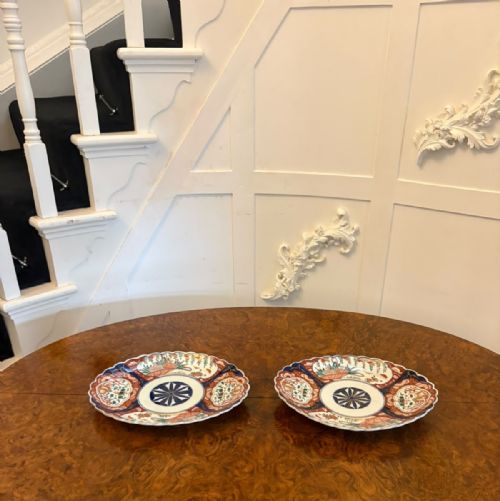
The inventory includes both individual pairs, such as oval dishes and shell shaped plates, and larger groupings like sets of six. Dessert services from the Georgian era also appear in the listings.
Buyers can select configurations ranging from small decorative pairs to more comprehensive collections.