



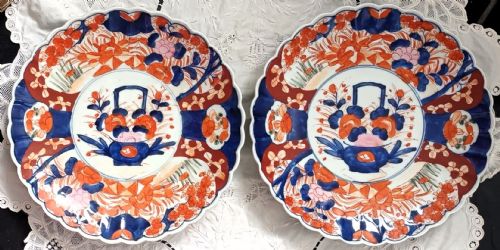
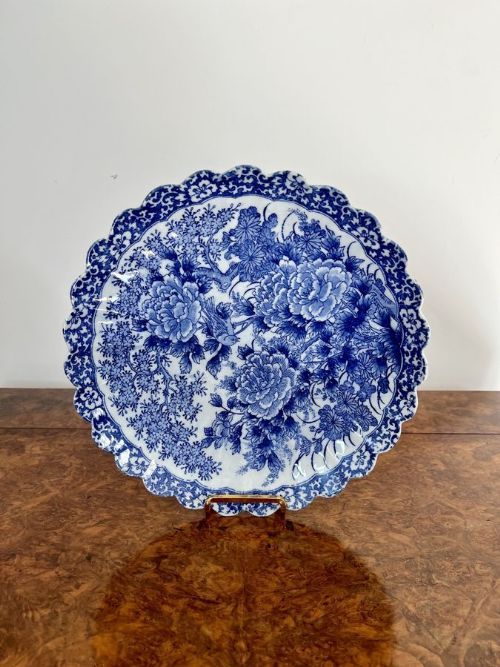


Scalloped Edge Imari Plates
These scalloped edge imari plates bring bold cobalt underglaze and rich enamel colour to a table, offering the traditional palette collectors value.
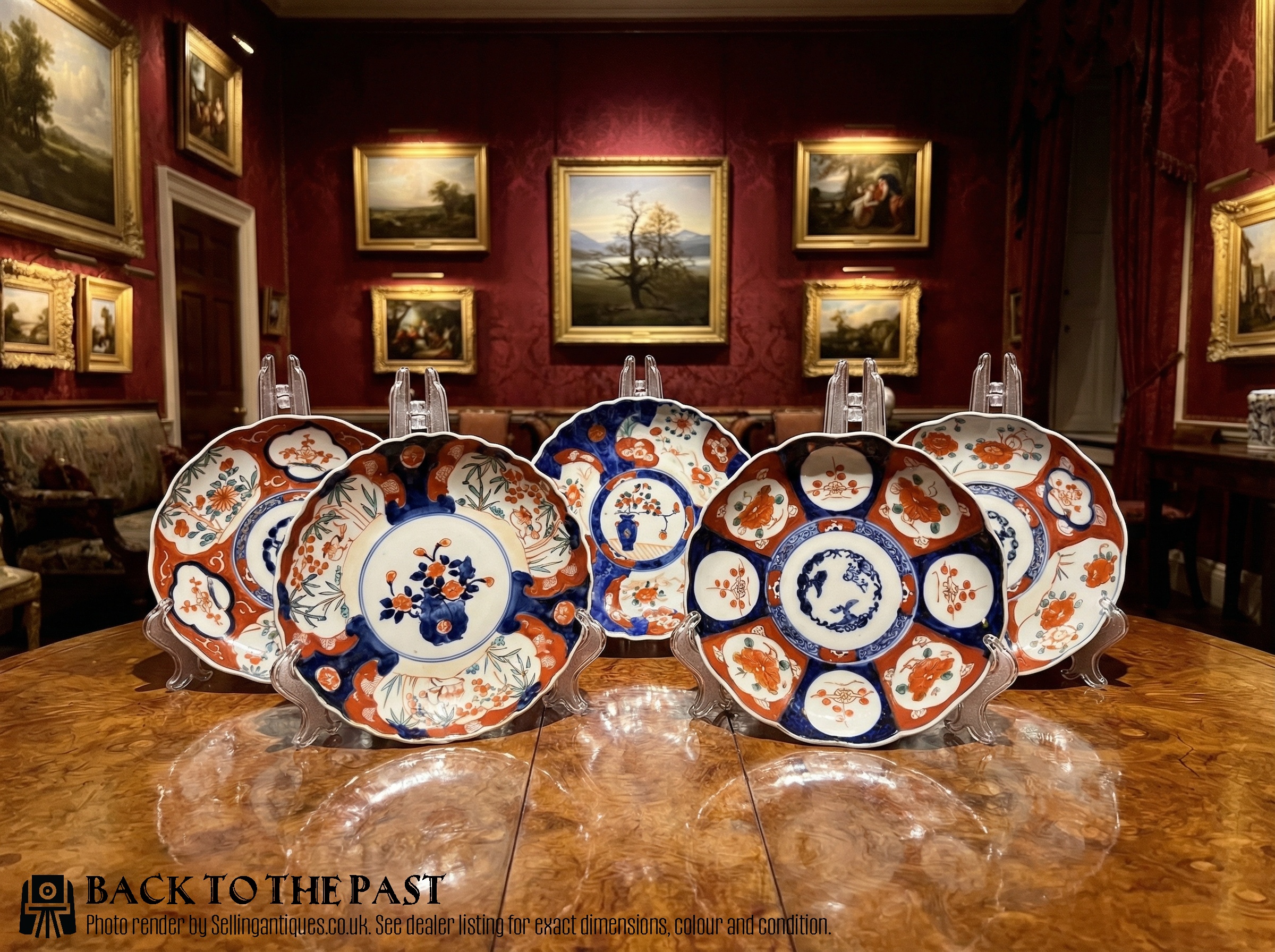
What scalloped edge imari plates are
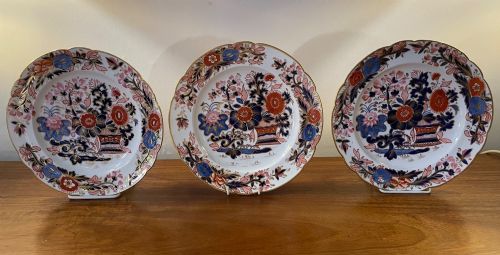
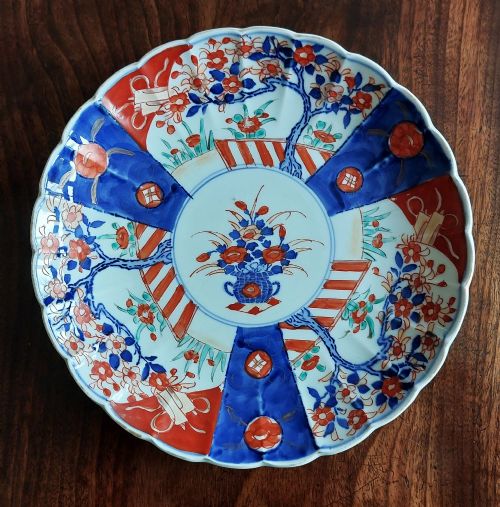
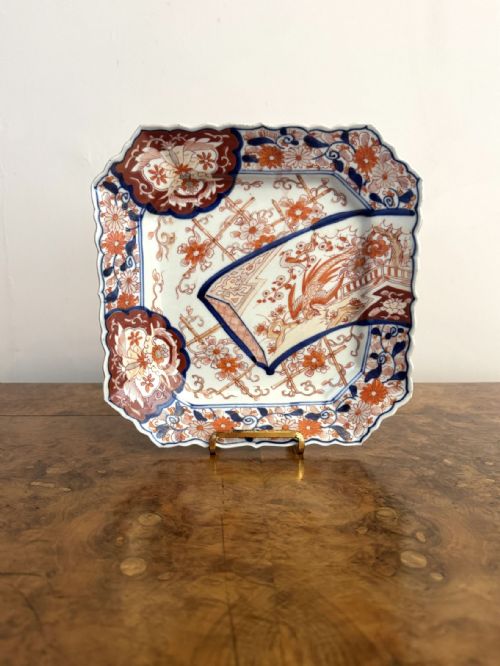
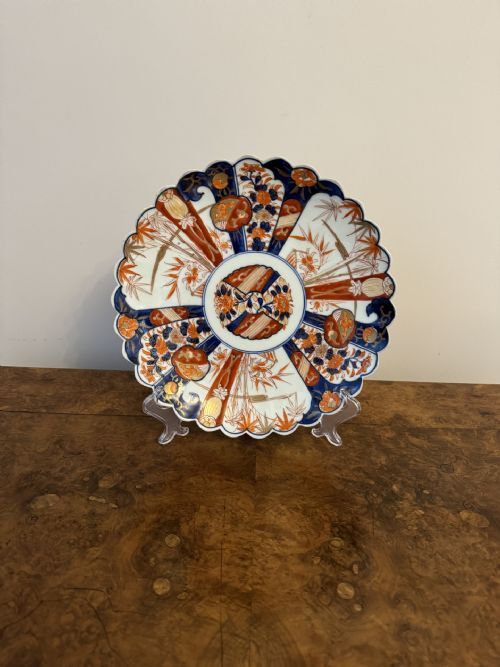
Scalloped edge imari plates span centuries of output from Japanese Meiji and Edo periods, alongside early nineteenth century Staffordshire interpretations using the distinctive imari palette. Buyers searching for scalloped edge imari plates encounter Japanese porcelain pieces decorated with exotic birds and floral motifs alongside British earthenware variants.
These decorative plates serve both as display items and tableware, with forms ranging from individual dishes to matched pairs and larger collections. The defining characteristic across these examples is the shaped, undulating rim paired with traditional cobalt and iron red decoration.
How they were made
Makers formed these pieces in porcelain and earthenware before applying cobalt underglaze details and hand painted enamel colours. Gold leaf and gilding provide the metallic highlights characteristic of the style.
The glaze seals the pigments, creating a durable surface that preserves the contrasting blue and red tones through decades of handling.
Retail Price Guide 2026
Typical UK retail prices for scalloped edge imari plates, calculated from the Sellingantiques database of over a million retail prices indexed since 2003. This retail price guide relies exclusively on Sellingantiques data; no external sources or auction records are used, so the figures do not describe the wider market.
Listings feature porcelain, earthenware, enamel, and gold leaf across pieces dated from the eighteenth to the early twentieth century.
What varies in quality
Execution of the hand painted motifs and precision of the gold leaf application separate standard production from finer output. The crispness of the cobalt underglaze lines and the richness of the enamel define the visual weight of each piece.
Consistency across a set or pair indicates careful workshop selection, while variation in the scalloped shaping shows the degree of artisan control during forming.
The Scalloped Edge Imari Plates Glossary
- Imari palette
- A traditional colour scheme combining cobalt blue underglaze, iron red, and gold leaf on a ceramic base. This combination originated in Japan and was later copied by European potteries.
- Cobalt underglaze
- A blue pigment applied to the clay body before glazing and firing, ensuring the colour remains permanent under the glass surface.
- Enamel
- Opaque glass paints applied over the glaze and fired at a lower temperature to add vibrant reds, greens, and other colours to the design.
- Gilding
- The application of gold leaf or gilt paint to accent rims and decorative details on the plate surface.
Frequently Asked Questions
How do I care for antique imari plates?
Wash these pieces by hand using mild soap and warm water to protect the delicate enamel and gold leaf details.
Avoid soaking them or placing them in a dishwasher, as harsh detergents and sustained moisture will damage the overglaze decoration over time.
Are these plates meant for daily dining?
Most collectors treat antique imari plates as decorative objects rather than everyday tableware due to their age and painted surfaces.
Using them for special occasions is acceptable, provided you avoid abrasive cutlery and manual stress that might scratch the glaze.
How do I distinguish Japanese imari from Staffordshire imari?
Japanese examples use a fine porcelain body with characteristic cobalt underglaze and iron red enamel, often featuring Meiji or Edo period motifs.
Staffordshire pieces typically utilise an earthenware body, interpreting the imari palette within early nineteenth century British ceramic traditions.
What periods do these plates come from?
The available selection spans the eighteenth century through the late Meiji period, encompassing both Japanese production and nineteenth century British output.
Dates generally centre around the eighteen hundreds and nineteen hundreds, reflecting established periods of manufacture.