
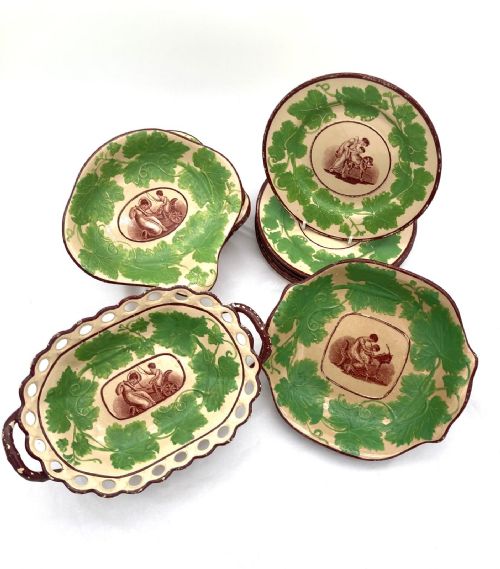
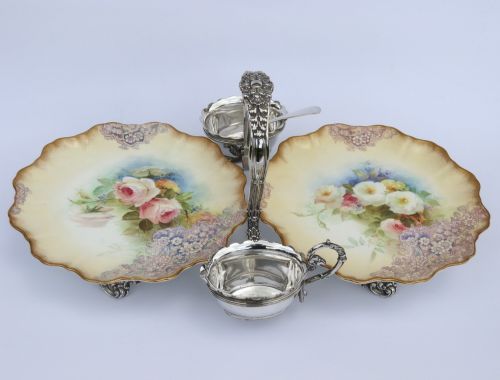


Antique Ceramic Dessert Set
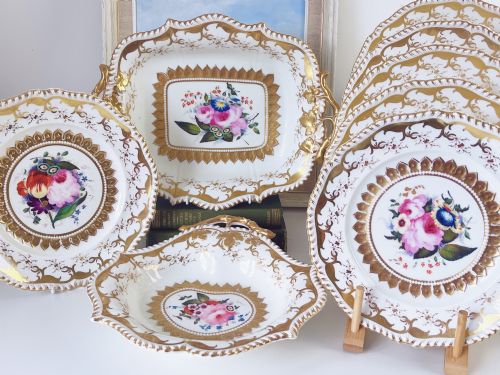
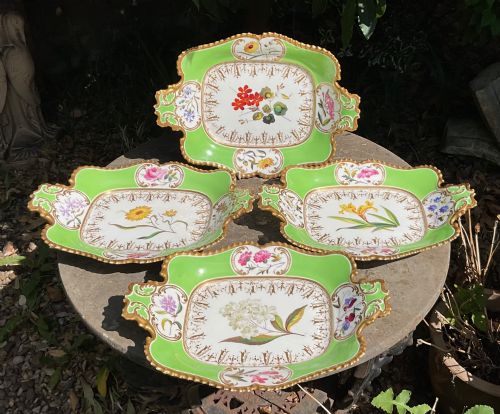
An antique ceramic dessert set brings period elegance to the table with matching plates, comports, and serving dishes.
Antique Ceramic Dessert Set
An antique ceramic dessert set comprises matched plates, comports, and serving dishes intended for the final course of a formal meal. These collections originate across the eighteenth, nineteenth, and early twentieth centuries, spanning Georgian, Regency, and Victorian periods.
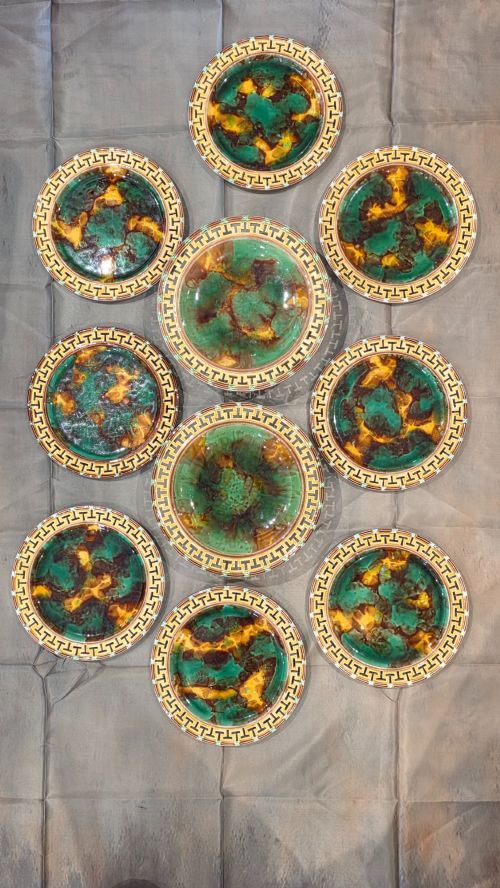
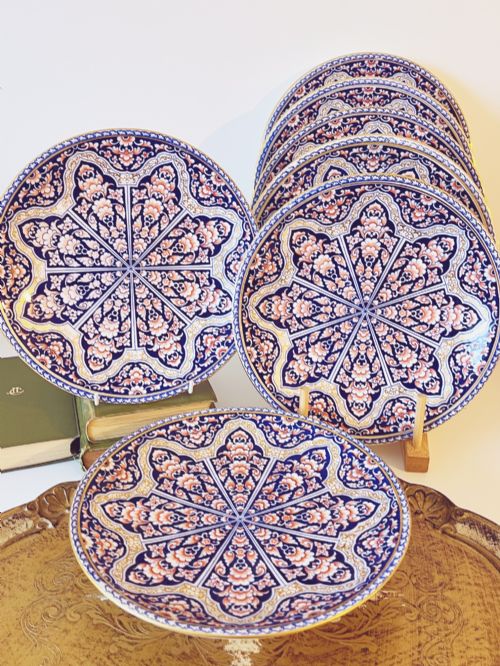
Most examples found here combine porcelain, bone china, or ironstone formed into dessert services, custard sets, and specialised plates. Makers utilised soft paste porcelain, earthenware, and stone china decorated with hand-painted floral motifs and transfer printing.
Buyers frequently encounter English and French services featuring raised borders, gilt edges, and distinctive regional potting styles. These assemblies range from intimate sets for two up to comprehensive services for large dining tables.
How They Were Made
Potters shaped these services using porcelain, bone china, and ironstone, often fired at high temperatures to ensure durability. Glazes provided a smooth protective coating over body pastes such as soft paste porcelain and earthenware.
Decoration relied on hand-painted floral details, enamel pigments, and gold leaf gilding applied by skilled artisans. Transfer printing techniques also appeared on wares from the nineteenth century onward, creating crisp surface patterns.
Moulds shaped specialised dessert shapes, comports, and cream pots with rococo revival curves or ozier moulded borders. Firing stability determined whether intricate forms survived the kiln without warping or surface crazing.
Antique Ceramic Dessert Set Retail Price Guide 2026
Typical asking prices for ceramic dessert set among the pieces listed under this phrase on Sellingantiques today, from the lower quarter to the upper quarter. They describe what is for sale here now, not the wider market.
Listings feature 19th Century, Regency, Georgian, and Victorian periods alongside materials like enamel, porcelain, and ironstone.
What Varies in Quality
The standard of painting on floral and pictorial panels distinguishes superior services from standard production pieces. Hand-painted brushwork executed with precision commands greater attention than repetitive transfer-printed designs.
Completeness and preservation of the original service greatly influence overall merit, particularly when comports and plates survive together. Preservation of gilt accents and enamel vibrancy without rubbing indicates careful past handling.
Body refinement also dictates quality, with fine translucent porcelain and delicate bone china representing higher manufacturing tiers than heavier ironstone or earthenware.
Grainger Lee And Co·Wedgwood·Royal Crown Derby·Chamberlains Worcester·Walker And Hall·Doulton Burslem·John Ridgway·Spode·Mason S·Davenport
The Antique Ceramic Dessert Set Glossary
- Comport
- A raised dish or pedestal stand used for serving fruit and sweetmeats as the centrepiece of a dessert service. These elevated vessels added vertical display to formal dining tables.
- Ironstone
- A dense, durable type of earthenware patented in the early nineteenth century to imitate Chinese porcelain. It resisted chipping better than soft paste bodies.
- Soft Paste Porcelain
- An artificial porcelain composition fired at lower temperatures than hard paste, popular in eighteenth-century European factories. It displays a warm, creamy glaze.
- Ozier Border
- A moulded basketweave pattern applied to the rims of plates and serving dishes. This decorative relief derived from wicker basket forms.
- Drabware
- A stoneware body possessing a dull greyish-brown or olive colour, favoured during the Georgian and Victorian eras. It provided a neutral background for applied ornaments.
Antique Ceramic Dessert Set: Frequently Asked Questions
What is an antique ceramic dessert set?
An antique ceramic dessert set is a coordinated collection of tableware designed specifically for serving fruit, sweets, and dessert courses following a main meal. These groupings typically include matching plates, serving dishes, and pedestal comports.
Produced across the Georgian, Regency, and Victorian eras, these services were manufactured from porcelain, bone china, and ironstone. They served both a functional role in upper-class dining and a decorative purpose on the sideboard.
How were dessert sets used?
Dessert courses were cleared from the main dining table or served in a separate drawing room after dinner. The service held fruits, nuts, sweetmeats, and custards.
Hostesses displayed their wealth and taste through the artistry of the ceramics and the symmetry of the arrangement. Comports sat centrally while individual plates were distributed to guests.
How do I care for antique ceramic dessert sets?
Wash these pieces strictly by hand using warm water and mild soap, avoiding modern dishwashers entirely. Sudden temperature changes can crack historic glazes.
Store plates with felt dividers between them to protect hand-painted surfaces and gilt edges from abrasion. Display them securely on stable surfaces away from direct sunlight.
How do I identify the period of a dessert service?
Examine the base for factory marks, pattern numbers, and registration dates that pinpoint the manufacturing decade. Georgian and Regency pieces often feature unmarked or hand-written factory titles.
Style indicators such as rococo revival moulded borders, colour palettes, and body materials like ironstone or bone china also help date the service. Comparing handle shapes and floral painting styles against known factory outputs confirms the era.