


Antique Floral Dessert Plates
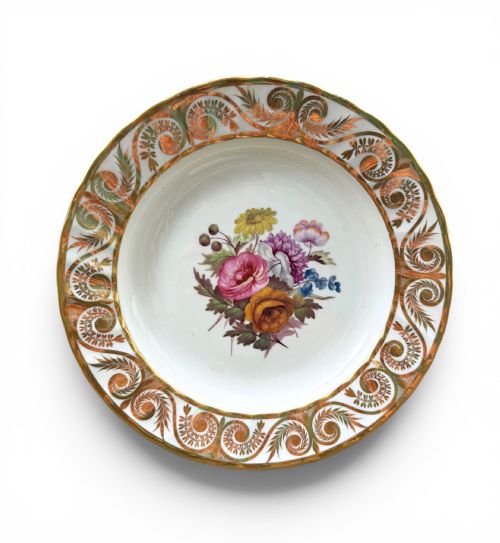
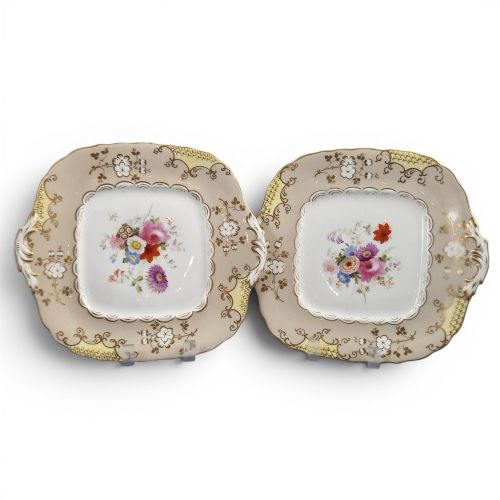
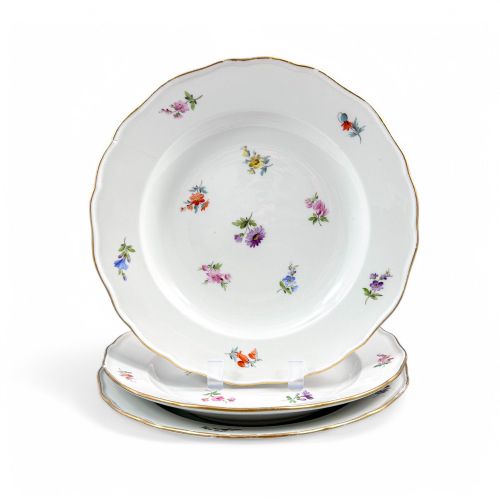
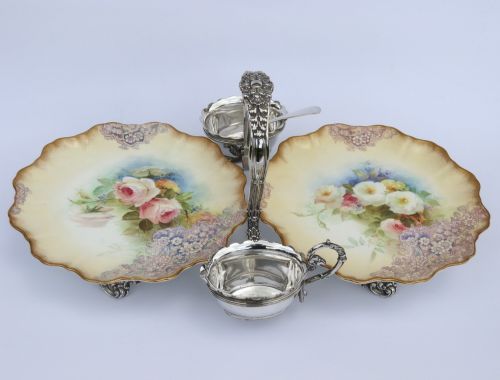
Antique floral dessert plates are fine porcelain and ceramic tablewares painted with botanical studies, offering a vibrant table setting from past centuries.
Antique Floral Dessert Plates
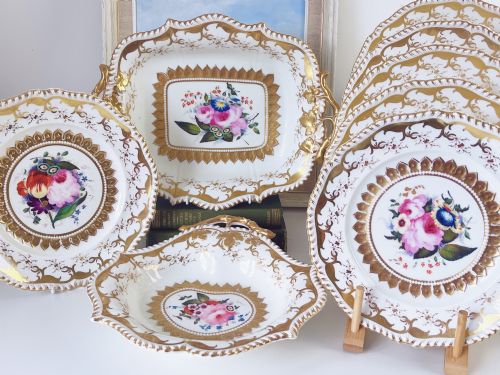
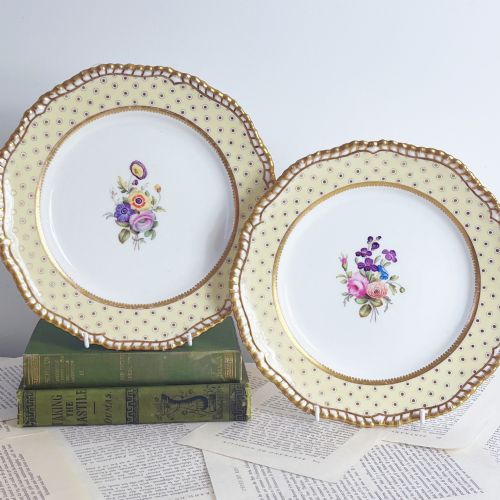
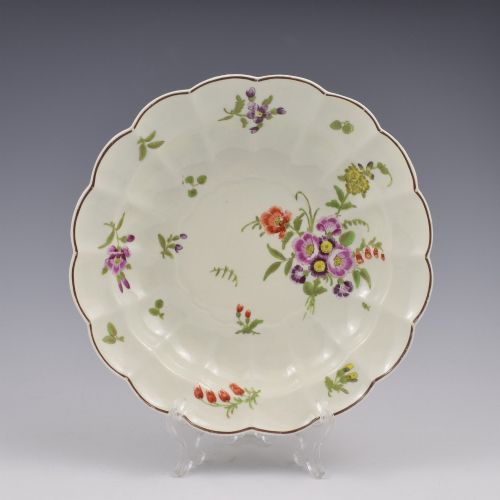
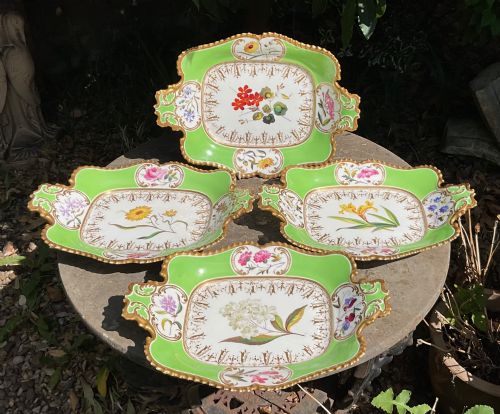
Antique floral dessert plates encompass porcelain and ceramic dishes created for the final course of a formal meal, spanning the eighteenth, nineteenth, and early twentieth centuries. These pieces appear as individual cabinet plates, pairs, or surviving fragments of larger dessert services intended for fruit and sweet dishes.
The selection on this page ranges from eighteenth-century soft paste porcelain by factories like Worcester and Chantilly to nineteenth-century bone china and ironstone services by makers such as Spode, Minton, and Coalport. Regency and Victorian examples demonstrate a strong preference for botanical painting framed by ornate borders and gilding.
Buyers will encounter lobed, shaped, and basketweave plate forms alongside matching serving dishes and compotes. Styles stretch from Rococo Revival curves to classical Regency patterns, reflecting the changing tastes of dining rooms across the Georgian and Victorian eras.
Materials and technique
Potters built these plates using ceramic bodies including bone china, soft paste porcelain, and ironstone, shaped manually or pressed into moulds to achieve lobed and basketweave profiles. Glaze was applied to seal the surface before secondary firing.
Decoration relied on handpainted enamel colours combined with gold leaf and rich gilding to highlight floral motifs and botanical studies. Kiln firing fixed the pigments and metals to the glazed ceramic substrate.
Collector Aston left his personal attribution notes directly on the back of early Coalport dishes.
Judging quality
Quality rests upon the execution of the handpainted floral decoration and the crispness of the porcelain moulding. Master painters achieved botanical accuracy and fine brushwork that elevated utilitarian tableware into high art.
The integration of gilding and enamel work defines the upper tiers of production. Heavier, more secure application of gold leaf and vibrant, stable enamel palettes indicate superior factory output from established makers.
Grainger Lee And Co·Spode·Chamberlains Worcester·Coalport·Meissen·Doulton Burslem·John Ridgway·Rockingham Pottery·Minton·Kerr And Binns·Wedgwood·Royal Crown Derby·Mason·Bloor Derby·Davenport
The Antique Floral Dessert Plates Glossary
- Bone china
- A type of porcelain incorporating bone ash for strength and translucency. It became a standard body for British dessert plates in the nineteenth century.
- Soft paste porcelain
- An early ceramic composition fired at lower temperatures than hard paste, prized by collectors for its warm glaze texture and historical depth.
- Gilding
- The application of gold leaf or gold paint to ceramic borders and handles. It provides a luxurious contrast to handpainted floral enamels.
- Ironstone
- A heavy, durable ceramic patented in the nineteenth century to rival porcelain. It offered strong utility for large dessert services.
- Ozier border
- A moulded wicker-pattern border design popular on eighteenth-century European porcelain plates. It frames the central floral painting with textured relief.
Antique Floral Dessert Plates: Frequently Asked Questions
What were antique floral dessert plates used for?
These plates served the final course of formal dinners, specifically holding fruit, nuts, cheeses, and sweetmeats. They formed part of larger dessert services displayed on the table or sideboard.
Because dessert was a social ritual involving the upper classes, these services were designed to impress guests with botanical artistry and fine porcelain bodies.
How do I date antique dessert plates?
Dating relies on factory marks stamped or painted on the reverse, stylistic clues such as Regency shapes or Victorian borders, and the type of ceramic body used. Soft paste porcelain points to the eighteenth century, while ironstone and bone china suggest the nineteenth.
Comparing pattern numbers and stylistic motifs with known factory production records helps narrow the decade of manufacture.
How should I display antique plates?
Antique plates can be displayed using wall hangers designed for ceramics or mounted securely in plate stands within cabinets. Direct sunlight should be avoided to protect handpainted enamel colours from fading.
Proper support prevents warping or strain on historical ceramic bodies during exhibition.
Can I use antique plates for dining?
Using these plates for modern dining is generally discouraged due to the fragility of nineteenth-century glazes, handpainted enamels, and delicate gold leaf. Acidic foods and modern dishwashers can cause permanent damage to the historic surfaces.
Gentle hand washing is required if the pieces are ever used for light serving purposes.