
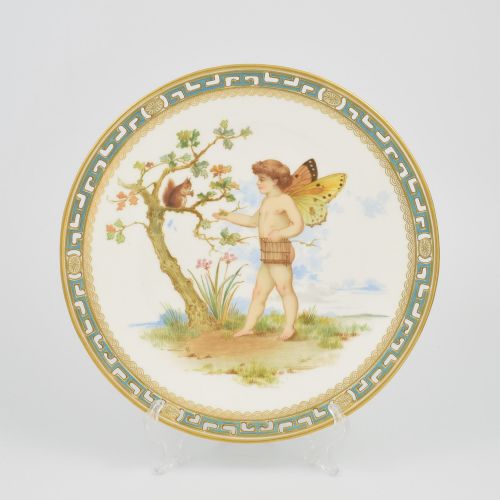


Pierced Rim Porcelain
Pierced rim porcelain pieces combine delicate openwork borders with finely painted central scenes, bringing height and texture to a cabinet display.
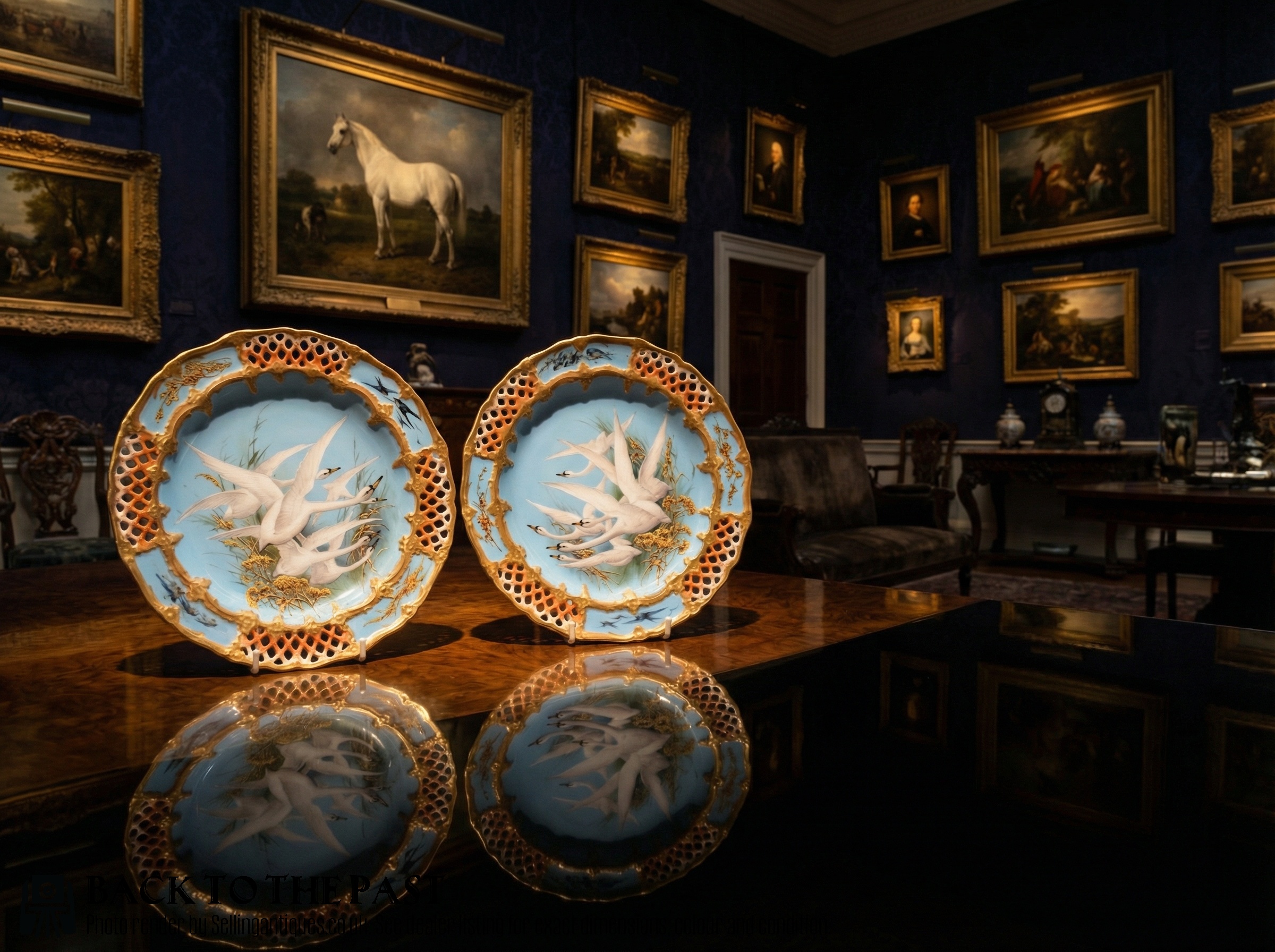
Pierced Rim Porcelain
When you search for pierced rim porcelain, you are looking at ceramic plates, chargers, bowls, and vases shaped with openwork borders, reticulation, or galleries. These items range from eighteenth-century continental wares to Victorian cabinet pieces and later exhibition items.
The most common forms you will meet on this page are decorative cabinet plates and chargers featuring pierced or basketweave rims, alongside larger punch bowls and spill vases. Makers across various periods used this openwork technique to frame hand-painted or gilt central subjects.
Pieces span several historical eras, including eighteenth-century continental production, Victorian revivals, Aesthetic Movement designs, and twentieth-century exhibition work. Each period brings distinct stylistic choices, from Rococo curves to Japanese Imari motifs and classical mythological scenes.
How they were made
Potters shaped these objects using high-fired porcelain, often forming intricate borders by cutting or piercing the clay while it was leather-hard. Manufacturers then applied white or coloured glaze before firing the body in a kiln.
Decoration relied on hand-painted enamels and gold leaf or gilding, highlighting central subjects such as birds, figures, and cattle. Factories like Minton, Meissen, and Royal Worcester employed specialist artists to execute these detailed enamel paintings.
Materials recorded across these items include enamel, gold leaf, gilt, glaze, gilding, and hand-painted enamels on a porcelain body.
What varies in quality
Quality rests upon the precision of the piercing and the artistic execution of the painted scene. Crisp, clean openwork requires considerable skill from the potter to prevent distortion during firing.
The sophistication of the hand-painted enamels and the application of gold leaf or gilding distinguish finer cabinet pieces from simpler wares. Signed work by known ceramic artists commands attention for its detailed brushwork.
Minton·Meissen·Furstenberg·Vienna·Royal Worcester·Coalport
The Pierced Rim Porcelain Glossary
- Pierced rim
- A ceramic border cut with decorative openings or holes during manufacture. This technique creates a lighter, more ornamental edge on plates and bowls.
- Cabinet plate
- A decorative ceramic dish intended for display in a cabinet rather than for dining. These items usually feature elaborate hand-painted scenes and gilt borders.
- Reticulated
- Describes ceramic work featuring an open network pattern resembling a net or lattice. Makers used this method to decorate the borders of plates and bowls.
- Gilding
- The application of gold leaf or gold powder to the surface of porcelain. It highlights rims, handles, and painted details.
- Enamel
- A glassy substance fused to porcelain through firing to provide colour and decoration. Hand-painted enamels allow for detailed pictorial scenes.
Pierced Rim Porcelain: Frequently Asked Questions
What is pierced rim porcelain?
Pierced rim porcelain refers to ceramic plates, bowls, and vases featuring openwork borders or galleries cut into the clay. These decorative openings create a lighter, more ornamental edge that frames the central painted decoration.
Items of this type range from eighteenth-century continental punch bowls to Victorian and twentieth-century cabinet plates. The openwork technique required skilled potters to cut the clay precisely before firing.
How were cabinet plates used?
Cabinet plates were created specifically for display in glass-fronted furniture rather than for practical table use. Their delicate pierced borders and fine hand-painted scenes made them ornamental centerpieces for collectors.
Owners typically exhibited these pieces to showcase wealth, taste, and an appreciation for fine ceramic artistry. The inclusion of intricate gilding and detailed paintings meant they were preserved away from everyday dining.
How do I identify Victorian pieces?
Victorian examples often reflect historicist revivals such as Rococo curves, Aesthetic Movement compositions, or classical motifs. Makers during this period frequently combined pierced borders with elaborate hand-painted subjects.
Examining the style of painting and the specific shape of the ceramic body helps distinguish nineteenth-century production. Many pieces from this era also bear factory marks associated with major English potteries.
What does reticulated mean on porcelain?
Reticulated describes ceramic work featuring an open, net-like pattern across the surface or border. Potters cut these intricate lattice designs into the damp clay before the initial firing.
This technique adds a fragile, lace-like quality to plates and bowls. Executing reticulation successfully required high technical skill to avoid warping the porcelain in the kiln.