

Royal Worcester Plates
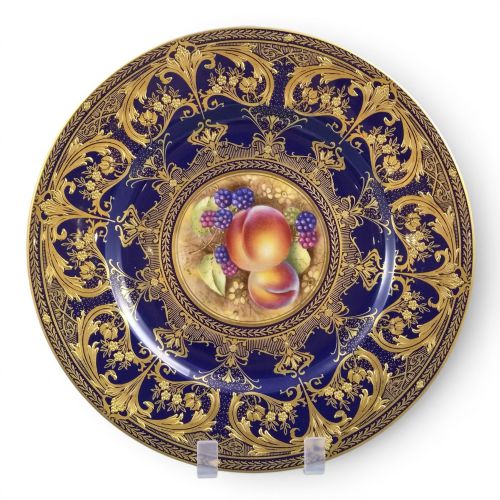
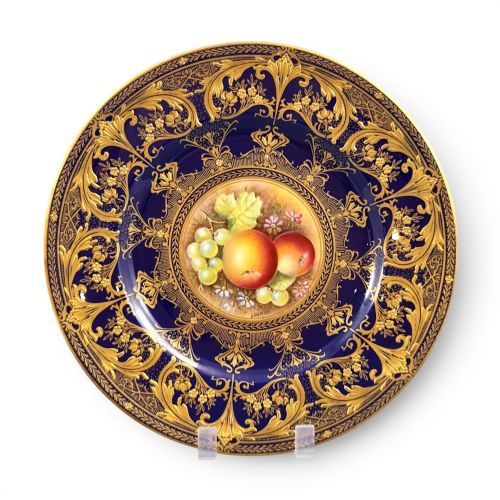
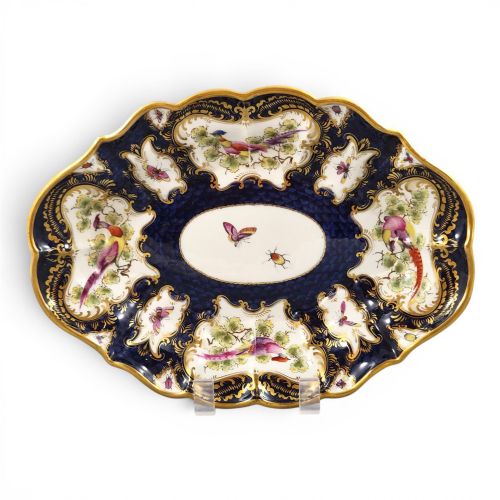
Royal Worcester plates carry hand-painted fruit, birds and floral scenes executed by notable studio artists across the Victorian, Edwardian and later periods.
Royal Worcester Plates
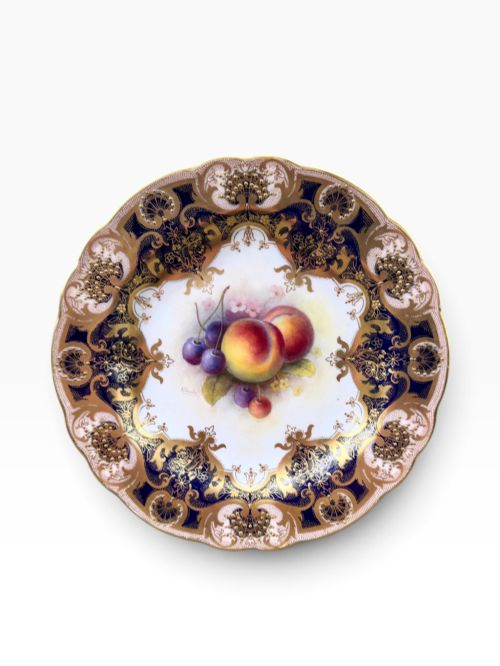
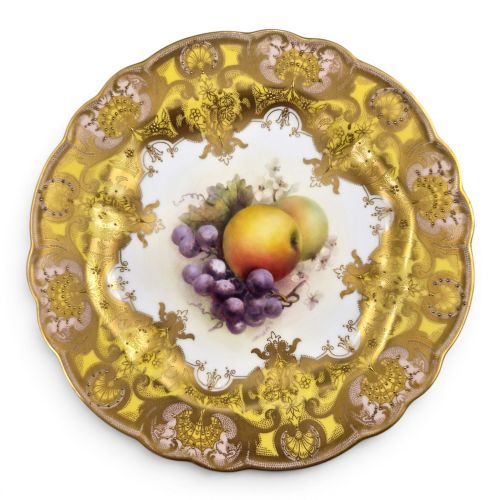
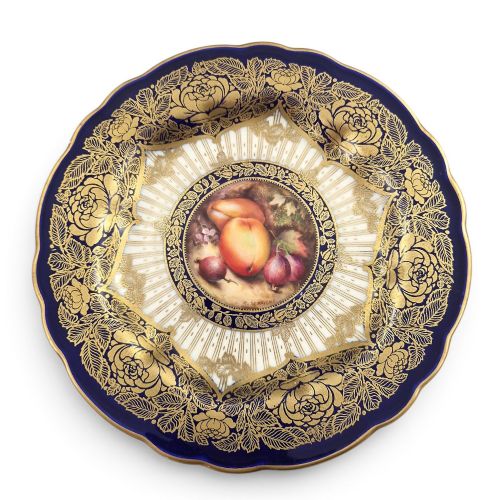
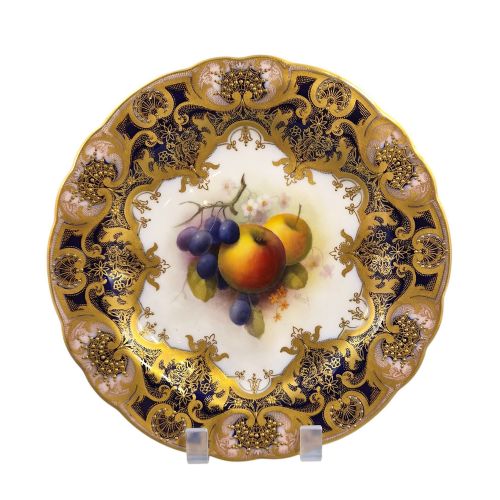
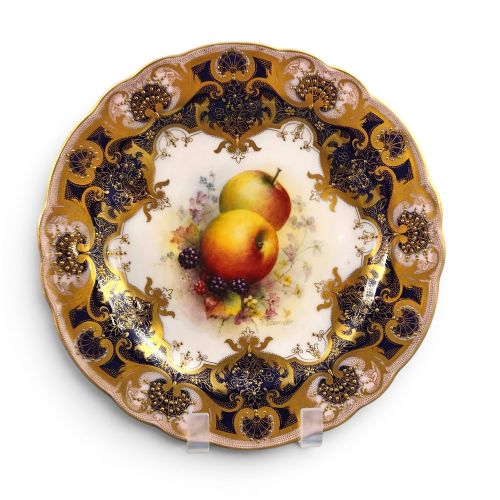
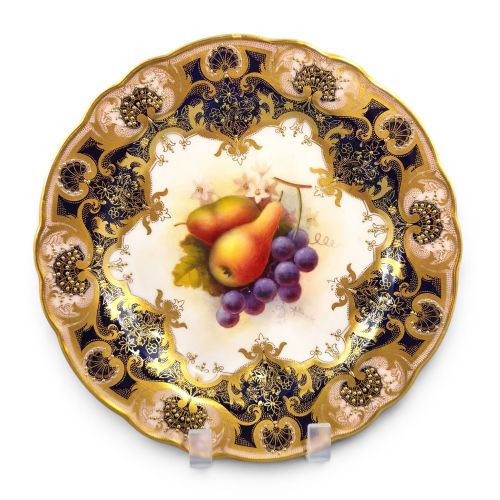
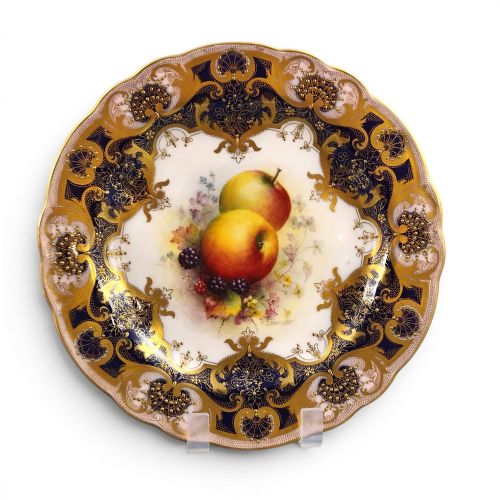
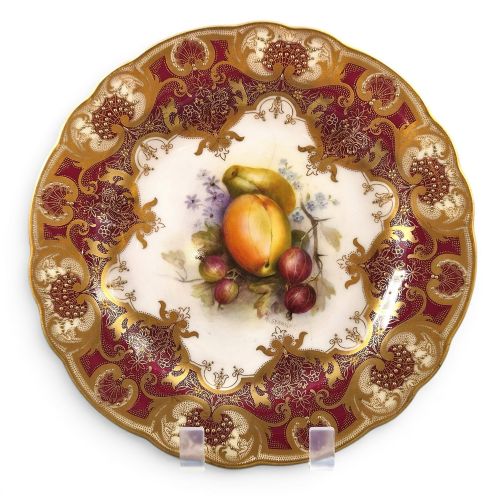
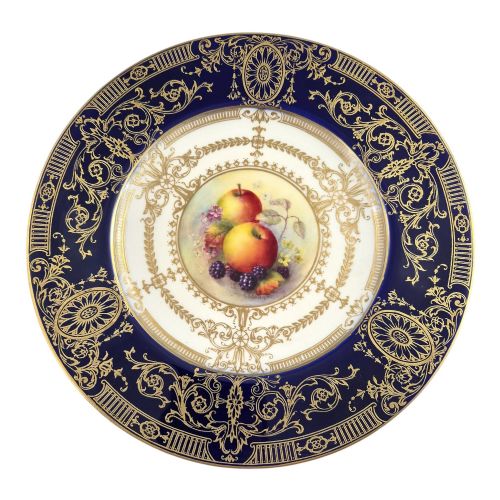
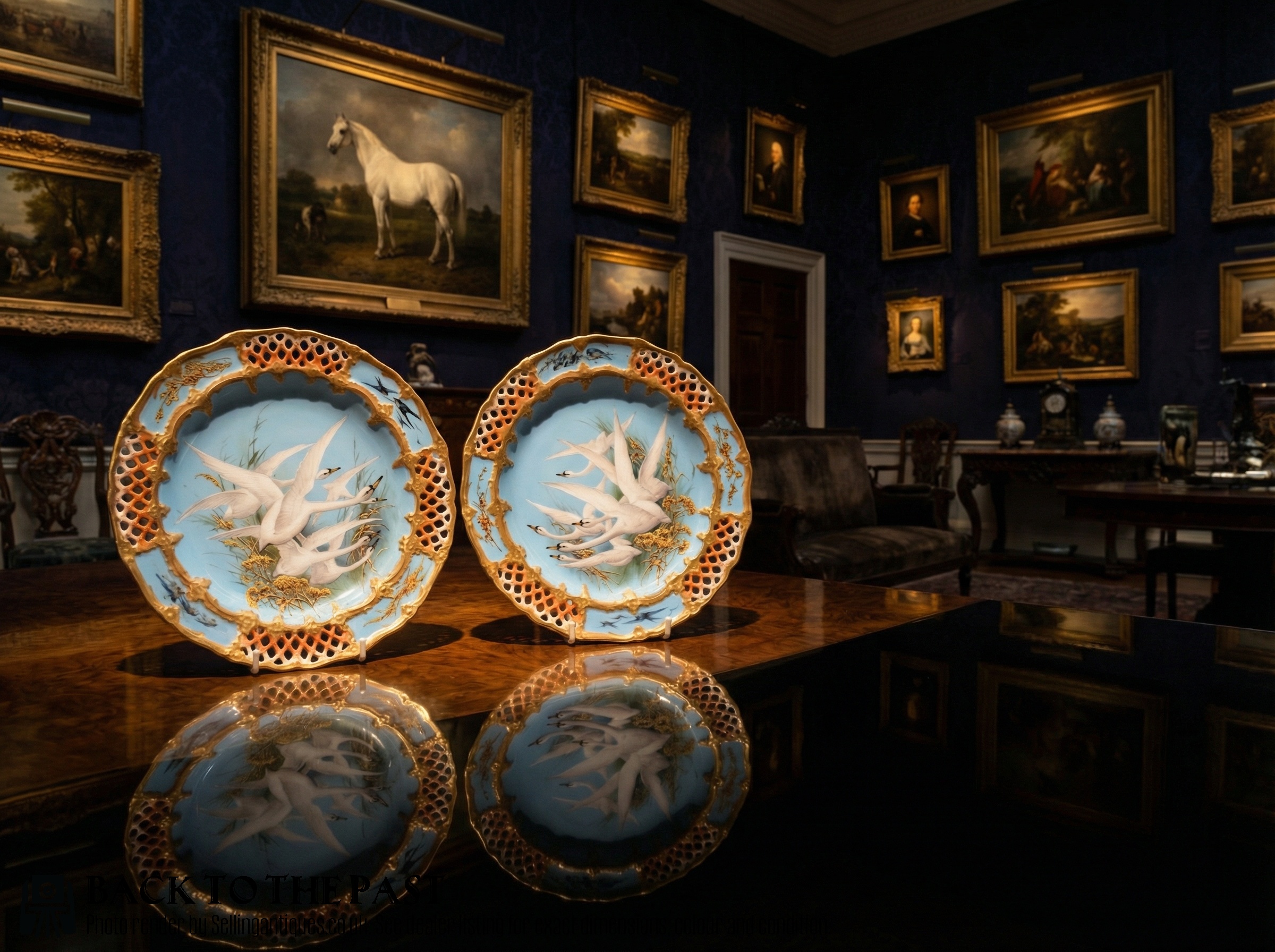
Royal Worcester plates comprise cabinet plates, dessert dishes, soup dishes and tea plates originating from the late nineteenth century through to the mid-twentieth century. The selection leans heavily towards finely decorated cabinet plates and dessert wares rather than utilitarian table service.
Makers and decorators documented in the titles range from Grainger & Co to prominent individual hands such as Richard Sebright, Albert Shuck and Charles Baldwyn. Pieces span Victorian, Edwardian, Art Deco and later traditional English periods.
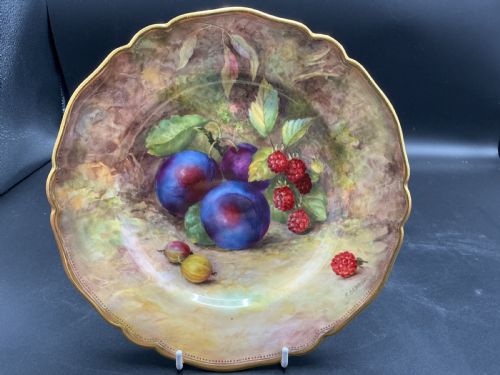
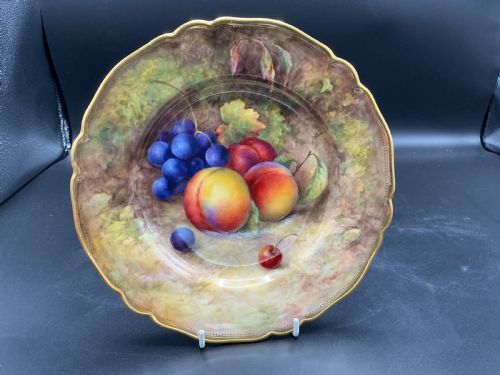
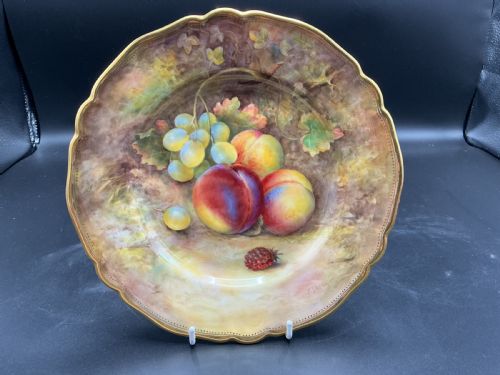
The dominant form met on this page is the painted fruit cabinet plate, alongside rope-edge plates and floral or bird decorations executed in porcelain and bone china.
How they were made
The body material utilises standard porcelain and bone china, providing a smooth white ground suited to detailed miniature painting. Gilding, gold leaf and enamel applications frame the central motifs.
Decoration relies on hand-painted enamel and paint, often combined with heavy tooling and acid-etched gilt borders. Many plates feature signed artwork depicting natural history subjects, fruit and landscapes.
Listings feature porcelain and bone china bodies combined with gold leaf, enamel and paint.
What varies in quality
Quality rests principally upon the identity of the artist and the complexity of the painted subject. Signed works by established painters command greater attention than unsigned or standard floral patterns.
The intricacy of the surrounding porcelain work, such as rope edges, pierced borders and extensive tooled gilding, separates standard production items from elite cabinet pieces.
Grainger & Co·Kerr & Binns
The Royal Worcester Plates Glossary
- Cabinet plate
- A decorative plate intended for display in a cabinet rather than for dining use. These often feature elaborate painted scenes and gilt borders.
- Bone china
- A type of porcelain incorporating bone ash, producing a strong, milky-white ceramic body. It forms the foundation for many finely painted late-Victorian and Edwardian pieces.
- Gilding
- The application of gold leaf or gold paint to ceramic surfaces. It is frequently tooled or acid-etched to create textured patterns around the rim.
- Blush ivory
- A soft, creamy matte ceramic finish developed by the factory. It provides a muted background for floral and gilt ornamentation.
Royal Worcester Plates: Frequently Asked Questions
How do I identify a painted fruit plate?
Painted fruit plates display detailed depictions of apples, grapes, peaches and berries, frequently signed by artists such as Richard Sebright or Albert Shuck.
They commonly appear as cabinet plates with gilt or rope-edge borders produced during the early twentieth century.
Are these plates meant for daily dining?
These items serve primarily as cabinet plates and decorative dessert dishes intended for display rather than everyday use.
The delicate hand-painted enamels and gold leaf detailing require careful handling to preserve the surface.
What periods do these pieces cover?
The selection spans from the Victorian era through the Edwardian period and into the mid-twentieth century.
Date marks and artist signatures often help narrow down the specific decade of manufacture.