


Stinton Highland Cattle
These stinton highland cattle pieces capture the pastoral mood of early twentieth century British ceramics through painted Highland scenes.
Stinton Highland Cattle
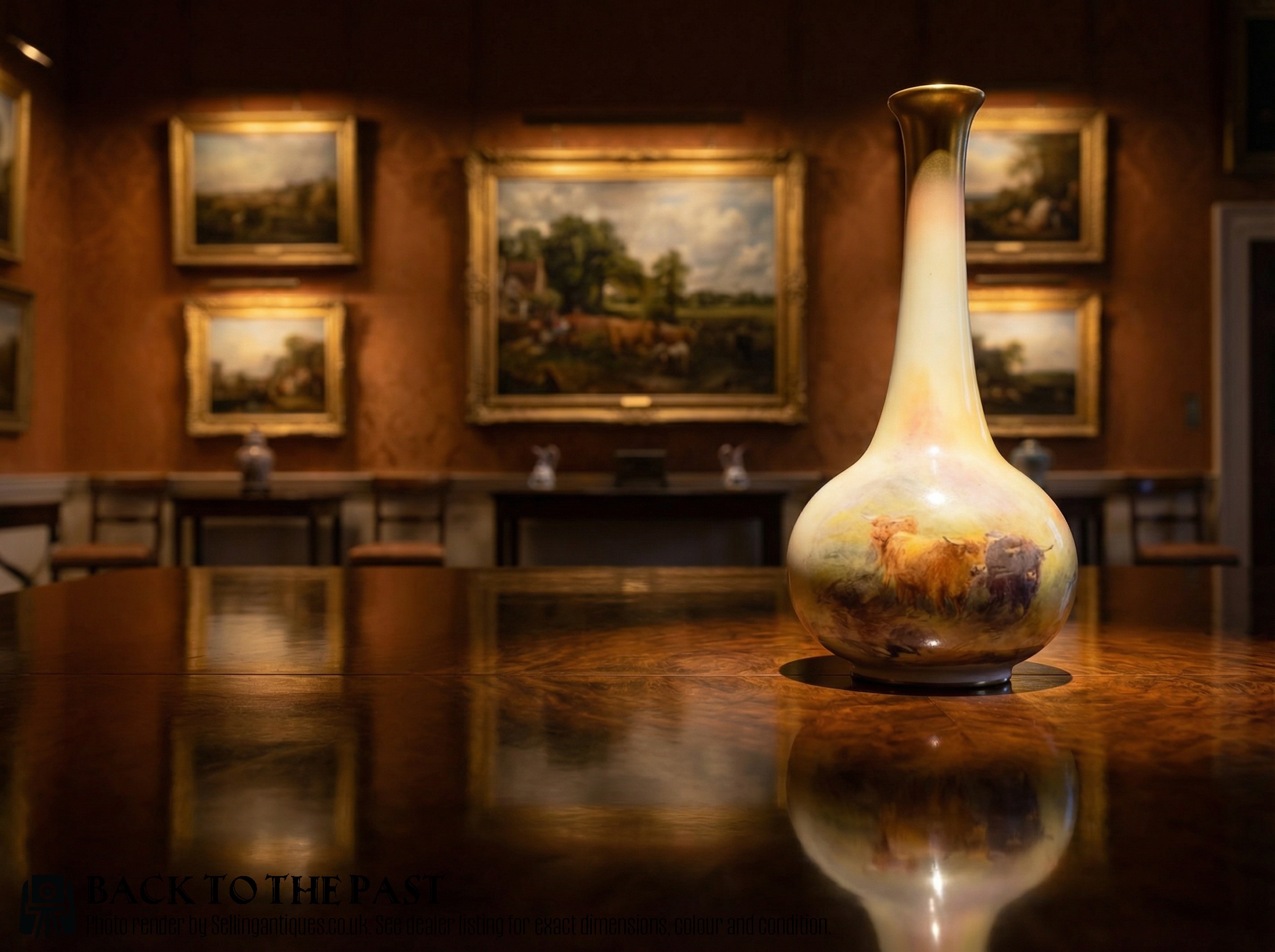
When you search for stinton highland cattle, you encounter porcelain and bone china created by Royal Worcester during the Edwardian period and the decades immediately following. These items take the form of vases, cabinet plates, ewers, and wall plaques depicting cattle in Scottish landscapes. The most common format on this page is the hand-painted vase or pair of vases signed by members of the Stinton family.
The objects span production dates from nineteen hundred through nineteen thirty, reflecting the sustained popularity of pastoral subjects in British decorative arts. Alongside standard cabinet vases, the inventory includes larger covered urns, pot pourri vessels, and decorative wall plaques. Collectors find these pieces grouped under Edwardian traditional styles, combining utility with fine art porcelain painting.
How they were made
The foundation of each piece is fine porcelain or bone china, shaped into vases, ewers, and plates before undergoing initial firing. Artisans applied detailed hand-painted pastoral scenes directly onto the ceramic body, often incorporating naturalistic tones to render the cattle and Highland backgrounds. Many items receive finishing touches of gold leaf, gilding, or gilt framing to accent the painted panels.
Vessels such as pot pourri jars and covered urns required precise ceramic engineering to ensure lids and bodies fitted correctly after multiple kiln firings. The integration of enamel colours over the glazed porcelain surface allowed painters to achieve depth and atmospheric perspective in their landscapes. Gilding was applied by hand around the rims, handles, and bases to complete the decorative scheme.
Stinton Highland Cattle Retail Price Guide 2026
Typical asking prices for stinton highland cattle among the pieces listed under this phrase on Sellingantiques today, from the lower quarter to the upper quarter. They describe what is for sale here now, not the wider market.
Listings feature items dated from nineteen hundred to nineteen thirty, executed in porcelain and bone china with gilt accents.
What varies in quality
Quality in these porcelain pieces rests upon the detail and expressiveness of the hand-painted cattle scene rather than the ceramic form alone. Works bearing the full signature of Harry Stinton or John Stinton often display superior brushwork and more complex landscape backgrounds compared to unsigned or generically marked examples. The subtlety of the enamel shading and the preservation of the gilding determine the upper tier of the range.
The scale and ambition of the object also influence its standing, with large covered vases and paired plaques demanding greater technical mastery from the pottery. Pieces retaining crisp definition in the animal coats and atmospheric skies command more attention from collectors than simpler, smaller spill vases. The harmony between the painted subject and the gilded porcelain shape distinguishes fine studio output from standard factory production.
Royal Worcester·Harry Stinton·John Stinton
The Stinton Highland Cattle Glossary
- Porcelain
- A hard, white ceramic material fired at high temperatures, used as the primary canvas for these painted scenes.
- Gilding
- The application of gold leaf or gilt paint to accent the rims and handles of ceramic vessels.
- Ewer
- A large jug with a wide spout and handle, frequently produced as a decorative display piece in this category.
- Pot pourri
- A decorative jar with a pierced cover designed to hold dried scented plant material.
- Enamel
- Vitreous material fused to the surface of porcelain to add permanent colour and detail to the painted artwork.
Stinton Highland Cattle: Frequently Asked Questions
Who painted these cattle scenes?
The painting was principally executed by members of the Stinton family, notably Harry and John, working for the Royal Worcester pottery.
Their detailed watercolours and enamel work on porcelain established a distinct genre of British ceramic art during the early twentieth century.
How do I date my vase?
Royal Worcester pieces carry factory date ciphers stamped or painted on the underside, often consisting of dots or letters corresponding to specific years.
Comparison with the active periods of artists like Harry and John Stinton helps confirm the decade of production between nineteen hundred and nineteen thirty.
Were these items used daily?
Most items functioned primarily as decorative cabinet pieces or display objects rather than utilitarian tableware in domestic interiors.
Plates, plaques, and covered urns were intended for visual appreciation on mantelpieces or within glass-fronted cabinets.
What is a bough pot?
A bough pot is a specialised vessel designed to hold cut branches or flowers for interior decoration.
In this category, they often feature removable pierced covers and hand-painted Highland cattle scenes.