
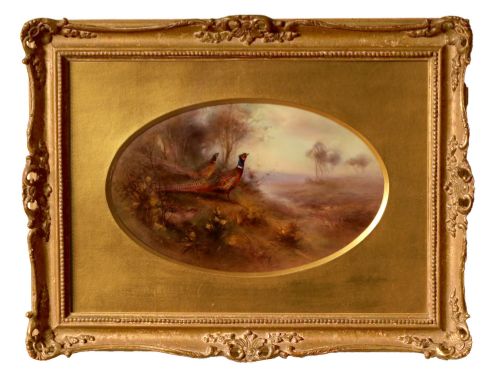


Royal Worcester Stinton
Royal worcester stinton pieces are hand-painted porcelain items depicting wildlife by members of a renowned artistic family, desired for their fine illustrative detail.
Royal Worcester Stinton
Royal worcester stinton pieces comprise hand-painted porcelain objects created by members of the Stinton family. The selection centres on items produced during the Edwardian period and the early decades of the twentieth century.
Buyers encounter forms such as small and large vases, ewers, pot pourri vessels, cabinet plates, framed wall plaques, and cups and saucers. These items frequently display pastoral scenes of highland cattle, game birds like pheasants, ducks, and stags.
The objects stem from production years spanning 1900 to 1930, capturing the height of the factory's painterly decorative tradition. Pieces range from intimate cabinet plates to substantial covered vases and framed porcelain plaques.
Materials and technique
The foundation of every piece is fine ceramic porcelain, often finished with gold leaf, gilt, or gilding along the rims, handles, and bases. Some items incorporate glass elements or giltwood frames for wall plaques.
Artisans applied enamel colours by hand to create the pictorial subjects, requiring skilled brushwork to capture feather textures and cattle in misty landscapes. Firing in kilns set the pigments permanently into the glazed porcelain surface.
Highland cattle stare out from miniature porcelain surfaces with remarkably detailed fringed coats.
Judging quality
Quality rests upon the complexity and scale of the painted subject, alongside the individual artist's hand. Detailed landscapes featuring multiple highland cattle or intricately feathered game birds represent the upper tier of execution.
The integration of the painted scene with the porcelain form dictates merit. Elaborate vessels such as large pot pourri sets, ewers, and framed plaques demand greater sculptural and artistic coordination than simple cabinet plates or spill vases.
James Stinton·Harry Stinton·John Stinton
The Royal Worcester Stinton Glossary
- Ewer
- A wide-spouted jug with a decorative handle, utilised historically for water but produced here as an ornamental vase. These vessels often feature painted Highland cattle landscapes.
- Pot pourri
- A decorative lidded vase or multi-piece set pierced to release scents from dried botanical materials. They serve as substantial centrepieces in ceramic collections.
- Bough pot
- A traditional container designed for holding flowering tree branches or bulbous plants. In these listings, they appear decorated with wildlife scenes.
- Gilding
- The application of gold leaf or powdered gold paint to ceramic surfaces and rims. It provides a metallic border that frames the hand-painted naturalism.
Royal Worcester Stinton: Frequently Asked Questions
How do I identify a Stinton painted piece?
Look for the signature or initials of James, Harry, or John Stinton painted directly onto the porcelain surface alongside the factory mark. Their work typically depicts specific wildlife subjects such as highland cattle, pheasants, or stags.
Compare the style of brushwork and the background scenery against documented examples from the early twentieth century. The quality of the enamel detailing generally confirms the authenticity of the artist's hand.
What subjects did the Stinton family paint?
The artists specialised in natural history and pastoral landscape subjects. Highland cattle in misty Scottish settings and game birds like pheasants, ducks, and stags dominate the decorated surfaces.
These motifs reflect the Edwardian taste for naturalistic countryside imagery applied to fine decorative ceramics. Each animal is rendered with distinct plumage or coat textures against soft, atmospheric backdrops.
How should I display plaques and vases?
Framed porcelain plaques require secure wall hanging away from direct, harsh sunlight to protect the enamel pigments over time. Vases and ewers benefit from placement on stable cabinets or shelves where their painted panels remain visible.
Avoid high-traffic areas where decorative handles or gilt rims might suffer accidental impact. Proper clearance allows the detailed wildlife scenes to be appreciated from multiple angles.
How do I care for antique painted porcelain?
Dust these items gently with a soft, dry cloth to prevent accumulation on raised gilding and painted surfaces. Avoid immersing gilded or enamelled porcelain in water or utilising chemical cleaning solutions.
Gentle maintenance preserves the integrity of both the gold leaf trim and the delicate hand-painted wildlife scenes. Professional conservation advice should be sought for any structural repairs.