


Highland Cattle Vase
These highland cattle vase examples bring hand-painted Scottish scenes directly into the home through exceptional porcelain artistry.
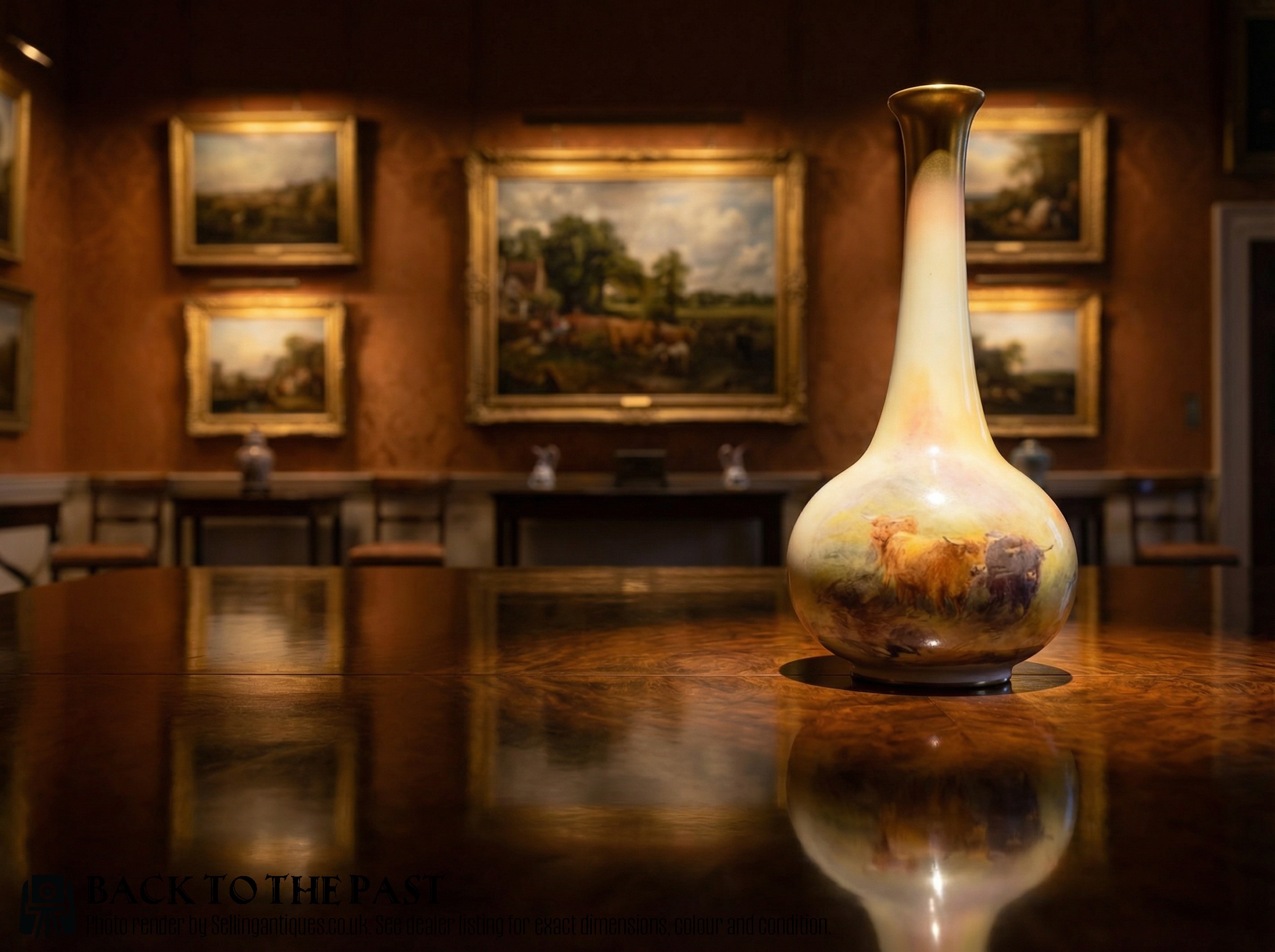
What they are
A highland cattle vase centres on detailed hand-painted depictions of cattle within misty moorland landscapes, predominantly rendered on fine porcelain bodies. The pieces found here span the Edwardian era through to the early decades of the twentieth century, capturing a specific golden age of ceramic painting.
Collector interest focuses heavily on signed examples, particularly those bearing the hand of renowned artists from the period. Forms range from simple spill vases and trumpet shapes to large twin-handled pedestals and covered pot pourri vessels.
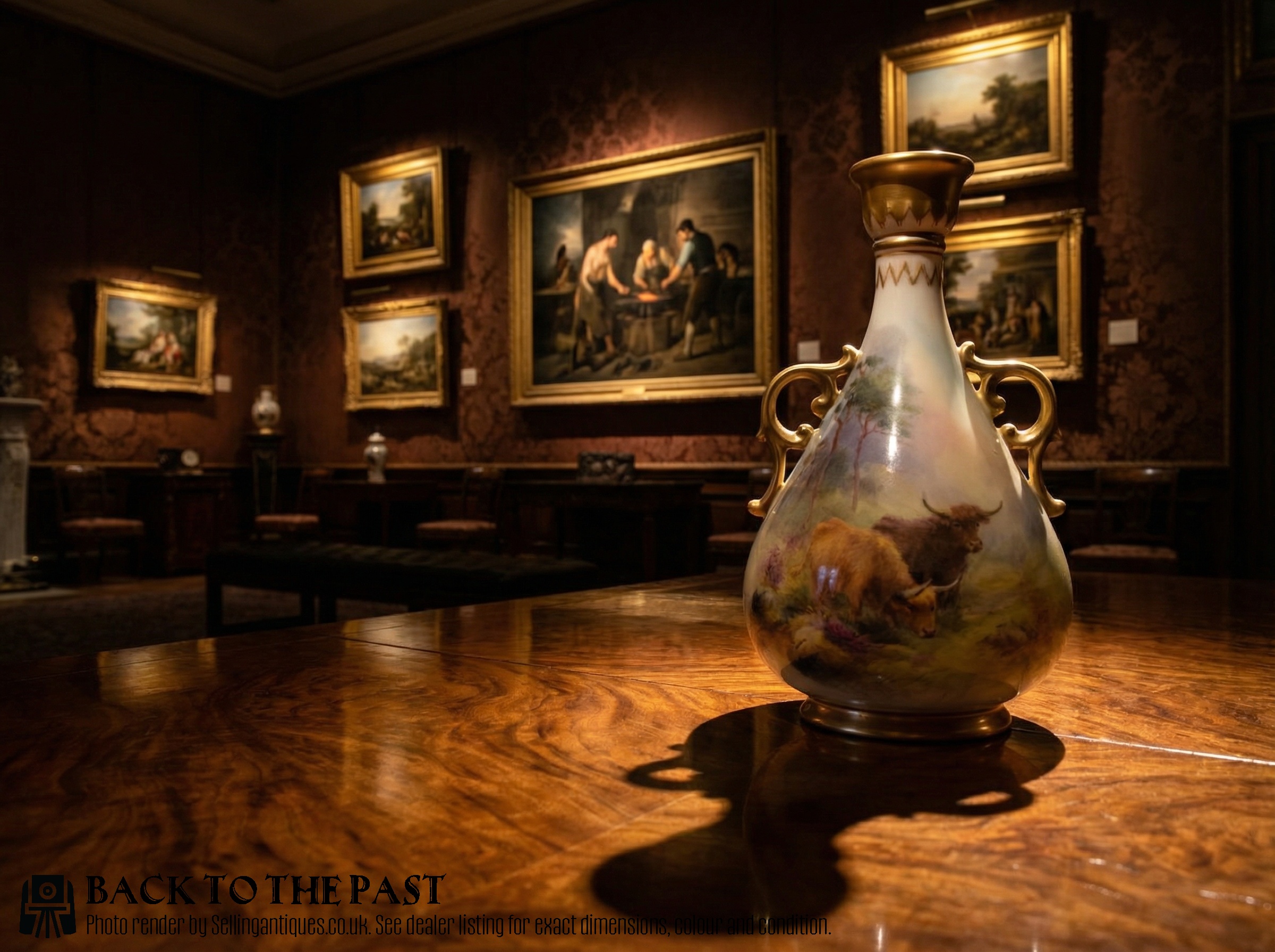
How they were made
Makers utilised high-fired porcelain as the canvas for intricate enamel work, building up the moorland atmosphere and the shaggy texture of the cattle through layered brushstrokes. Gilding, gold leaf and rich gilt accents frequently frame the painted panels and highlight handles, rims and covers.
The decorative process required multiple firings in kilns to fix the delicate enamel colours permanently into the glaze without losing the fine detail of the brushwork.
Retail Price Guide 2026
Typical UK retail prices for highland cattle vase, calculated from the Sellingantiques database of over a million retail prices indexed since 2003. This retail price guide relies exclusively on Sellingantiques data; no external sources or auction records are used, so the figures do not describe the wider market.
Recorded materials across these listings include porcelain, gilding, gilt, enamel and gold leaf.
What varies in quality
The distinction between standard production and the finest work lies entirely in the ambition of the painted scene and the reputation of the artist. Fully realised panoramic landscapes with naturalistic animal anatomy command greater appreciation than simpler, more repetitive decorative treatments.
The application of gilding and the physical presence of the porcelain form also dictate standing, with large covered urns and twin-handled pedestals representing the more substantial expressions of the genre.
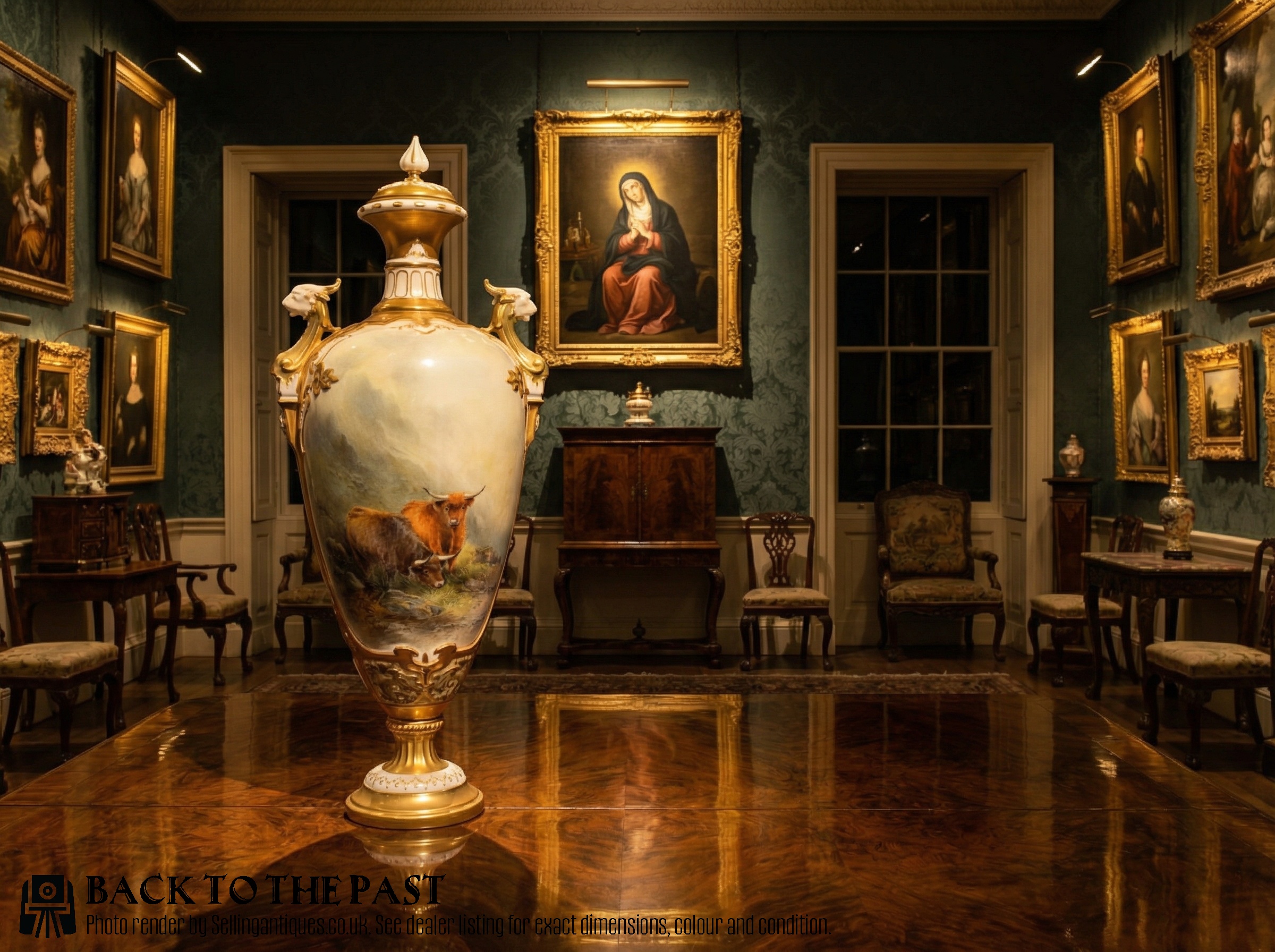
Royal Worcester·John Stinton·Harry Stinton·Townsend
The Highland Cattle Vase Glossary
- Porcelain
- A hard, fine-grained ceramic material fired at high temperatures to achieve a dense, impermeable body. It provides the smooth white surface essential for detailed miniature painting.
- Gilding
- The application of gold leaf or powdered gold onto the ceramic surface to create luminous metallic borders and accents. This finish is typically fired to bond with the glaze.
- Enamel
- Vitreous pigments applied over the glaze and fired to produce permanent, vibrant colours. These paints allow for the subtle shading seen in landscape and animal depictions.
- Pot pourri
- A decorative vessel featuring a pierced cover designed to diffuse scent from dried floral materials. These forms often incorporate elaborate handles and footed bases.
- Spill vase
- A tall, slender vessel originally intended to hold slender wooden spills used for lighting fires or pipes. Their upright format suits vertical landscape compositions.
Frequently Asked Questions
Who painted these vases?
Many pieces carry signatures from prominent ceramic artists associated with major English potteries, most notably members of the Stinton family.
Their detailed work depicts cattle in natural highland settings.
What periods do they date from?
The available pieces originate from the early twentieth century, spanning the Edwardian period into the nineteen-twenties and thirties.
This era represents the peak of hand-painted animal subjects on porcelain.
How should I display them?
These vessels require placement away from direct sunlight to preserve the stability of the enamel colours and the brightness of the gilding.
Pairing them with neutral backgrounds allows the detailed landscape scenes to stand out.
Are covers important?
Original matching covers significantly complete the silhouette of larger forms like pot pourri vessels and pedestal urns.
Their presence indicates that the piece survives in a more complete state.