
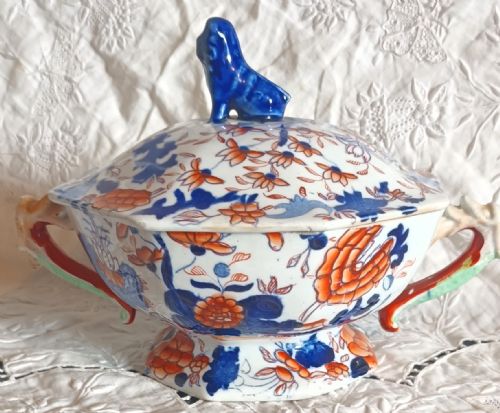


Masons Patent Ironstone Dish
These pieces of masons patent ironstone dishware bring durable ceramic practicality and bold pattern into domestic service.
Masons Patent Ironstone Dish
A masons patent ironstone dish encompasses robust serveware items ranging from large covered tureens and soup vessels down to dessert plates, platters, and specialised soap dishes. These objects originate predominantly from the nineteenth century, bridging Georgian elegance through Victorian aesthetics into Edwardian and later productions.
The version most commonly met on this page is the substantial serving vessel or covered tureen, often decorated in transfer-printed and hand-painted Chinoiserie or Imari palettes. Alongside these hollowware items, buyers encounter flat serveware including ashets, meat platters, and footed cheese dishes.
Originating in English ceramic traditions, these pieces combine utilitarian strength with decorative ambition. They represent a durable alternative to delicate porcelain while maintaining rich surface detail.
How they were made
The body of a masons patent ironstone dish consists of a dense ironstone ceramic mixture that provides high resistance to chipping and thermal shock. This clay body is fired to a hard finish, creating a heavy foundation designed for regular service.
Surfaces are decorated using enamel colours, gold leaf, and gilding, often applied over intricate hand-painted or transfer-printed patterns. A clear glaze seals the ceramic body and protects the pigments underneath from wear during daily use.
Soap dishes and cheese covers prove that nineteenth-century dining tables demanded thematic ceramic coordination down to the washing station.
What varies in quality
The distinction between standard examples and finer items rests in the precision of the hand painting and the application of gold leaf over the transfer-printed outlines. Pieces that retain crisp enamels and rich gilding without rubbing demonstrate superior initial execution and careful subsequent handling.
Complexity of form also separates production grades, with large covered soup tureens, footed cheese dishes, and shaped comports requiring greater modelling skill than flat plates. The clarity of the moulded details and the registration of complex patterns such as Chinoiserie or Japan Basket indicate the workshop standard.
Mason
The Masons Patent Ironstone Dish Glossary
- Ironstone
- A dense ceramic body patented in the nineteenth century to provide a durable alternative to porcelain. It combines ball clay, china stone, and scoria.
- Tureen
- A deep covered bowl used for serving soups, sauces, or vegetables at the table. These vessels often include matching ladles and undertrays.
- Ashet
- A Scottish and northern English term for a large serving platter or meat dish. They form part of larger dinner services.
- Comport
- A footed bowl or elevated dish used for serving fruit or sweetmeats on the dining table. They lift elements of the table service to create visual variety.
- Imari
- A decorative style inspired by Japanese export ceramics featuring iron red, underglaze blue, and gold highlights. It appears frequently on nineteenth-century ceramic wares.
Masons Patent Ironstone Dish: Frequently Asked Questions
What were these dishes used for?
These ceramic items served practical functions across the nineteenth-century dining table, from holding roasted meats on platters to containing hot soups in covered tureens. Specialised forms also accommodated desserts, cheeses, and toilet articles.
Their robust construction allowed them to withstand the rigours of daily household service while their decorative patterns matched the formal dining standards of the period.
How do I date a piece?
Dating relies on stylistic markers, pattern names, and the nature of the ceramic body and mark. Pieces associated with the early patent period often exhibit rich Chinoiserie or Imari palettes.
Later Victorian and Edwardian examples incorporate different ground colours, such as yellow or green, alongside modified shapes and transfer-printing techniques.
How do I care for ironstone?
Ironstone is a durable ceramic material, but pieces with hand-painted enamels and gold leaf require gentle handling. Hand washing in warm water with mild detergent preserves the surface decoration.
Avoid abrasive cleaners and sudden temperature shifts to protect the glaze and prevent wear to the gilt highlights over time.
What is Chinoiserie?
Chinoiserie is a European decorative style reflecting imaginative interpretations of Chinese art and motifs. On these ceramics, it appears as pagodas, exotic birds, and figures in garden landscapes.
Potters applied these designs using a combination of transfer printing and hand-applied enamel colours to create vibrant surface decoration.